UB 305x102x25 is a hot-rolled universal beam designation used to identify a specific I-shaped steel section. The reference information below records the section dimensions, root fillet radius, sectional area, unit weight, applicable standard reference, and the associated CAD drawing resource.
Use the listed properties when identifying the section in schedules, checking a drawing label, or coordinating a structural-steel CAD model. The designation is nominal, so the published depth, width, and mass should be taken from the verified section data rather than inferred only from the section name.
UB 305x102x25
Universal Beams
refer to : EN 10365:2017
a European standard that defines the dimensions, tolerances, and sectional properties for hot-rolled steel channels, I-beams, and H-beams used in construction and engineering. It ensures uniformity and compatibility across European structural steel products.
Dimension : 305.1×101.6×5.8×7
Depth : 305.1 mm
Width : 101.6 mm
Web Thickness : 5.8 mm
Flange Thickness : 7 mm
Root Fillet Radius : 8 mm
Sectional Area : 31.6 cm2
Unit Weight : 24.8 kg/m
How to Read the UB Designation
In this universal beam naming format, the designation communicates the section family and its nominal depth, nominal flange width, and nominal mass per unit length. The detailed values in the source content provide the corresponding published dimensions and unit weight. Small differences between the nominal designation and listed properties are normal for rolled-section naming systems.
Understanding the Section Dimensions
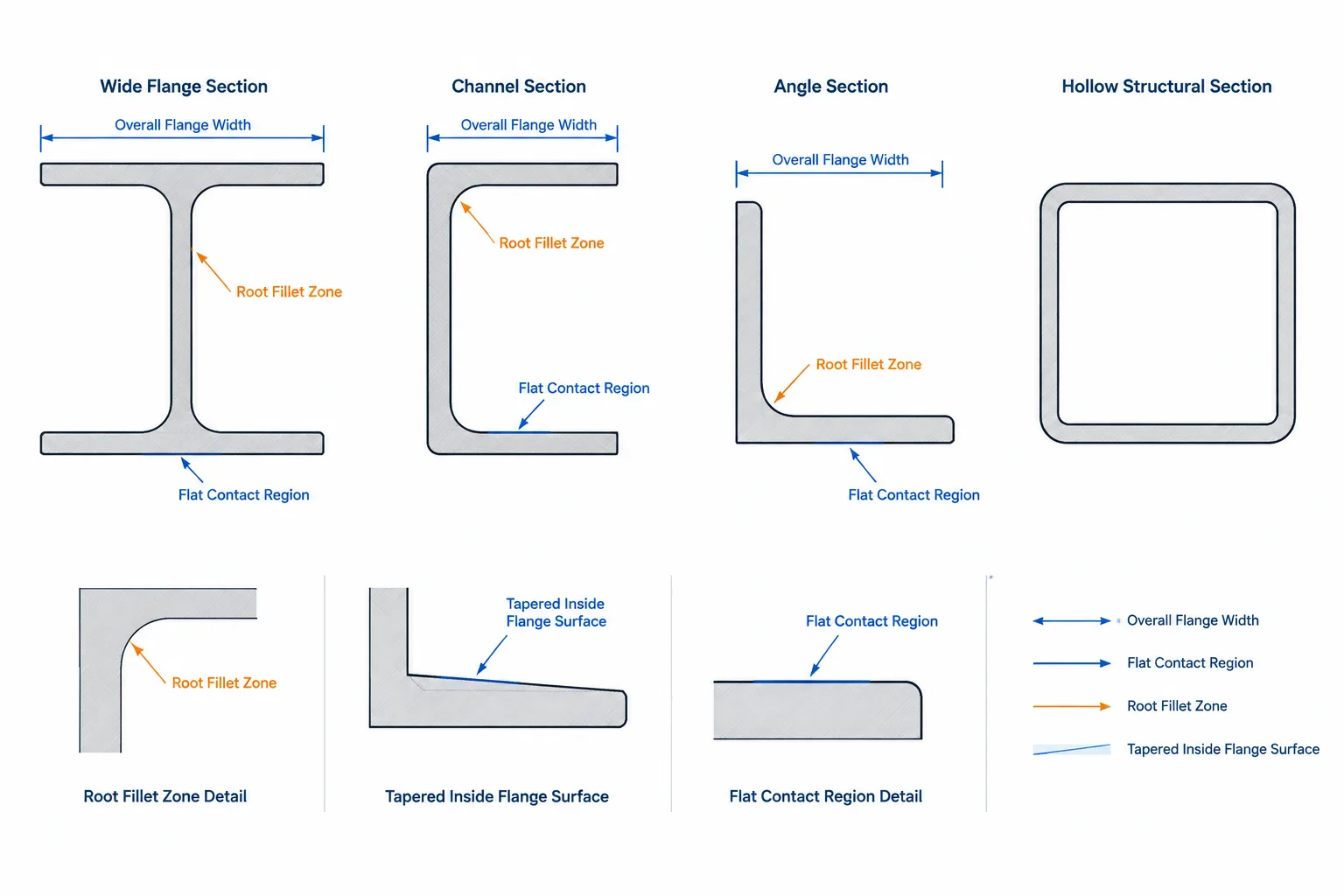
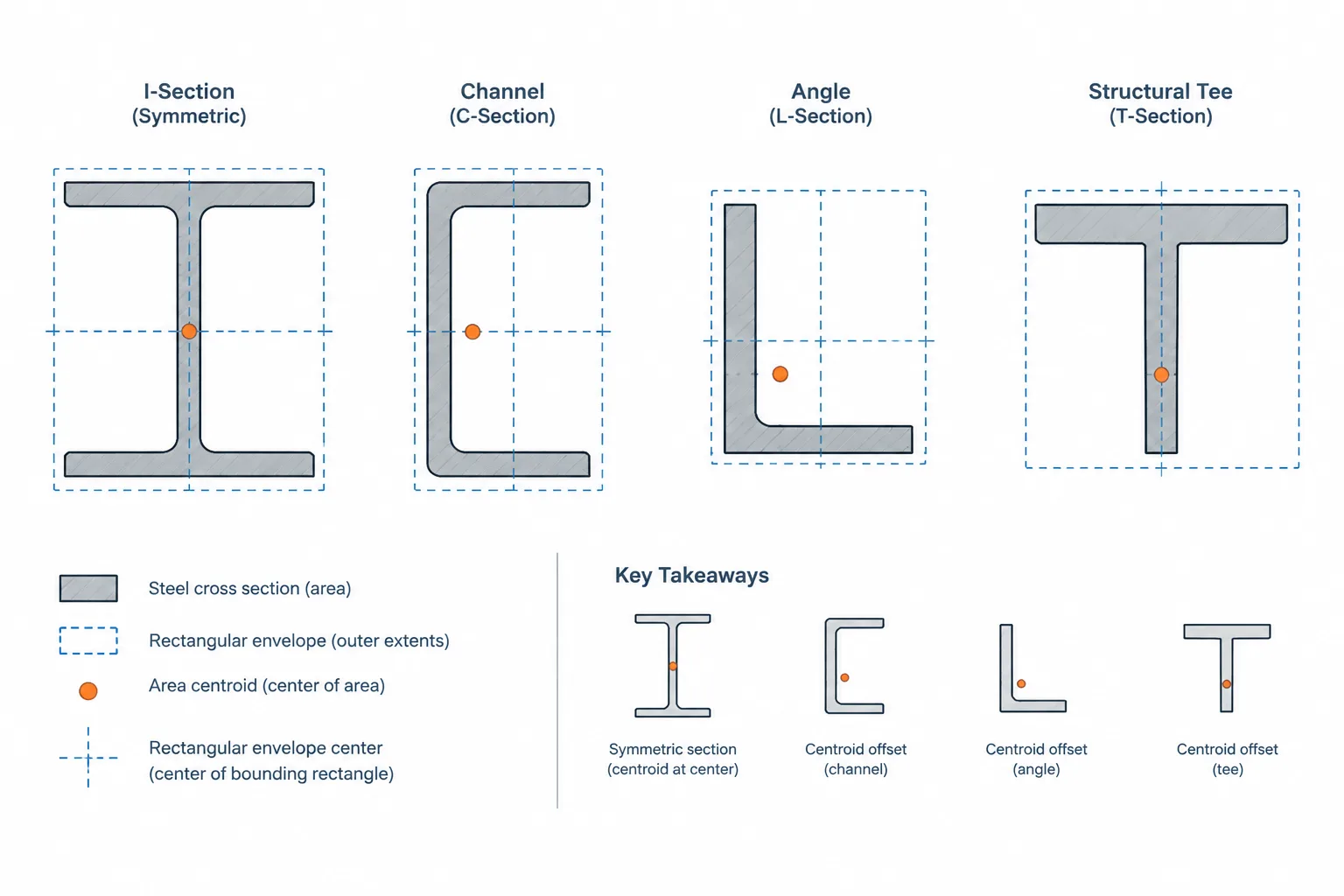
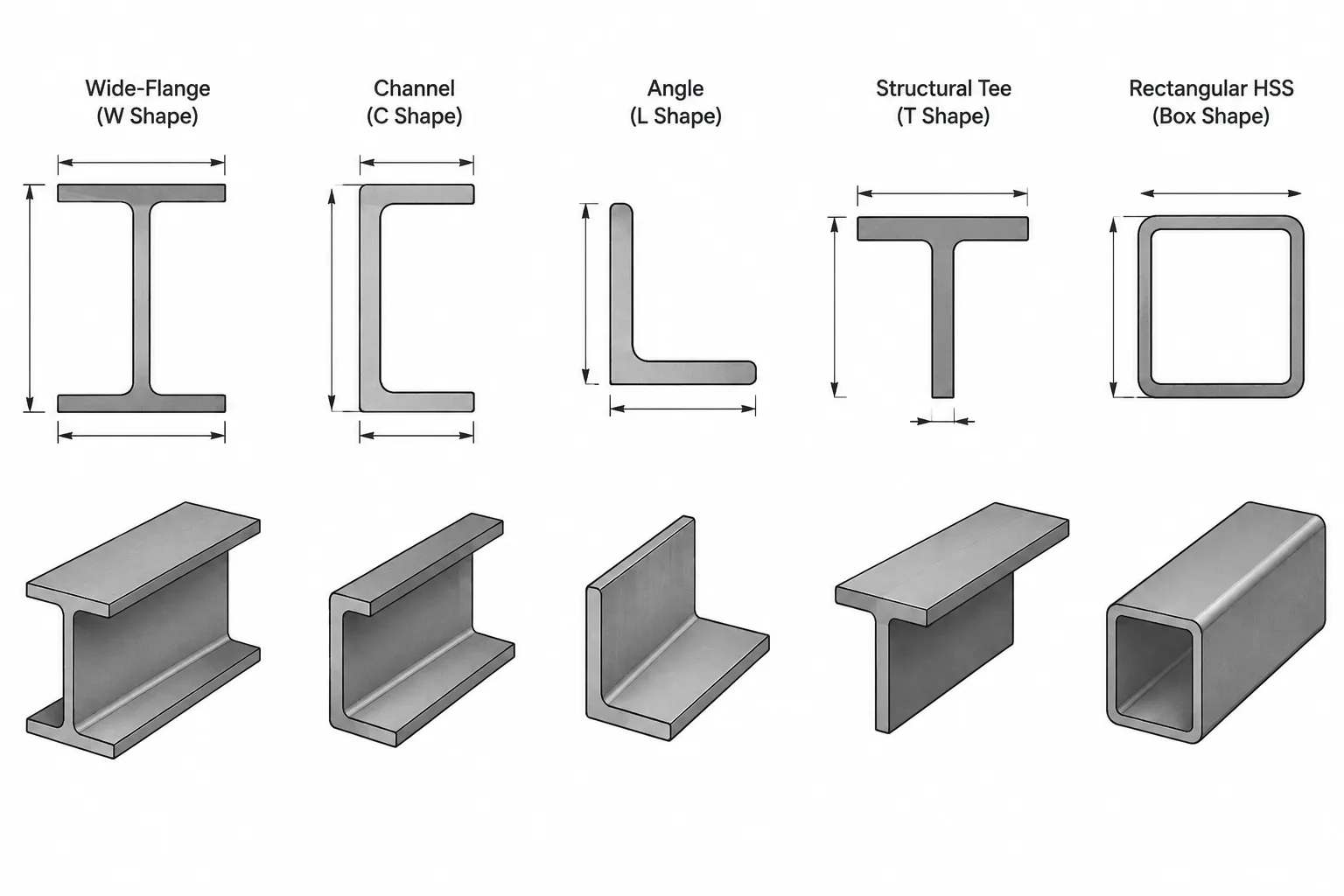
The overall depth describes the distance across the full height of the beam, while the width refers to the flange width. Web thickness applies to the central vertical element, and flange thickness applies to the horizontal elements. These dimensions are important when preparing framing plans, checking clearances, laying out connections, and coordinating the beam with plates or adjacent members.
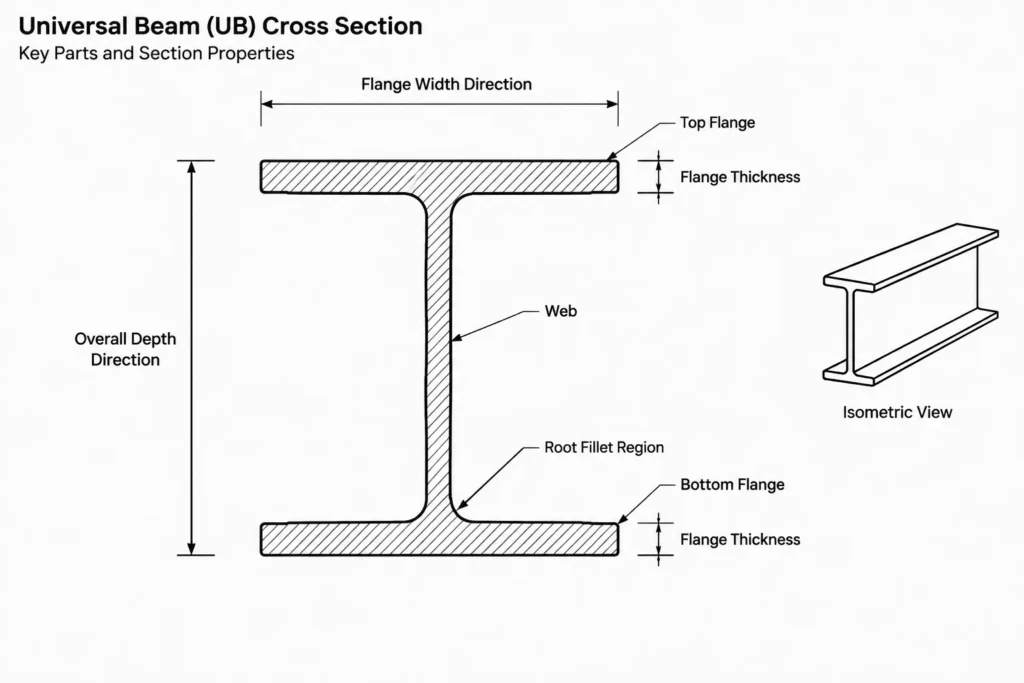
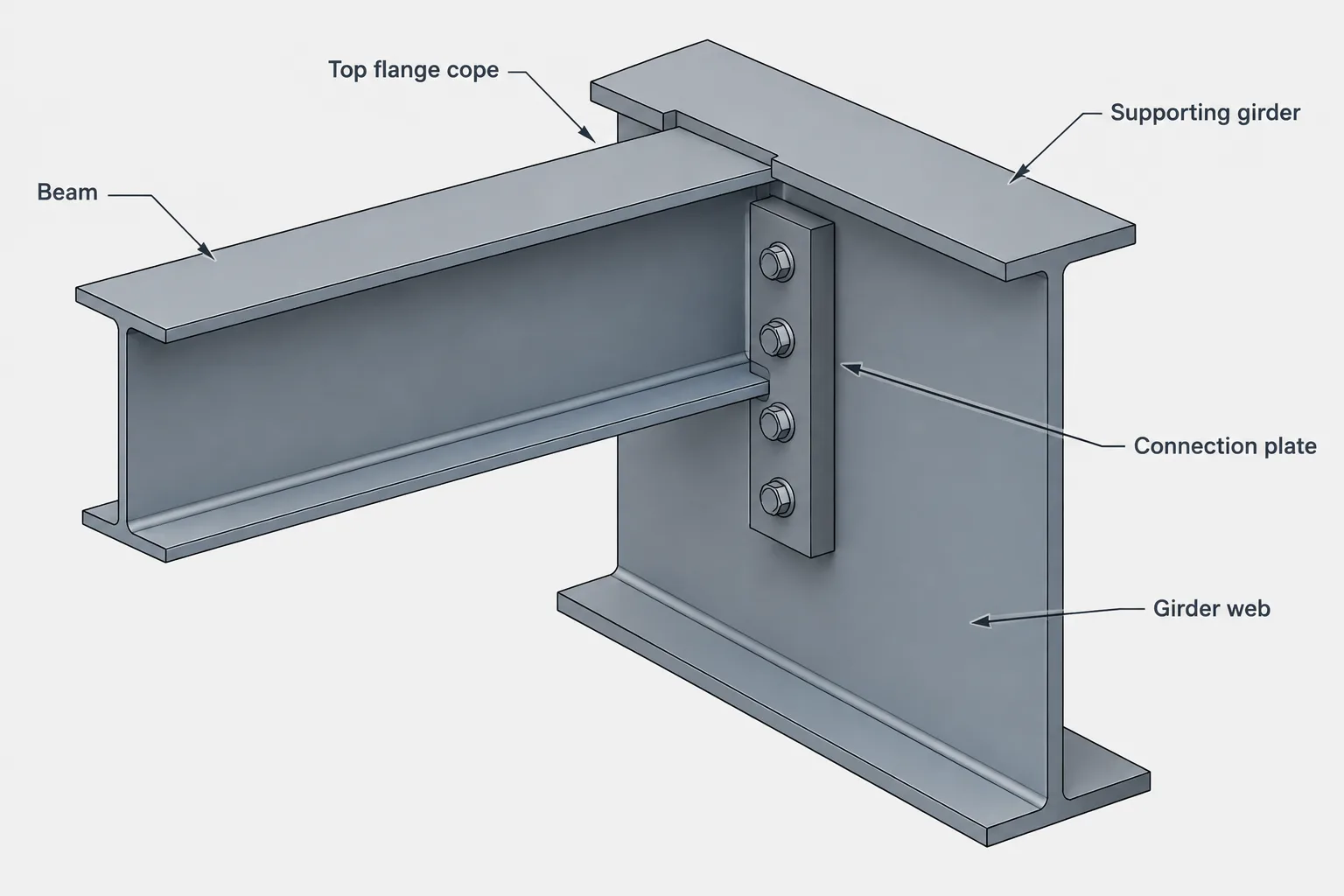
The root fillet radius describes the curved transition between the web and each flange. This region should not automatically be treated as a sharp internal corner. It can affect plate fit-up, cope geometry, clearance around bolts or welds, and the accuracy of a detailed section profile.
Sectional Area and Unit Weight
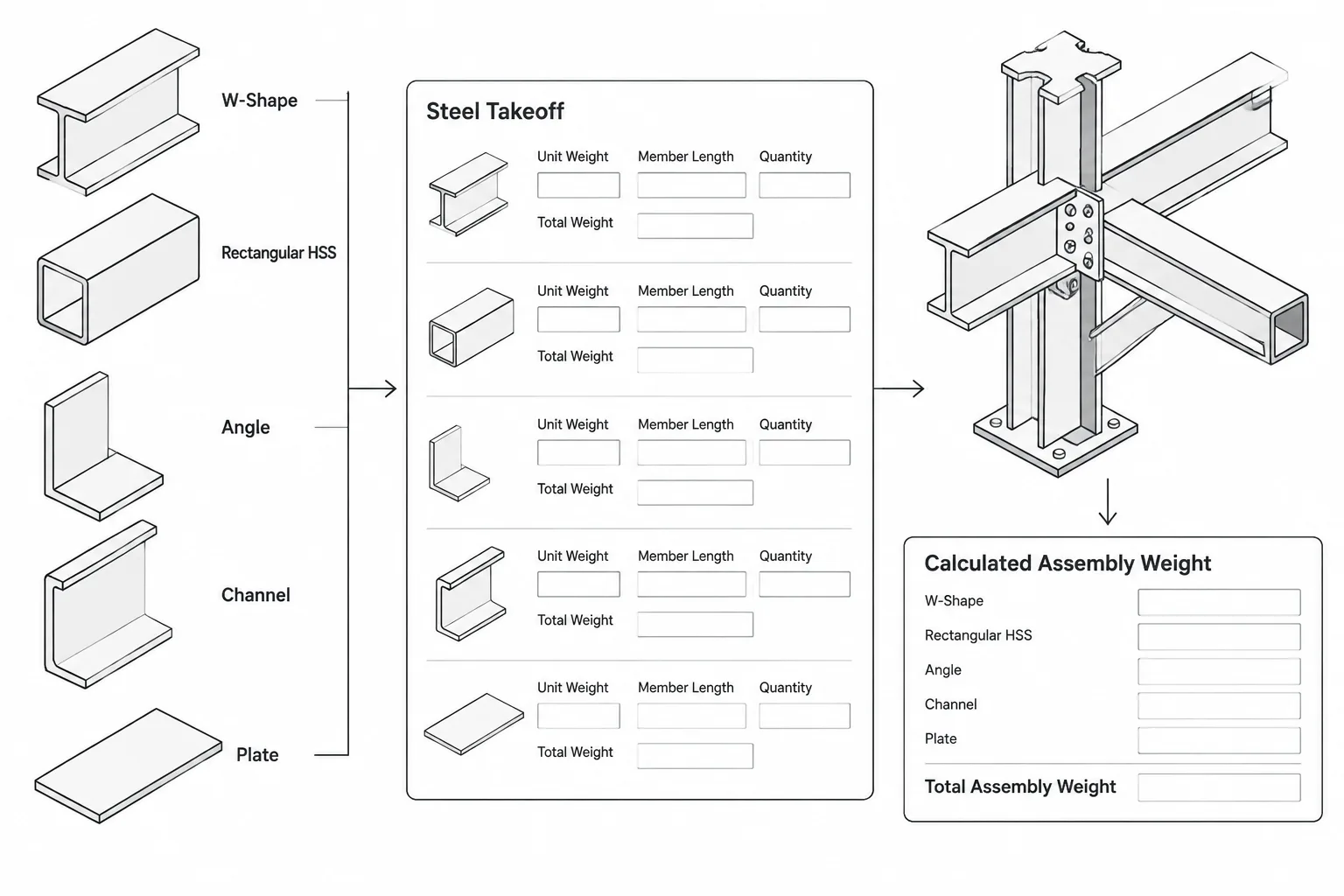
Sectional area expresses the amount of steel in the cross section. Unit weight expresses the mass of the member for each unit of length. They are related concepts, but they serve different drafting and calculation tasks. Area is commonly used in section-property and stress calculations, while unit weight is useful for material takeoffs, shipping estimates, and member-weight schedules.
Unit weight alone does not establish structural capacity. Design checks may also depend on material grade, member length, restraint, axis of bending, local and overall buckling, connection behavior, loading, and the governing design rules.
Using the DWG Reference
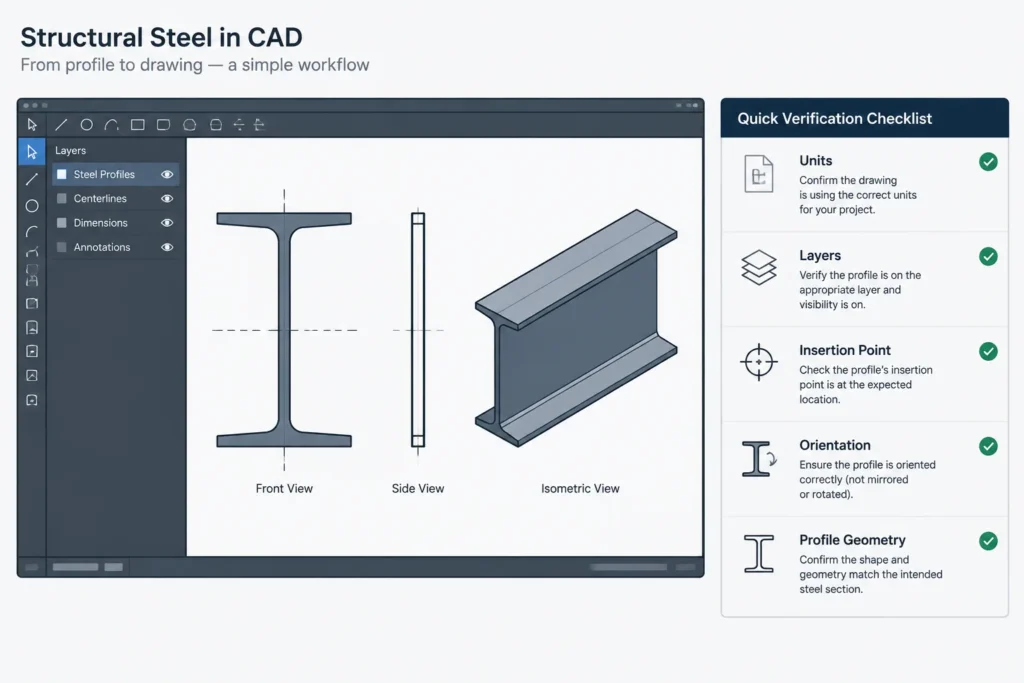
The DWG resource can support section identification, CAD library organization, schematic detailing, and coordination work. Before incorporating it into a project drawing, confirm the drawing units, profile geometry, insertion point, scale, layer conventions, and compatibility with the receiving CAD workflow.
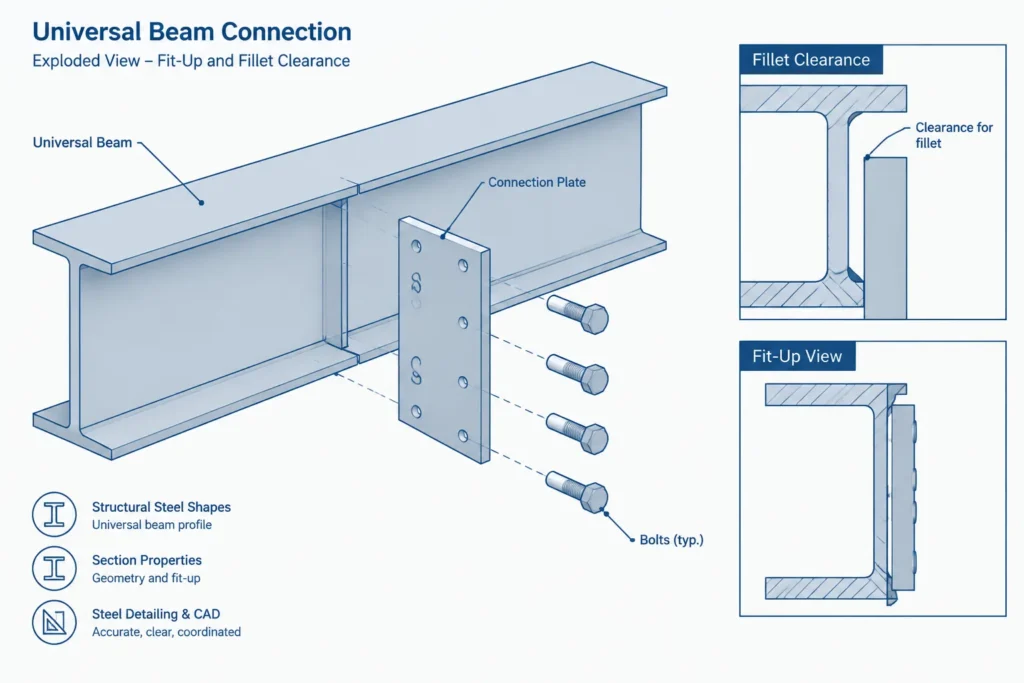
A section-profile drawing is not a substitute for project engineering or fabrication review. Connection plates, welds, bolts, holes, copes, tolerances, and member end conditions must be developed for the actual design and verified against the applicable project requirements.
Related Reference Topics
- Universal beam dimensions and section-property terminology
- I-shaped steel section identification
- Structural steel unit weight and quantity takeoffs
- Root fillets, detailing clearances, and connection fit-up
- Steel beam CAD blocks and DWG coordination
- Rolled-section standards and designation systems
Frequently Asked Questions
What does UB mean?
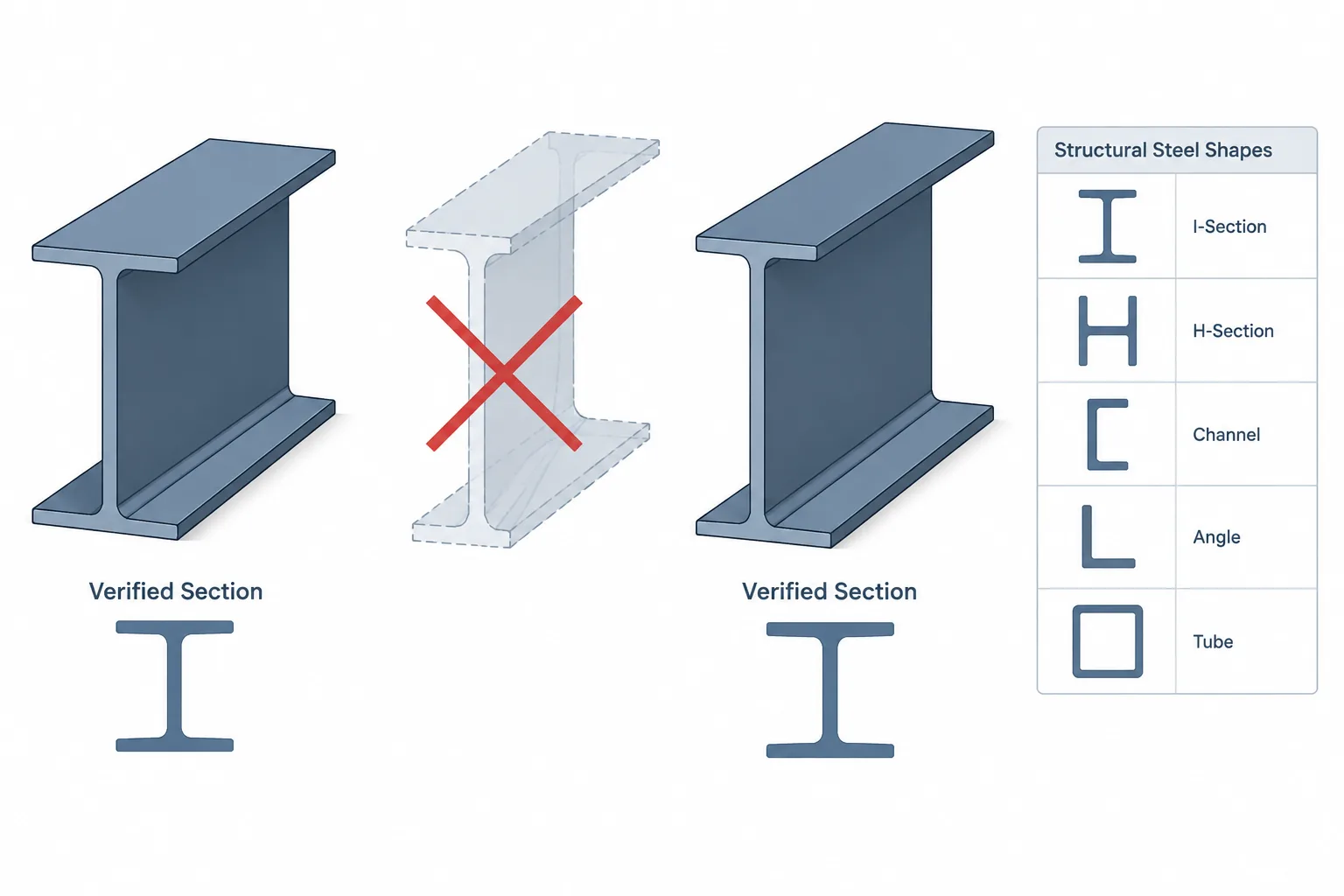
UB means universal beam. It is a rolled I-shaped steel section with two flanges connected by a central web.
Why do the listed dimensions differ slightly from the designation?
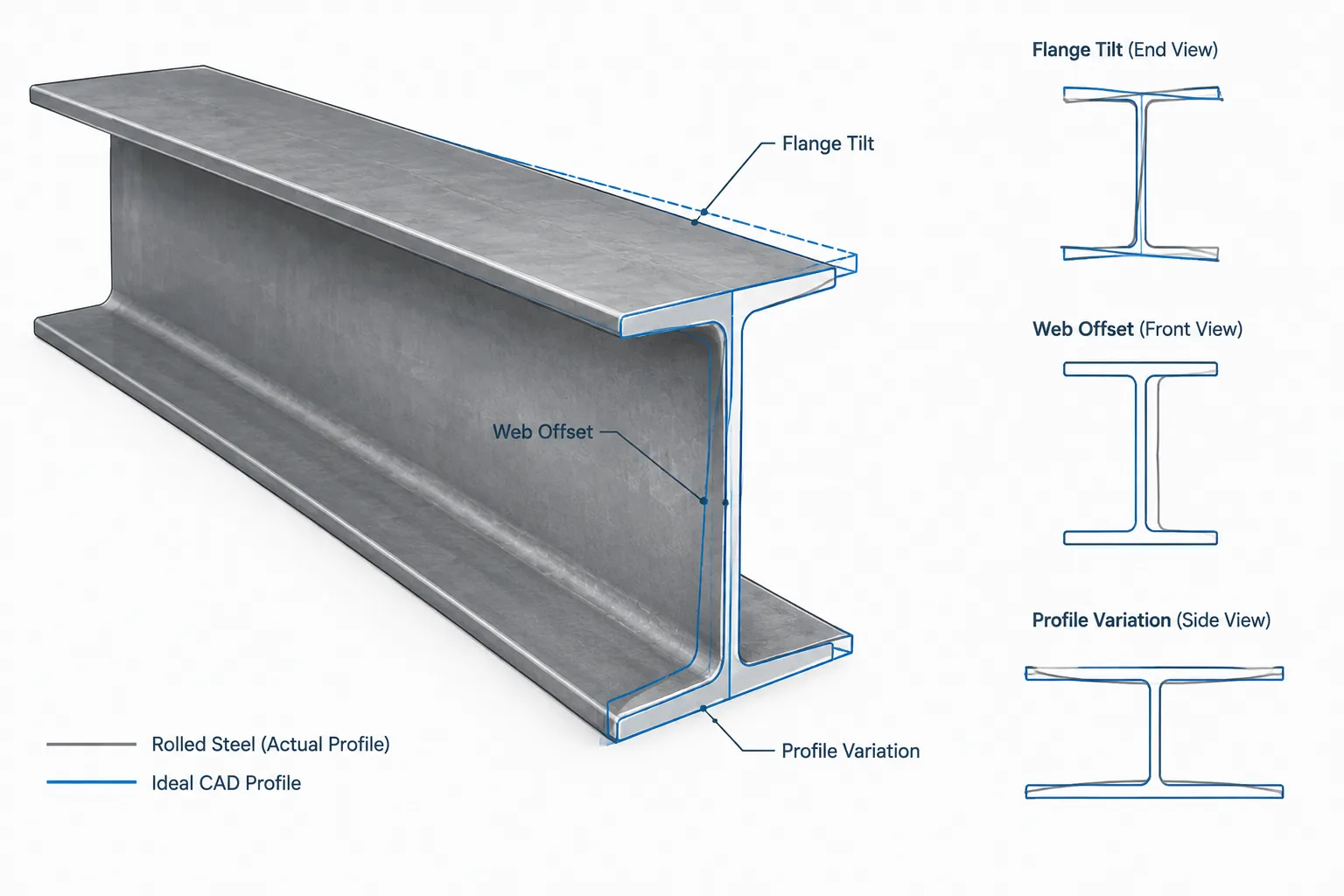
The section name uses nominal identifying values, while the detailed listing gives the published section dimensions and unit weight. For drafting and verification, use the detailed values rather than treating the designation as an exact geometric description.
Why is the root fillet radius important?
The radius defines the curved web-to-flange transition. Plates, notches, weld preparations, and other connection components may require clearance from this curved region to avoid interference.
Can sectional area or unit weight be used as beam capacity?
No. These properties help describe the section but do not provide a complete strength or serviceability evaluation. Capacity depends on additional section properties, material information, loading, restraint, member length, connection behavior, and the applicable design method.
Can the DWG be issued directly for fabrication?
It should first be checked against the project requirements and the verified section data. Fabrication documents also require connection geometry, tolerances, holes, weld information, member ends, and other project-specific details not established by a basic section profile.
What should be checked when importing the CAD file?
Confirm units, scale, insertion point, profile orientation, layers, line types, and geometry. Also compare the CAD profile with the listed source dimensions before using it in a coordinated drawing set.