Tag: section properties
-
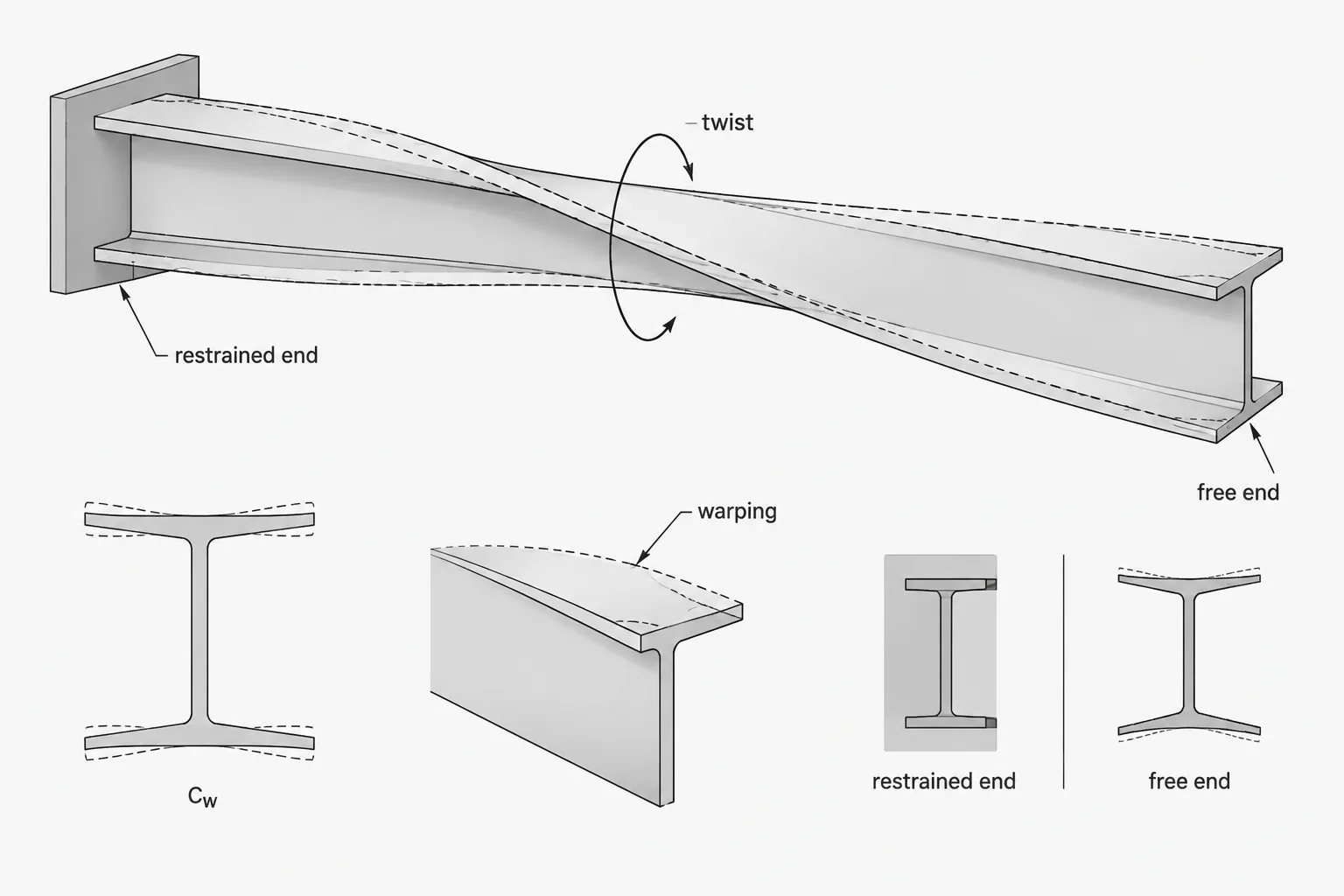
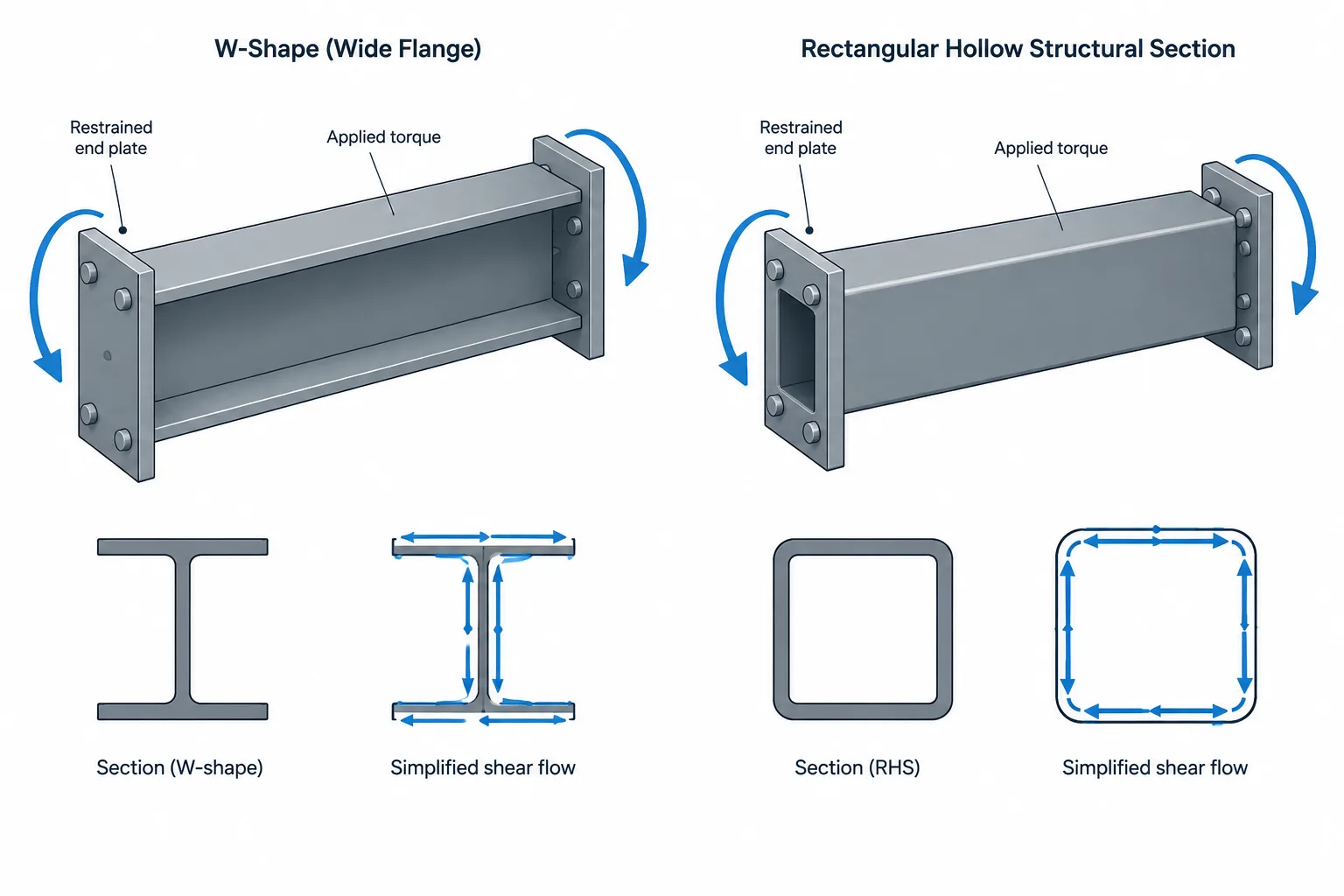
W-Shapes vs. HSS Under Torsion: Closed Sections, Warping, and Connection Effects
Compare how W-shapes and HSS resist torsion, including closed-section shear flow, warping, load position, connection behavior, and modeling checks.
Written by
-
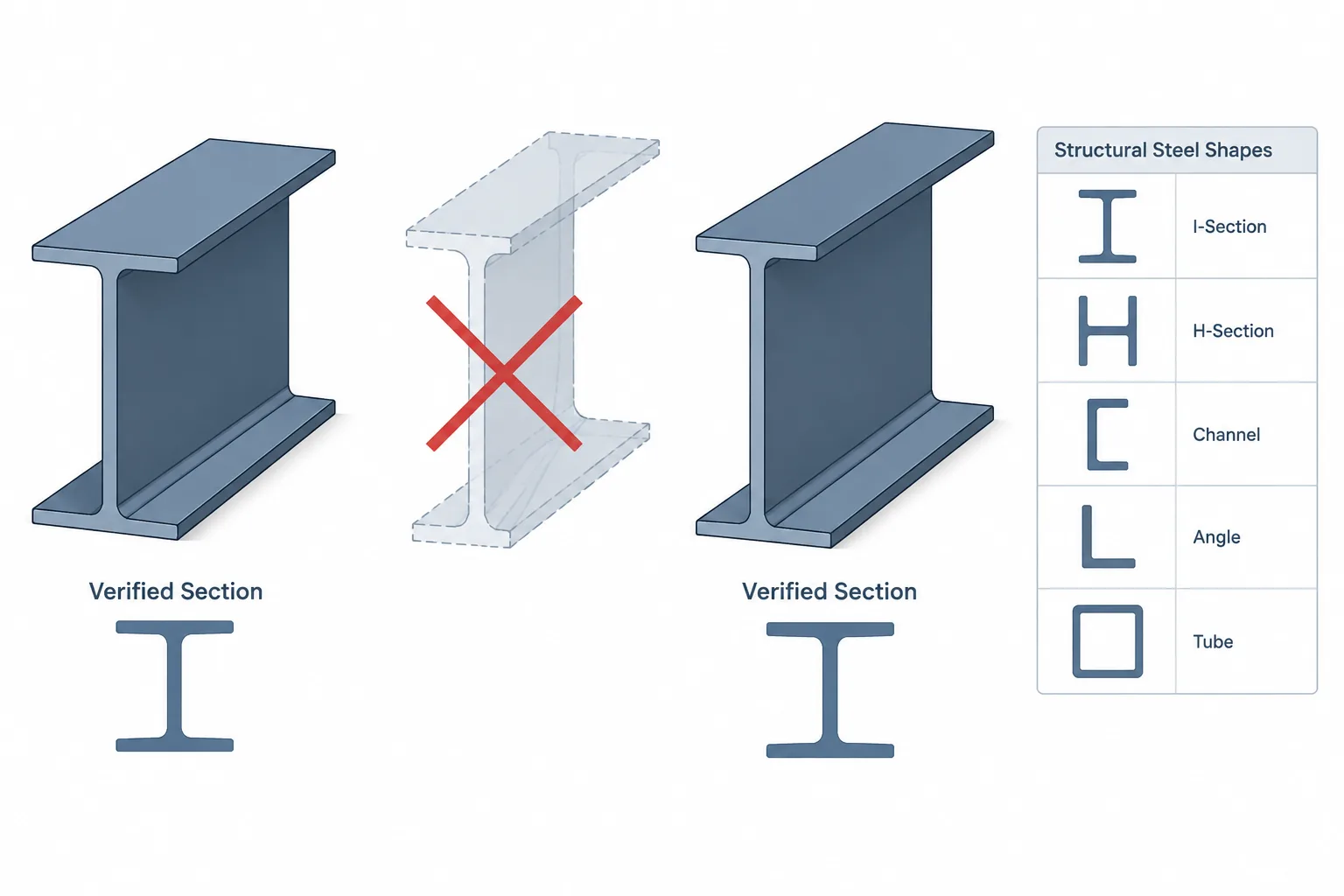
Why Structural Steel Shape Properties Should Not Be Interpolated Between Sizes
Learn why steel shape dimensions and section properties should not be interpolated between listed sizes, and how to compare or model alternatives safely.
Written by
-
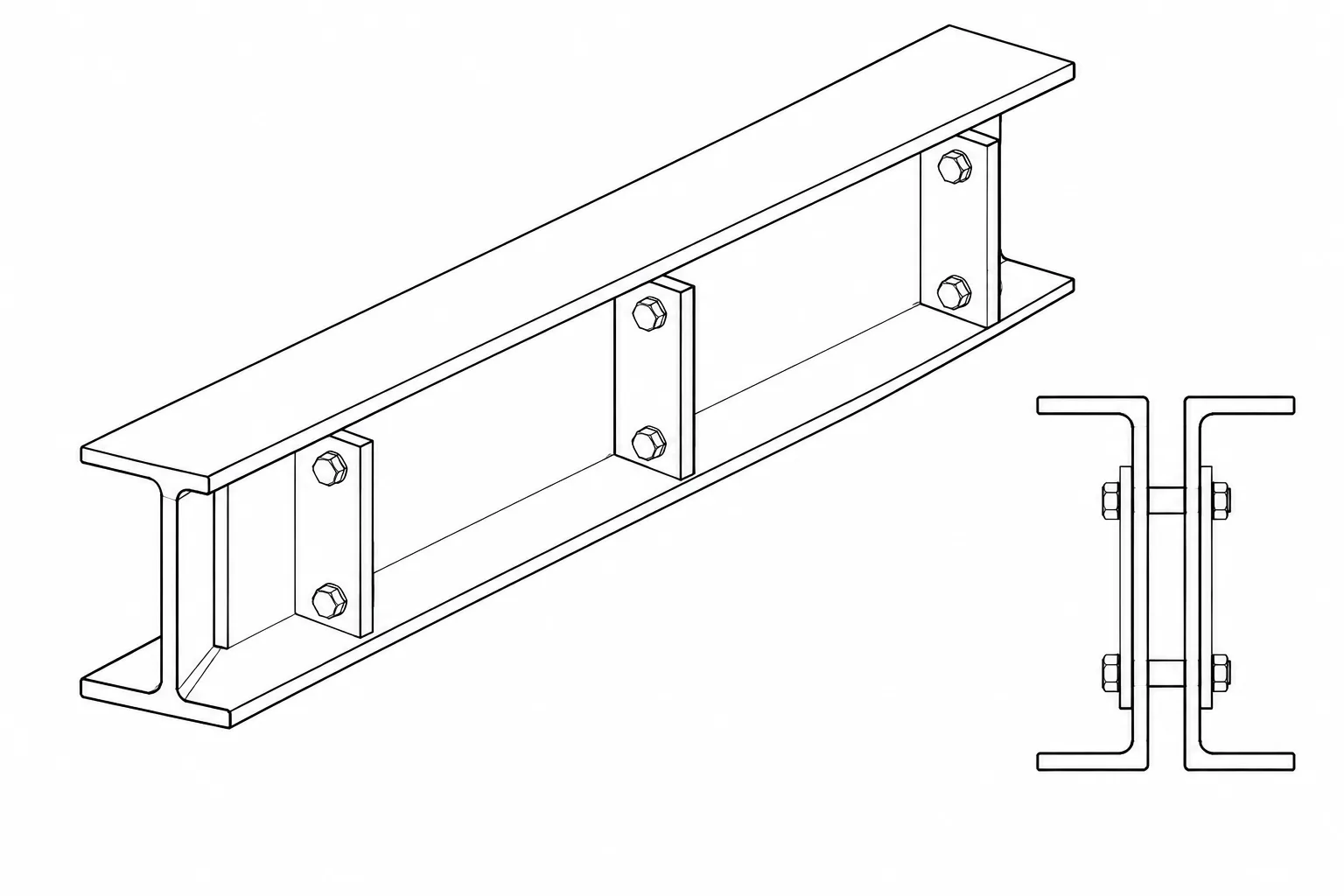
Back-to-Back Steel Channels: Spacing, Built-Up Properties, and Detailing Datums
Learn how back-to-back steel channels are oriented, spaced, modeled, dimensioned, and checked as built-up structural members.
Written by
-
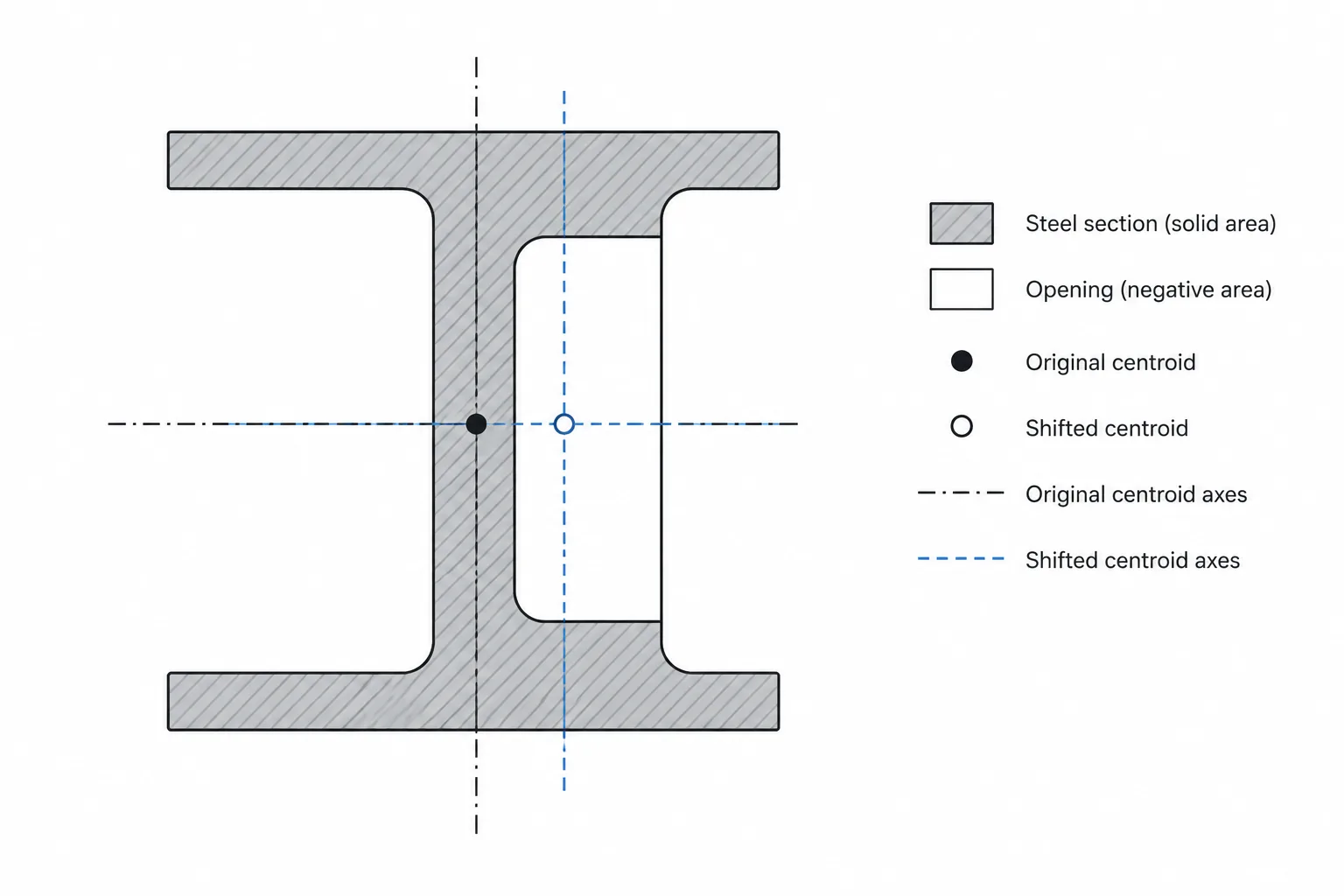
Calculating Steel Section Properties with Holes and Openings: A Practical CAD Workflow
Learn how holes and openings affect steel area, centroid, moment of inertia, and section modulus, with a practical CAD-based calculation workflow.
Written by
-
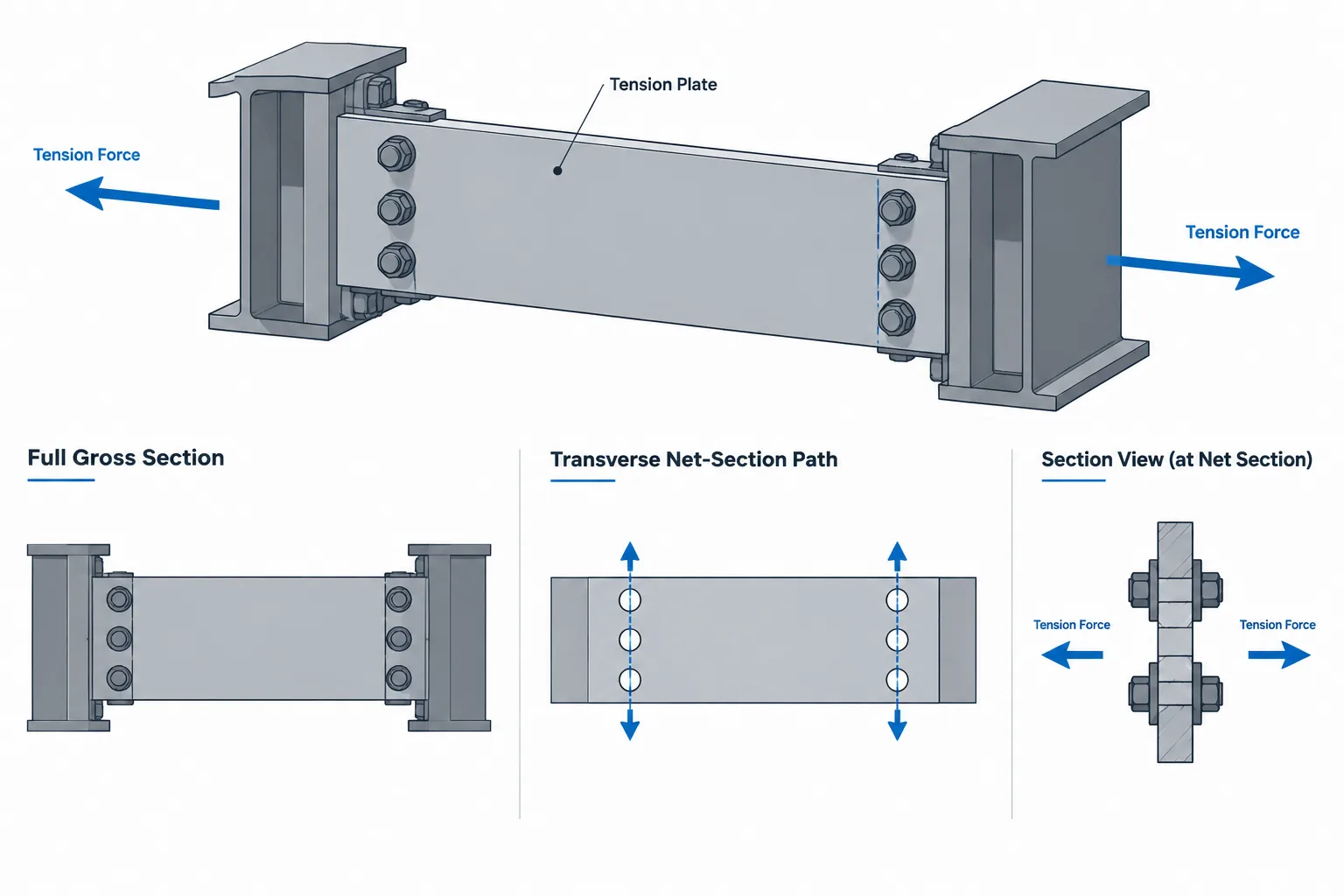
Gross Area, Net Area, and Effective Net Area in Steel Tension Members
Learn how gross area, net area, and effective net area differ in steel tension members, including bolt holes, staggered paths, shear lag, and CAD checks.
Written by
-
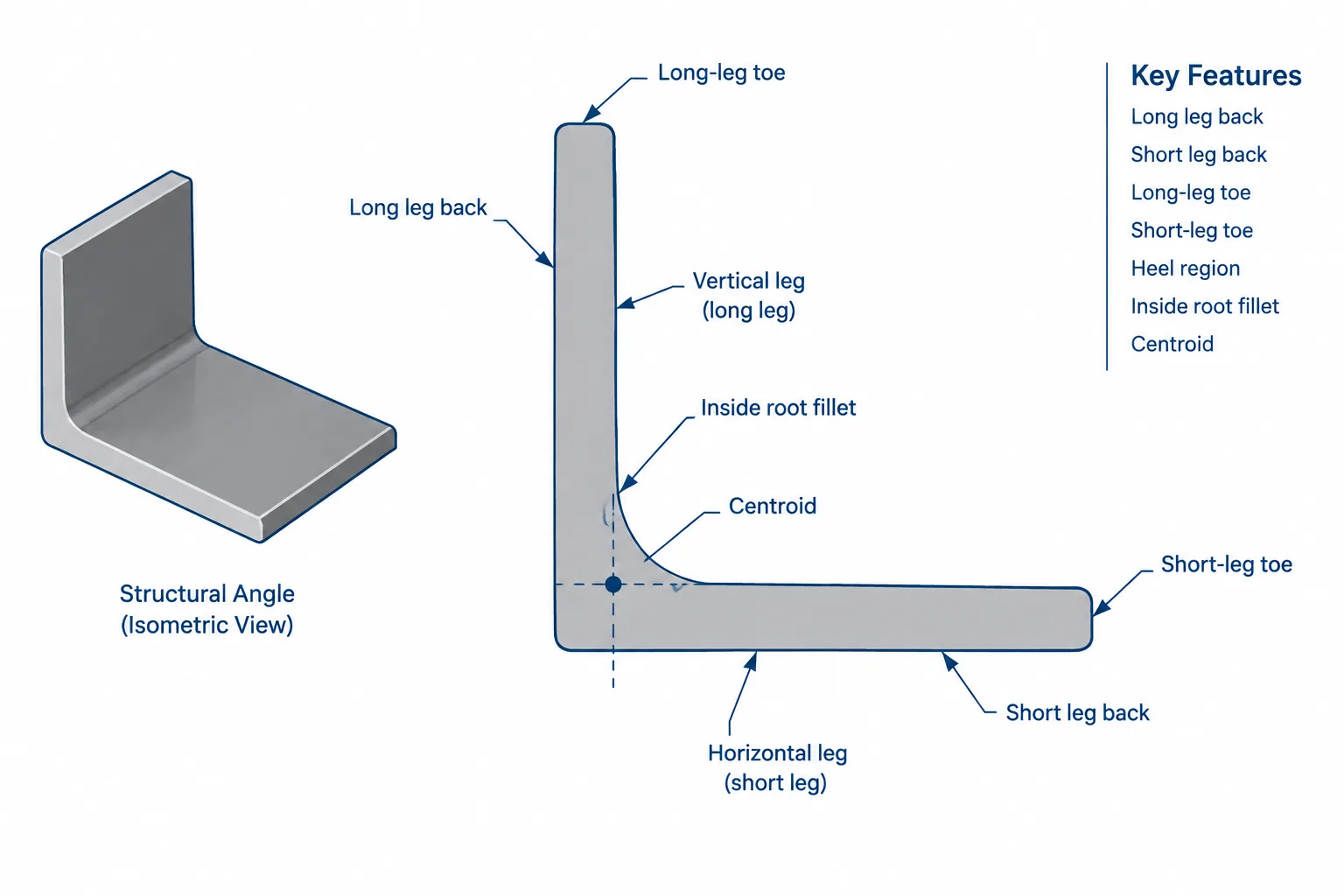
Steel Angle Heel, Toe, and Root Radius: Geometry, Datums, and CAD Detailing
Learn steel angle heel, toe, root-radius, back-of-leg, and centroid terminology for clearer drawings, connection layouts, and CAD shape models.
Written by
-
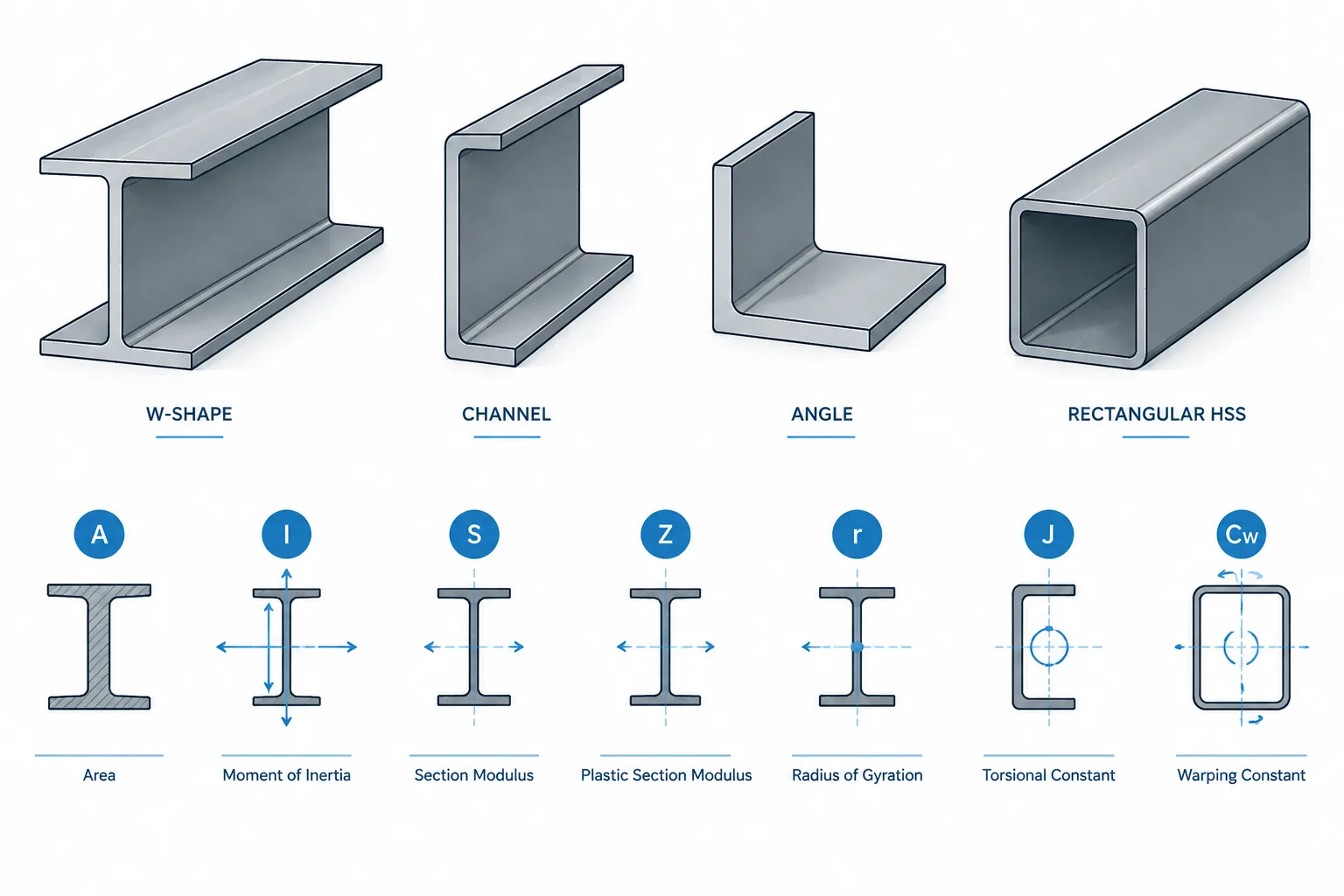
Units of Structural Steel Section Properties: A, I, S, Z, r, J, and Cw
Learn the units for steel section properties, how length powers control conversion, and how to check A, I, S, Z, r, J, Cw, and Q.
Written by
-
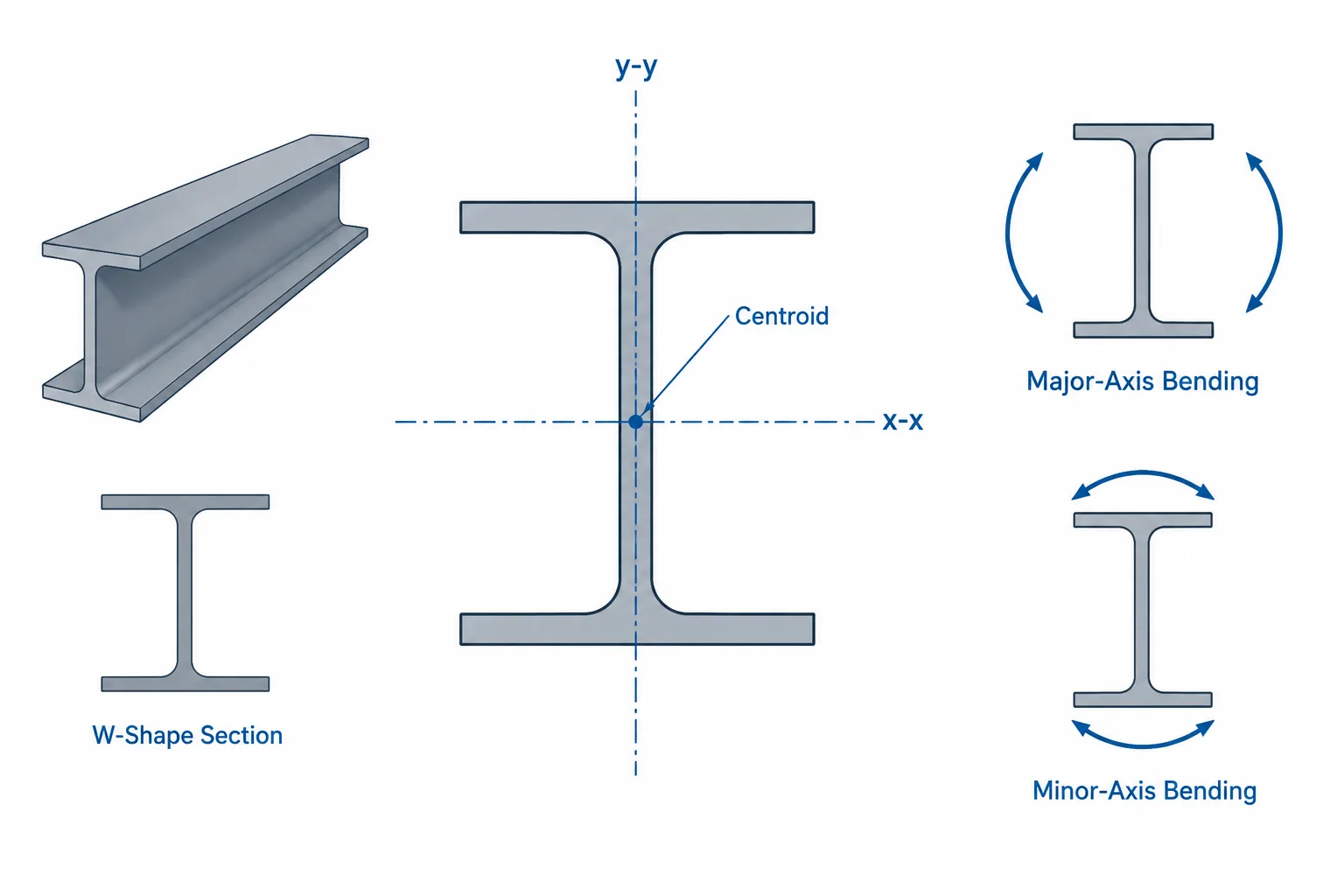
Strong-Axis vs. Weak-Axis Bending in Structural Steel Shapes: Reading Ix, Iy, Sx, and Sy
Learn how strong- and weak-axis bending relate to steel shape orientation, Ix, Iy, Sx, Sy, bracing, CAD models, and structural drawings.
Written by
-
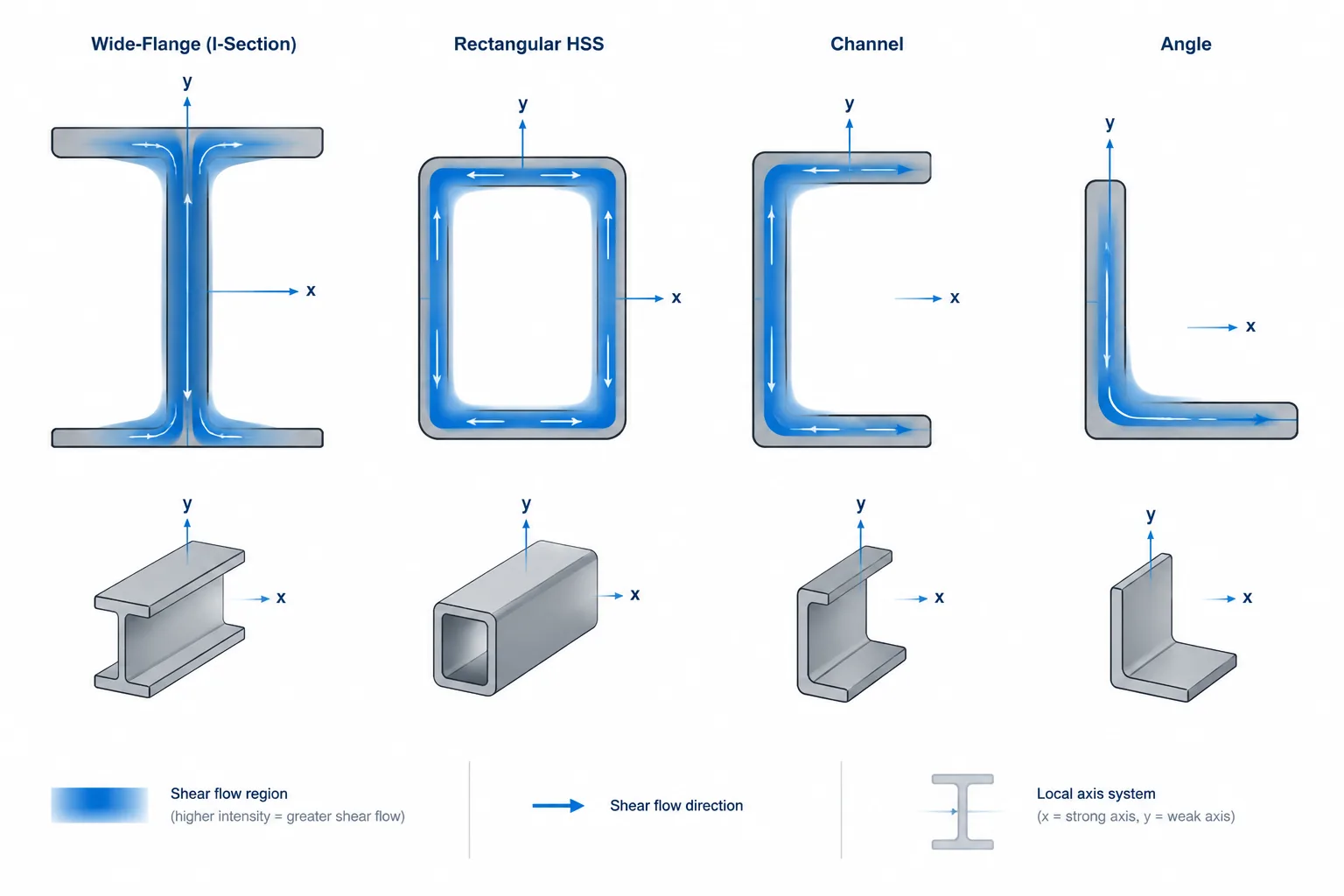
Shear Area in Structural Steel Sections: Av, Web Area, and Analysis-Model Checks
Learn how effective shear area differs from gross area and web area, how local axes affect Av, and what to verify in steel analysis models.
Written by
-
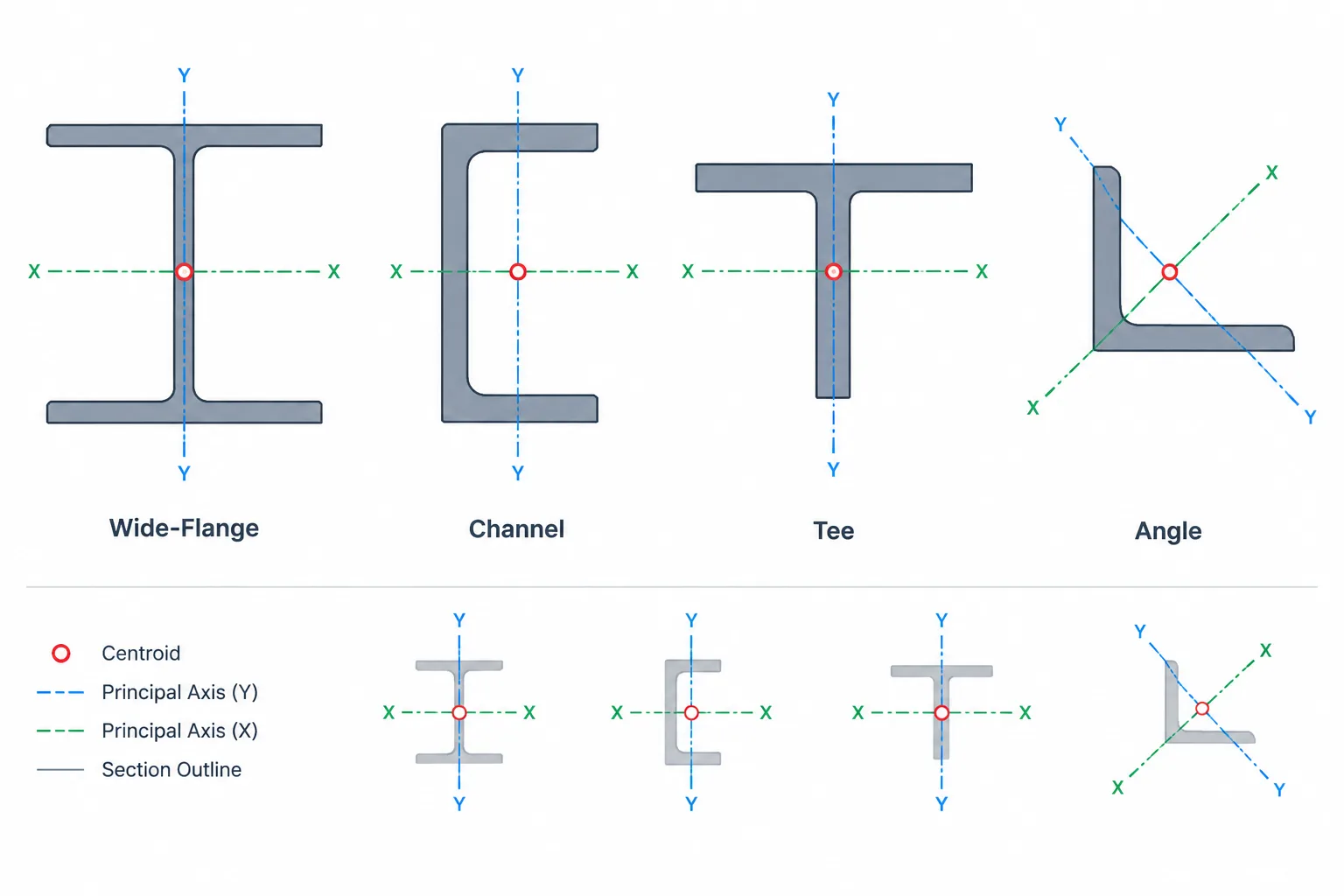
Principal Axes of Structural Steel Sections: Rotation, Ixy, and CAD Orientation
Learn how principal axes relate to centroidal axes, product of inertia, unsymmetric bending, steel shape tables, and CAD section orientation.
Written by
-
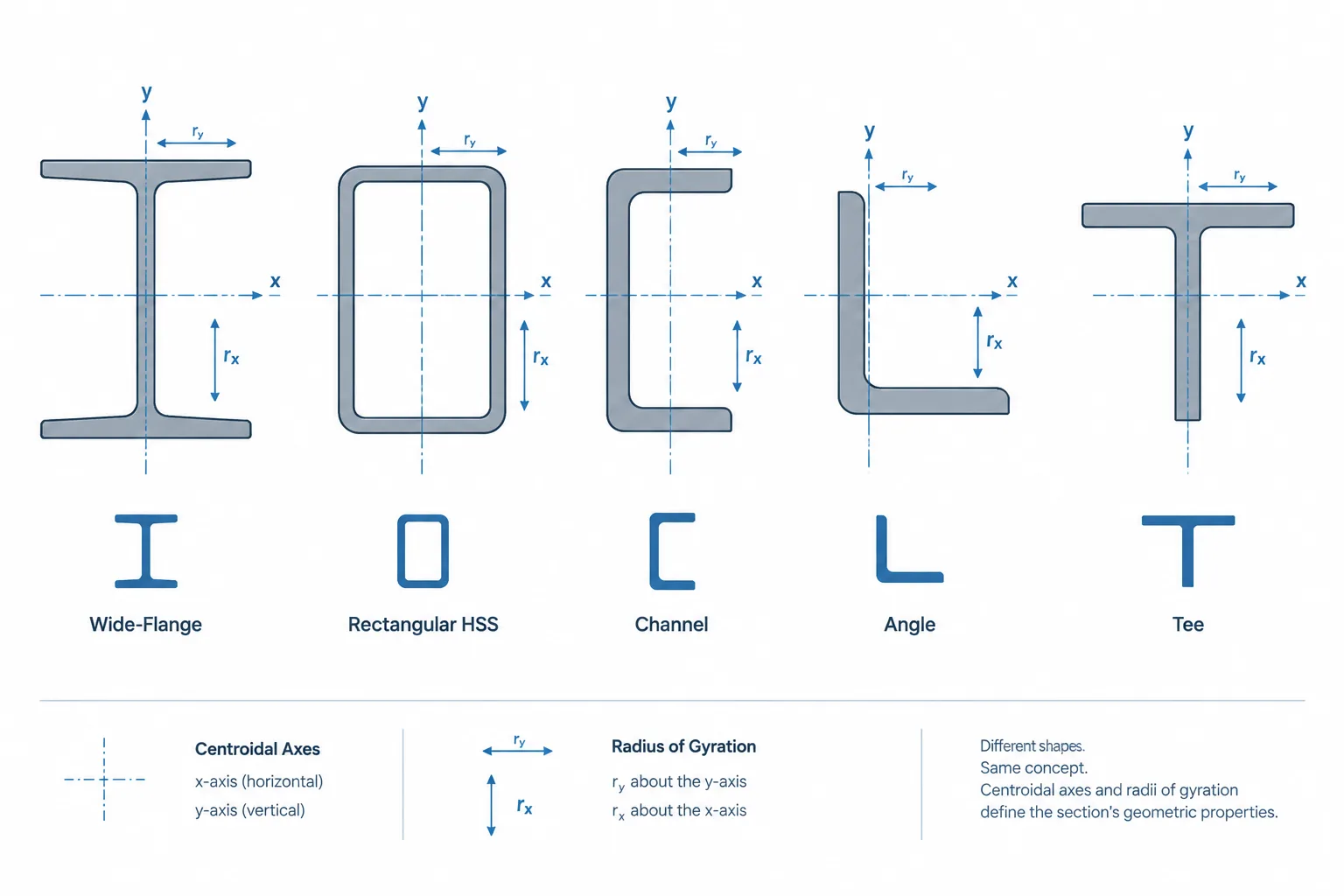
Radius of Gyration in Steel Shape Tables: Understanding rx, ry, and KL/r
Learn what radius of gyration means in steel shape tables, how rx and ry relate to area and moment of inertia, and how to avoid common KL/r and CAD axis errors.
Written by
-
Warping Constant Cw in Steel Shape Tables: What It Means and When It Matters
Understand the warping constant Cw in structural steel tables, how it differs from torsional constant J, and why units, shape geometry, and restraint matter.
Written by