The W27x336 is a wide-flange structural steel shape identified by its W-section designation. This reference presents the source dimensions and section data together with practical guidance for reading the entry, checking drawings, and using the associated CAD resource.
Use the listed properties as reference data for estimating, detailing, and preliminary coordination. Final member selection, connection design, stability checks, and code compliance require project-specific engineering review.
W Beam
refer to : AISC 16
the American Institute of Steel Construction (AISC) Specification for Structural Steel Buildings (AISC 360-16), which is the 2016 edition of the AISC Specification for Structural Steel Buildings. It provides guidelines and requirements for the design, fabrication, and erection of steel structures in the United States.
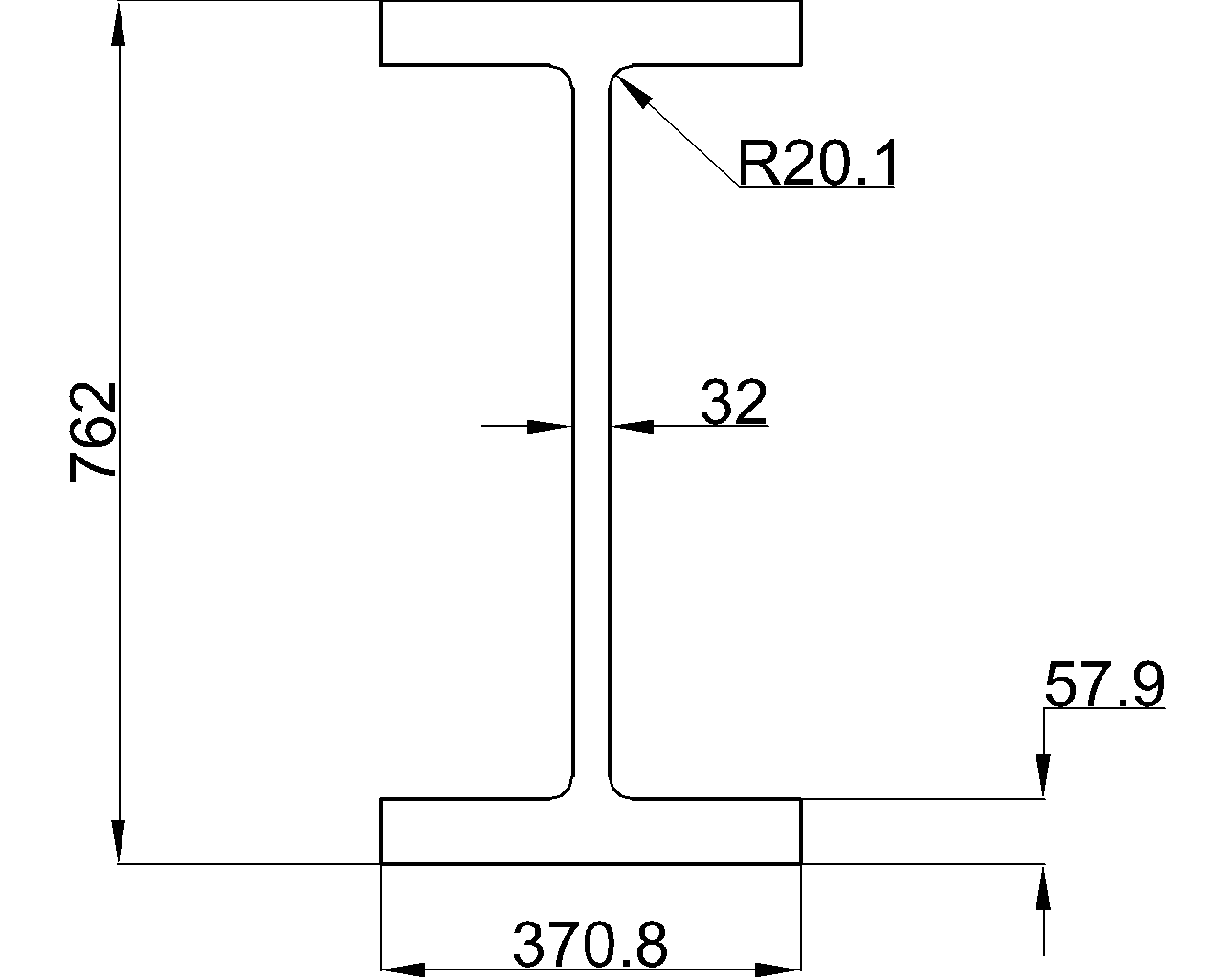
Depth : 762 mm
Width : 370.8 mm
Web Thickness : 32 mm
Flange Thickness : 57.9 mm
Root Fillet Radius : 20.1 mm
Sectional Area : 640 cm2
Unit Weight : 502.4 kg/m
How to read the W27x336 reference
The source entry identifies the shape as a W beam and provides its depth, flange width, web thickness, flange thickness, root fillet radius, sectional area, and unit weight. These properties describe the physical profile and provide common starting points for structural calculations, material takeoffs, and drawing coordination.
Dimensions and detailing
Depth and width help establish the member envelope in plans, elevations, framing layouts, and connection details. Web and flange thicknesses are important when coordinating bolts, welds, copes, stiffeners, bearing details, and adjacent framing. The root fillet region should also be considered when a connection or fitting detail approaches the flange-to-web transition.
Sectional area and unit weight
Sectional area is commonly used with material and member calculations, while unit weight supports preliminary steel takeoffs and handling estimates. These values should be read directly from the source entry and verified against the project’s governing material specification and design documents before procurement or fabrication.
CAD and drafting workflow
The downloadable DWG resource can support layout and detailing workflows. Before issuing a drawing, confirm the section orientation, insertion scale, units, member centerlines, end conditions, and connection geometry. For related research, see the site’s references on W shapes, steel section properties, structural steel connections, and CAD/DWG detailing.
W27x336 FAQ
What type of section is W27x336?
W27x336 is a W, or wide-flange, structural steel beam designation. The source entry provides its profile dimensions and reference properties.
What information is listed for this shape?
The entry lists depth, width, web thickness, flange thickness, root fillet radius, sectional area, and unit weight, along with an AISC reference and a DWG download.
How should the W27x336 data be used in design?
Use the listed data as reference information for coordination and preliminary engineering work. Member selection and final design must account for the complete project loading, support conditions, stability requirements, connections, materials, and governing design criteria.
Why does the root fillet matter?
The root fillet is the curved transition between the web and flange. It can affect fit-up and detailing where plates, clips, stiffeners, or connection components approach that transition.
Is the DWG file ready for fabrication?
The DWG is a drafting reference, not a substitute for project-specific fabrication documentation. Check units, scale, orientation, tolerances, connections, and required fabrication notes before using geometry in an issued drawing.