Tag: steel detailing
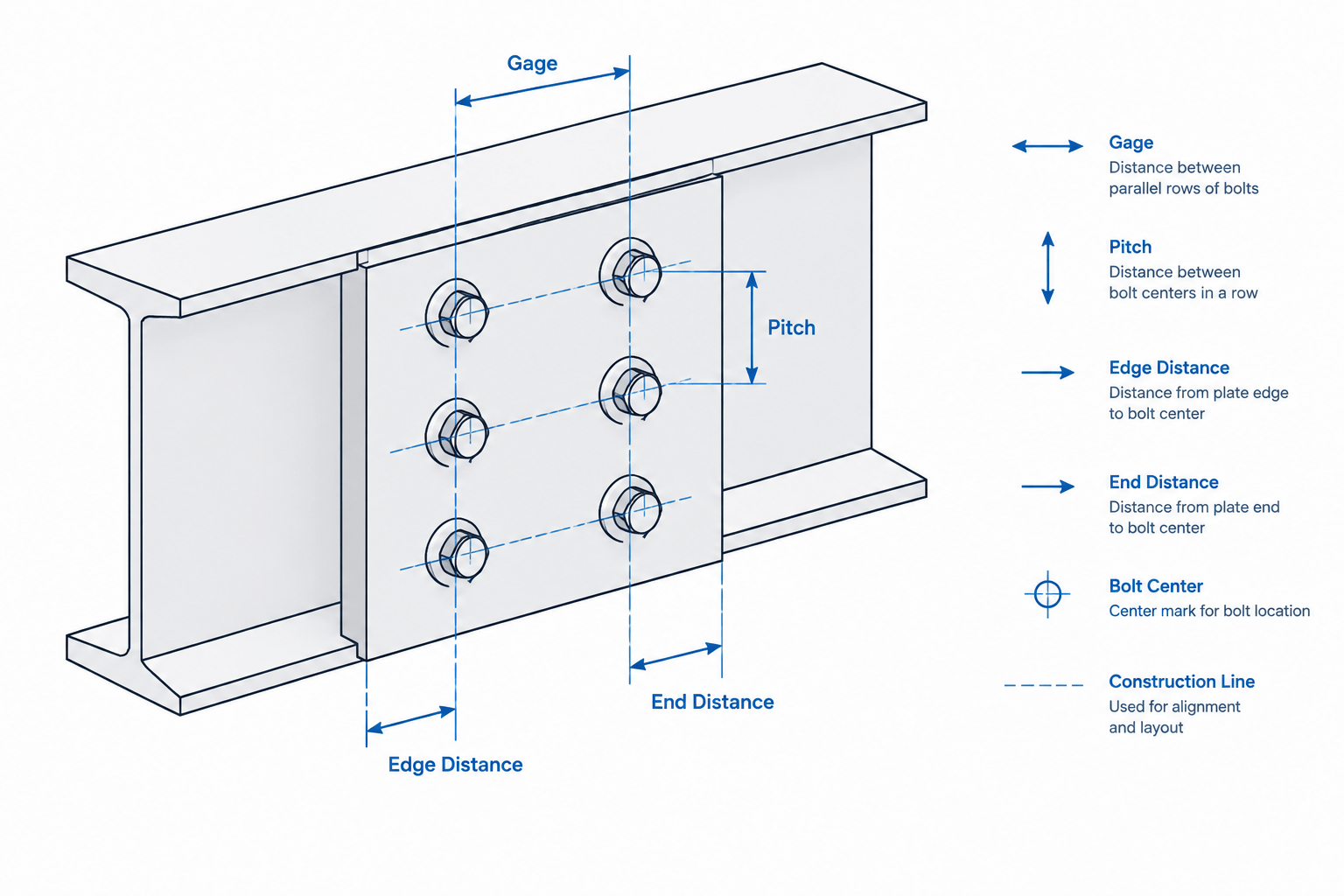
Bolt Layout Terminology in Steel Detailing: Gage, Pitch, Edge Distance, and End Distance
Learn how gage, pitch, edge distance, end distance, stagger, and hole spacing are interpreted in structural steel detailing and CAD drawings.
Written by
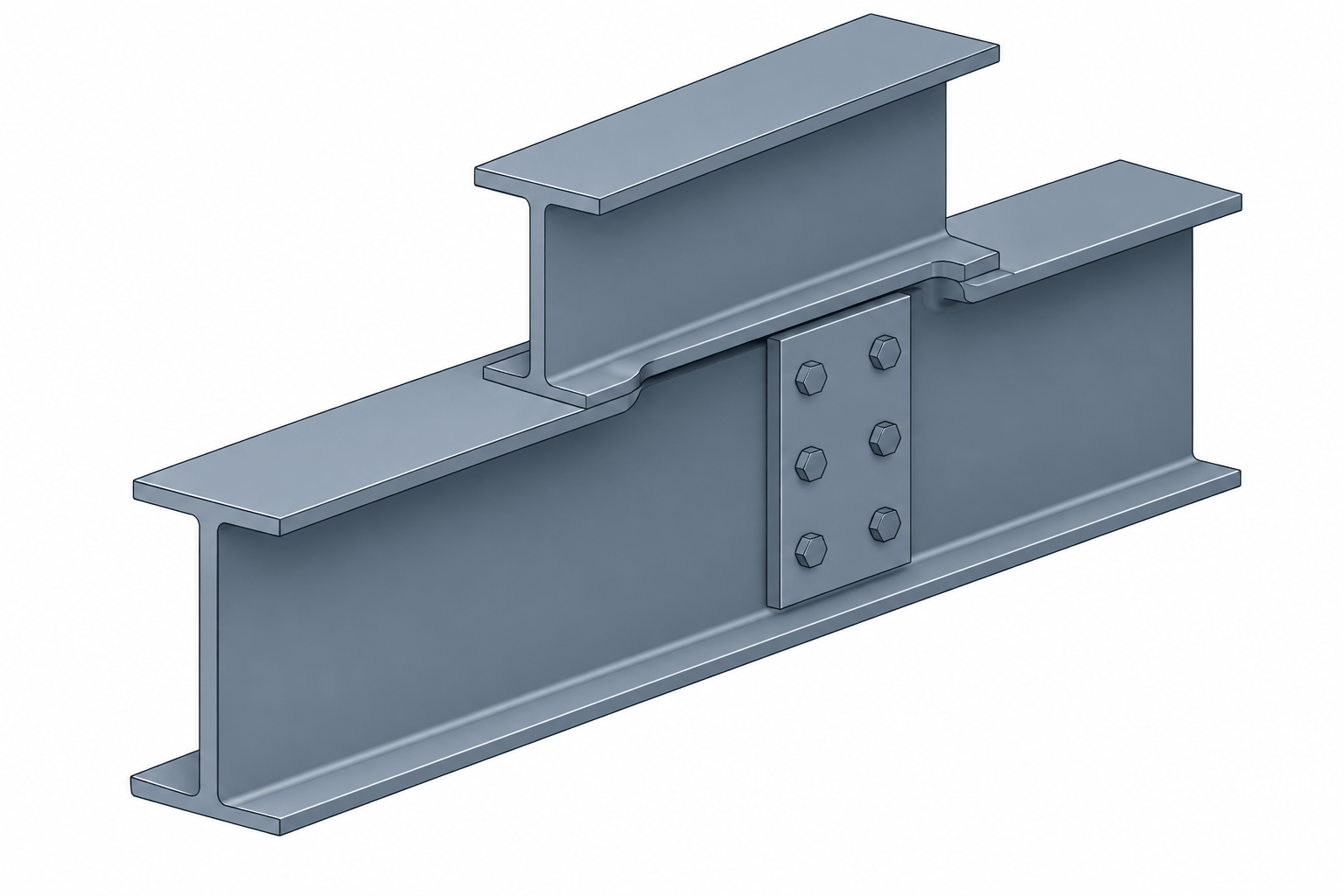
Beam Copes in Structural Steel Detailing: Geometry, Dimensions, and Drawing Practice
Learn how beam copes are represented and dimensioned in structural steel drawings, including top, bottom, and double copes, corner radii, clearances, and CAD checks.
Written by
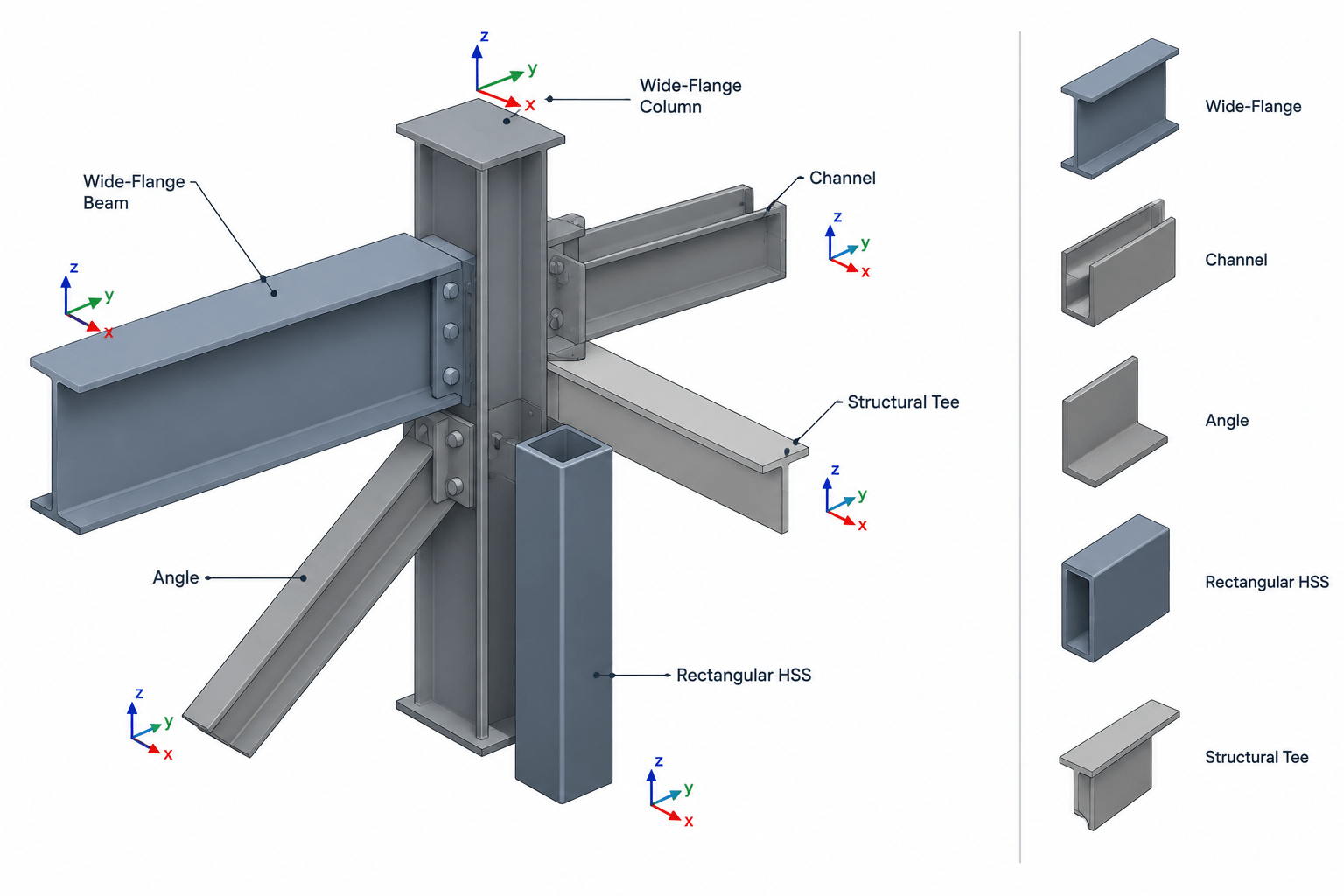
Steel Member Orientation in Plans, Elevations, Sections, and CAD Models
Learn how roll, slope, skew, local axes, and section rotation define steel member orientation in drawings and CAD models.
Written by
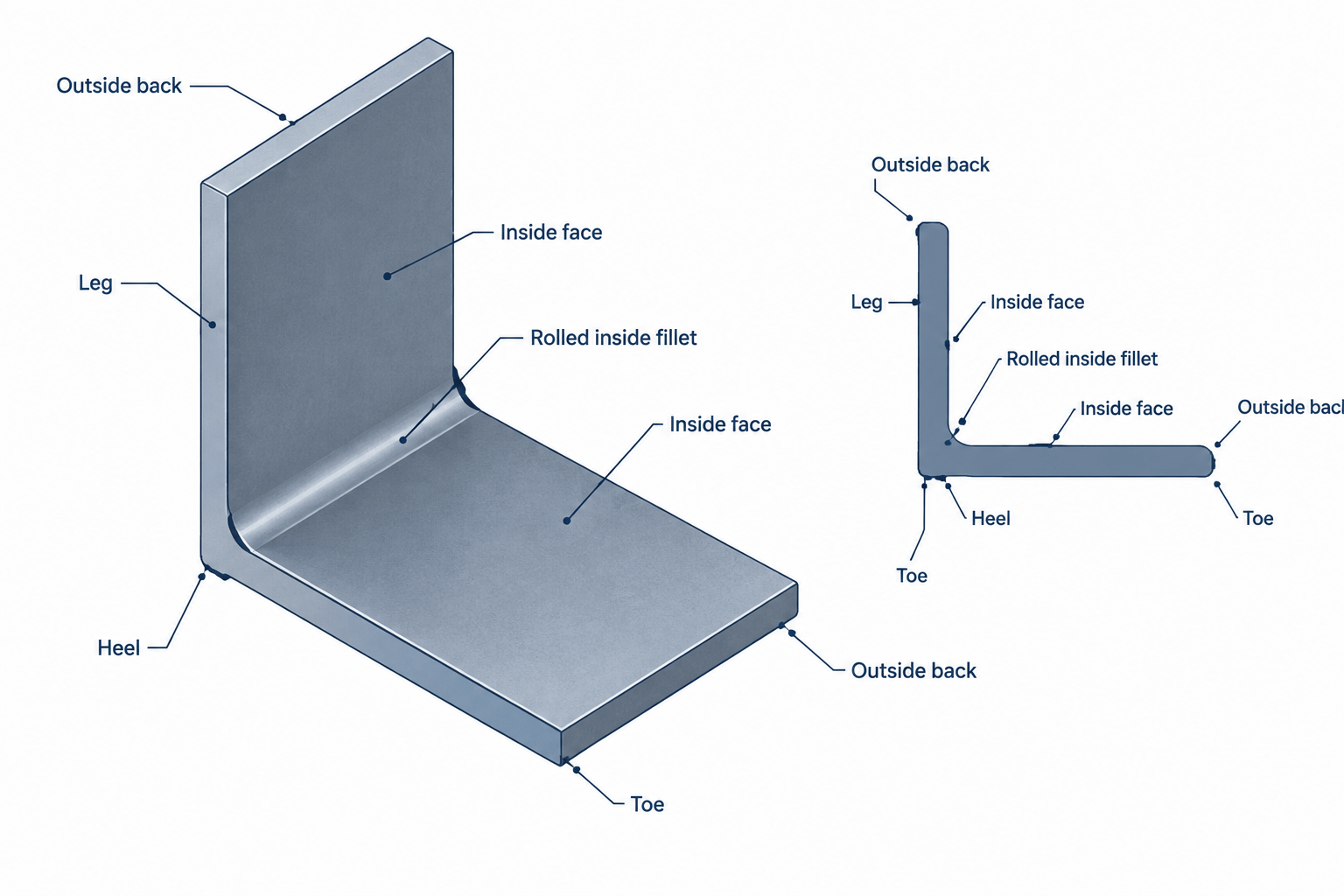
Steel Angle Terminology: Legs, Toes, Heel, Fillet, and Orientation
Learn structural steel angle terminology, including legs, toes, heel, backs, fillet, connected legs, orientation, and practical CAD detailing checks.
Written by
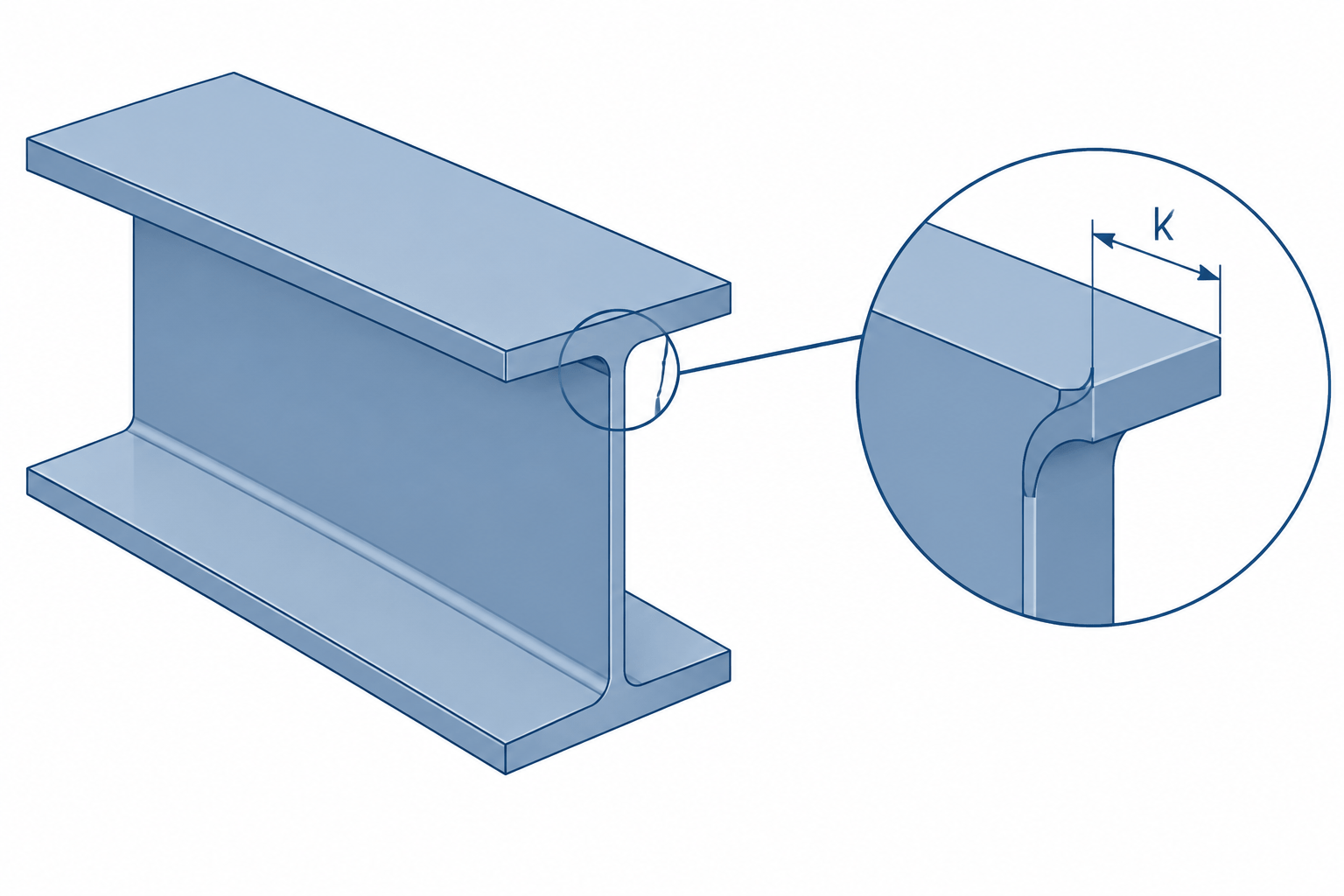
Steel Shape k Dimensions: Rolled Fillets, Detailing Clearance, and CAD Geometry
Learn what the steel shape k dimension represents and how rolled fillets affect connection detailing, clearances, stiffeners, and CAD outlines.
Written by
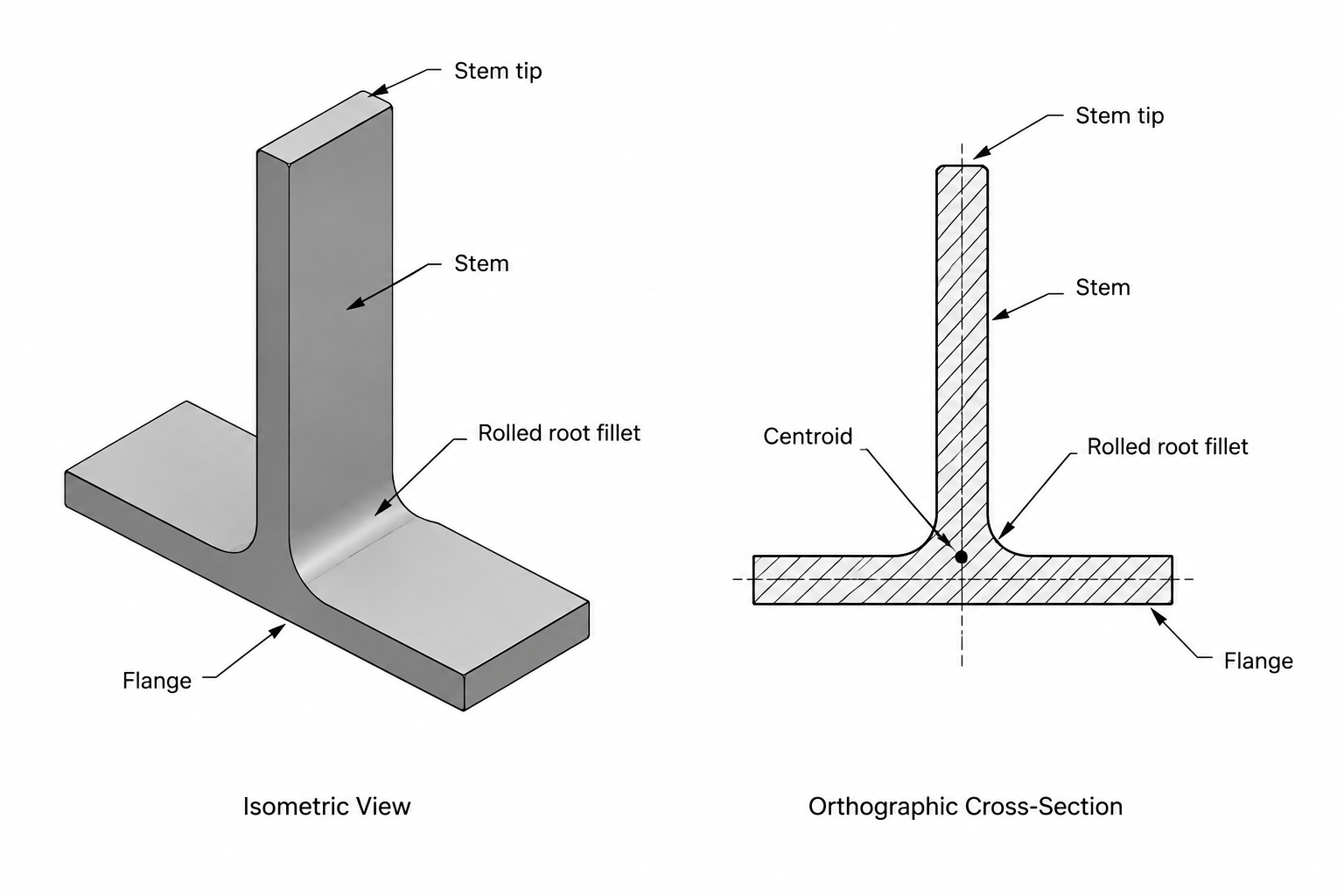
Structural Tee (WT) Shapes: Designations, Orientation, and Detailing Geometry
Learn how structural tee WT shapes are designated, oriented, detailed, and modeled, including centroid location, cut edges, fillets, and connection geometry.
Written by
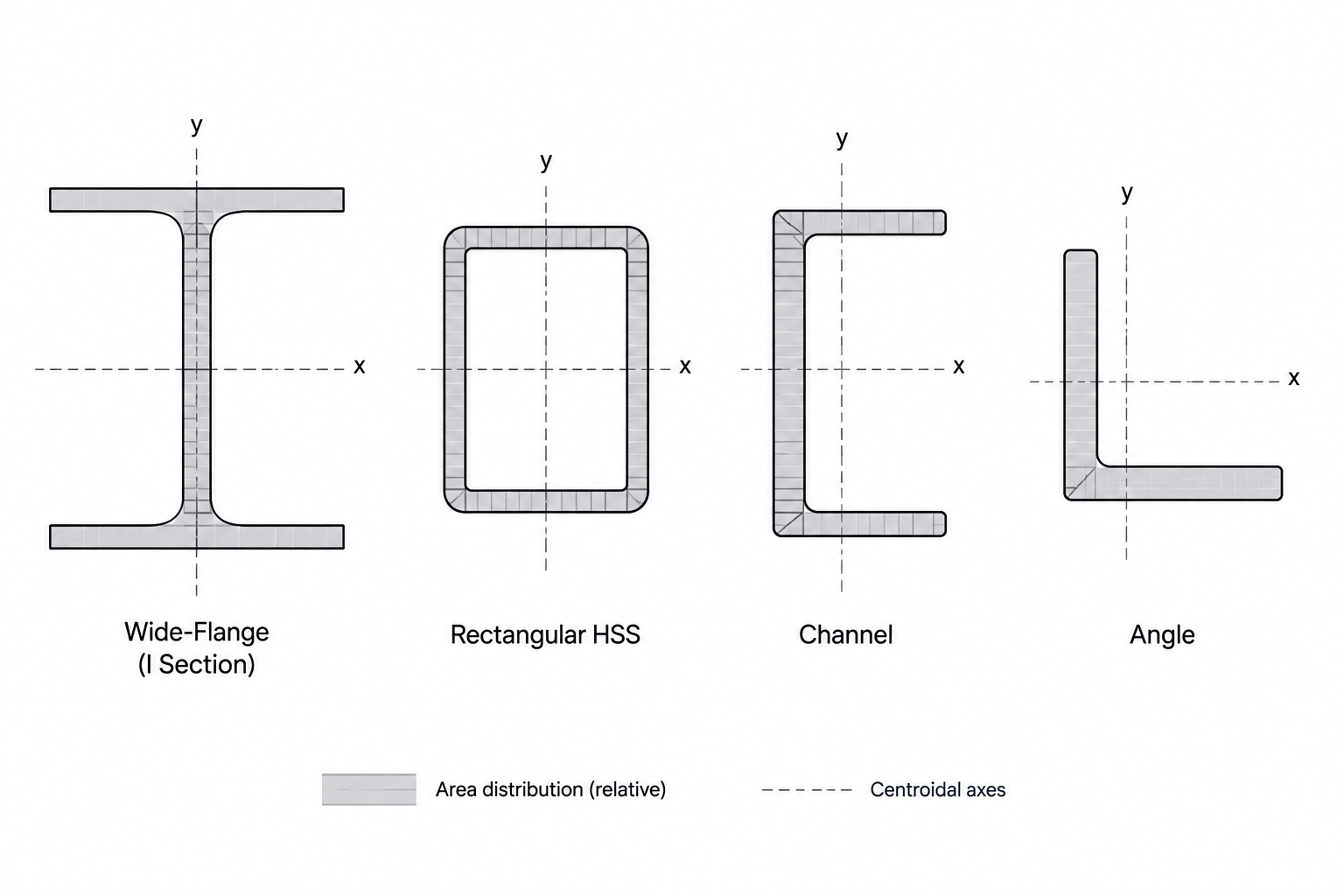
Radius of Gyration in Steel Shape Tables: Understanding rx, ry, and Slenderness
Learn what rx and ry mean in structural steel shape tables, how radius of gyration relates to moment of inertia, and why it matters in column slenderness.
Written by
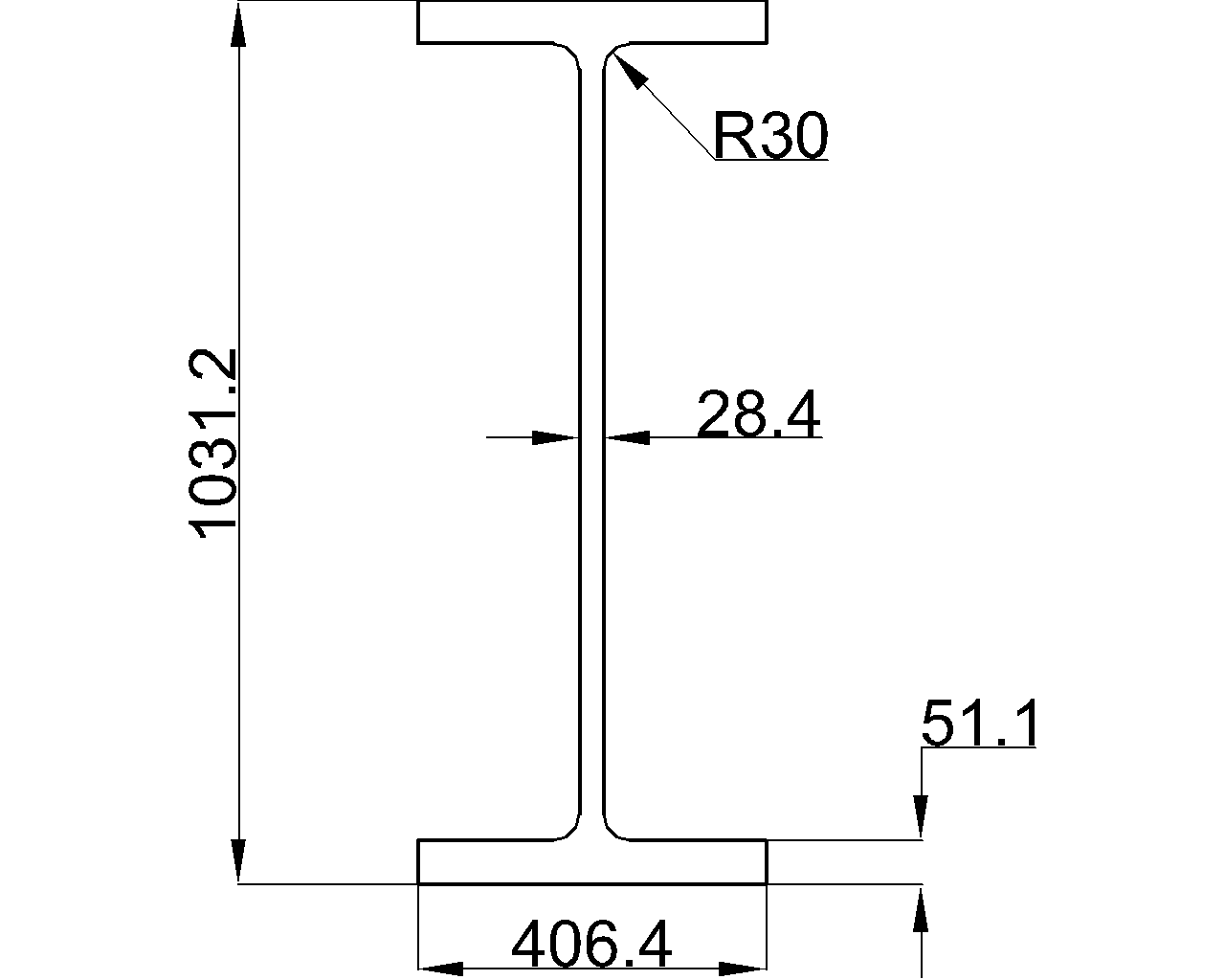
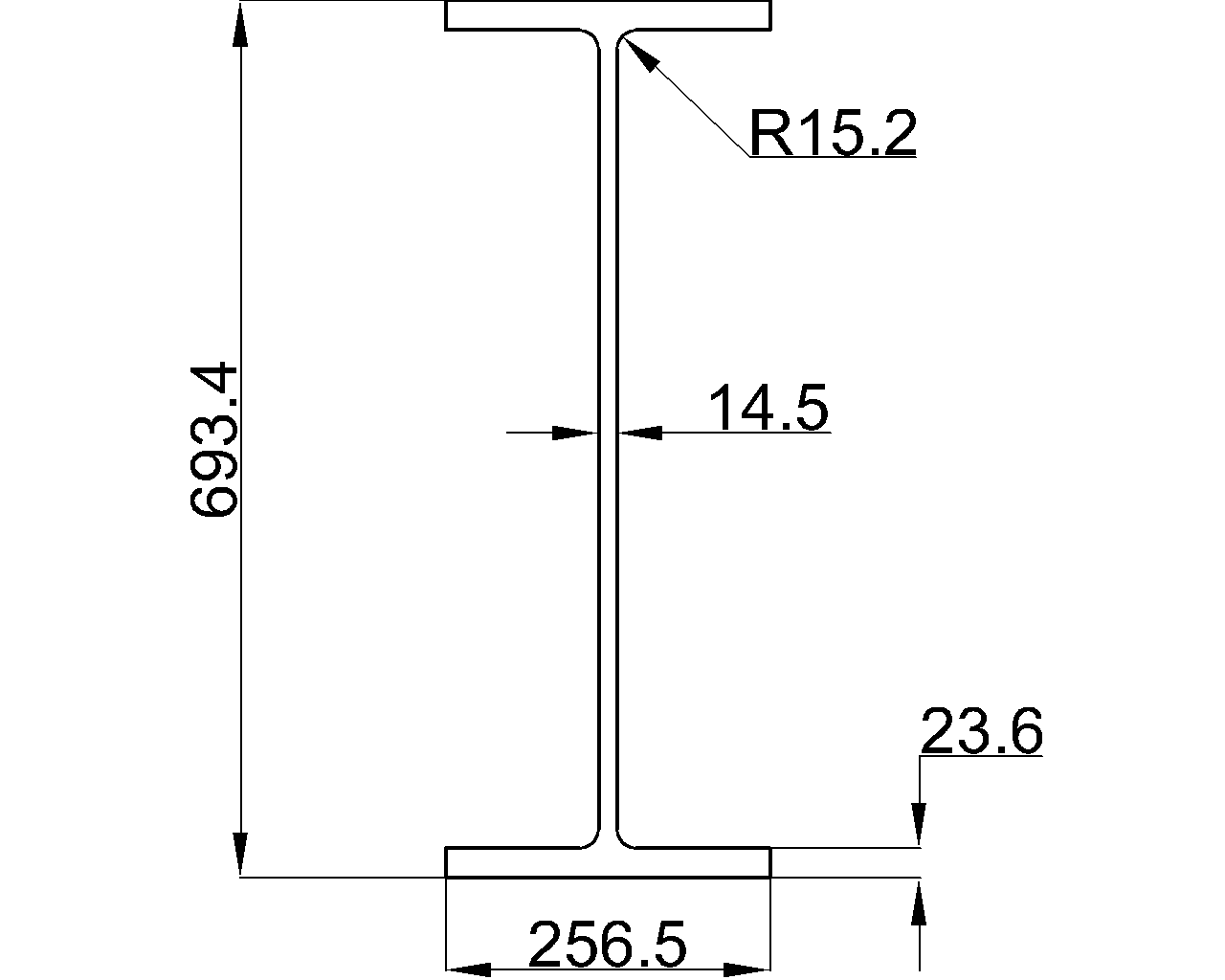
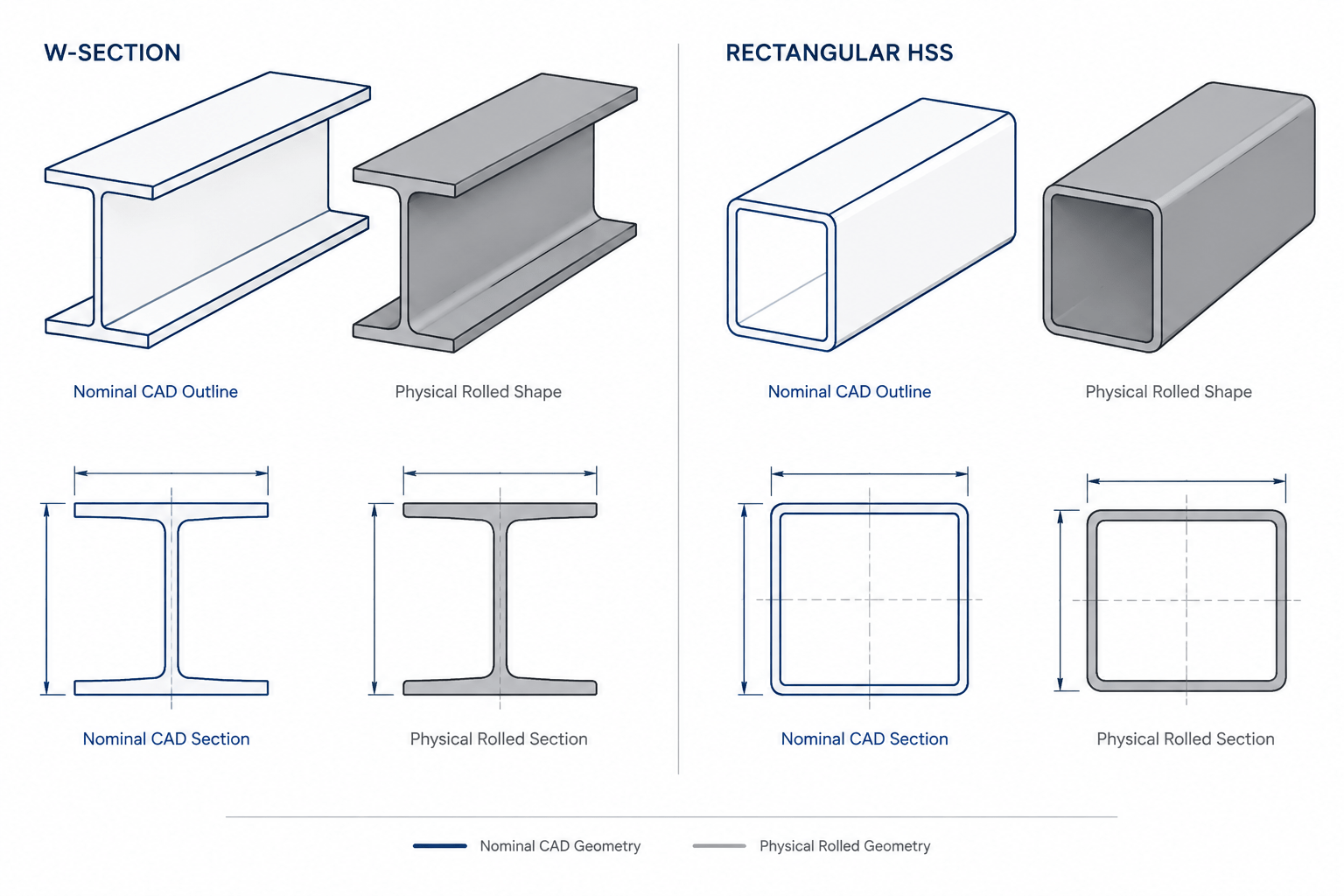
Nominal vs. Actual Structural Steel Dimensions: A Guide for CAD and Detailing
Learn how nominal steel dimensions, mill tolerances, fillets, HSS corners, and field conditions affect structural detailing and CAD geometry.
Written by
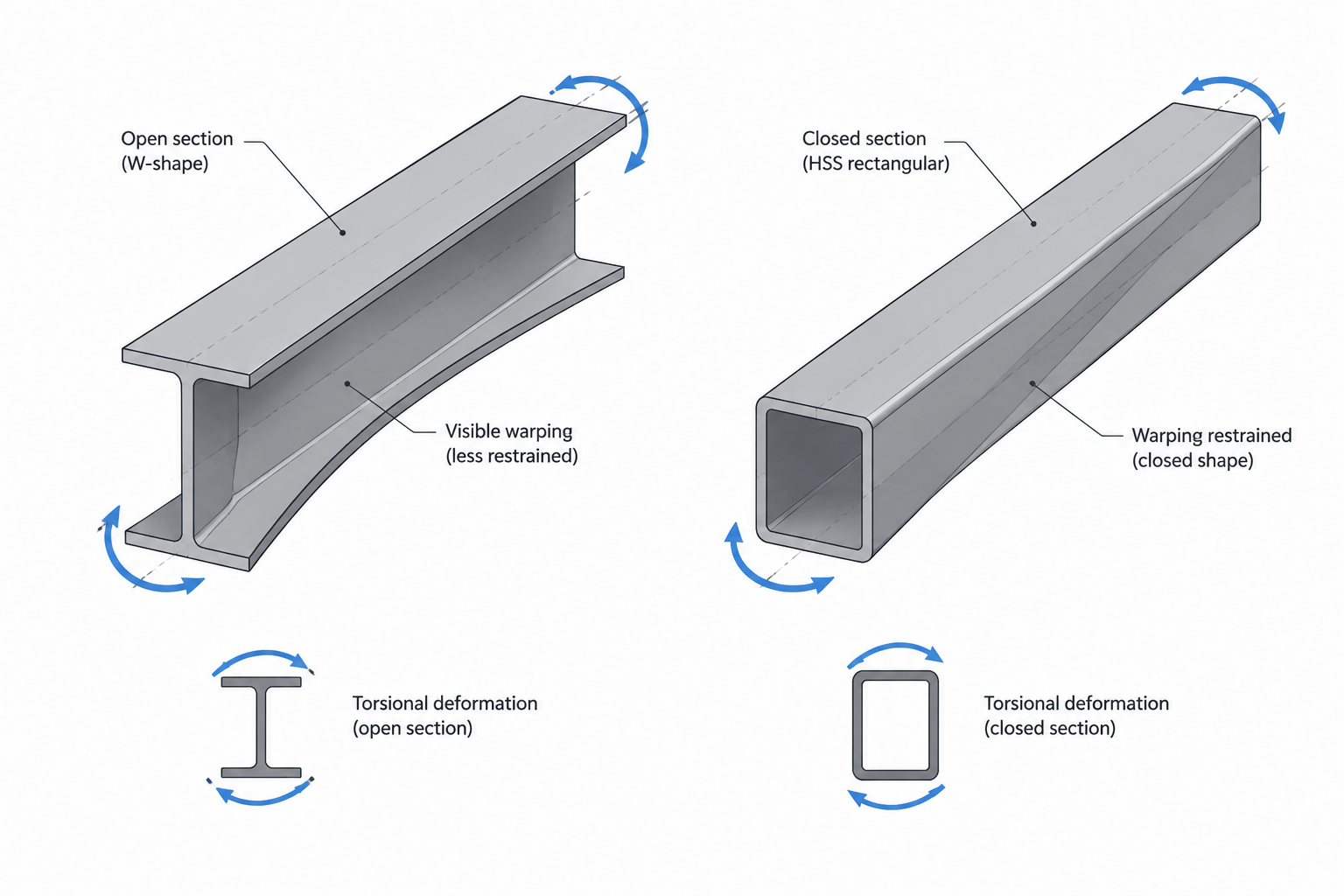
Torsional Constant J and Warping Constant Cw in Steel Shape Tables
Learn what J and Cw mean in structural steel shape tables, how open and closed sections resist torsion, and how to use these properties in design and CAD workflows.
Written by
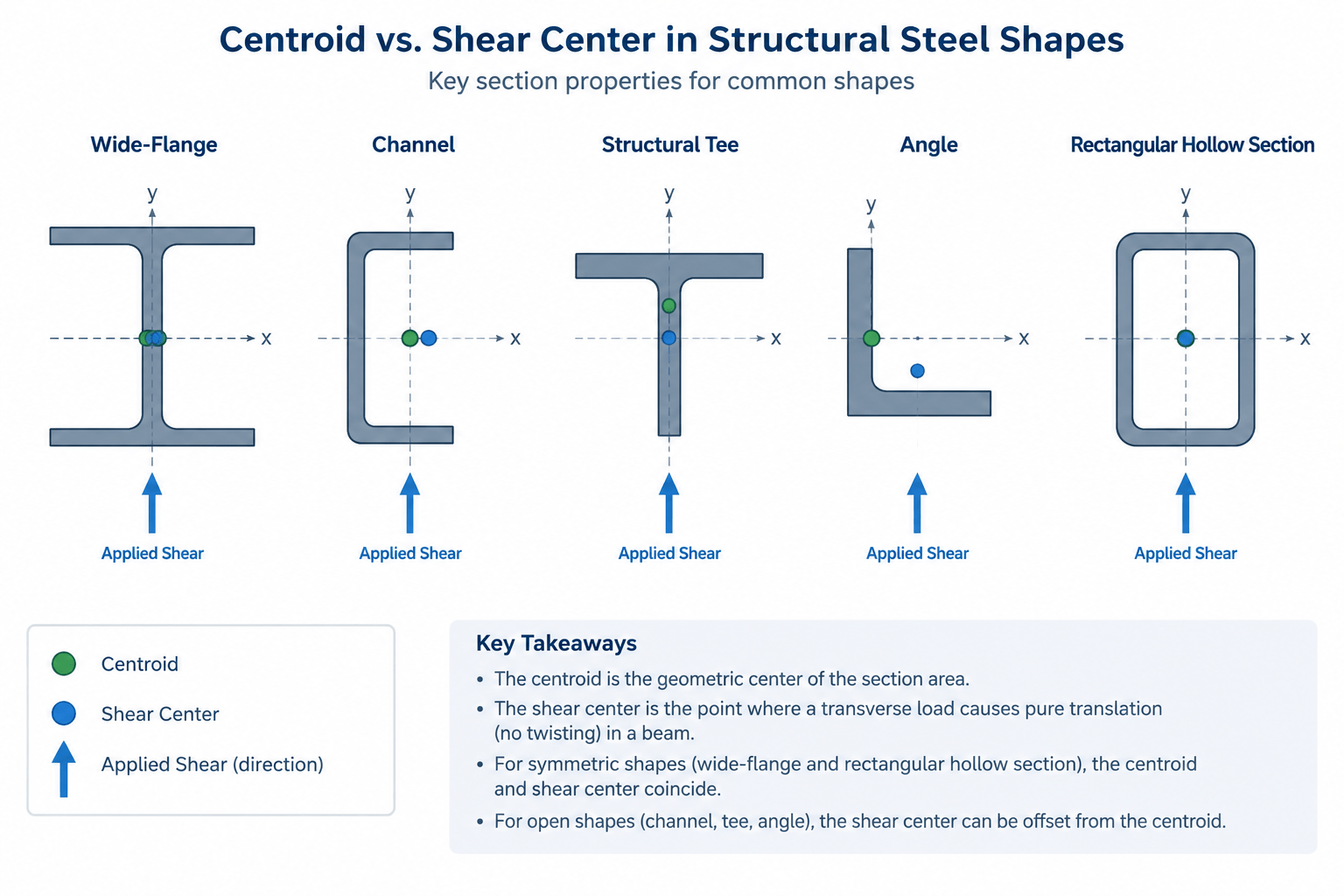
Shear Center vs. Centroid in Structural Steel Shapes
Learn how the shear center differs from the centroid in W-shapes, channels, tees, angles, and HSS, with practical detailing and CAD guidance.
Written by