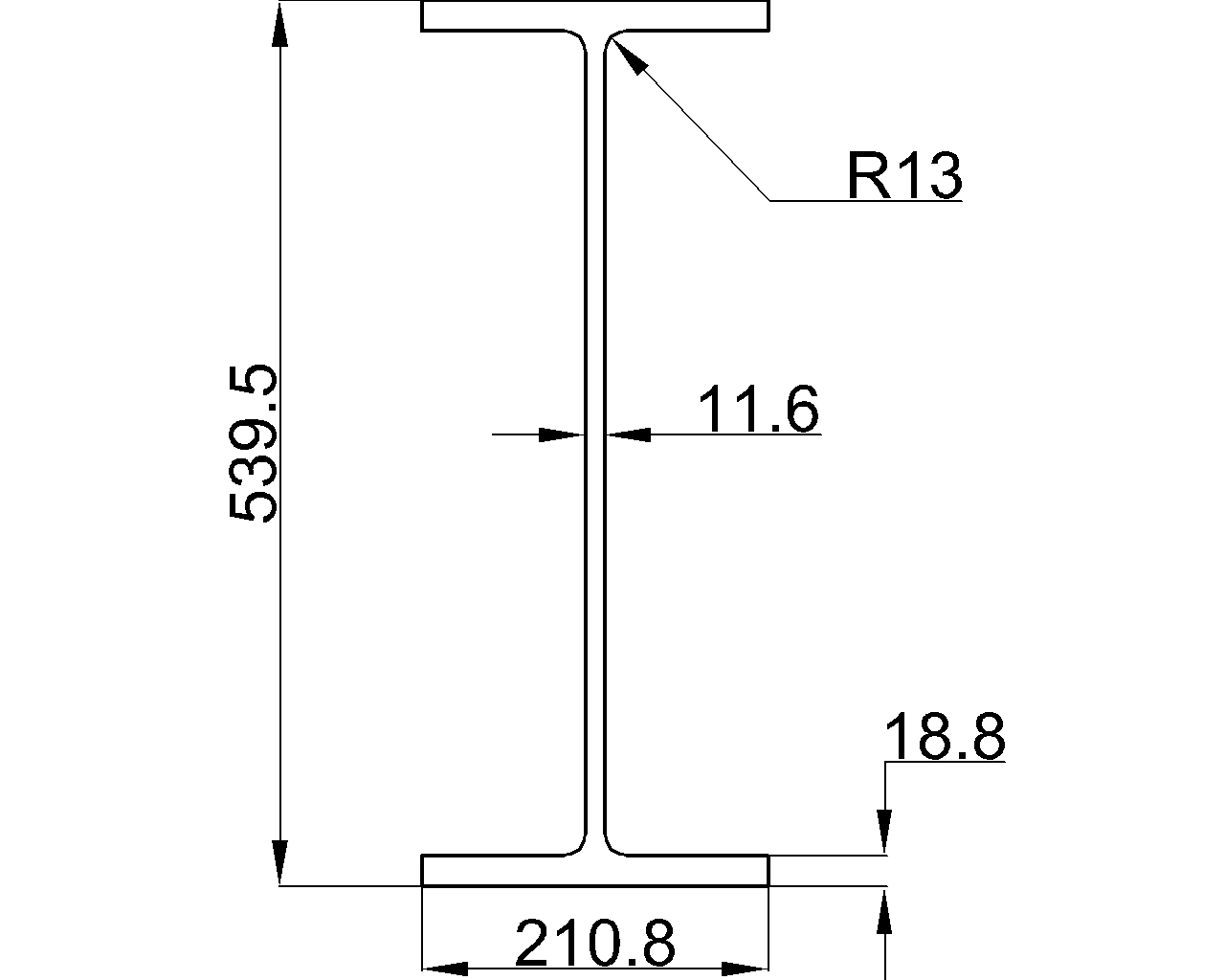
UB 533x210x109 is a universal beam reference for users who need to check the published profile data and coordinate it with a CAD workflow. The source block below retains the stated dimensions, root fillet radius, sectional area, unit weight, standard reference, and DWG download.
Use this page as a profile-identification and drafting aid. For design or fabrication, confirm that the selected section, material, tolerances, member orientation, and connection requirements match the governing project documents.
UB 533x210x109
Universal Beams
refer to : EN 10365:2017
a European standard that defines the dimensions, tolerances, and sectional properties for hot-rolled steel channels, I-beams, and H-beams used in construction and engineering. It ensures uniformity and compatibility across European structural steel products.
Dimension : 539.5×210.8×11.6×18.8
Depth : 539.5 mm
Width : 210.8 mm
Web Thickness : 11.6 mm
Flange Thickness : 18.8 mm
Root Fillet Radius : 13 mm
Sectional Area : 138.9 cm2
Unit Weight : 109 kg/m
How to read the UB designation
The designation UB 533x210x109 identifies a particular universal beam profile. It is a section name rather than a substitute for the detailed dimensions listed in the source data. When preparing drawings, schedules, or models, use the published depth, width, web thickness, flange thickness, and root fillet radius rather than deriving geometry from the designation alone.
Understanding the section geometry
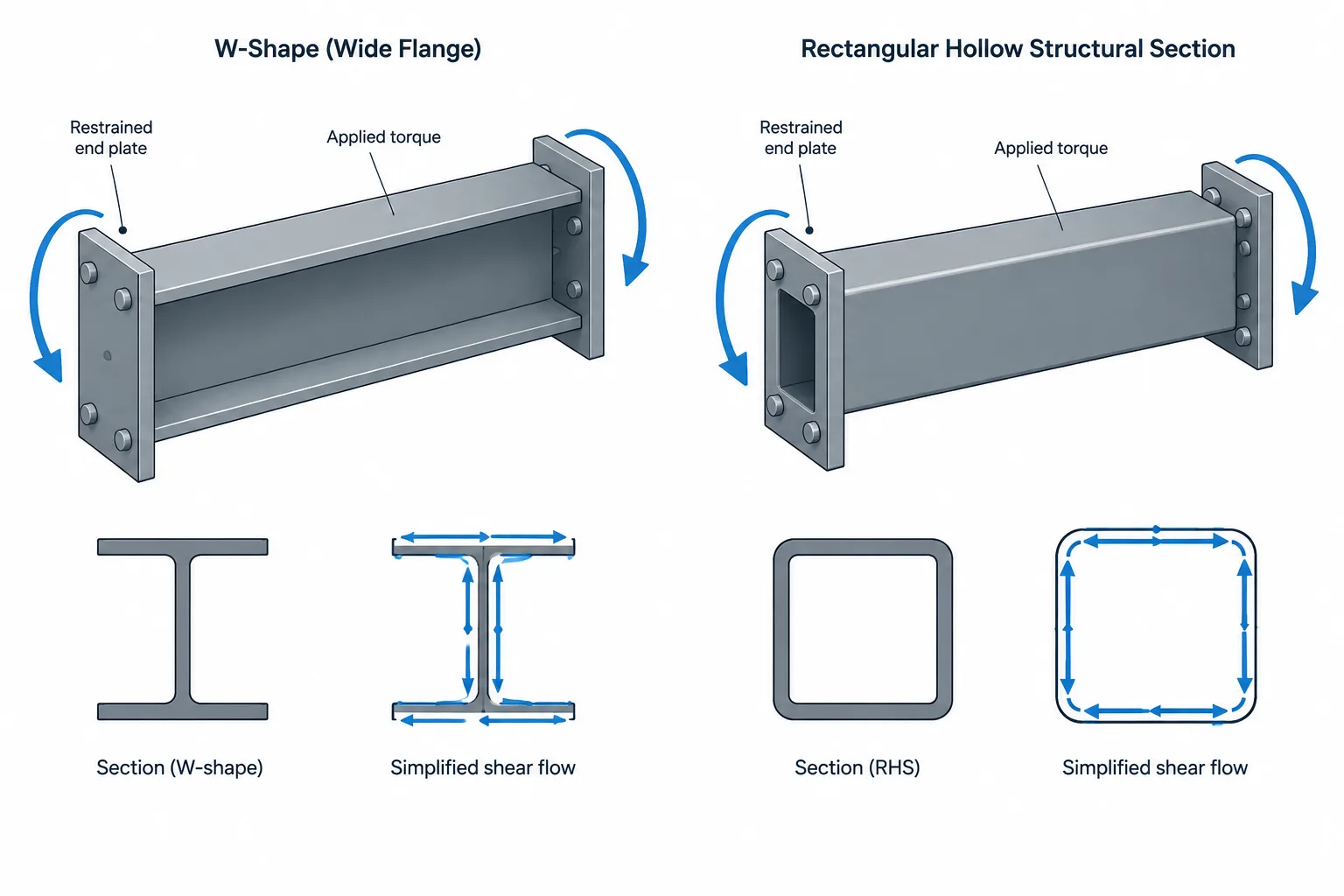
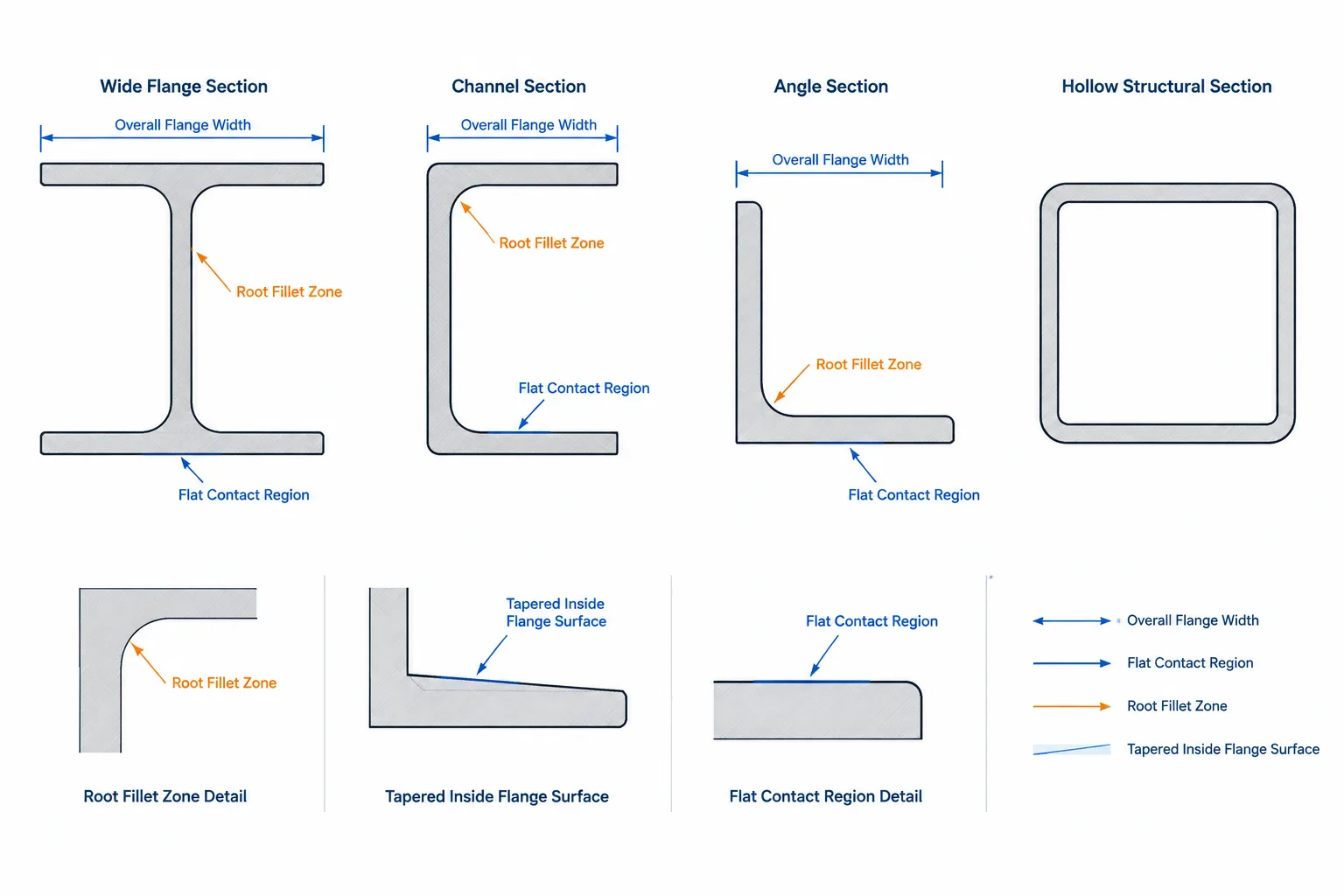
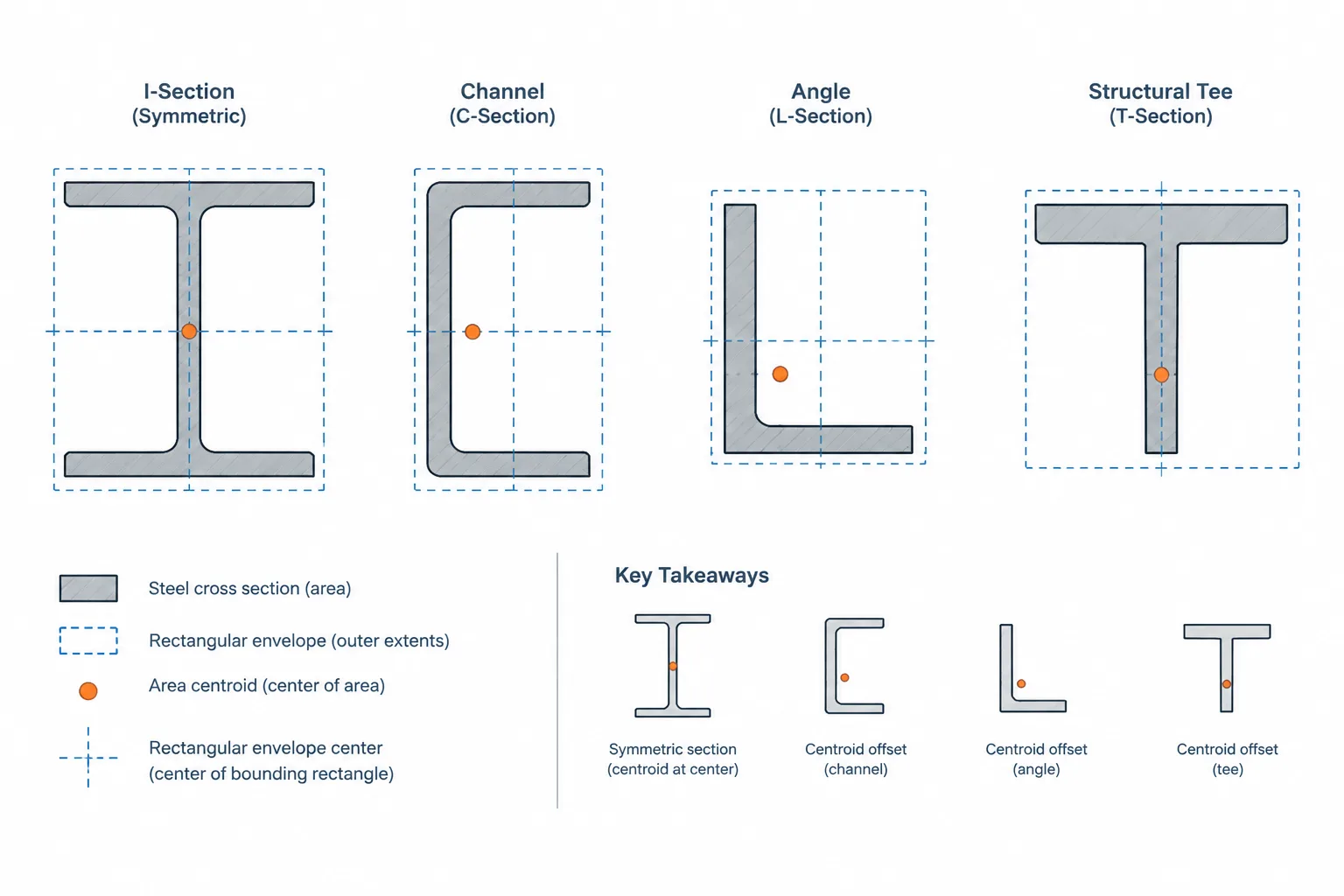
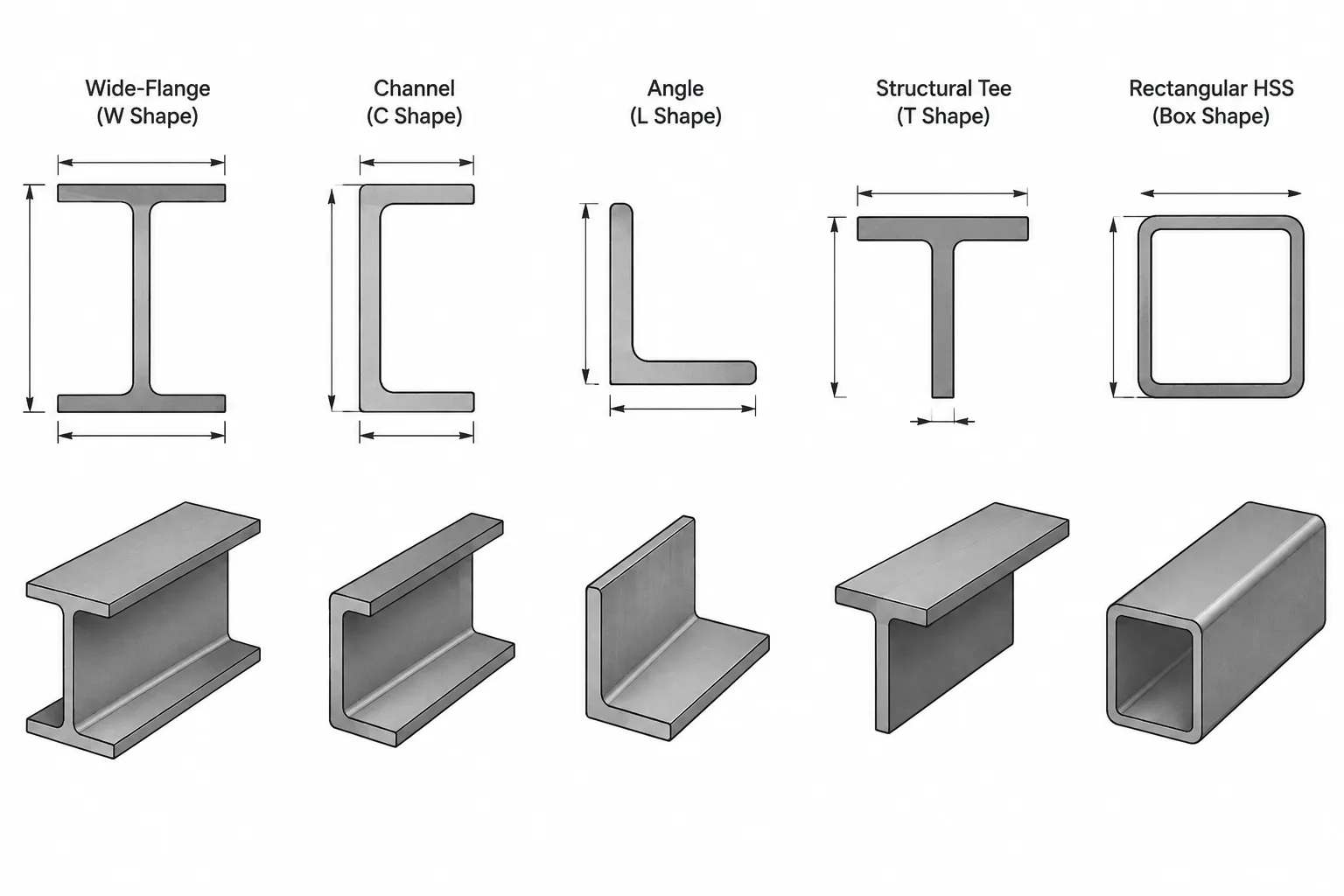
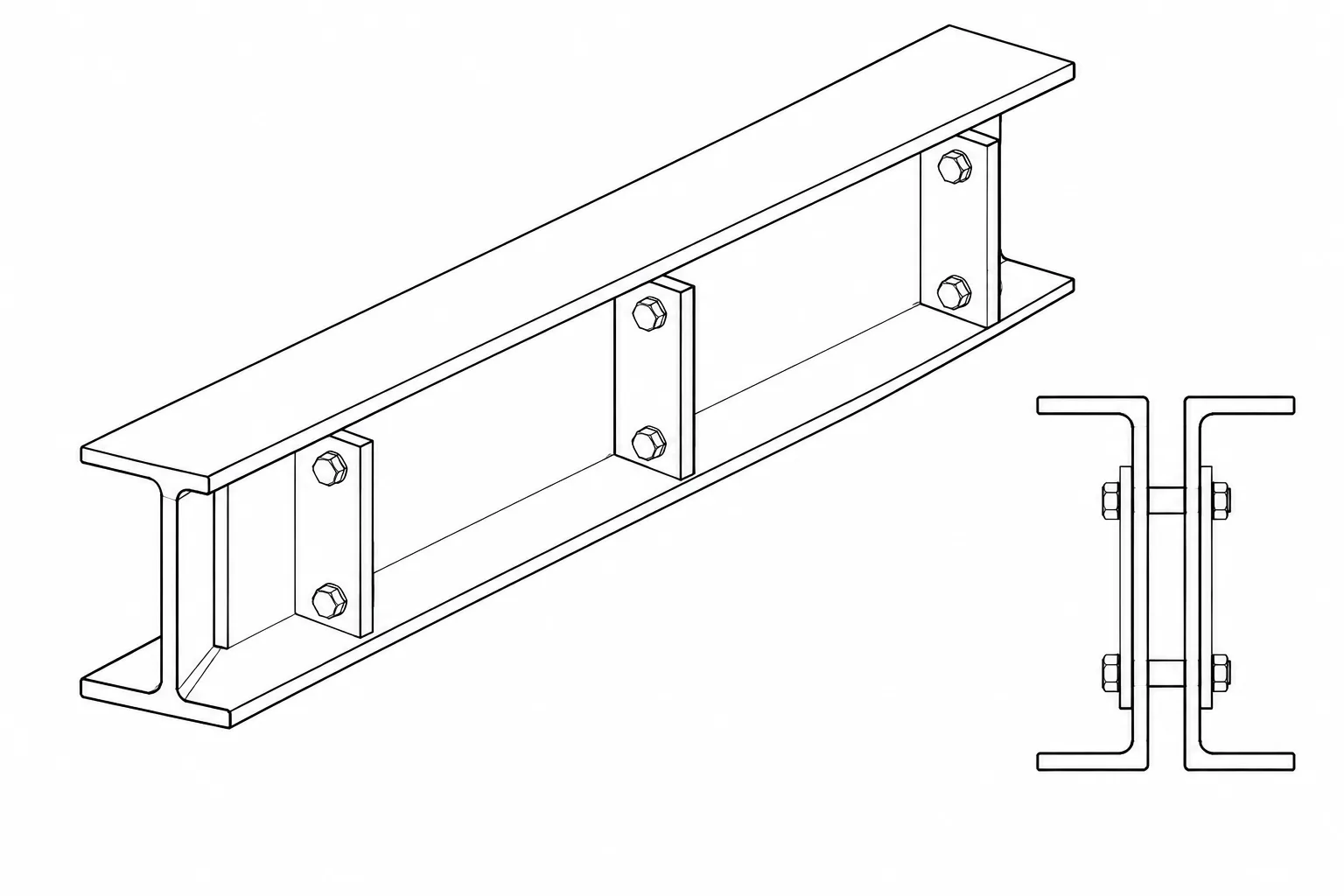
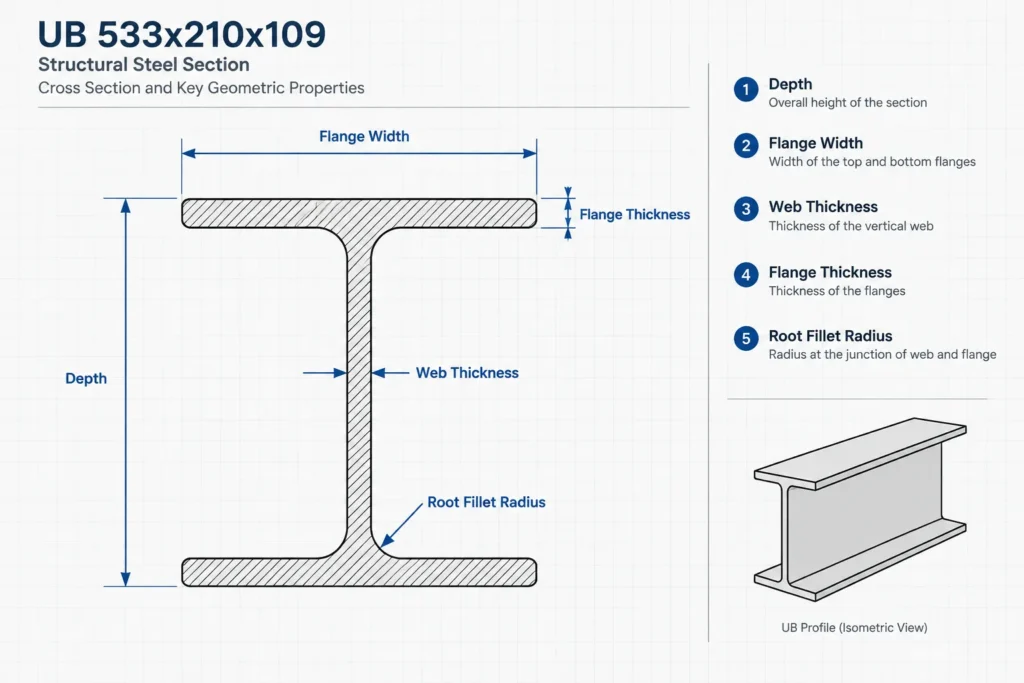
A universal beam has two flanges connected by a central web. Depth describes the overall distance across the section, while width refers to the flange width. Web and flange thicknesses define the principal plate-like parts of the rolled profile.
The root fillet is the curved transition between the web and each flange. This radius matters when checking the fit of plates, bolts, weld access, stiffeners, notches, and other nearby details. A CAD outline should preserve this transition where geometric clearance is important.
Sectional area and unit weight
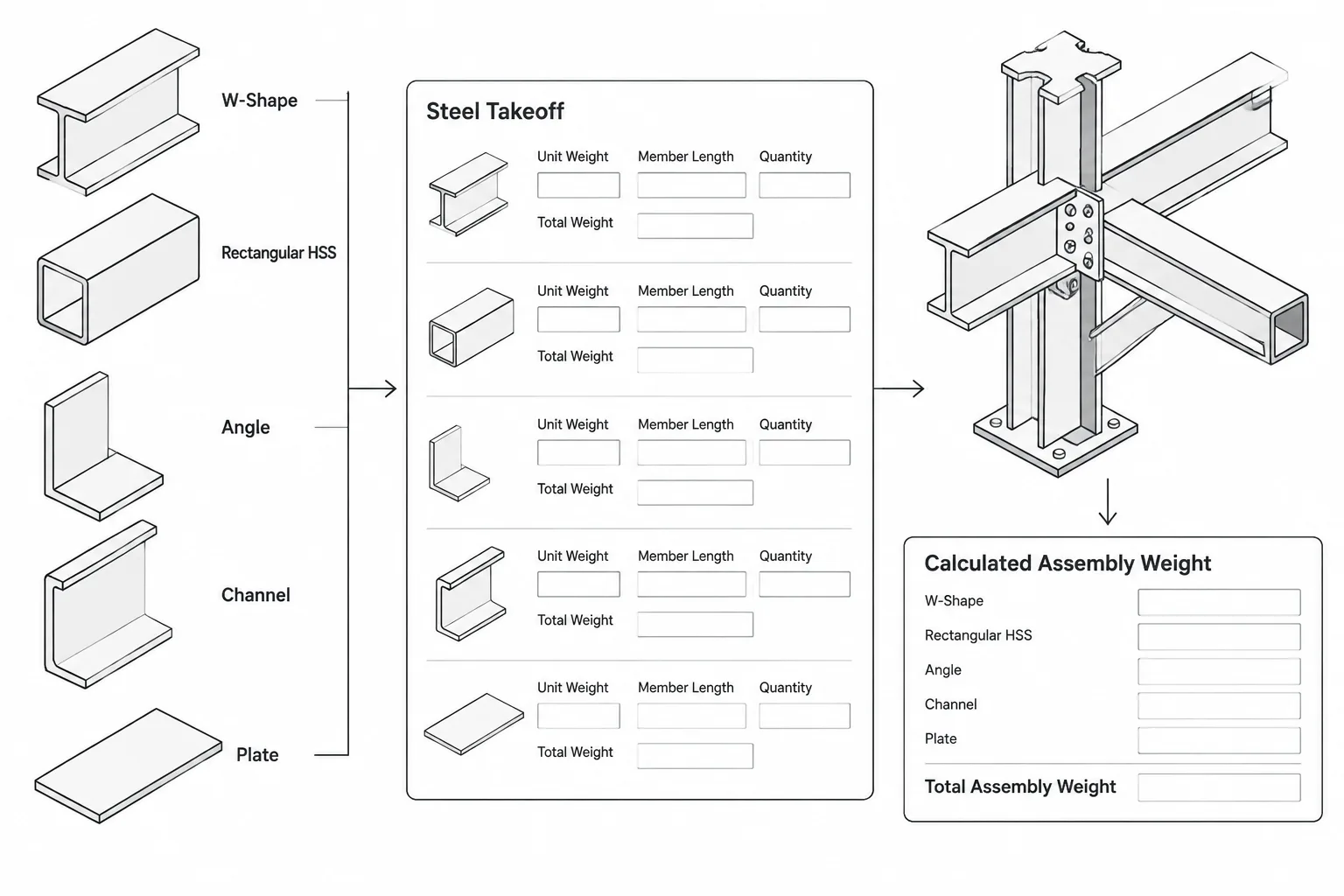
Sectional area describes the amount of steel present in the cross section. Unit weight, presented here in kg/m, expresses the listed mass associated with a unit length of the beam. These values serve different purposes: area is a geometric section property, while unit weight is commonly used for material schedules, takeoffs, handling estimates, and member mass calculations.
Neither value by itself establishes structural capacity. Design checks also depend on other section properties, material specification, member length, restraint, loading, connection behavior, and the applicable design rules.
Practical CAD and detailing checks
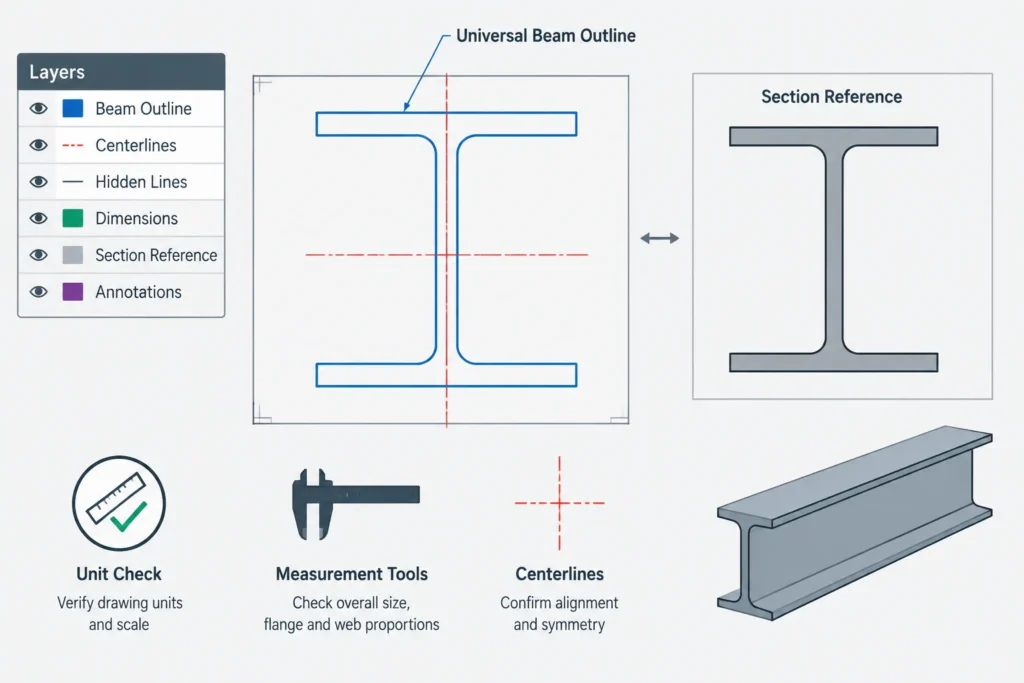
- Confirm drawing units: Check the DWG unit settings before measuring, scaling, or inserting the profile into another file.
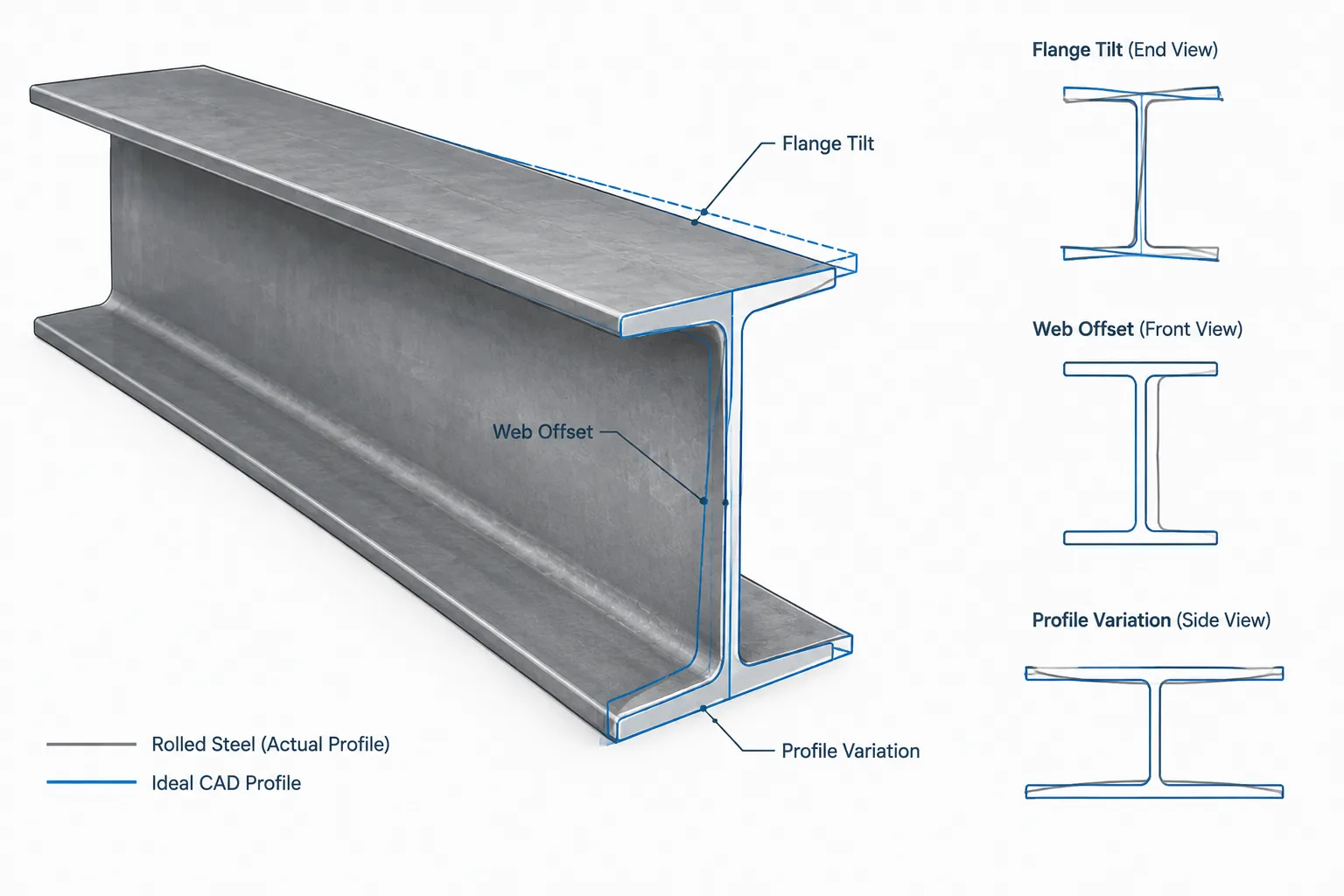
- Compare the outline with the source data: Verify the principal depth, width, thicknesses, and fillet geometry against the published reference values.
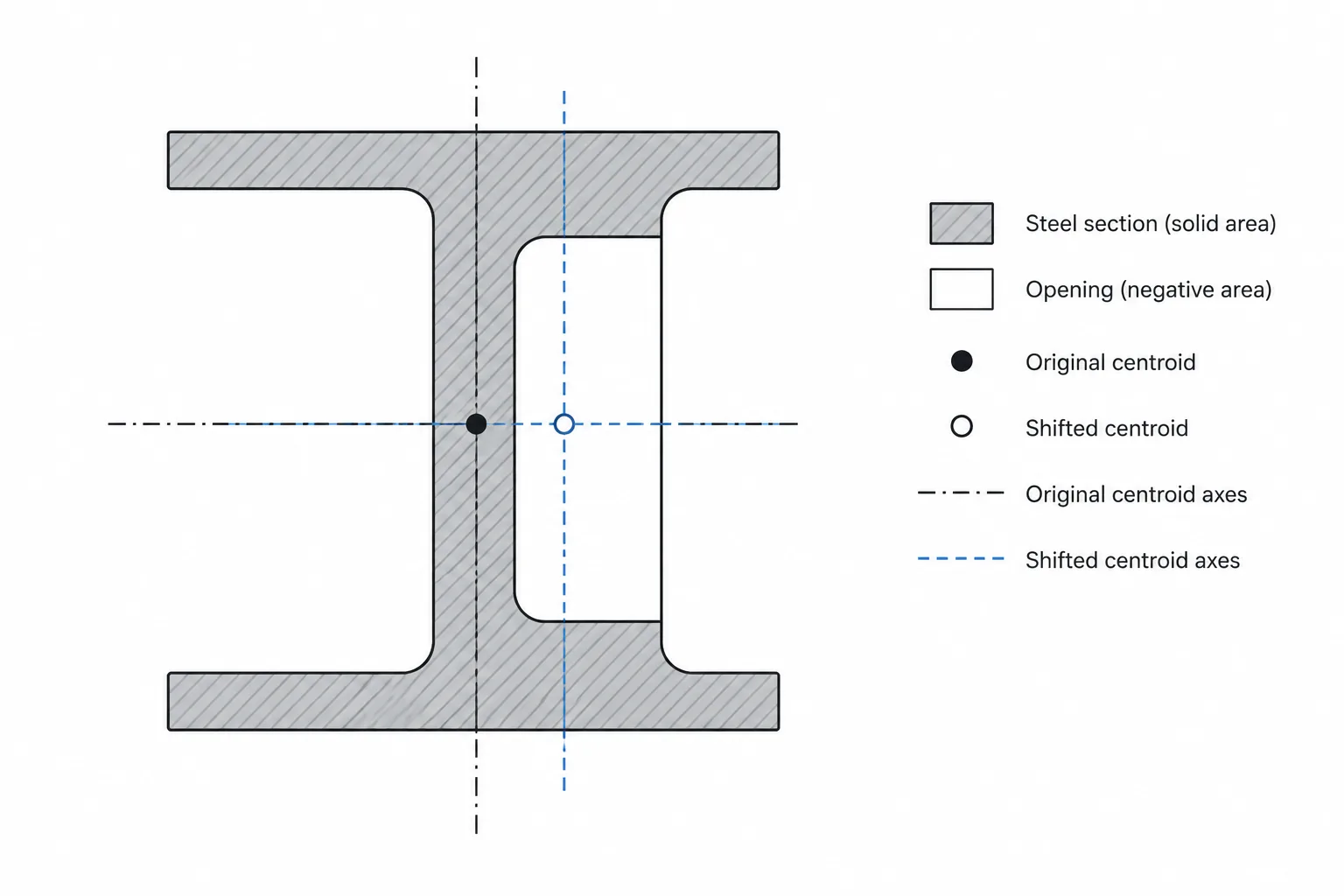
- Check the insertion point: Do not assume that the file origin represents the centroid, a flange face, or another project datum.
- Review connection clearances: Account for flange edges, web faces, and root fillets when positioning plates, bolts, welds, or stiffeners.
- Control revisions: Keep the section reference, project model, schedules, and issued drawings coordinated when files are updated.
Related reference topics
This profile is best understood alongside guides to universal beam dimensions, I-shaped steel sections, section-property terminology, steel unit weight, rolled-shape tolerances, beam connection detailing, and CAD layer management. Those topics help distinguish profile identification from structural selection and project-specific detailing.
Frequently asked questions
Are the numbers in UB 533x210x109 the exact drawing dimensions?
No. The designation identifies the profile, but the detailed values in the source content should be used when checking geometry. The listed depth and width are not identical to the rounded figures embedded in the section name.
What does the final 109 indicate?
The source identifies the section’s unit weight as 109 kg/m. In schedules and takeoffs, this value is used with the required member length, subject to the conventions and requirements of the project.
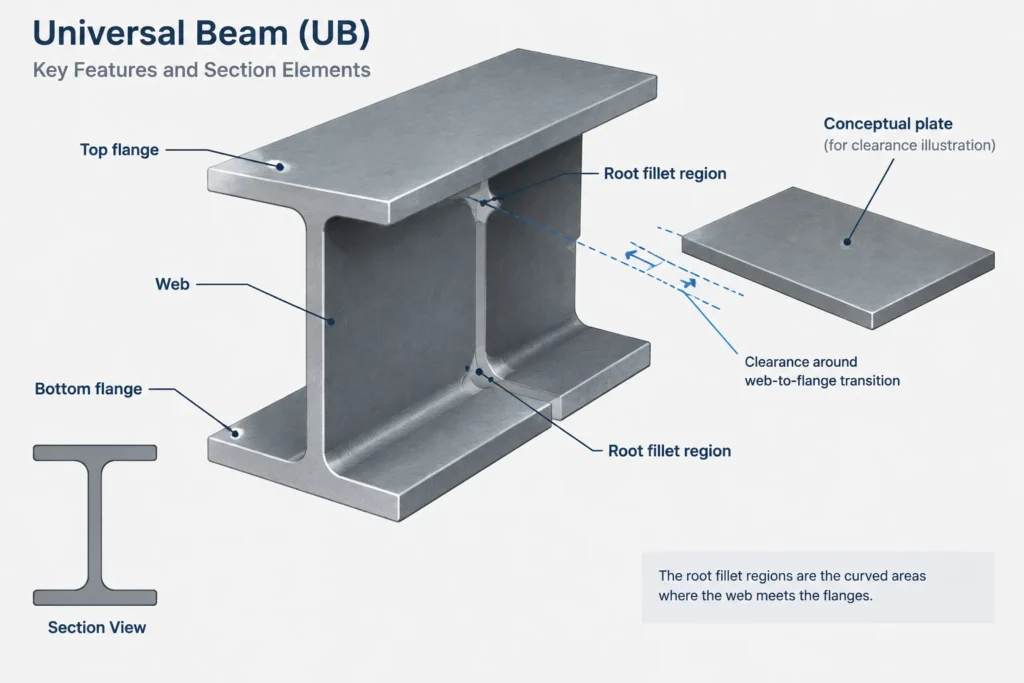
Why is the root fillet radius included?
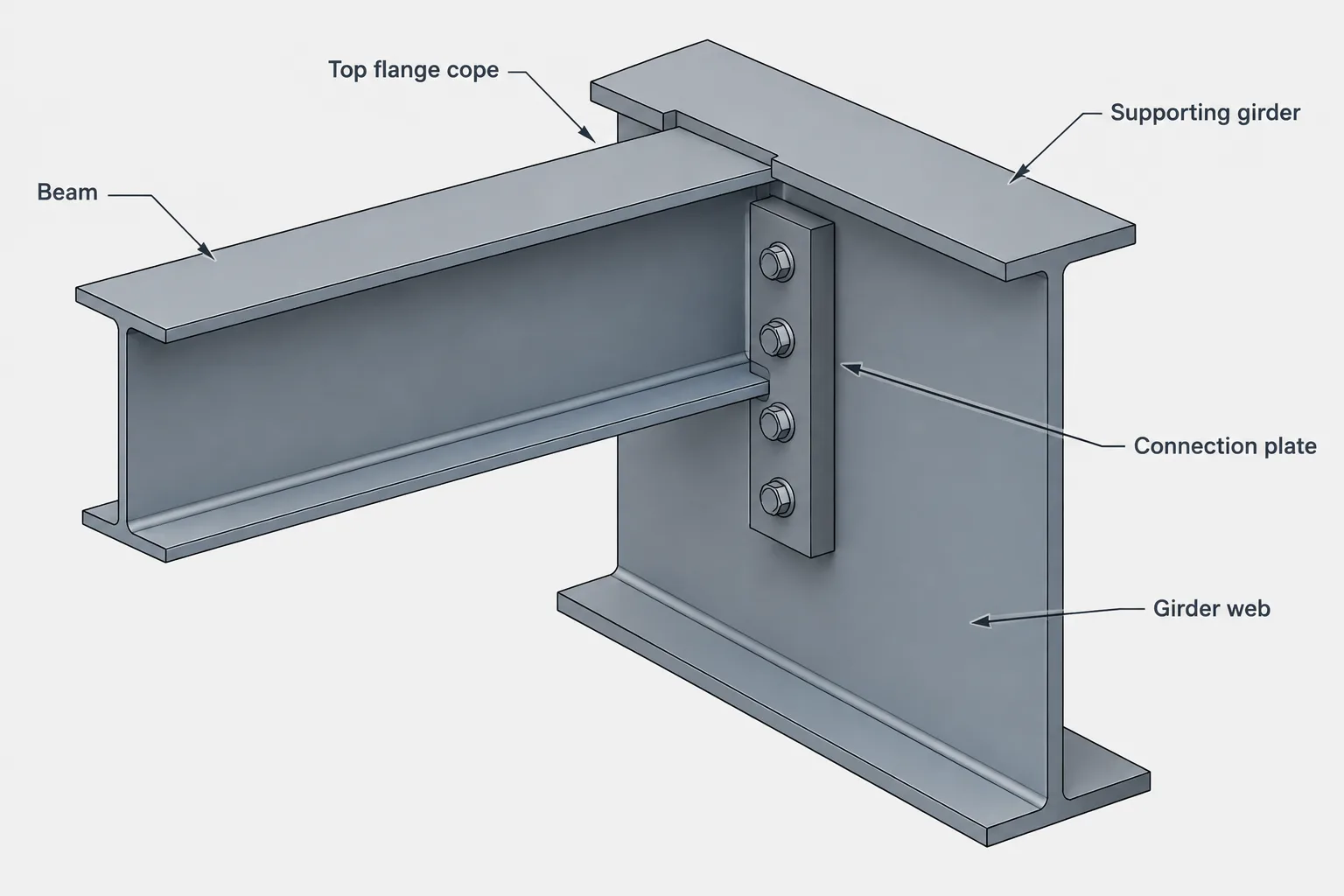
The root fillet describes the curved transition between the web and flange. It can affect fit-up and clearance for connection plates, stiffeners, welds, bolts, and copes placed near the inside flange region.
What standard is referenced for this profile?
The source content refers to EN 10365:2017. Users should confirm that this is the required reference for their contract documents, supplier data, and project location.
Can the DWG be used directly for fabrication?
The drawing can support drafting and profile-reference work, but it should not be treated as project approval. Verify units, scale, geometry, material requirements, tolerances, connections, and revision status before using it in fabrication documents.