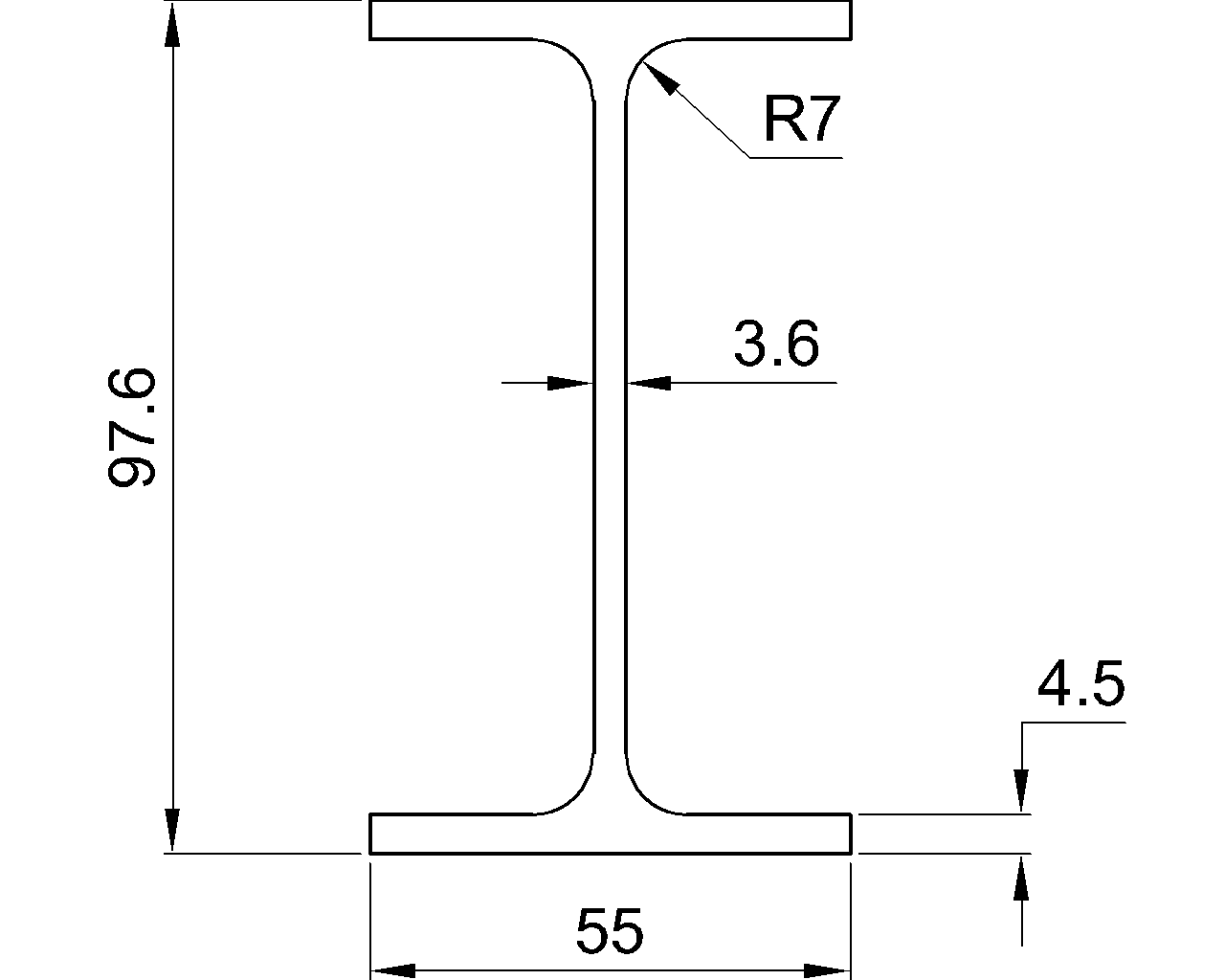
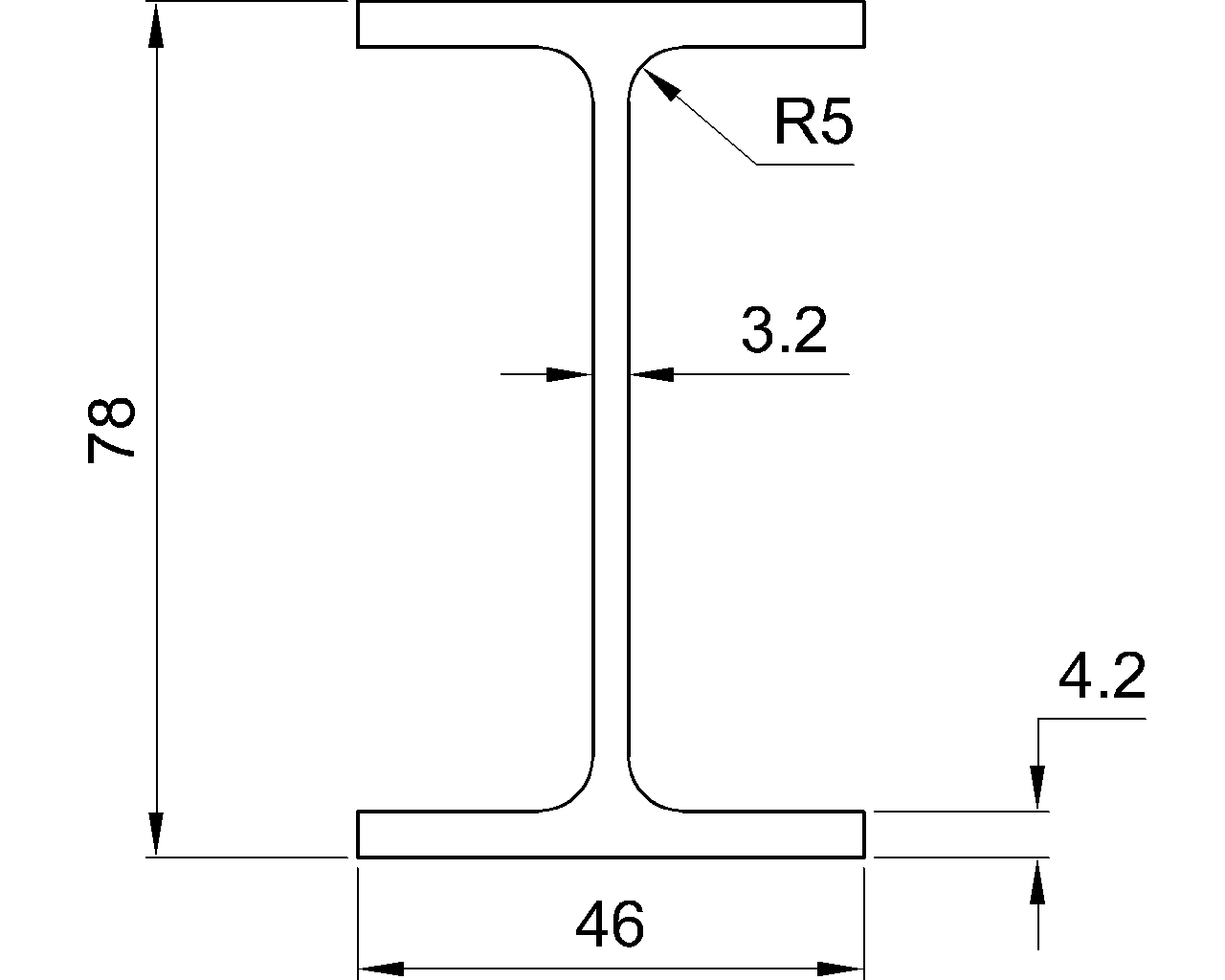
The UB 152x89x16 is a Universal Beam reference entry for engineers, fabricators, detailers, and CAD users working with structural steel. This page brings together the published designation, dimensional information, section data, and a downloadable DWG resource.
Use the dimensions below when checking drawings, comparing beam designations, or coordinating steelwork details. Always verify the selected section against the project design basis, connection requirements, material specification, and applicable engineering checks.
UB 152x89x16
Universal Beams
refer to : EN 10365:2017
a European standard that defines the dimensions, tolerances, and sectional properties for hot-rolled steel channels, I-beams, and H-beams used in construction and engineering. It ensures uniformity and compatibility across European structural steel products.
Dimension : 152.4×88.7×4.5×7.7
Depth : 152.4 mm
Width : 88.7 mm
Web Thickness : 4.5 mm
Flange Thickness : 7.7 mm
Root Fillet Radius : 8 mm
Sectional Area : 20.3 cm2
Unit Weight : 15.9 kg/m
How to read the UB 152x89x16 reference
The beam designation identifies a Universal Beam section, while the listed dimension describes the overall depth, flange width, web thickness, and flange thickness in the order shown. These dimensions help distinguish the section from other UB sizes and support coordination between design, detailing, fabrication, and procurement documents.
Section dimensions and properties
- Depth and width: These describe the overall envelope of the beam section and are important for layout, clearances, and connection detailing.
- Web thickness: This is the thickness of the central web. It is a key input when reviewing web connections, local detailing, and section-property data.
- Flange thickness: This describes the thickness of the top and bottom flange plates formed as part of the rolled section.
- Root fillet radius: The rolled transition between the web and flange affects the actual profile geometry and should be allowed for in precise detailing or fit-up checks.
- Sectional area: This is a geometric property of the whole steel section and is used with the relevant material and design rules when evaluating member behavior.
- Unit weight: The listed value expresses the beam’s mass per unit length for quantity takeoffs, handling planning, and weight estimates.
Standard and CAD reference
The entry refers to EN 10365:2017, which provides the dimensional and sectional-property framework identified in the source data. The linked DWG file can support drafting workflows, but users should confirm scale, units, layer conventions, and the modeled profile against the project requirements before using it for fabrication or construction documentation.
For broader reference work, this page can be used alongside related Universal Beam sizes, steel section-property guides, steel terminology, and connection-detailing resources. Comparing entries by designation and listed geometry helps reduce errors when selecting or documenting adjacent section sizes.
Practical checking points
- Confirm that the designation on drawings matches the section data used in calculations and schedules.
- Check whether the drawing requires the overall profile envelope or the detailed rolled geometry, including the root fillet.
- Use the listed unit weight consistently when preparing preliminary steel quantities.
- Do not treat a section reference alone as evidence that the member is adequate for a particular structural application; design verification remains project-specific.
Frequently asked questions
What does UB 152x89x16 mean?
It is the designation for a Universal Beam section identified on this page. The accompanying dimension and property data provide the profile information needed for reference, drafting, coordination, and engineering checks.
Which standard is referenced for this beam?
The source entry refers to EN 10365:2017 for the dimensional and sectional-property information presented here.
What is the root fillet radius used for?
The root fillet radius describes the curved transition between the web and flange. It matters when modeling the actual rolled profile, checking clearances, or detailing components that meet the flange-to-web region.
Can the DWG file be used directly for fabrication?
The DWG is a drafting reference and should be checked for units, scale, profile orientation, and project-specific CAD requirements before it is used in fabrication or construction documents.
Does the listed unit weight determine whether the beam is structurally adequate?
No. Unit weight supports quantity and handling estimates, but adequacy depends on the complete design, including actions, restraints, connections, material requirements, and applicable verification procedures.