The W36x231 is a W-shaped structural steel section identified by its shape designation and unit-weight designation. This reference page brings together the published dimensions and basic section data needed for preliminary steel detailing, comparison, and document review.
Use the existing values below as the controlling local reference for this shape. For design work, confirm the applicable project specification, material requirements, connection details, stability checks, and analysis assumptions with the responsible engineer.
W Beam
refer to : AISC 16
the American Institute of Steel Construction (AISC) Specification for Structural Steel Buildings (AISC 360-16), which is the 2016 edition of the AISC Specification for Structural Steel Buildings. It provides guidelines and requirements for the design, fabrication, and erection of steel structures in the United States.
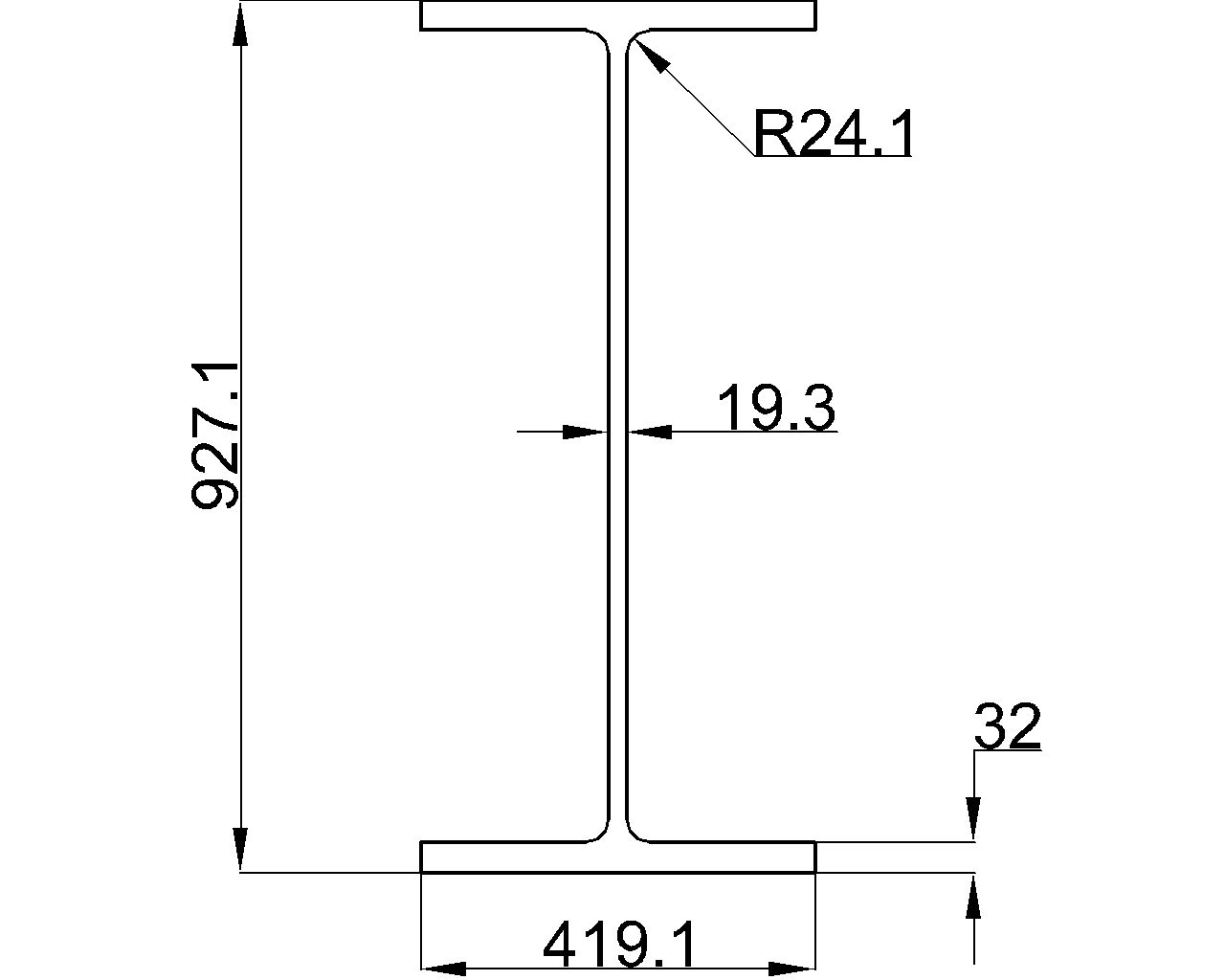
Depth : 927.1 mm
Width : 419.1 mm
Web Thickness : 19.3 mm
Flange Thickness : 32 mm
Root Fillet Radius : 24.1 mm
Sectional Area : 440 cm2
Unit Weight : 345.4 kg/m
How to read the W36x231 reference
The listed depth and width describe the overall envelope of the section. Web thickness applies to the central web, while flange thickness applies to the projecting flanges. The root fillet radius identifies the curved transition between the web and each flange, which is important when reviewing clearances, coping, detailing, and CAD geometry.
Section properties and weight information
Sectional area expresses the amount of steel in the cross-section. It can support quantity review and section-property comparisons, but it is not by itself a design resistance or allowable load. The listed unit weight is useful for estimating member mass, handling requirements, shipping, and framing takeoffs. Design decisions still require the applicable analysis and specification checks.
Practical drafting and design context
- Compare the listed dimensions with the project’s W-shape dimensions and member schedule before preparing fabrication or erection drawings.
- Account for the web, flange, and root-fillet geometry when developing steel connection details or checking fit-up clearances.
- Use the linked CAD/DWG resource as a drafting aid, then verify geometry and revision control against the project’s approved documents.
- For specification context, the source identifies AISC 360-16, which addresses the design, fabrication, and erection of steel structures in the United States.
W36x231 FAQ
What does the W designation indicate?
The W designation identifies a wide-flange structural steel shape. The complete W36x231 designation distinguishes this section from other W-shape entries.
What is the difference between depth and width?
Depth is the overall dimension measured through the section, while width is the overall flange-to-flange dimension. Use the tabulated source values when coordinating layouts or checking drawing geometry.
Why is the root fillet radius important?
The root fillet is the curved transition between the web and flange. It can affect contact surfaces, connection detailing, coping, stiffener placement, and the clear geometry available around the section.
Can the unit weight be used as the member design capacity?
No. Unit weight describes mass per unit length. It may support estimating and coordination, but member capacity depends on the section, material, unbraced conditions, load effects, limit states, and the governing design requirements.
What is the DWG download used for?
The DWG is intended to support drafting and CAD coordination for the W36x231 profile. Review the file against the authoritative project documents before using it for fabrication or construction.