The W27x114 is a wide-flange structural steel shape identified in the AISC W-shape reference system. This page preserves the published dimensional and section-property data for the shape and provides a downloadable DWG file for drafting workflows.
Use the data below as a reference when reviewing steel framing layouts, comparing W-shape designations, or coordinating drawings. For related background, see the site’s resources on W-shape terminology, steel section properties, and structural steel detailing.
W Beam
refer to : AISC 16
the American Institute of Steel Construction (AISC) Specification for Structural Steel Buildings (AISC 360-16), which is the 2016 edition of the AISC Specification for Structural Steel Buildings. It provides guidelines and requirements for the design, fabrication, and erection of steel structures in the United States.
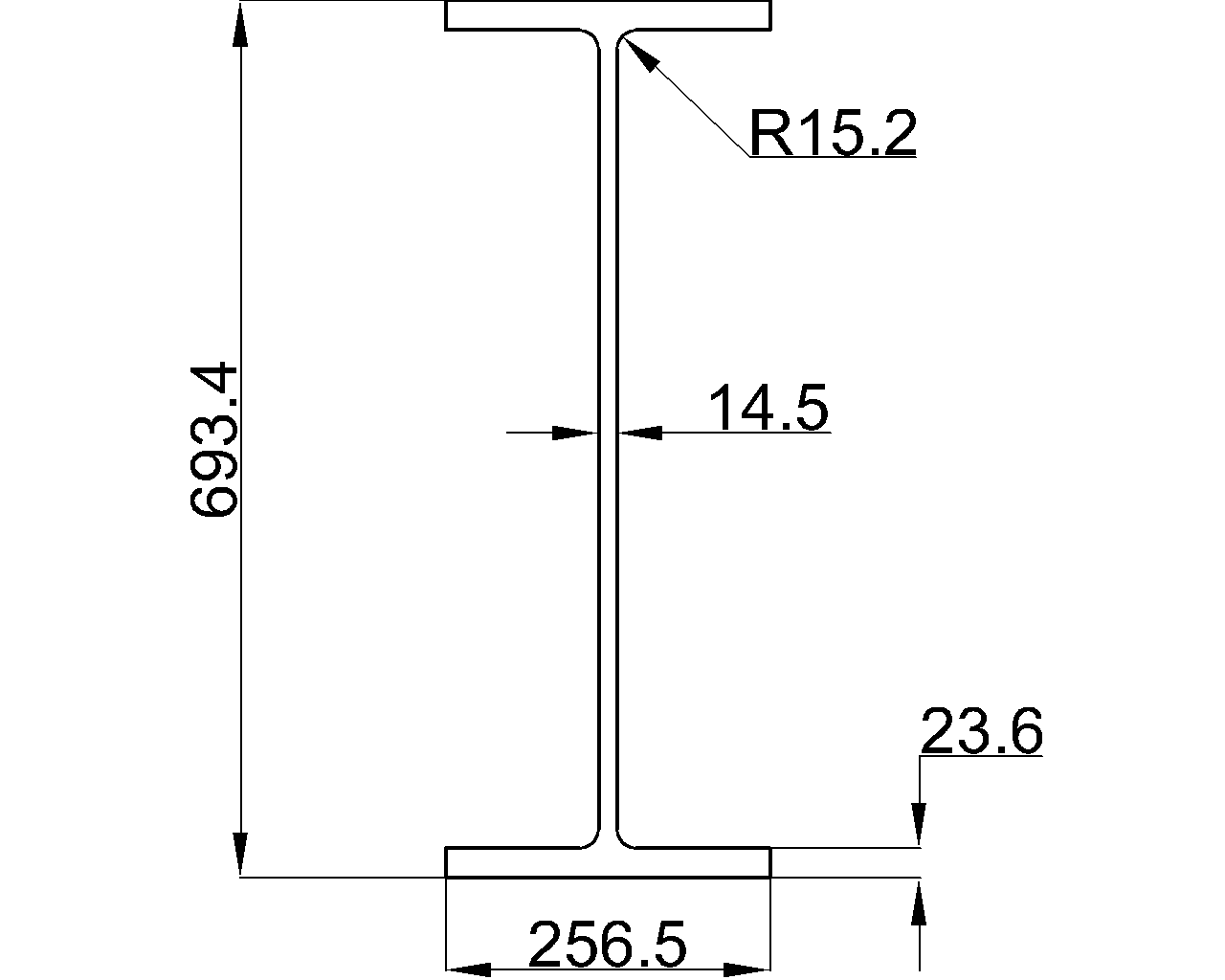
Depth : 693.4 mm
Width : 256.5 mm
Web Thickness : 14.5 mm
Flange Thickness : 23.6 mm
Root Fillet Radius : 15.2 mm
Sectional Area : 216.77 cm2
Unit Weight : 170.2 kg/m
How to read the W27x114 designation
The W identifies a wide-flange beam. The number following the letter is part of the nominal designation, while the final number distinguishes the shape by its designated weight series. The actual dimensions and mass-related properties should therefore be taken from the authoritative shape data rather than inferred from the name alone.
Understanding the listed dimensions
The reference data identifies the overall depth and flange width, along with web thickness, flange thickness, and root fillet radius. These dimensions help detailers and engineers understand the shape’s envelope, connection interfaces, clearances, and transitions between the web and flanges.
The sectional area and unit weight describe the steel quantity represented by the shape. They are useful for material takeoffs and reference checks, but they do not by themselves establish allowable strength, stability, connection resistance, or suitability for a particular member application.
AISC reference and drawing use
The source identifies AISC 360-16, the AISC specification used for structural steel design, fabrication, and erection requirements in the United States. Treat the listed shape information as a reference and verify project-specific material requirements, analysis assumptions, connection details, and governing design criteria with the responsible design professional.
The available DWG download can support CAD layout and detailing. Before issuing drawings, confirm units, layer conventions, insertion scale, orientation, and compatibility with the project’s drafting standards. A DWG representation should be checked against the authoritative shape data before it is used for fabrication or construction documentation.
W27x114 frequently asked questions
What does W27x114 mean?
It is the designation of a wide-flange structural steel shape. The letters identify the shape family, while the numbers form the section designation used in the reference system.
What information is provided for this shape?
The source lists the shape’s depth, width, web and flange thicknesses, root fillet radius, sectional area, and unit weight. These values are retained as the page’s authoritative local reference data.
Can the listed dimensions be used directly for structural design?
They can support preliminary reference and coordination, but member design also depends on loads, unbraced length, material requirements, limit states, connections, and the governing project criteria. Engineering verification is required before selecting the shape for a structural application.
What is the DWG file used for?
The DWG file provides a CAD representation that can assist with layout and detailing. Review its scale, units, orientation, and geometry against the source data before incorporating it into project documents.
Why is the root fillet radius important?
The root fillet is the curved transition between the web and flange. Its geometry can affect detailing clearances, connection fit-up, and how accurately the section is represented in CAD.