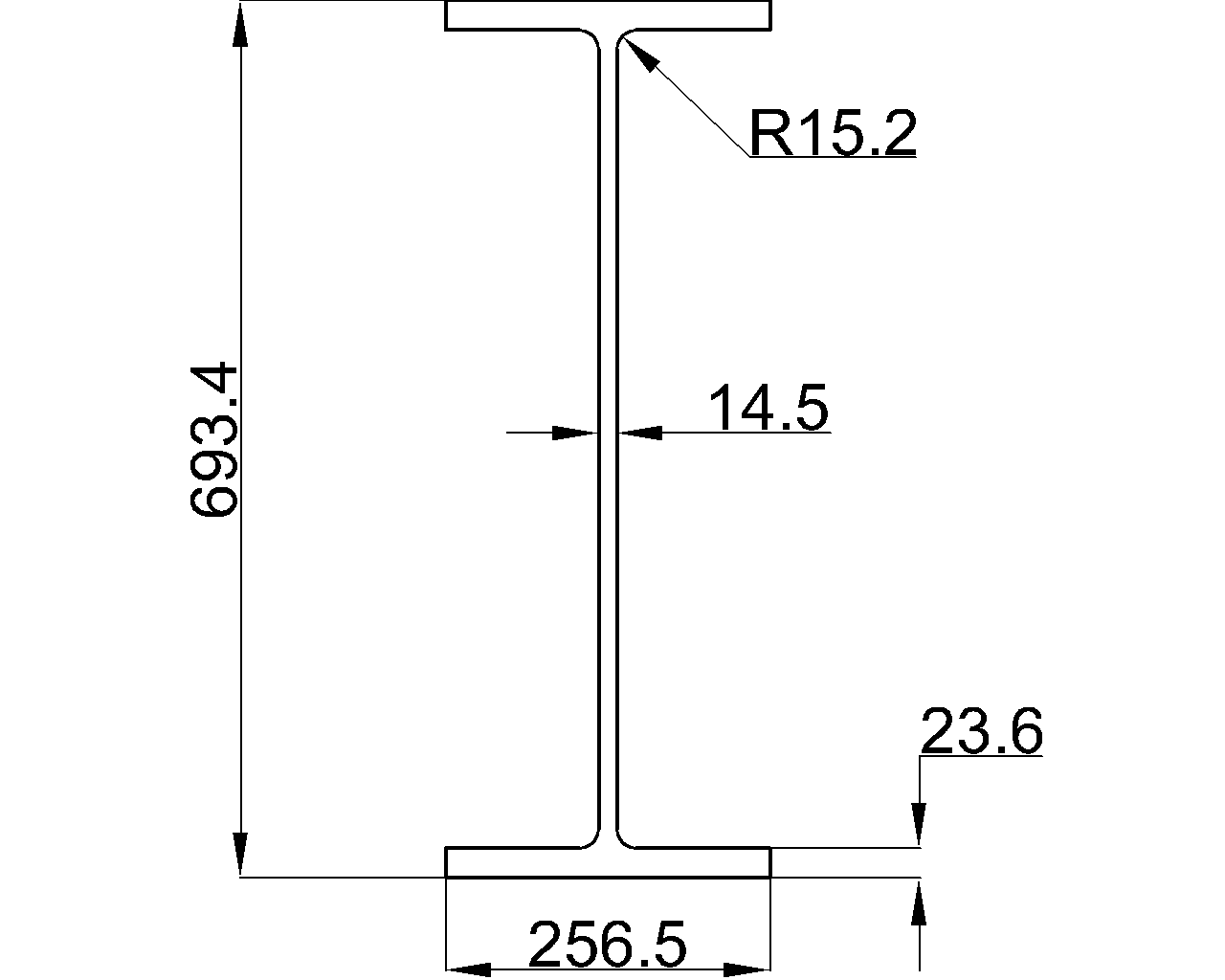
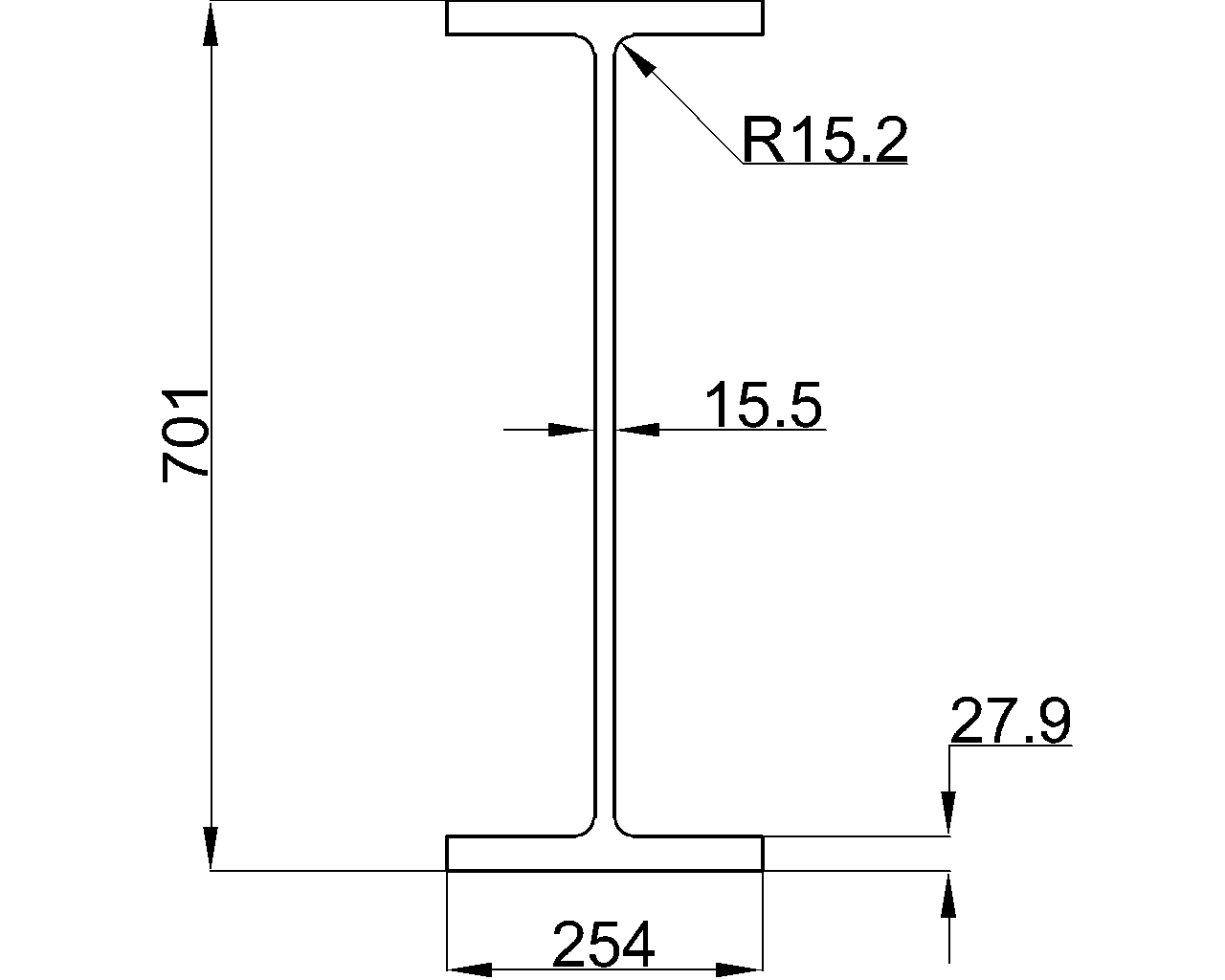
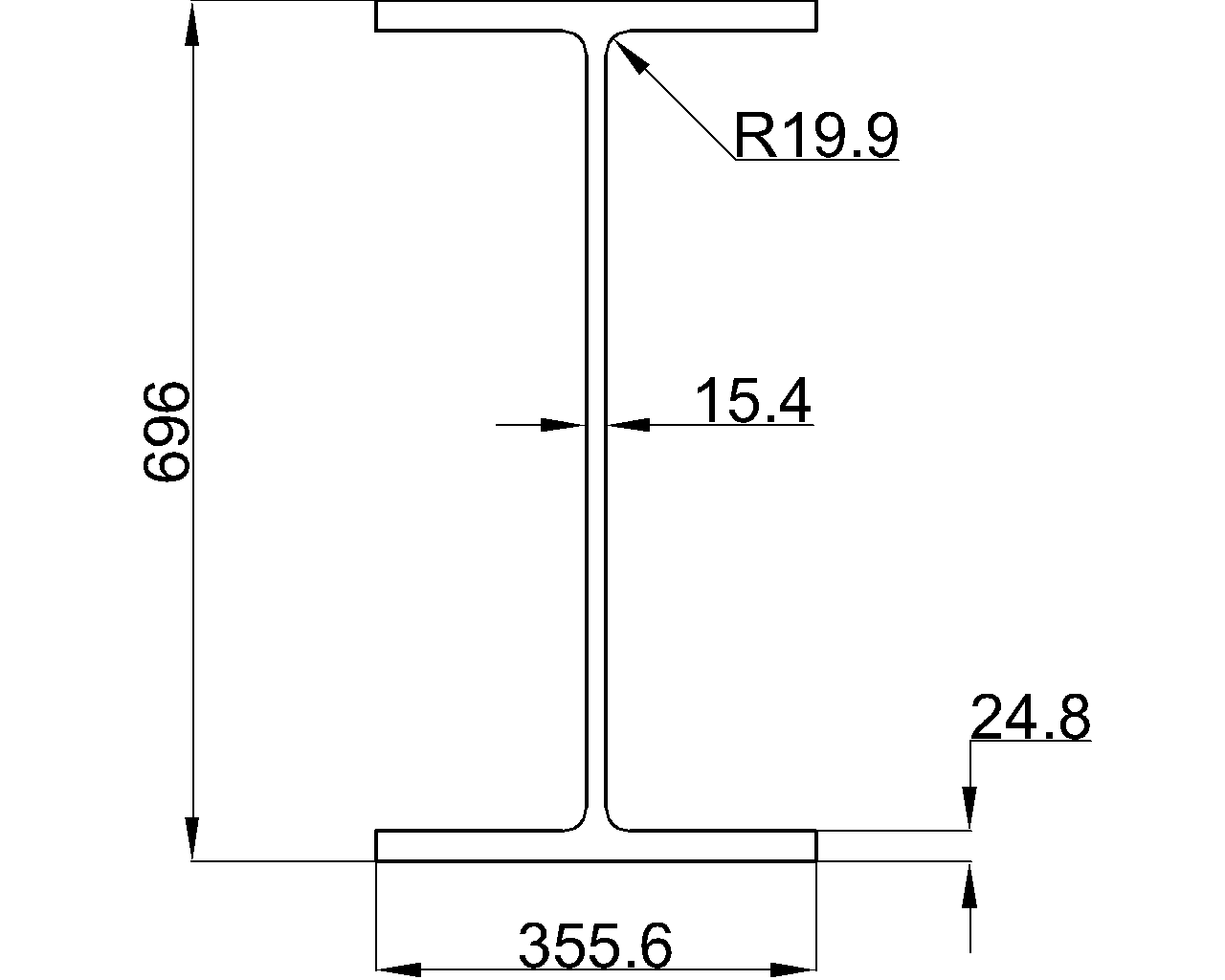
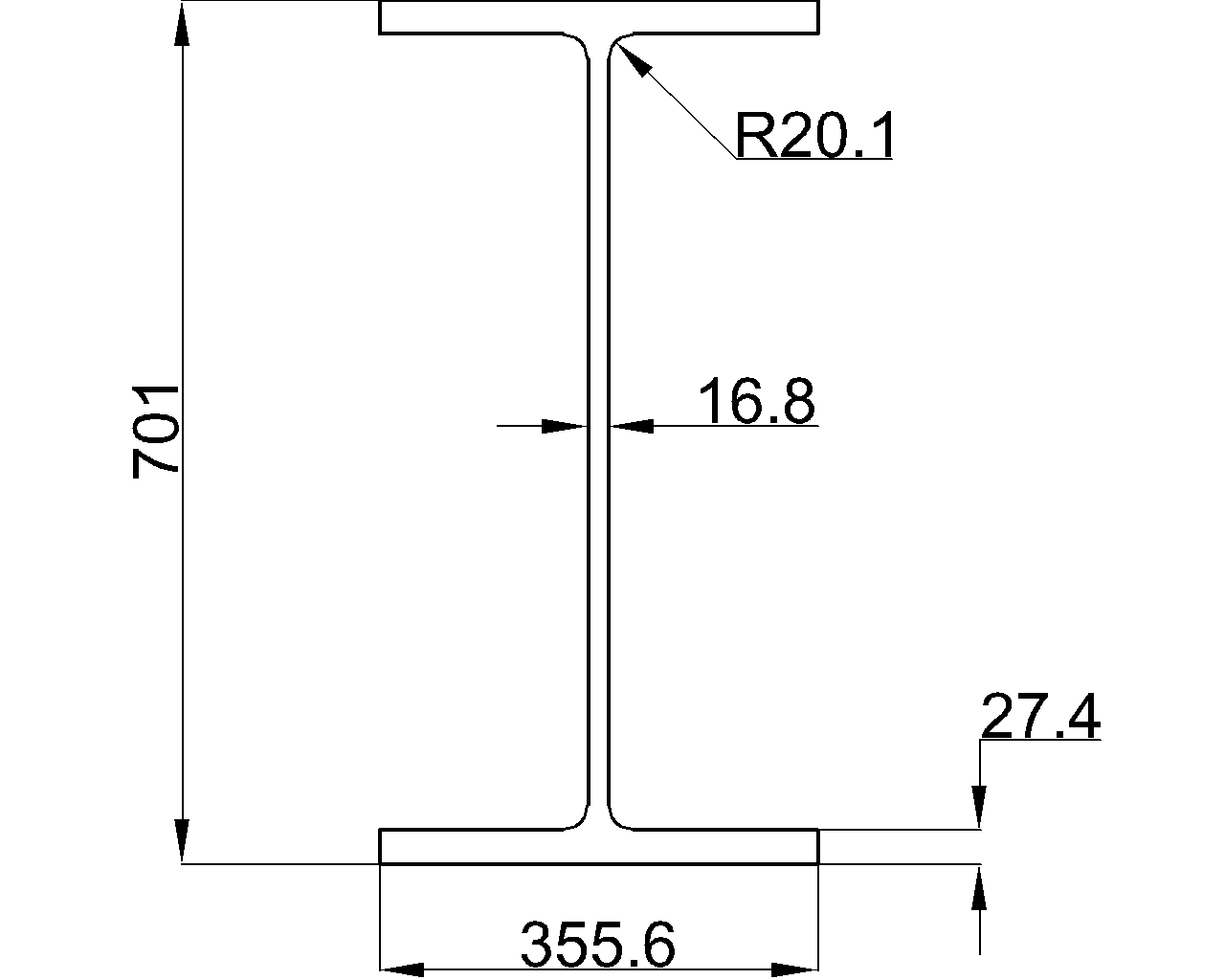
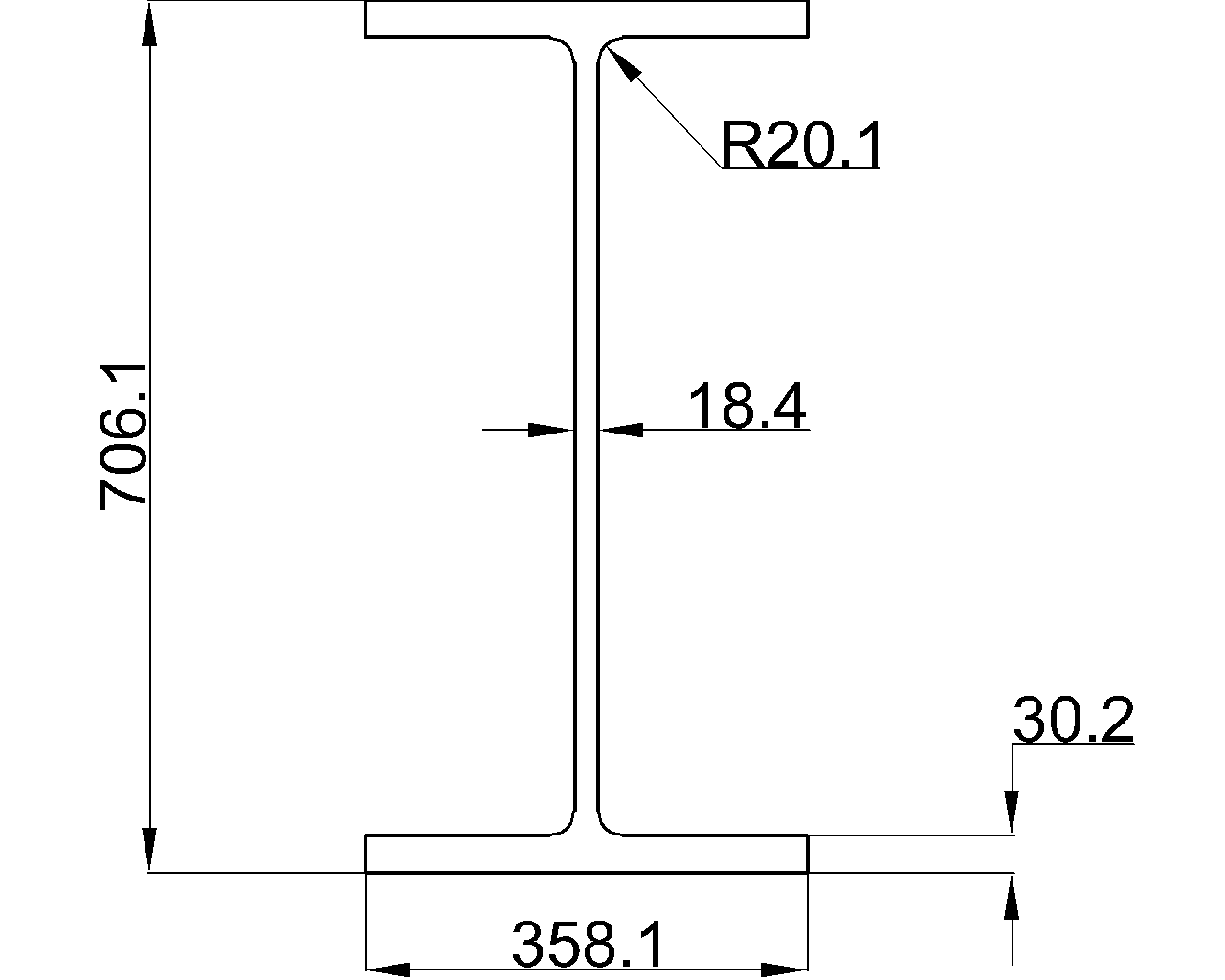
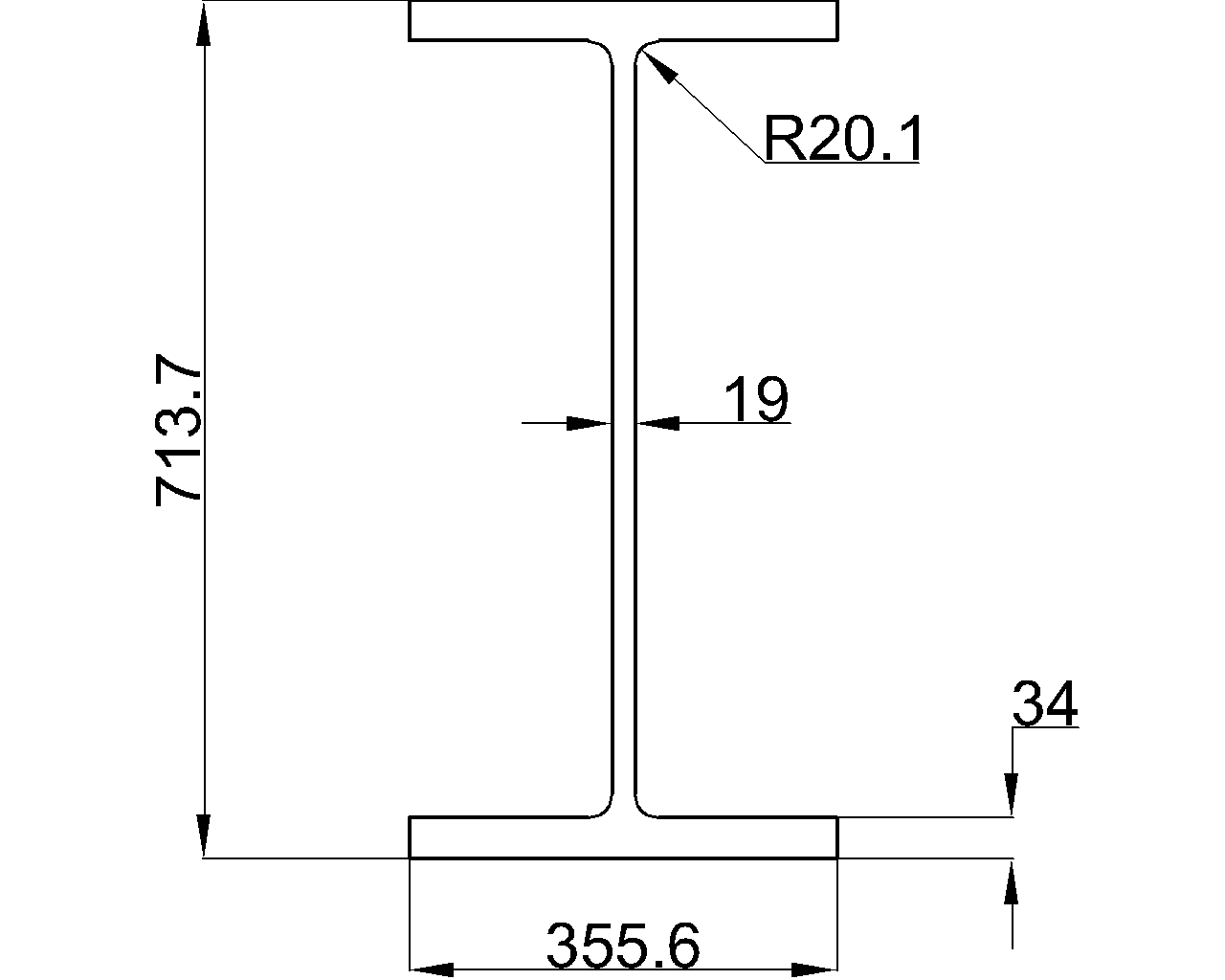
The UB 686x254x125 is a hot-rolled universal beam identified by its established section designation. This page provides the verified overall dimensions, web and flange thicknesses, root radius, sectional area, unit weight, and referenced European standard.
Use the listed data when checking section identity, coordinating a structural model, or preparing a preliminary drawing. The designation should not be treated as a substitute for the detailed dimensions shown in the source content.
UB 686x254x125
Universal Beams
refer to : EN 10365:2017
a European standard that defines the dimensions, tolerances, and sectional properties for hot-rolled steel channels, I-beams, and H-beams used in construction and engineering. It ensures uniformity and compatibility across European structural steel products.
Dimension : 677.9x253x11.7×16.2
Depth : 677.9 mm
Width : 253 mm
Web Thickness : 11.7 mm
Flange Thickness : 16.2 mm
Root Fillet Radius : 15 mm
Sectional Area : 159.5 cm2
Unit Weight : 125.2 kg/m
How to Read the UB Designation
A universal beam designation provides a convenient catalog reference, but its nominal numbers may not match every published dimension exactly. For drafting and model setup, use the detailed depth, width, web thickness, flange thickness, and root fillet radius stated on this page rather than constructing the profile from the designation alone.
Understanding the Listed Dimensions
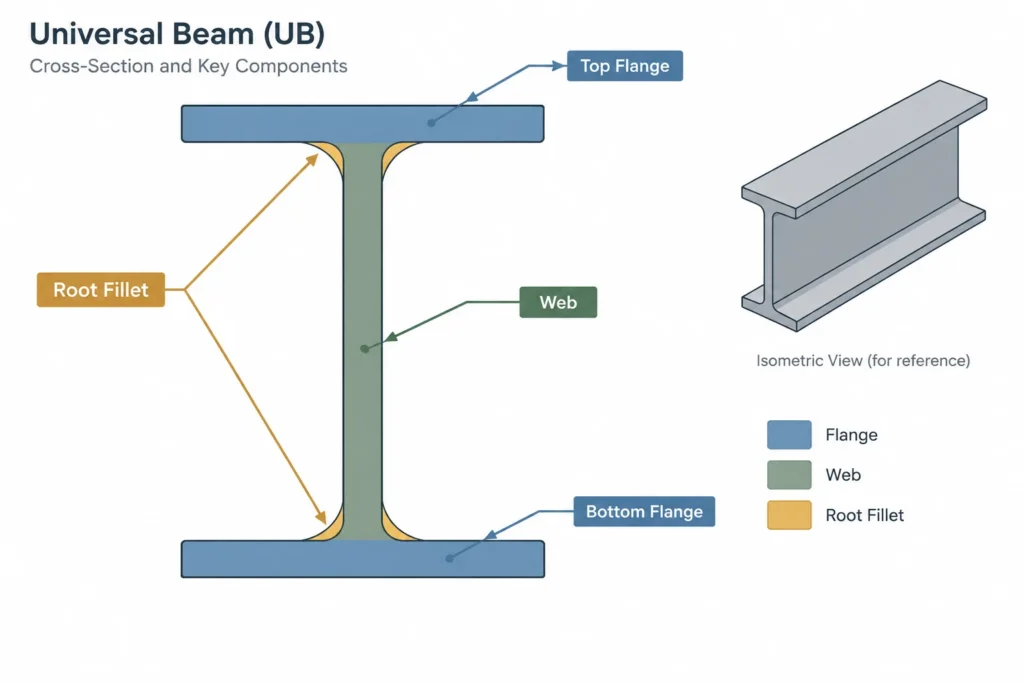
- Depth describes the overall distance across the section from the outside of one flange to the outside of the other.
- Width is the overall flange width.
- Web thickness describes the thickness of the central plate-like portion connecting the flanges.
- Flange thickness is used when defining the top and bottom flange geometry.
- Root fillet radius identifies the curved transition between the web and each flange. It should be considered when checking clearances or producing a detailed section profile.
Sectional Area and Unit Weight
Sectional area represents the cross-sectional quantity of steel and is relevant to calculations involving axial behavior and material quantity. Unit weight expresses the mass of the beam per unit length and is useful for estimating member mass, transportation requirements, lifting plans, and material schedules.
These values do not by themselves establish structural capacity. Design checks may also require material grade, member length, restraint conditions, loading, connection behavior, and additional section properties that are not listed in the source content.
Using the CAD/DWG Resource
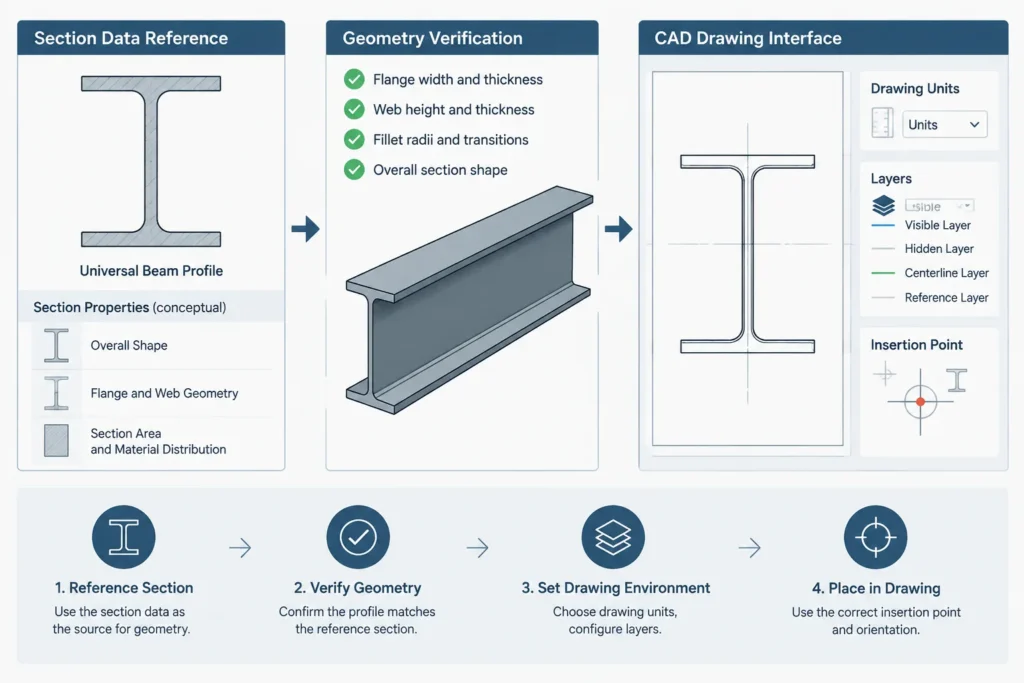
The accompanying DWG can support section-library development, drafting, and visual coordination. Before incorporating it into project documents, confirm the drawing units, scale, layer organization, insertion point, and profile geometry against the verified data displayed on this page.
For connection detailing, also account for root-radius clearance, bolt or weld access, fabrication tolerances, and the geometry of adjoining members. A section outline is a reference component rather than a complete connection design.
Related Reference Topics
This section can be reviewed alongside universal beam terminology, I-shape geometry, structural section properties, steel unit-weight concepts, beam connection detailing, and CAD block verification. Those topics help connect catalog data with practical modeling and drawing workflows.
Frequently Asked Questions
Is UB 686x254x125 the same as its exact dimensions?
No. The section name is a catalog designation. Use the detailed dimensions listed in the preserved source content when creating or checking geometry.
What does UB mean?
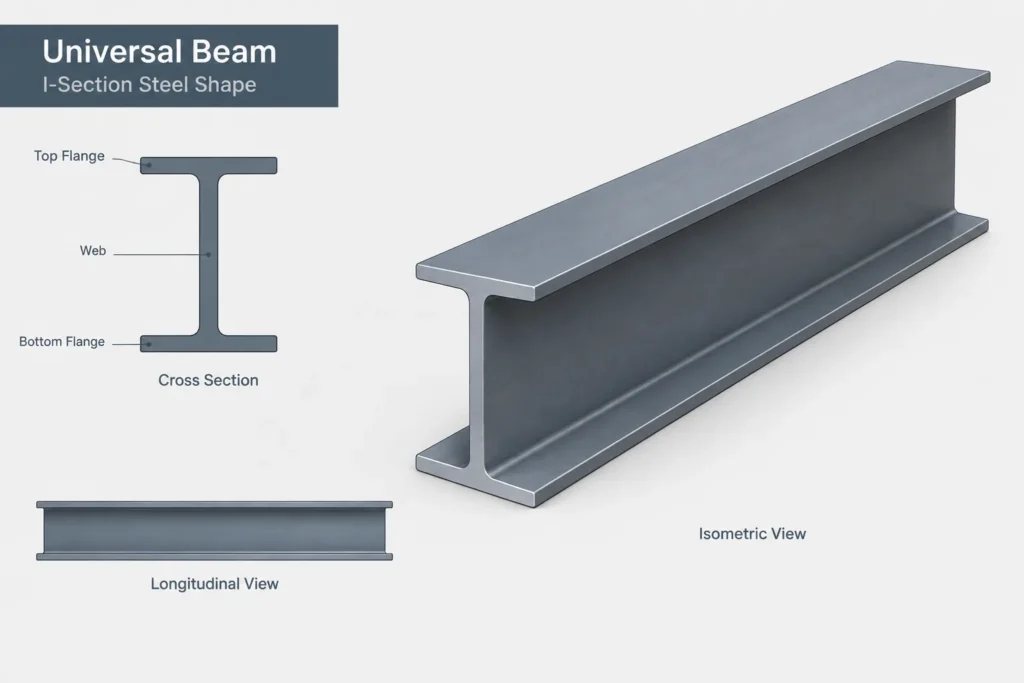
UB means universal beam. It is a hot-rolled I-shaped steel section with two flanges connected by a central web.
Why is the root fillet radius important?
The root fillet forms the curved transition between the web and flange. It can affect fit-up, clearance for plates and fasteners, and the accuracy of a detailed CAD profile.
Can unit weight be used to estimate the mass of a beam?
Yes. Unit weight is used with the required member length to estimate mass. Any project calculation should maintain consistent units and account for attached plates, connections, coatings, or other components separately.
Does this page provide the beam’s load capacity?
No. Dimensions, sectional area, and unit weight are reference data, not a complete capacity assessment. Structural capacity depends on additional section properties, material information, loading, restraint, stability, and the applicable design requirements.
Should the DWG be used without verification?
No. Check the file units, scale, geometry, layers, and insertion point before use. Project-specific detailing and engineering decisions require independent professional verification.