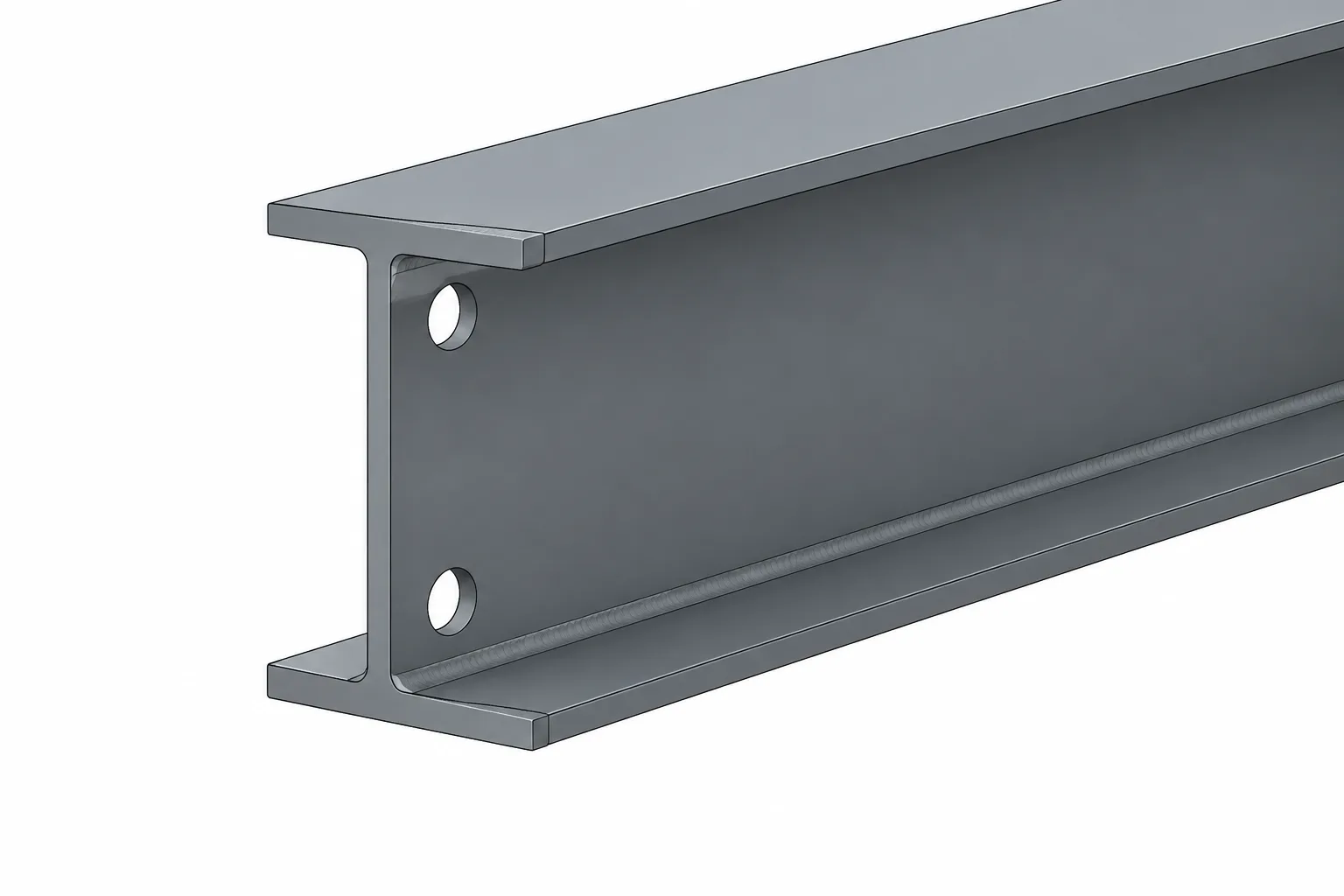
UB 610x305x149 is a hot-rolled universal beam designation used in European structural-steel references. The information below identifies the applicable standard, principal cross-section dimensions, sectional area, unit weight, and the associated DWG resource.
The designation is a convenient section identifier rather than a complete dimensional specification. For accurate drafting and comparison, use the published depth, width, web thickness, flange thickness, root radius, area, and unit weight shown in the source content.
UB 610x305x149
Universal Beams
refer to : EN 10365:2017
a European standard that defines the dimensions, tolerances, and sectional properties for hot-rolled steel channels, I-beams, and H-beams used in construction and engineering. It ensures uniformity and compatibility across European structural steel products.
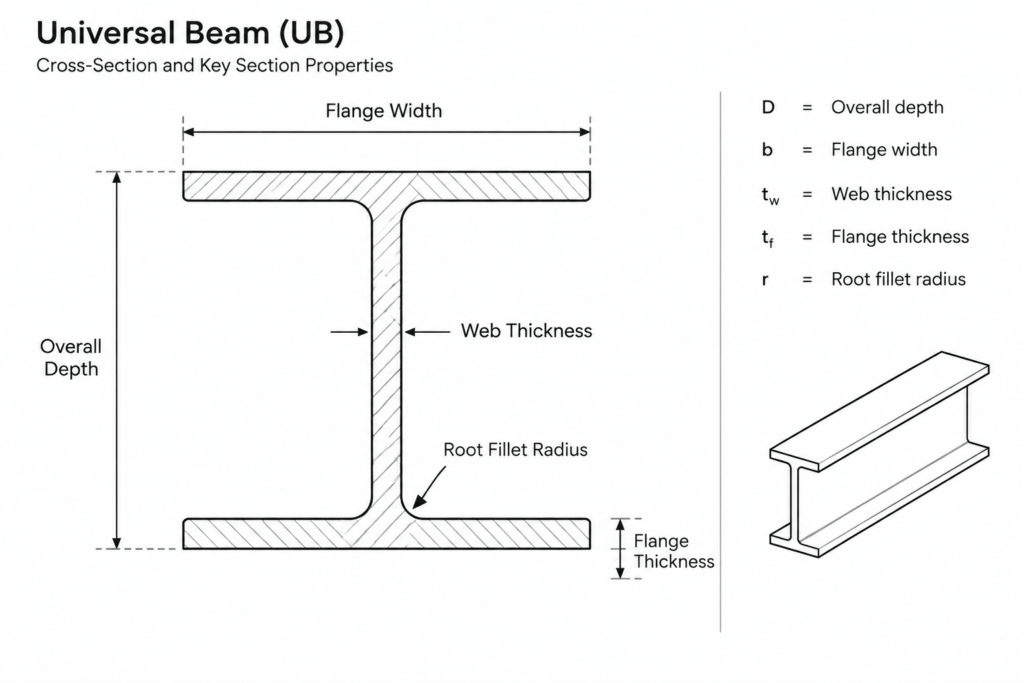
Dimension : 612.4×304.8×11.8×19.7
Depth : 612.4 mm
Width : 304.8 mm
Web Thickness : 11.8 mm
Flange Thickness : 19.7 mm
Root Fillet Radius : 17 mm
Sectional Area : 190 cm2
Unit Weight : 149.1 kg/m
How to read the UB designation
UB means universal beam. The numbers in the designation identify the nominal section series and mass category, but they should not be treated as substitutes for the listed properties. This is especially important here because the published unit weight is more precise than the rounded mass identifier used in the section name.
Understanding the cross-section dimensions
- Depth is the overall distance across the outside faces of the two flanges.
- Width is the overall flange width.
- Web thickness describes the central vertical plate-like portion connecting the flanges.
- Flange thickness describes the thickness of the upper and lower flange portions.
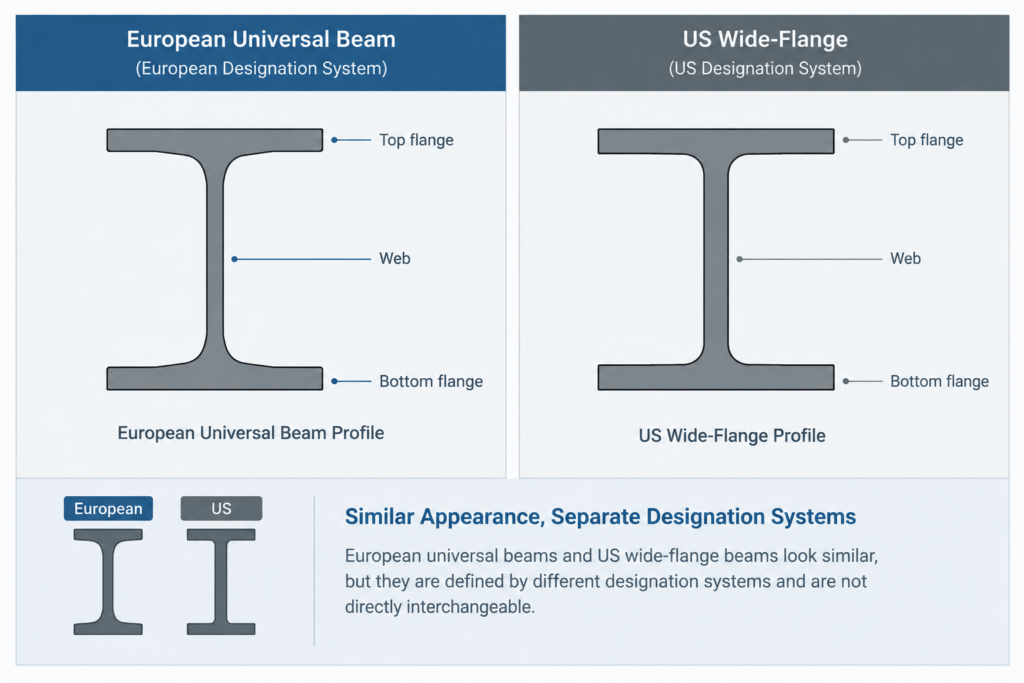
- Root fillet radius identifies the curved transition where the web meets a flange. It matters when checking clearances, coping, plates, weld access, and simplified CAD geometry.
Section area and unit weight
Sectional area describes the amount of steel in the cross section. Unit weight gives the mass per unit length and is useful for material schedules, quantity takeoffs, shipping estimates, and model checks. Neither value is a standalone statement of structural capacity.
Strength and serviceability checks require additional project information, including material grade, member length, restraint, loading, connection behavior, stability, and the design rules selected by the responsible engineer.
Using the DWG in a detailing workflow
The drawing can support section libraries, general arrangements, shop-detail backgrounds, connection layouts, and coordination models. After insertion, confirm the drawing units, scale, layer conventions, orientation, and cross-section geometry against the verified values in the source content.
A simplified CAD profile may omit manufacturing details or represent fillets schematically. Do not infer connection clearances solely from the nominal section name. Check the root region and actual listed dimensions before positioning plates, bolts, welds, stiffeners, or copes.
European UB sections and US W-shapes
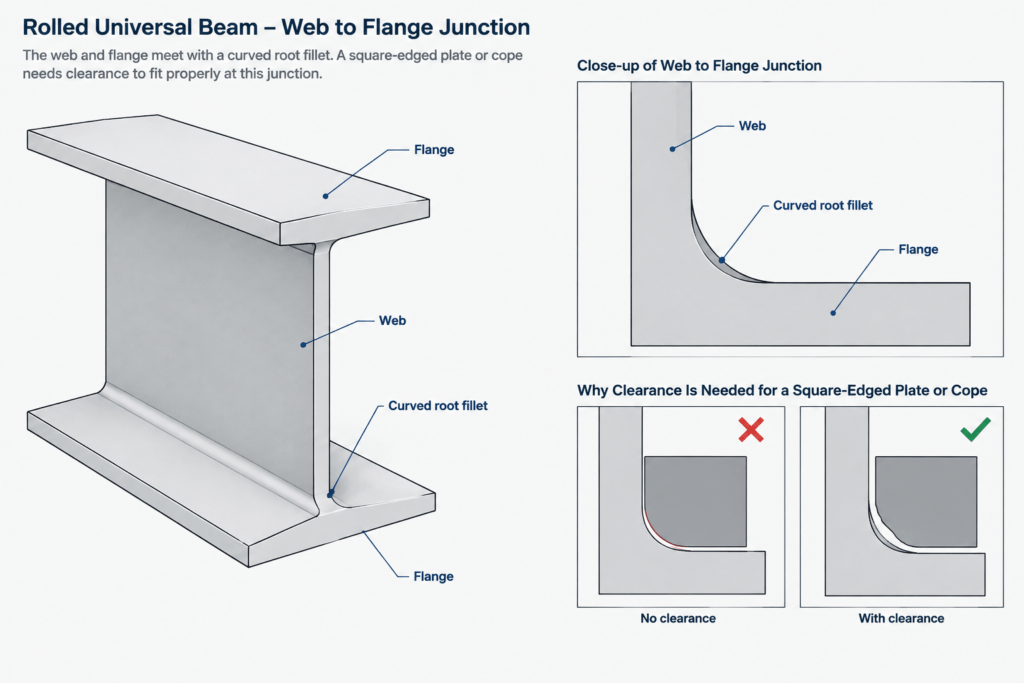
A universal beam may look similar to a US wide-flange shape, but the naming systems and available section properties are not interchangeable. A W-shape should not be selected as a direct replacement based only on similar nominal depth, flange width, or weight. Compare the complete geometry and relevant section properties under the governing project requirements.
Related reference topics
Useful companion references include universal beam dimensions, I-shape terminology, section-property concepts, steel unit-weight calculations, root fillet clearance, bolted and welded connection detailing, and CAD block verification. These topics help connect the section data to practical drafting and engineering workflows without treating the profile alone as a finished design.
Frequently asked questions
What does UB 610x305x149 mean?
It is a universal beam designation. The numbers act as nominal identifiers for the section series and mass category; the exact published dimensions and unit weight are provided separately in the source data.
Should the designation numbers be used as exact dimensions?
No. Use the listed depth, flange width, web thickness, flange thickness, and root fillet radius when accuracy is required. Nominal naming is useful for identification but does not replace tabulated geometry.
What does the root fillet radius affect?
The root fillet is the curved transition between the web and flange. It can affect plate fit-up, cope geometry, weld access, bolt clearances, and whether a simplified rectangular CAD profile accurately represents the rolled section.
Does the sectional area or unit weight indicate beam capacity?
No. These values describe section geometry and mass. Member capacity depends on additional properties, steel grade, loading, restraint, stability, connection conditions, and the applicable design method.
Is this UB section equivalent to a US W-shape?
Not automatically. UB and W-shape designations come from different section systems. Any comparison or substitution should use complete dimensional and property data rather than nominal size alone.
What should be checked after opening the DWG?
Confirm drawing units, scale, layers, profile orientation, and geometry. Compare the CAD profile with the verified source dimensions, especially where connection components approach the web-to-flange root region.