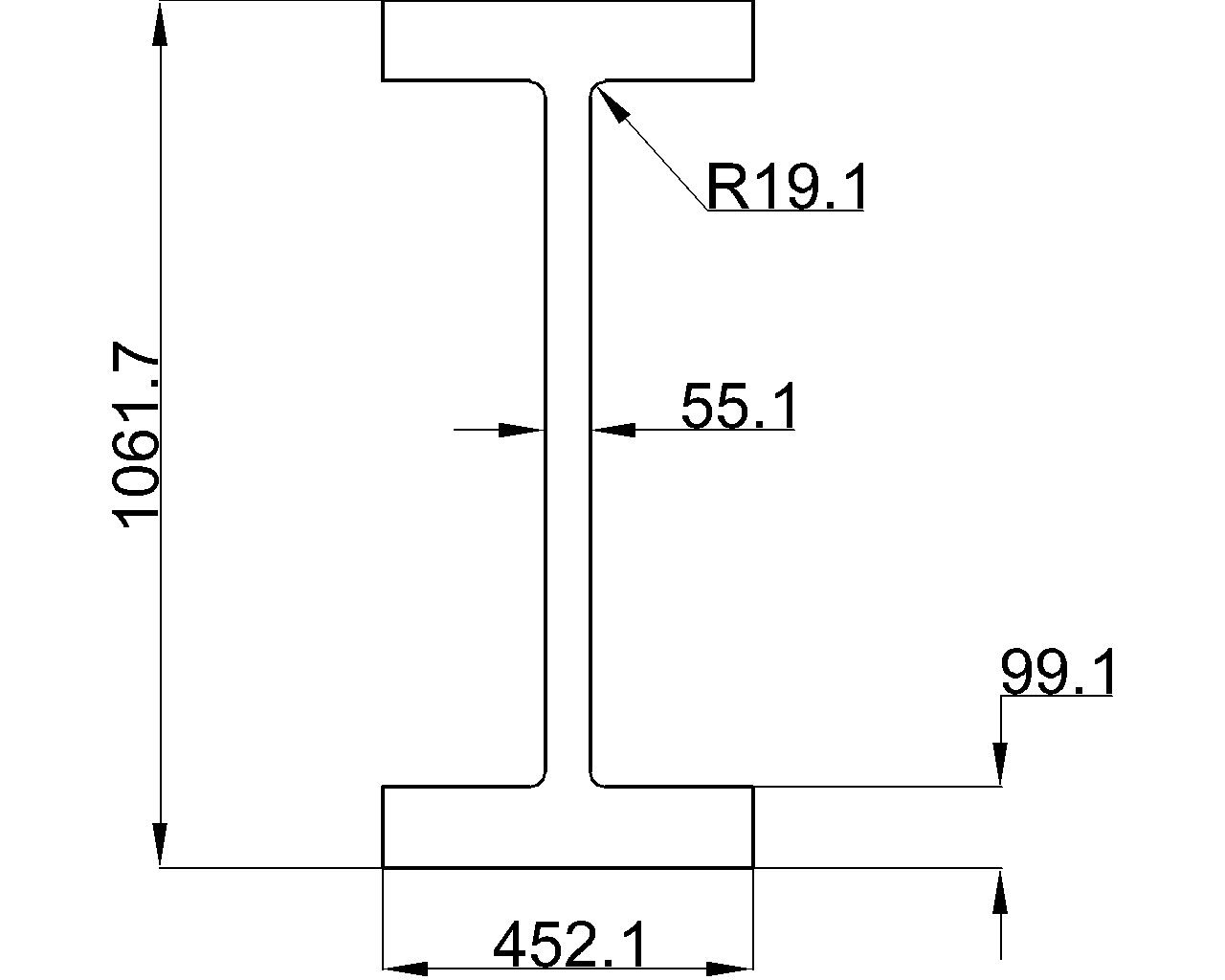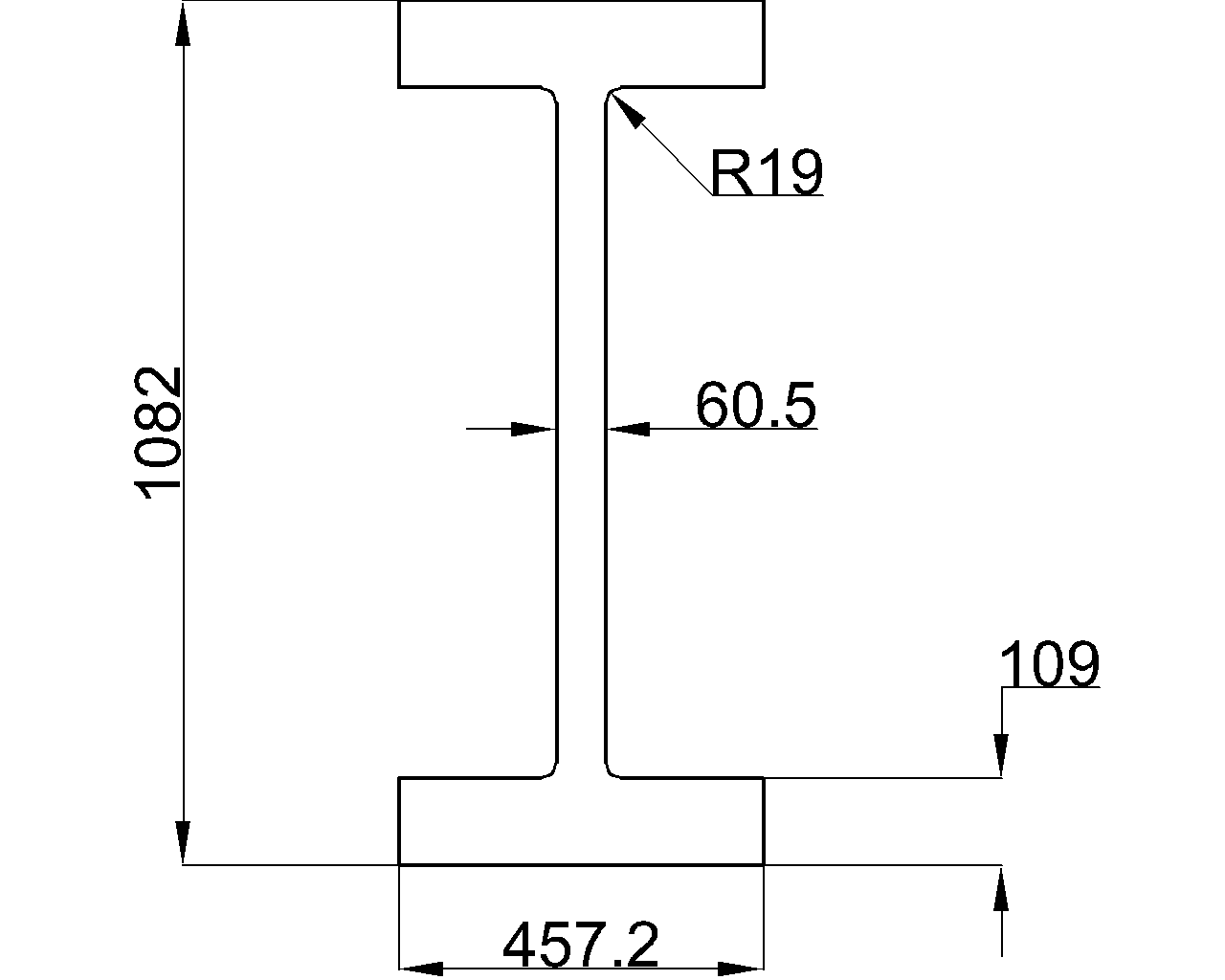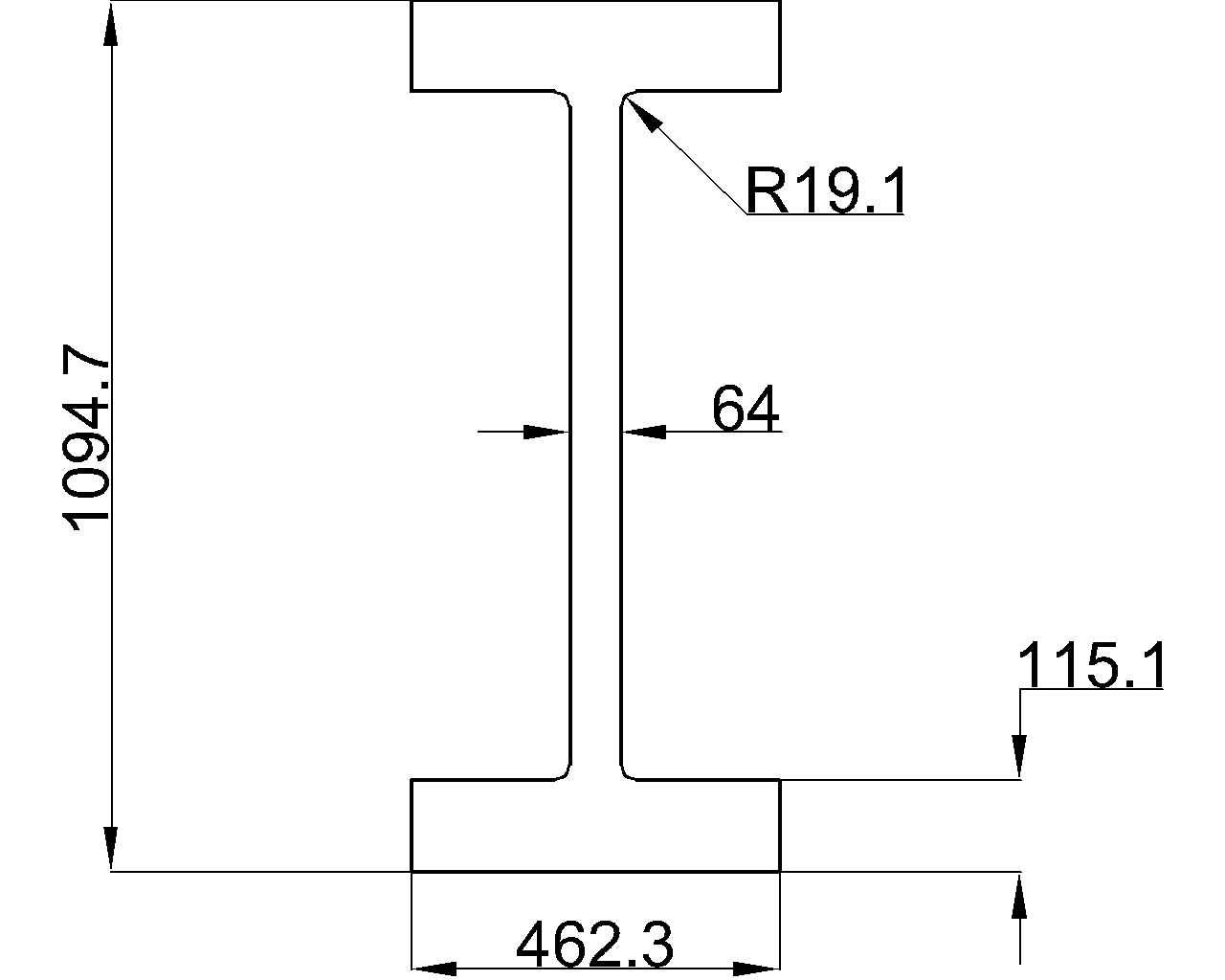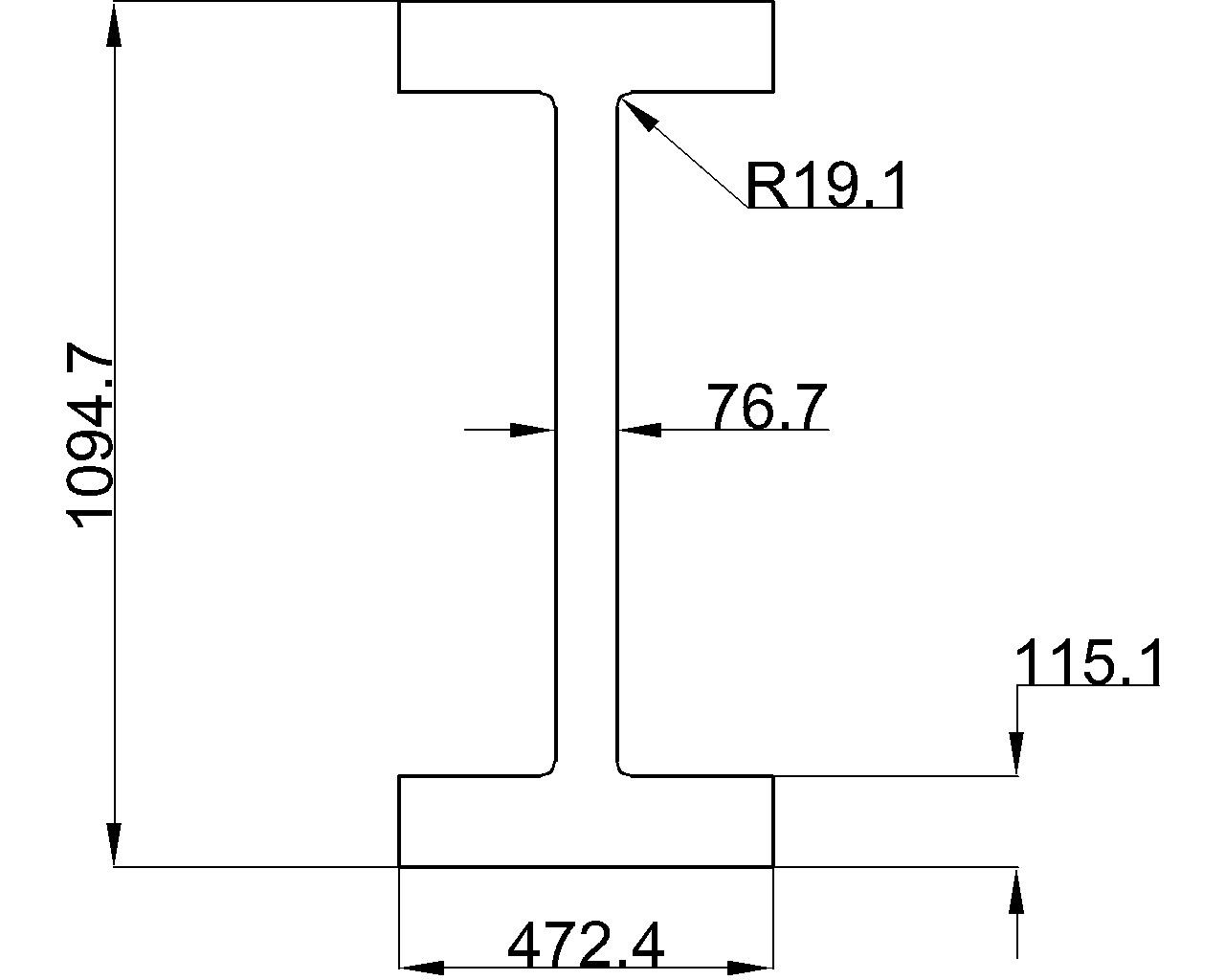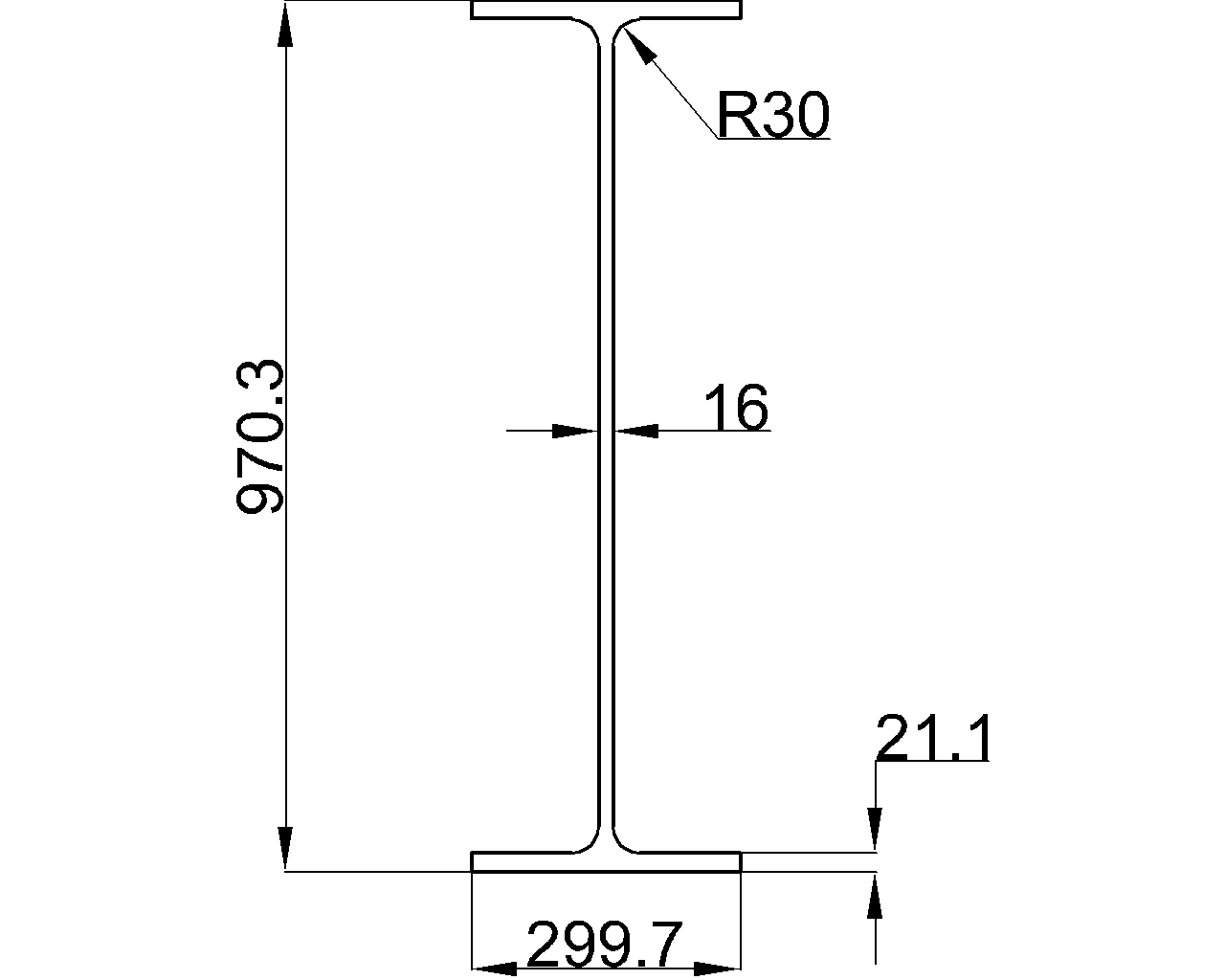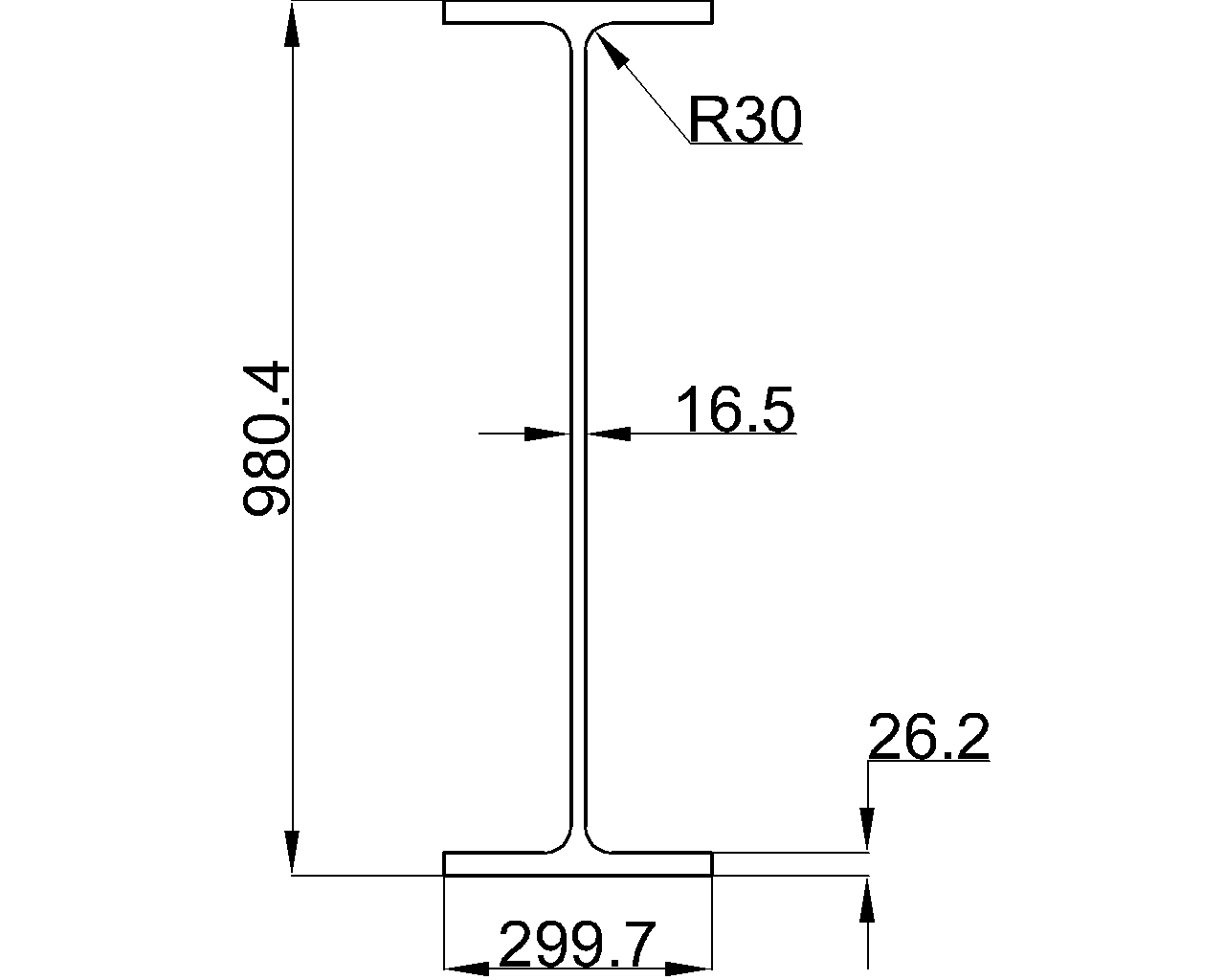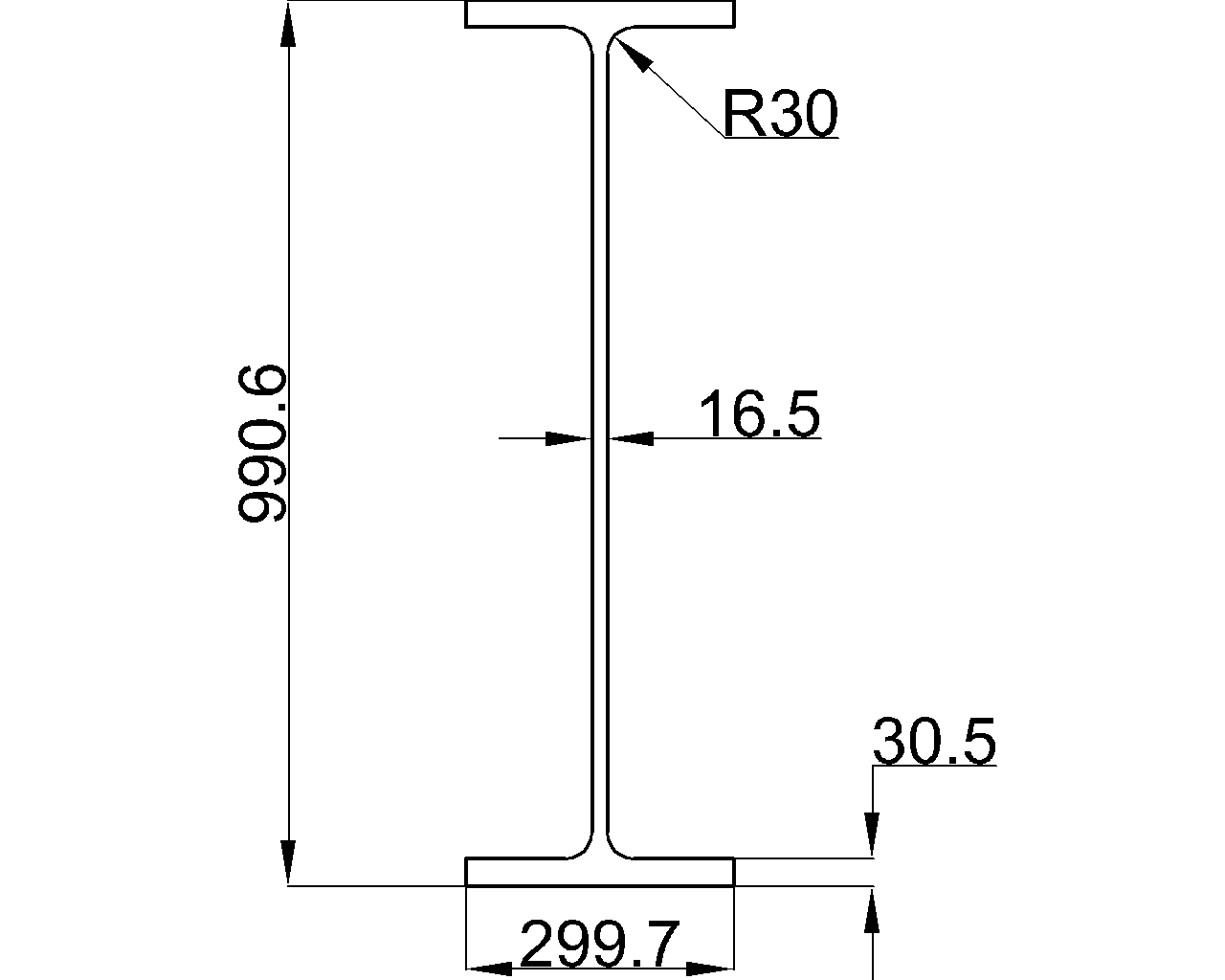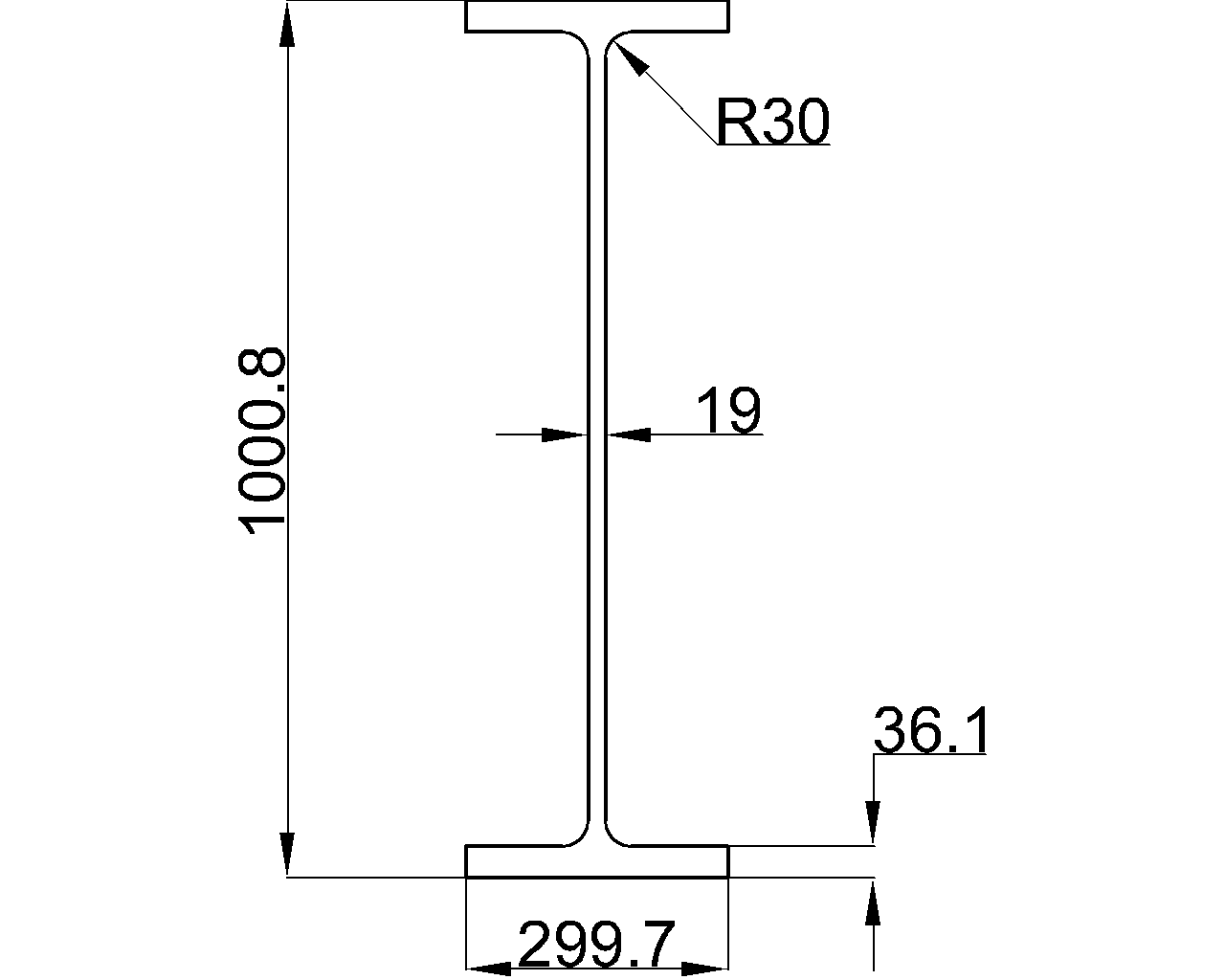
The W40x278 page provides a compact reference for a wide-flange structural steel shape. Use the source data below to review the section’s reported dimensions, sectional area, unit weight, and related terminology before using it in design or detailing work.
This page also identifies the AISC specification context and includes a DWG resource for drafting workflows. Pair this reference with the site’s guides to W-shapes, steel section properties, and structural steel connections when developing a broader design review.
W Beam
refer to : AISC 16
the American Institute of Steel Construction (AISC) Specification for Structural Steel Buildings (AISC 360-16), which is the 2016 edition of the AISC Specification for Structural Steel Buildings. It provides guidelines and requirements for the design, fabrication, and erection of steel structures in the United States.
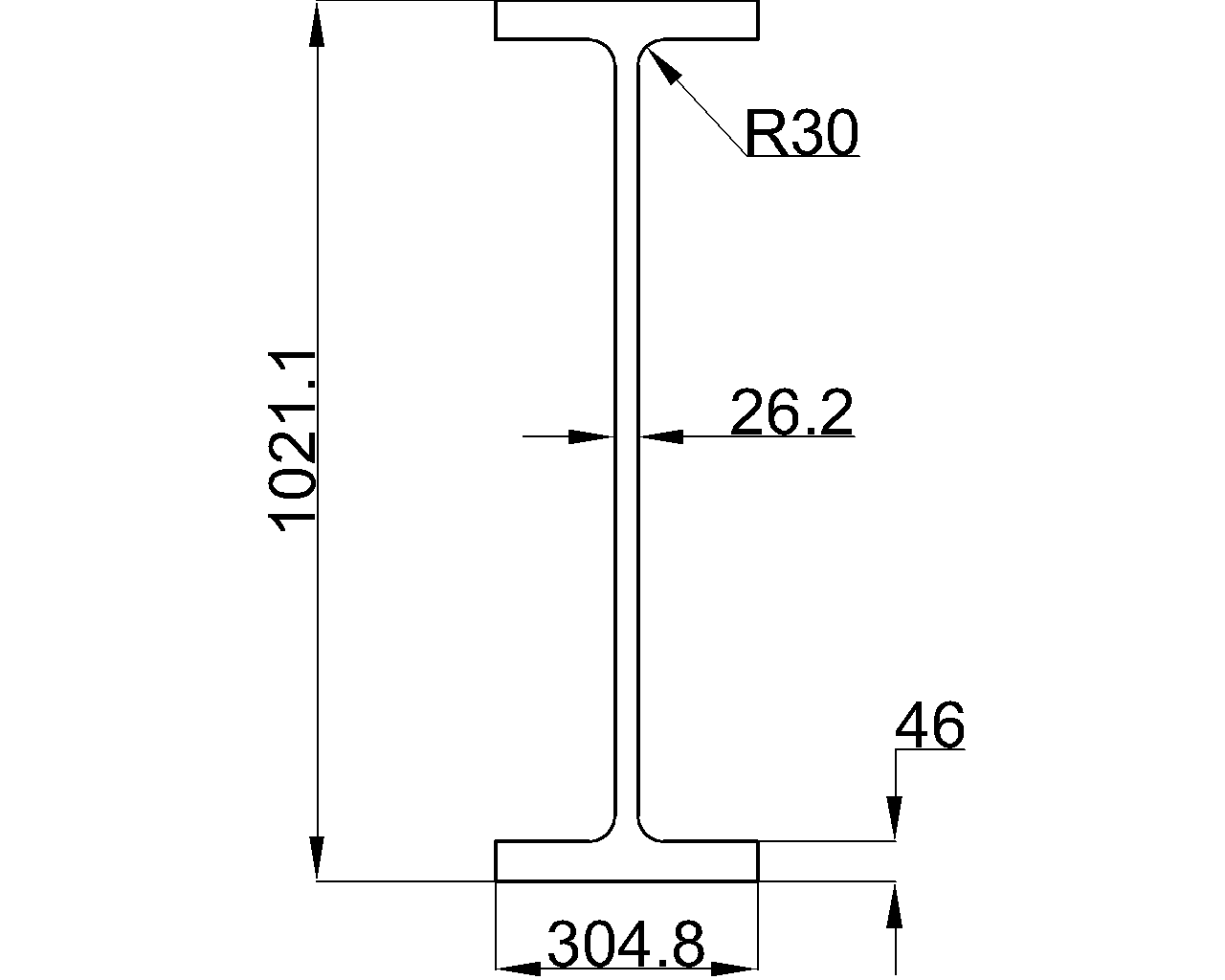
Depth : 1021.1 mm
Width : 304.8 mm
Web Thickness : 26.2 mm
Flange Thickness : 46 mm
Root Fillet Radius : 30 mm
Sectional Area : 530.97 cm2
Unit Weight : 416.8 kg/m
How to read the W40x278 reference
The listed depth and width describe the overall envelope of the section. Web thickness refers to the thickness of the central web, while flange thickness describes the thickness of the top and bottom flange elements. These dimensions are useful for checking clearances, connection detailing, fabrication references, and coordination with adjacent components.
The root fillet radius identifies the rounded transition between the web and each flange. This area matters when interpreting detailed geometry and when preparing accurate connection or fabrication drawings. A simplified rectangular sketch should not be treated as a complete representation of the rolled section.
Sectional area and unit weight
Sectional area describes the amount of steel in the cross-section and is used by engineering software and manual calculations for several section-property checks. Unit weight supports material takeoffs, shipping estimates, and coordination with fabrication documentation. Confirm how a project’s governing specification and calculation method use these properties before relying on them for design decisions.
AISC reference and DWG workflow
The source identifies AISC 360-16, the AISC Specification for Structural Steel Buildings, as the referenced design and construction framework. The specification context should be reviewed alongside the project’s adopted requirements, material documentation, connection design assumptions, and engineer-of-record direction.
The downloadable DWG can help with CAD coordination and drafting. Treat a CAD file as a geometry reference rather than a substitute for the authoritative section data or project-specific engineering review. For related drafting guidance, see the site’s resources on steel CAD and DWG details and steel detailing terminology.
W40x278 FAQ
What is the W40x278?
W40x278 is a designation for a wide-flange structural steel shape. The reference data on this page reports its principal dimensions, root fillet radius, sectional area, and unit weight.
What does the 278 in W40x278 mean?
The designation is part of the shape identification used for W-shapes. Interpret the designation together with the published section data rather than using the name alone to determine geometry or design properties.
What is the AISC reference on this page?
The page cites AISC 360-16, the American Institute of Steel Construction Specification for Structural Steel Buildings. Project users should confirm the governing specification and adopted requirements for their work.
Can the DWG be used for structural design?
The DWG is intended to support drafting and coordination. It should not replace verified section data, connection calculations, project specifications, or review by a qualified engineer.
Where should I use the W40x278 data?
The data can support preliminary reference, CAD coordination, material takeoffs, and section identification. Final design use requires checking the complete project context, applicable requirements, loads, connections, and engineering assumptions.