The W33x221 is a wide-flange structural steel shape listed in the AISC 16 reference data. This page provides its principal dimensions, mass-related information, and a CAD download reference for drafting workflows.
Use the values below as a section-reference starting point. Before using this shape in a project, confirm the applicable material specification, design assumptions, connection details, and engineering requirements for the specific application.
W Beam
refer to : AISC 16
the American Institute of Steel Construction (AISC) Specification for Structural Steel Buildings (AISC 360-16), which is the 2016 edition of the AISC Specification for Structural Steel Buildings. It provides guidelines and requirements for the design, fabrication, and erection of steel structures in the United States.
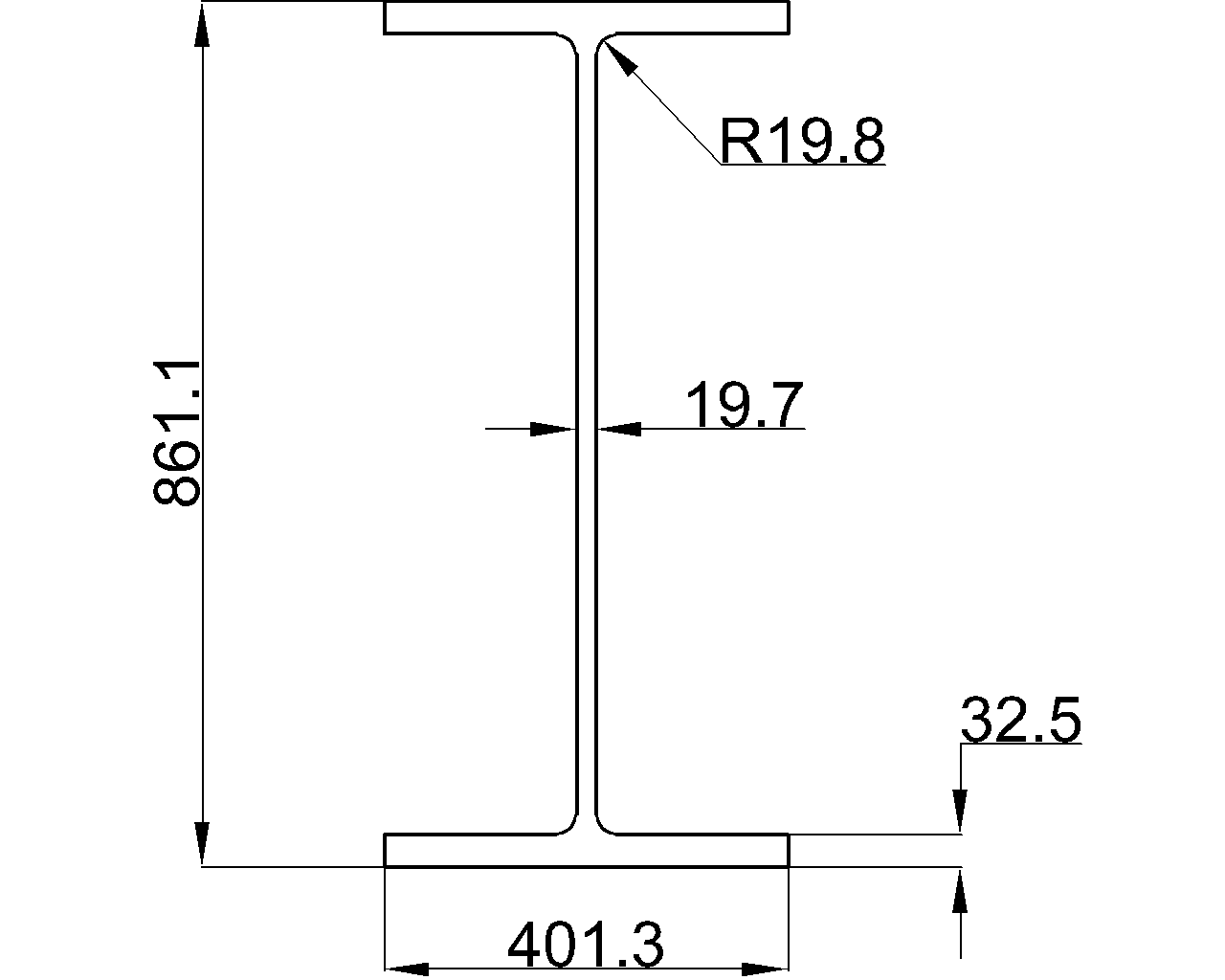
Depth : 861.1 mm
Width : 401.3 mm
Web Thickness : 19.7 mm
Flange Thickness : 32.5 mm
Root Fillet Radius : 19.8 mm
Sectional Area : 421.29 cm2
Unit Weight : 330.7 kg/m
How to read the W33x221 reference data
The listed depth and width describe the overall envelope of the section. These dimensions are useful when checking framing clearances, alignment, detailing space, and the graphical scale of a model or drawing.
Web thickness describes the central vertical plate, while flange thickness describes the thickness of the top and bottom flanges. Together, these dimensions help explain the shape’s geometry and support coordination with connections, stiffeners, openings, and adjacent members. The root fillet radius identifies the transition between the web and flange, which is important when interpreting rolled-shape geometry and detailing clearances.
Section area and unit weight
Sectional area is a geometric property of the steel cross-section. It is commonly used with material density to determine member mass and may also appear in calculations involving axial resistance, subject to the applicable design specification and limit states.
Unit weight expresses the mass of the member per unit length. It is useful for preliminary quantity takeoffs, shipping and handling estimates, and coordination with structural schedules. It should not be treated as a substitute for project-specific weight calculations when coatings, fittings, splice materials, or fabrication additions are included.
CAD and detailing workflow
The linked DWG file can support drafting and modeling tasks where a two-dimensional representation of the W33x221 profile is needed. Check drawing units, layer conventions, insertion scale, and the source geometry before incorporating the file into a project document.
For broader context, connect this page to related references on W-shape terminology, steel section properties, structural steel connections, and AISC shape resources. Those topics help readers move from a profile lookup to a coordinated design or detailing workflow.
W33x221 FAQ
What type of section is W33x221?
W33x221 is a W-shape, also called a wide-flange structural steel section. Its profile consists of two flanges connected by a web.
What information is provided for W33x221?
The reference lists overall depth, overall width, web thickness, flange thickness, root fillet radius, sectional area, and unit weight. A DWG download is also provided for CAD reference.
What is the purpose of the W33x221 unit weight?
The unit weight helps estimate the mass of the steel member over a given length. Project takeoffs should also account for items that are not part of the rolled shape itself.
Can the W33x221 DWG be used directly for fabrication?
The DWG is a reference resource for drafting and modeling. Verify units, geometry, revision control, project standards, and fabrication requirements before using any CAD file for production documentation.
Does the listed profile data determine whether W33x221 is adequate for a structure?
No. Member adequacy depends on the project loads, unbraced lengths, support conditions, material requirements, limit states, connections, and governing design provisions. A qualified engineer must verify the application.