The W12x53 is a wide-flange structural steel beam designation used in American steel-shape references. This page brings together the source-listed geometry, section area, unit weight, specification context, and a DWG resource for engineers, detailers, fabricators, and students reviewing W shapes.
Use the dimensional information below when comparing W-beam proportions or checking a drafting model. Design decisions still require the applicable project criteria, material information, connection assumptions, and verification by a qualified engineer.
W Beam
refer to : AISC 16
the American Institute of Steel Construction (AISC) Specification for Structural Steel Buildings (AISC 360-16), which is the 2016 edition of the AISC Specification for Structural Steel Buildings. It provides guidelines and requirements for the design, fabrication, and erection of steel structures in the United States.
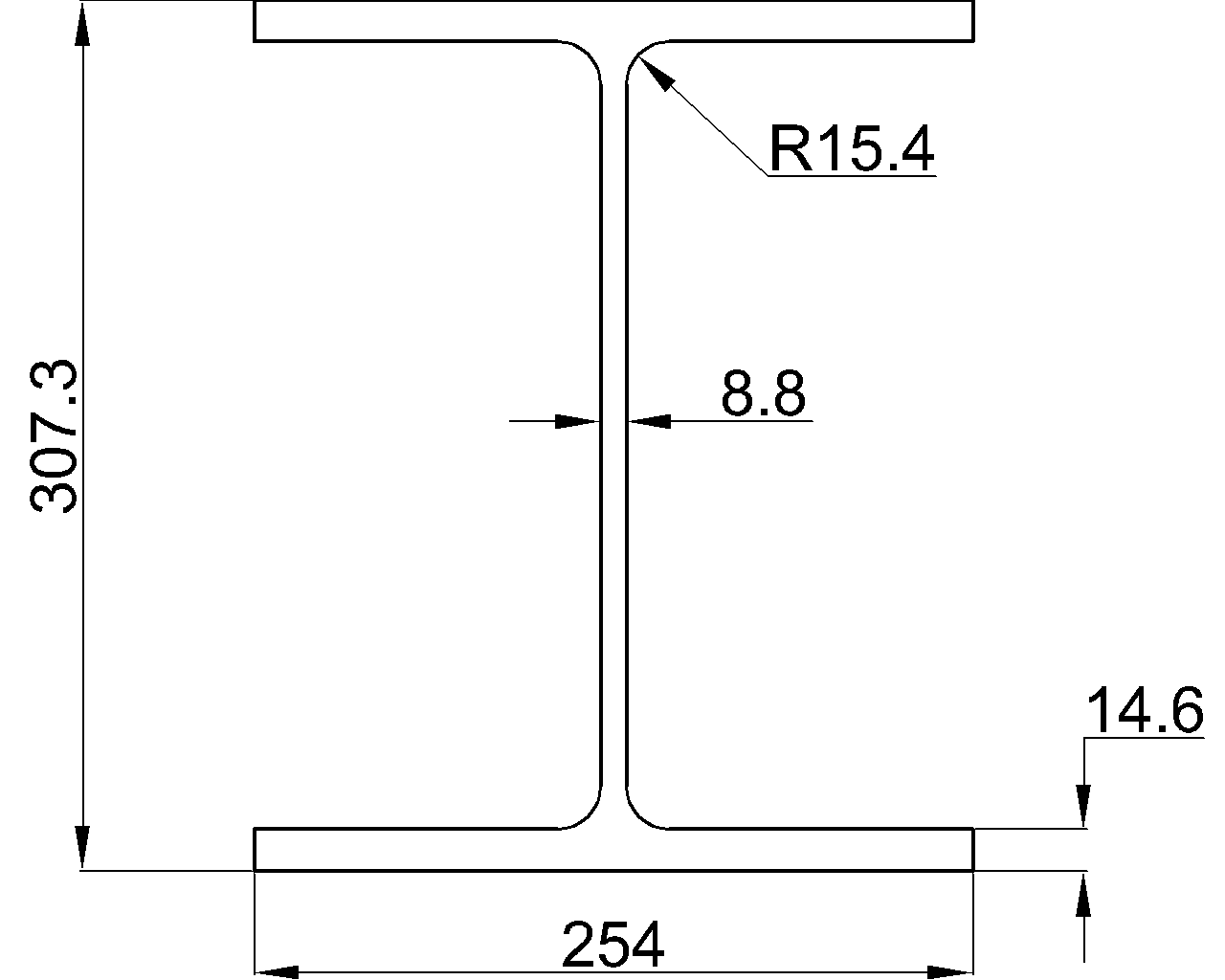
Depth : 307.3 mm
Width : 254 mm
Web Thickness : 8.8 mm
Flange Thickness : 14.6 mm
Root Fillet Radius : 15.4 mm
Sectional Area : 100.64 cm2
Unit Weight : 79 kg/m
How to read the W12x53 reference
The W designation identifies a wide-flange beam. The designation’s numeric portion is the shape identifier used in steel-shape catalogs; it should be read together with the listed dimensions and properties rather than treated as a substitute for the source data. The reference block reports depth, flange width, web thickness, flange thickness, root fillet radius, sectional area, and unit weight.
Dimensions and section properties
The listed dimensions are given in millimeters. The sectional area is reported in square centimeters, while unit weight is reported in kilograms per meter. Keeping these units visible is important when transferring the shape into a calculation, estimating material quantities, or checking a CAD model against a steel-shape reference.
Depth and flange width describe the overall envelope of the section. Web and flange thicknesses help explain the distribution of steel within that envelope, while the root fillet radius identifies the transition between the web and flange. The sectional area and unit weight are useful reference properties, but they do not by themselves establish member strength, stability, connection resistance, or serviceability performance.
AISC context and DWG use
The source identifies the shape with the AISC Specification for Structural Steel Buildings (AISC 360-16). That reference provides a design, fabrication, and erection framework; it does not remove the need to confirm the project’s adopted requirements and engineering assumptions.
The linked DWG can support drafting and coordination workflows. Before using imported geometry, check units, layer behavior, insertion scale, and the relationship between the drawing and the authoritative numeric reference. For related research, connect this page with the site’s resources on W shapes, steel section properties, structural steel terminology, and DWG detailing practices.
W12x53 FAQ
What type of steel shape is W12x53?
W12x53 is identified as a W beam, also called a wide-flange beam in common structural steel terminology.
What information is listed for this shape?
The source lists depth, width, web thickness, flange thickness, root fillet radius, sectional area, and unit weight. Each value should be used with its stated unit.
What does the AISC 360-16 reference mean here?
It identifies the AISC Specification for Structural Steel Buildings, 2016 edition, as the referenced specification context for design, fabrication, and erection of steel structures. Project users should verify which requirements govern their work.
Can the DWG be used directly for design?
The DWG is a drafting and reference resource. It should be checked for scale and geometry, and it should not replace engineering calculations or the authoritative section data.