The UB 914x305x253 is a Universal Beam reference for structural steel detailing, specification review, and preliminary section comparison. This page brings together the listed dimensional data, sectional area, unit weight, and CAD download associated with the section.
Use the source values below as the controlling local reference. For design work, confirm the required steel grade, loading, restraint, connection details, fabrication requirements, and applicable project rules with the responsible engineer.
UB 914x305x253
Universal Beams
refer to : EN 10365:2017
a European standard that defines the dimensions, tolerances, and sectional properties for hot-rolled steel channels, I-beams, and H-beams used in construction and engineering. It ensures uniformity and compatibility across European structural steel products.
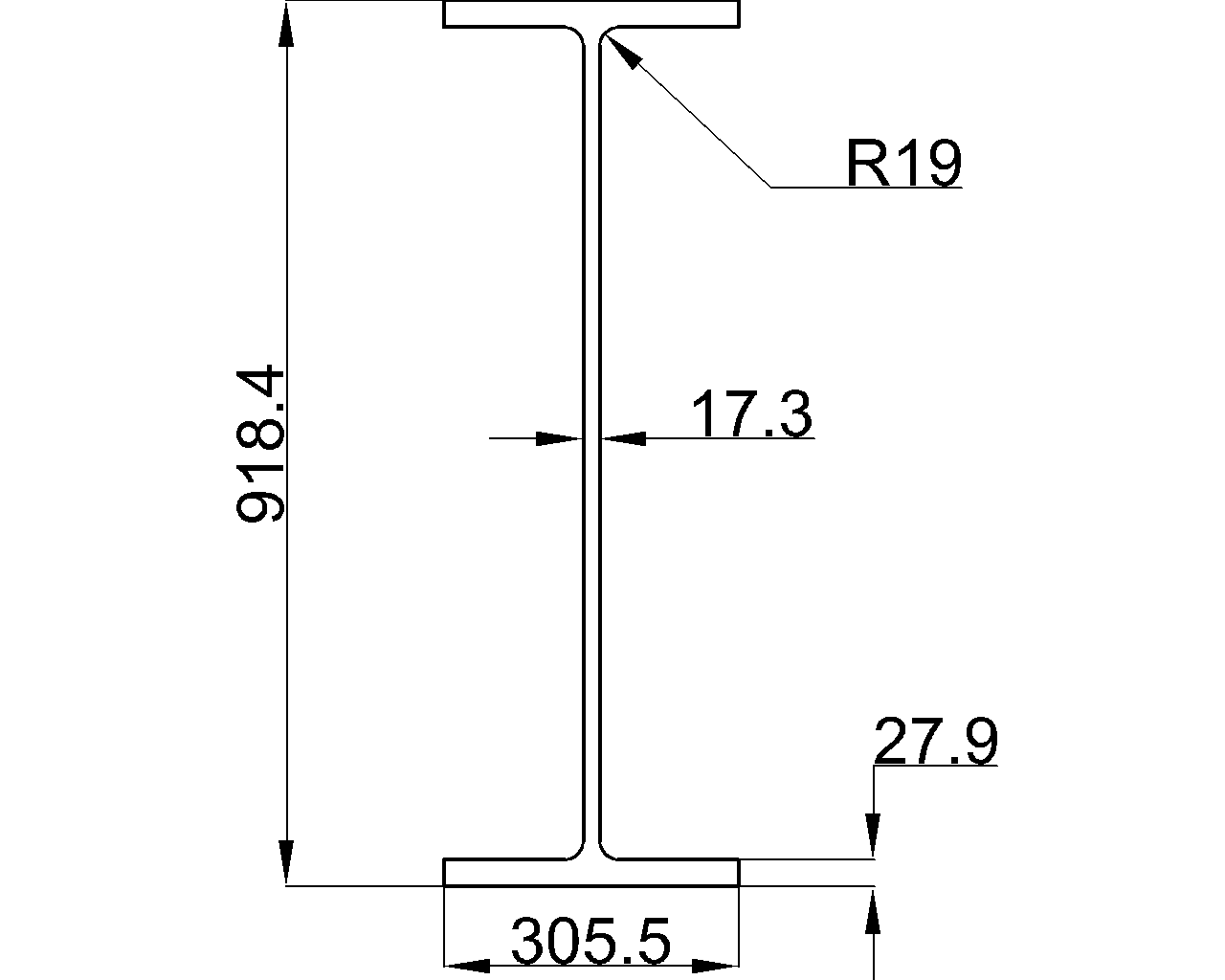
Dimension : 918.4×305.5×17.3×27.9
Depth : 918.4 mm
Width : 305.5 mm
Web Thickness : 17.3 mm
Flange Thickness : 27.9 mm
Root Fillet Radius : 19 mm
Sectional Area : 322.8 cm2
Unit Weight : 253.4 kg/m
Understanding the UB 914x305x253 designation
UB identifies the Universal Beam family. The designation is used to distinguish this section from other rolled steel shapes, while the accompanying source data provides the actual depth, width, web thickness, flange thickness, root fillet radius, sectional area, and unit weight.
How to read the listed section data
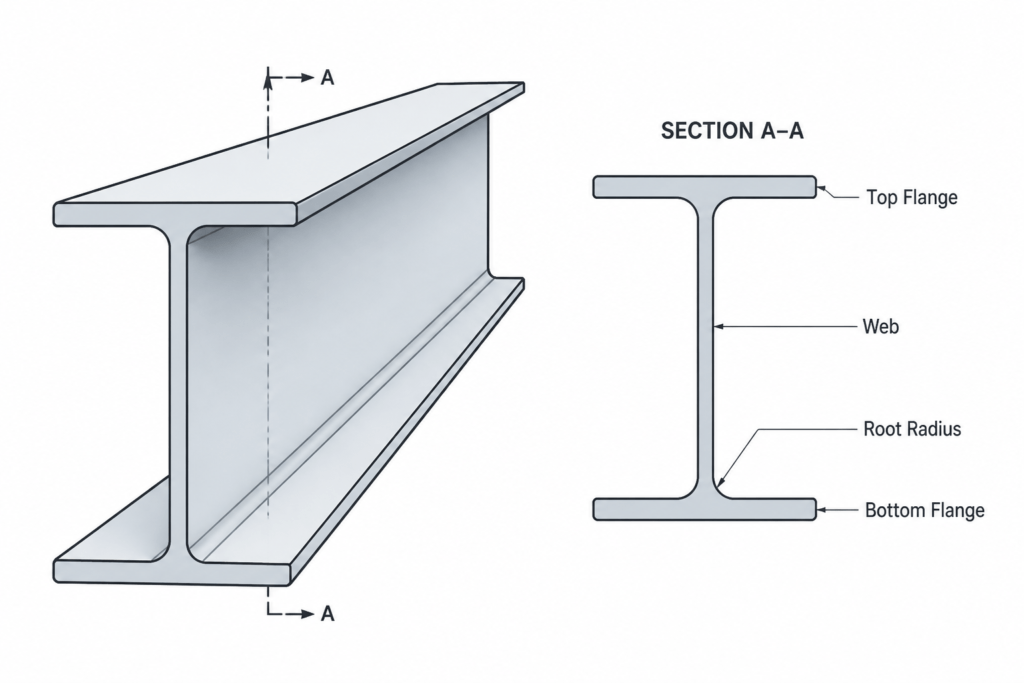
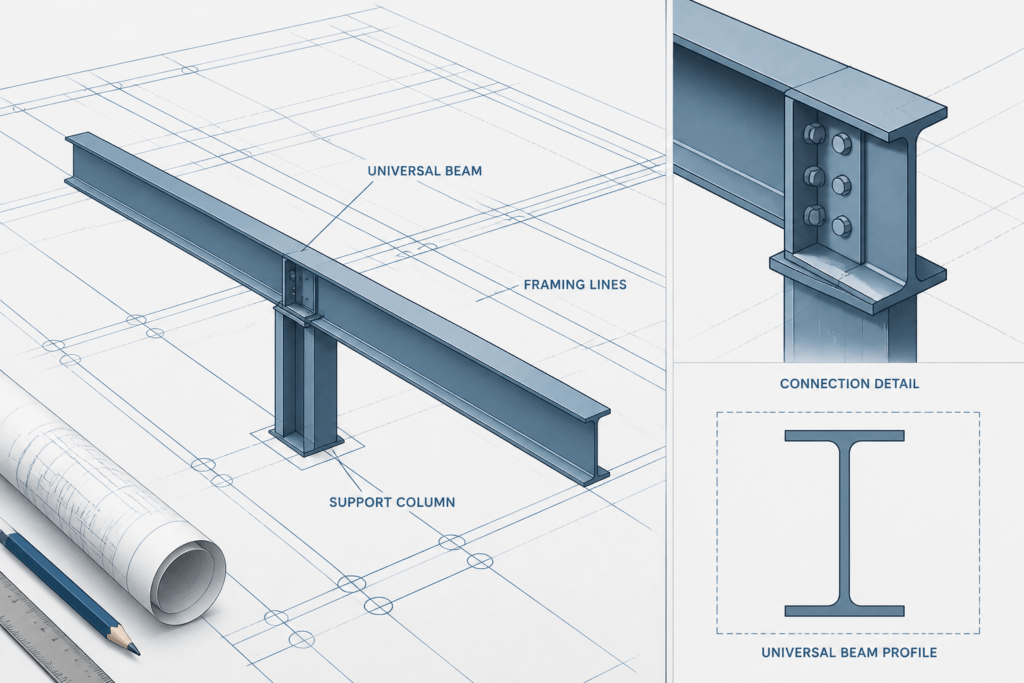
The dimension entry follows the order presented in the source: overall depth, flange width, web thickness, and flange thickness. These dimensions describe the principal geometry of the rolled profile and help drafters coordinate the section with framing layouts, connection details, openings, and fabrication drawings.
The root fillet radius describes the curved transition between the web and flange. This region is important when checking fit-up, detailing clearances, coped connections, and the way adjoining components bear against the rolled shape.
Sectional area is a geometric property of the steel profile, while unit weight expresses the listed mass per unit length. Both values are useful for material takeoffs and reference comparisons, but they do not by themselves establish structural adequacy for a particular application.
Standard and CAD reference
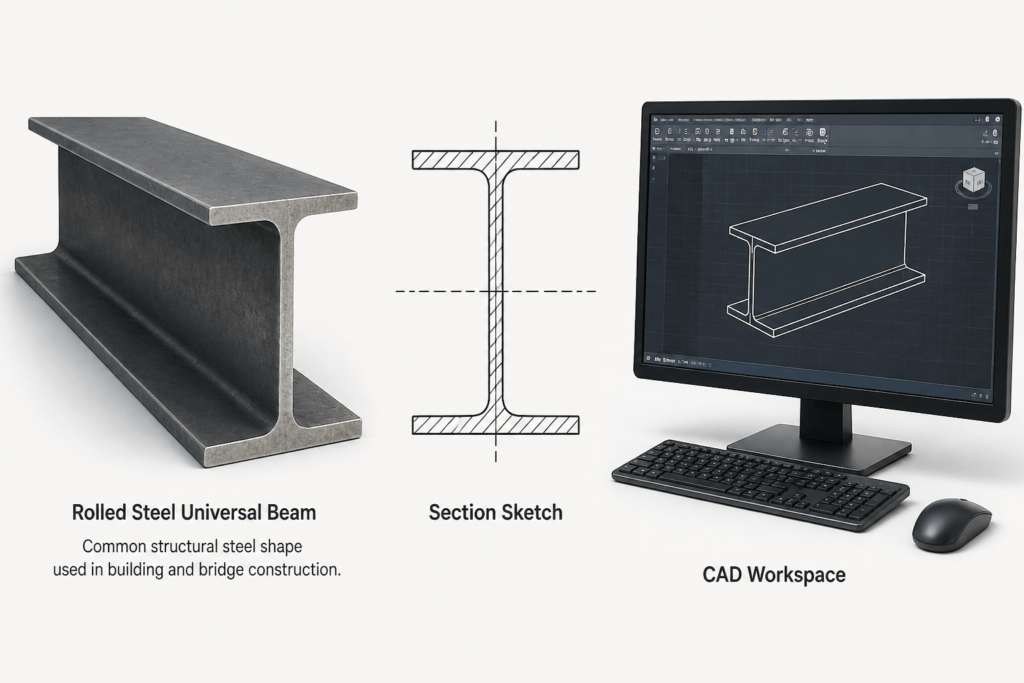
The source identifies EN 10365:2017 as the dimensional reference for the listed Universal Beam data. The attached DWG resource can support drafting and coordination workflows. Before using a CAD profile for fabrication or construction documents, verify the drawing orientation, units, layer content, and consistency with the project’s approved section schedule.
Related engineering topics
- Universal Beam and Universal Column terminology
- Rolled steel section dimensions and tolerances
- Steel connection and detailing clearances
- Section properties used in structural checks
- Structural steel CAD and DWG coordination
Frequently asked questions
What does UB mean?
UB means Universal Beam, a rolled structural steel section family commonly identified by its depth and mass designation. The complete source entry should be used when confirming the exact profile.
What dimensions are listed for this beam?
The source lists the overall depth, flange width, web thickness, flange thickness, and root fillet radius. These values describe the beam geometry and should be checked against the approved product or section reference before fabrication.
What is the purpose of the sectional area?
Sectional area is a geometric property used in engineering calculations and material quantity work. Its application depends on the governing design method and the other properties required for the specific check.
Can the DWG file be used directly for fabrication?
The DWG is a drafting reference, not a substitute for project-approved fabrication information. Confirm units, orientation, tolerances, connection details, and revision status before issuing drawings.
Does the listed unit weight confirm structural capacity?
No. Unit weight describes the listed mass per unit length. Structural capacity also depends on material properties, loading, span, restraint, stability, connections, and the applicable design requirements.