The UB 610x229x113 is a Universal Beam reference entry for engineers, detailers, fabricators, and students working with European structural steel profiles. This page brings together the designation, published dimensions, section data, and a CAD download in one place.
Use the source values below when checking drawings, comparing section designations, or preparing preliminary documentation. For design work, confirm material grade, loading, restraint, connection behavior, and applicable project requirements separately.
UB 610x229x113
Universal Beams
refer to : EN 10365:2017
a European standard that defines the dimensions, tolerances, and sectional properties for hot-rolled steel channels, I-beams, and H-beams used in construction and engineering. It ensures uniformity and compatibility across European structural steel products.
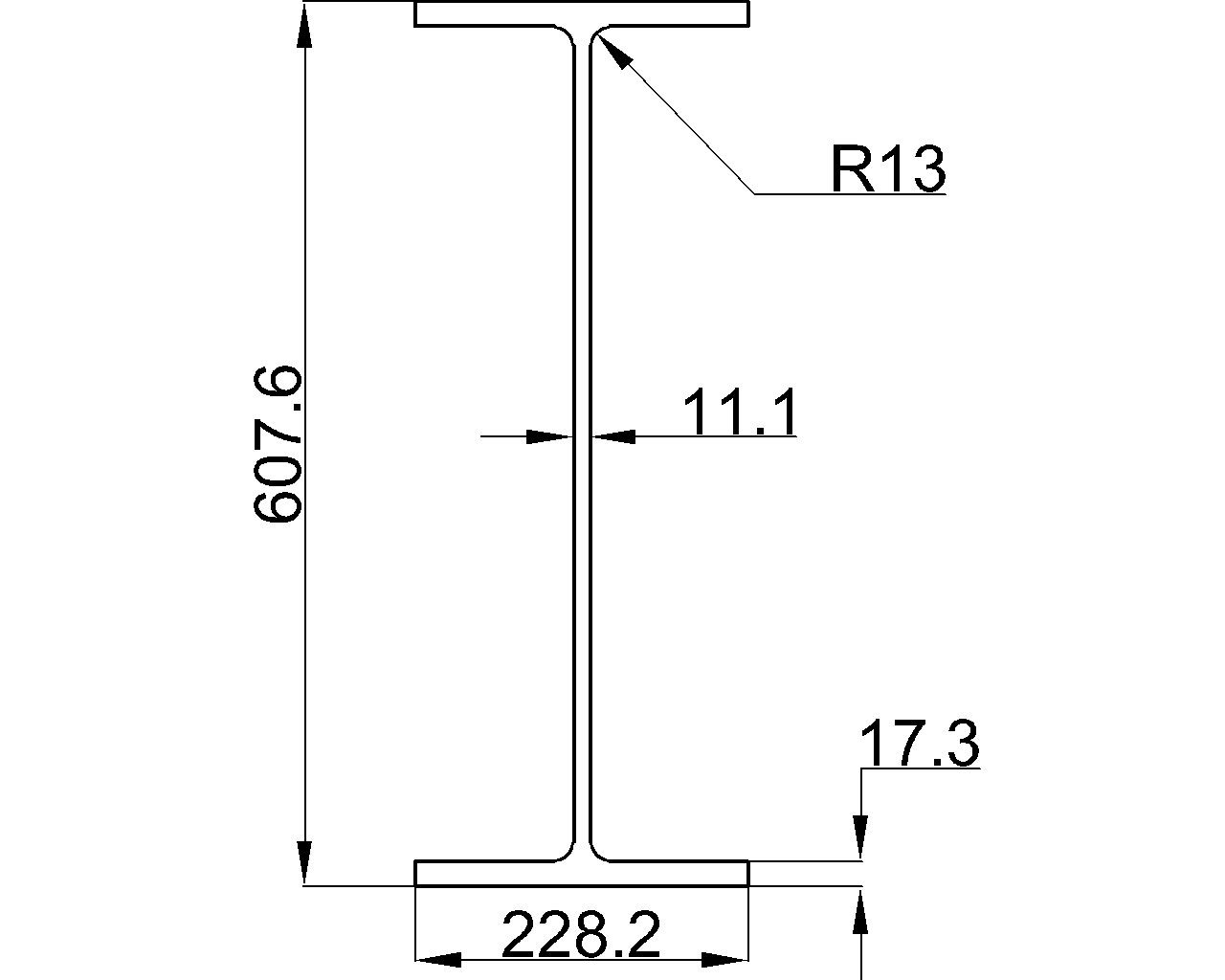
Dimension : 607.6×228.2×11.1×17.3
Depth : 607.6 mm
Width : 228.2 mm
Web Thickness : 11.1 mm
Flange Thickness : 17.3 mm
Root Fillet Radius : 13 mm
Sectional Area : 143.9 cm2
Unit Weight : 113 kg/m
How to read the UB designation
The designation identifies a Universal Beam profile and its nominal mass category. The dimensional string is presented in the order of overall depth, flange width, web thickness, and flange thickness. The listed dimensions provide a quick geometric description of the section, while the root fillet radius records the curved transition between the web and flange.
Reference data included on this page
- Depth and width: These describe the overall envelope of the rolled section and help with layout, clearance, and detailing checks.
- Web and flange thickness: These describe the principal plate elements of the I-shaped section and are useful when reviewing section geometry and connection details.
- Root fillet radius: This identifies the rounded internal transition created by the rolling process. It should be considered when detailing plates, stiffeners, copes, and bearing interfaces.
- Sectional area: This is a published geometric property used with other section properties in engineering calculations.
- Unit weight: The listed value expresses the profile’s linear mass and supports material takeoffs and handling estimates.
Standard and CAD reference
The source identifies EN 10365:2017 as the dimensional reference for this Universal Beam entry. Engineers should distinguish the profile’s geometric designation from the steel grade, product certification, fabrication requirements, and design standard used on a project.
The downloadable DWG can support drafting workflows and preliminary arrangement work. Check the drawing units, layer conventions, local detailing practice, and project-specific requirements before incorporating CAD geometry into issued documents. Related reference topics include Universal Beams, section properties, steel terminology, connection detailing, and structural steel CAD resources.
Using the published values responsibly
Profile dimensions and section data are useful for identification and comparison, but they do not by themselves establish member capacity or design suitability. A complete engineering assessment may also require loading, support conditions, buckling checks, connections, corrosion allowances, fire requirements, and verified material information.
Frequently asked questions
What type of section is UB 610x229x113?
It is a Universal Beam, an I-shaped hot-rolled structural steel section.
What does the dimension string describe?
The dimension string describes the section in the order of depth, width, web thickness, and flange thickness, as identified by the source data.
Which standard is referenced for this profile?
The entry refers to EN 10365:2017 for the dimensions, tolerances, and sectional properties of the listed rolled steel profile.
What is the DWG download used for?
The DWG is a CAD reference resource for drafting and layout work. It should be checked against the project drawing standard and verified before use in issued documentation.
Does the profile designation alone confirm structural capacity?
No. Capacity depends on the material, loading, restraint, support conditions, connections, design method, and other project requirements. The published profile data should be used as part of a complete engineering review.