UB 533x165x66 is a Universal Beam reference for engineers, fabricators, and detailers working with European structural steel sections. This page brings the listed dimensions and section data together with practical guidance for reading the designation, checking connection details, and using the associated CAD resource.
Use the original data below as the dimensional reference for this section. For design work, confirm material grade, loading, restraint, connection behavior, buckling resistance, and applicable project requirements separately; the section dimensions alone do not establish structural capacity.
UB 533x165x66
Universal Beams
refer to : EN 10365:2017
a European standard that defines the dimensions, tolerances, and sectional properties for hot-rolled steel channels, I-beams, and H-beams used in construction and engineering. It ensures uniformity and compatibility across European structural steel products.
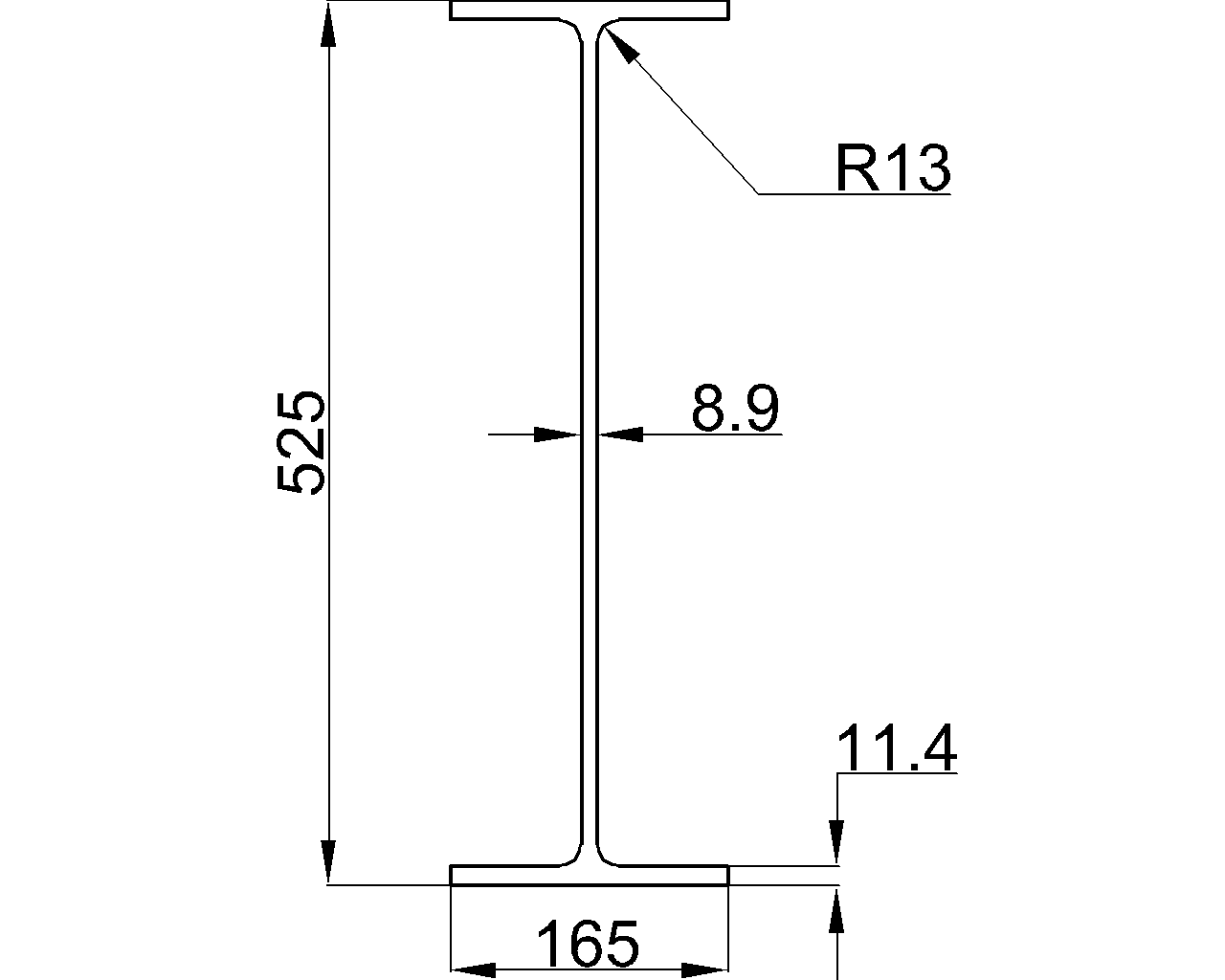
Dimension : 525x165x8.9×11.4
Depth : 525 mm
Width : 165 mm
Web Thickness : 8.9 mm
Flange Thickness : 11.4 mm
Root Fillet Radius : 13 mm
Sectional Area : 83.8 cm2
Unit Weight : 65.8 kg/m
How to read the UB 533x165x66 reference
“UB” identifies a Universal Beam. The designation is a convenient section label, while the detailed dimension line provides the depth, width, web thickness, and flange thickness used to describe the section geometry. The listed unit weight and sectional area are useful for estimating steel quantities and coordinating member schedules, but they should not be treated as a substitute for a complete design check.
Geometry and detailing considerations
The web primarily separates and connects the flanges, while the flanges provide the main breadth of the rolled section. The root fillet is the curved transition between web and flange. That transition matters when checking connection fit-up, stiffener placement, end-plate detailing, cope geometry, and clearances for fabrication tools.
When preparing drawings, keep the web and flange thicknesses visible in the member reference or section schedule where they affect connection detailing. Also check whether the actual rolled profile, weld arrangement, bolts, plates, and access requirements are compatible with the intended connection. Fabrication tolerances and site conditions may require additional coordination.
Using the EN 10365 reference
The source identifies EN 10365:2017 as the reference for the dimensions, tolerances, and sectional properties of relevant hot-rolled steel sections. Treat that reference as the dimensional framework for this entry, while confirming the governing project specification and the applicable design standard before issuing calculations or fabrication documents.
CAD and drawing workflow
The downloadable DWG can support preliminary drafting, layout coordination, and connection development. Before using it for fabrication, verify the drawing units, insertion scale, section orientation, layer content, and any assumptions about the member centerline or reference axes. Compare critical geometry against the authoritative values shown on this page and the project documentation.
Related steel-reference topics
- Universal Beam dimensions: compare depth, width, web, flange, and root geometry across nearby sections.
- Steel section properties: distinguish geometric data from the resistance checks required for design.
- Steel connections and detailing: review how bolts, welds, plates, stiffeners, and clearances interact with rolled profiles.
- Structural steel CAD and DWG resources: use downloadable section references as drafting aids, followed by project-specific verification.
Frequently asked questions
What does UB mean?
UB means Universal Beam, a rolled structural steel section designation used for beam profiles in the referenced European steel system.
Why does the designation include 533x165x66?
The designation is the section label used to identify this UB profile. The detailed entry below it supplies the dimensional and mass information needed for reference and coordination.
Why is the listed dimension written as 525x165x8.9×11.4?
This dimension sequence describes the section geometry in the order provided by the source: depth, width, web thickness, and flange thickness. It gives more specific geometric information than the abbreviated section designation.
What is the root fillet used for in detailing?
The root fillet is the rounded transition between the web and flange. It should be considered when checking plate fit, stiffeners, weld access, copes, and other connection details near the web-to-flange junction.
Can the DWG be used directly for fabrication?
Use the DWG as a drafting and coordination reference only until its scale, units, orientation, geometry, and project-specific detailing have been checked against the authoritative section data and fabrication requirements.
Does the section data establish design capacity?
No. Capacity depends on factors such as material properties, span, loading, restraint, buckling behavior, connection design, and the governing design rules. A qualified engineer should complete the relevant verification.