UB 356x171x67 steel section reference
The UB 356x171x67 is a Universal Beam profile documented with dimensional and mass information for structural steel reference work. This page brings together the profile designation, principal dimensions, sectional area, unit weight, and the associated EN 10365:2017 reference.
Use the data below when checking drawings, comparing steel section references, or preparing preliminary material estimates. For design, fabrication, and connection detailing, confirm the project specification, material requirements, loading, and applicable design rules with the responsible engineer.
UB 356x171x67
Universal Beams
refer to : EN 10365:2017
a European standard that defines the dimensions, tolerances, and sectional properties for hot-rolled steel channels, I-beams, and H-beams used in construction and engineering. It ensures uniformity and compatibility across European structural steel products.
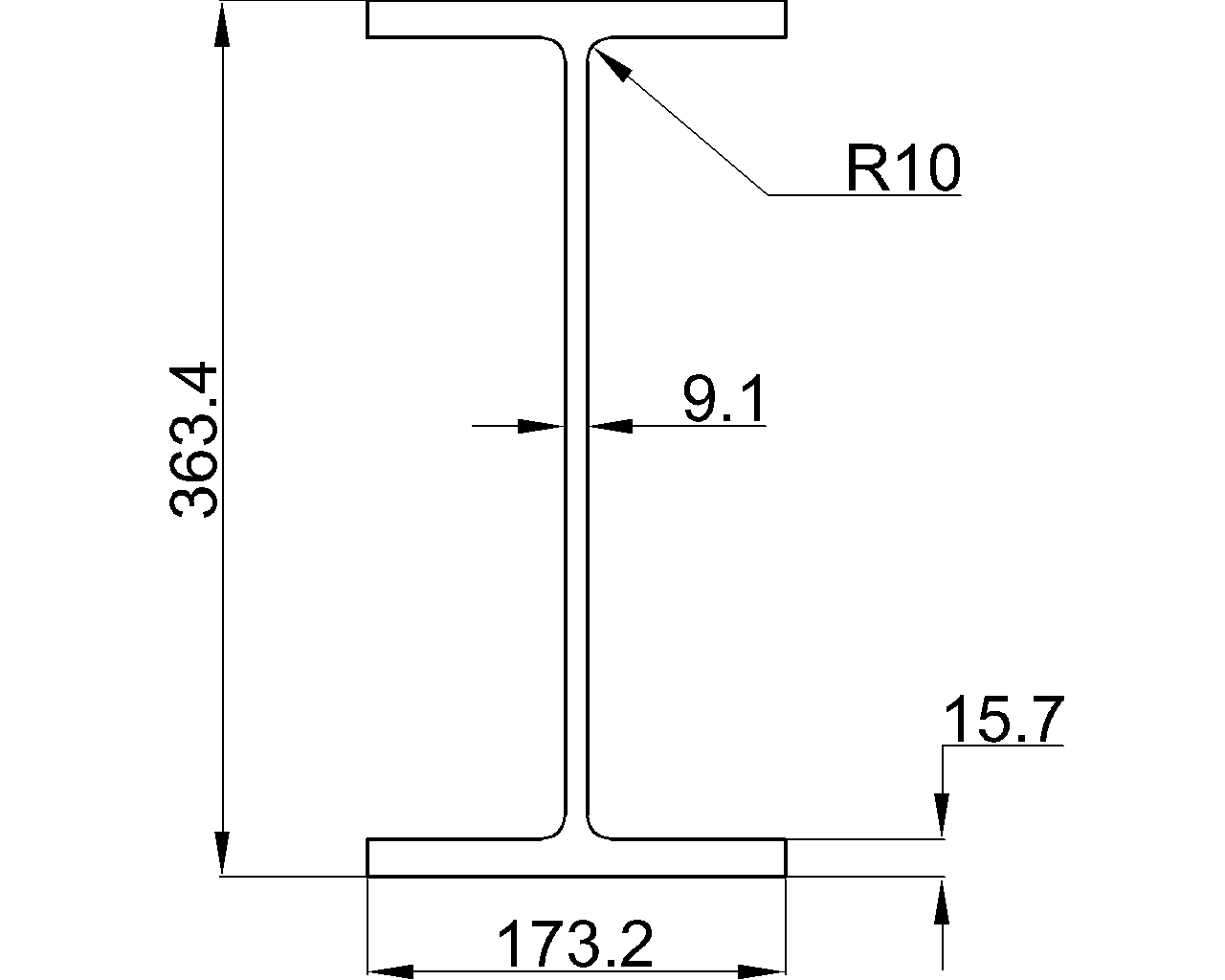
Dimension : 363.4×173.2×9.1×15.7
Depth : 363.4 mm
Width : 173.2 mm
Web Thickness : 9.1 mm
Flange Thickness : 15.7 mm
Root Fillet Radius : 10 mm
Sectional Area : 85.5 cm2
Unit Weight : 67.1 kg/m
How to read the UB 356x171x67 reference
The compact dimension string lists the overall depth, flange width, web thickness, and flange thickness in the same sequence as the labeled values below. These dimensions help identify the physical envelope of the section and support coordination with plates, connections, openings, and adjacent construction.
Key section terminology
- Depth and width: These describe the principal overall dimensions used to coordinate the beam within a structural or fabrication drawing.
- Web thickness: This identifies the thickness of the central web between the flanges and is relevant to detailing and connection interfaces.
- Flange thickness: This describes the thickness of the top and bottom flange elements.
- Root fillet radius: The fillet is the curved transition between the web and flange. It should be considered when detailing parts that bear against or pass near the section profile.
- Sectional area and unit weight: These are useful reference properties for section comparison and material takeoff work. They should not be used as a substitute for a complete structural design check.
CAD and detailing reference
The downloadable DWG provides a practical starting point for drafting and coordination. Before using it in production drawings, check the drawing units, profile orientation, scale, and project-specific detailing requirements. Related SteelSTD resources on Universal Beams, section properties, steel terminology, and connection detailing can help place this profile in a broader reference workflow.
Frequently asked questions
What does UB 356x171x67 identify?
It identifies a Universal Beam profile. The page pairs that designation with the section dimensions, sectional area, unit weight, and the EN 10365:2017 reference supplied in the source data.
What information is included in the dimension string?
The dimension string presents the section depth, width, web thickness, and flange thickness. The page then lists those properties individually for easier checking and use in drawings.
Why is the root fillet radius important?
The root fillet is the curved area where the web meets a flange. Its presence can affect the fit of plates, stiffeners, connection components, and other details placed close to the web-to-flange junction.
Can the unit weight be used for a structural design?
The unit weight can support material estimates and comparison of steel sections. Structural design also requires project loads, restraint conditions, material requirements, connection design, and verification under the applicable engineering rules.
What is the DWG file used for?
The DWG is a CAD reference resource for drafting and coordination. Review its units and geometry before incorporating it into controlled project documentation.