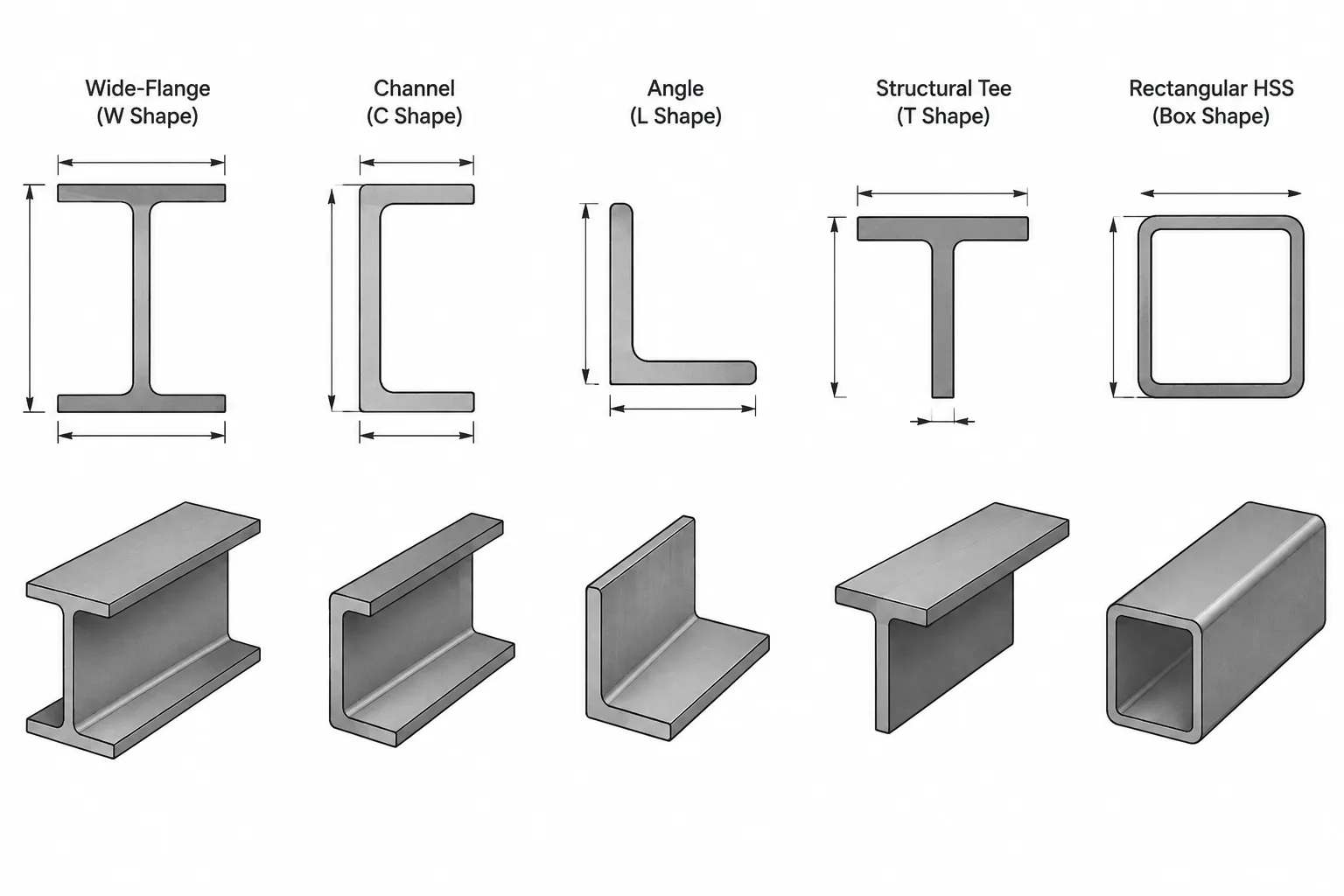
RHS 160x80x7 is a cold-formed welded rectangular hollow section identified by its depth, width, and wall thickness. This page provides the verified geometric data, sectional area, unit weight, standards context, and DWG download shown below.
The section designation is useful for finding the correct profile, but it should not be treated as a complete design specification. Steel grade, delivery requirements, connection details, member orientation, and project criteria must also be established before the section is used in engineering or fabrication documents.
RHS 160x80x7
Cold Formed Welded Rectangular Steel Tubes
refer to : EN 10219-2
the European standard that specifies tolerances, dimensions, and sectional properties for cold-formed welded structural hollow sections made of non-alloy and fine grain steels. It complements EN 10219-1, which covers technical delivery conditions.
Dimension : 160x80x7
Depth : 160 mm
Width : 80 mm
Thickness : 7 mm
Outer Corner Radius : 17.5 mm
Inner Corner Radius : 10.5 mm
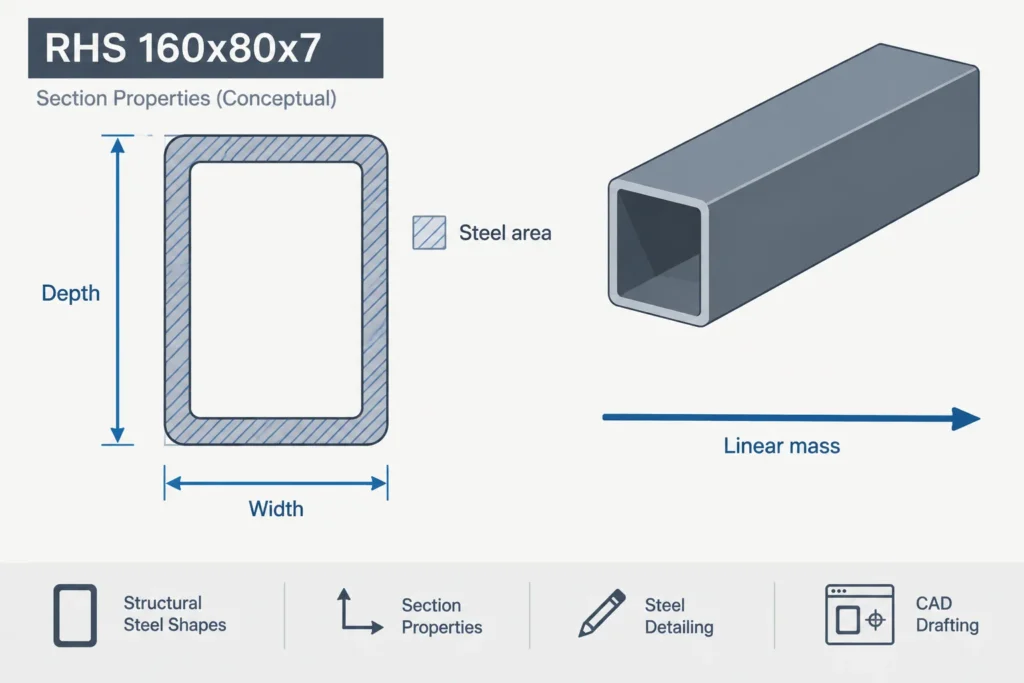
Sectional Area : 29.96 cm2
Unit Weight : 23.5 kg/m
How to Read the RHS 160x80x7 Designation
- RHS: Rectangular hollow section.
- 160: The listed section depth in millimeters.
- 80: The listed section width in millimeters.
- 7: The listed wall thickness in millimeters.
The depth and width are not interchangeable when section orientation matters. Rotating a rectangular hollow section changes how its deeper and narrower directions align with the applied loading, framing, or connection geometry. Appropriate section properties and design checks should therefore be associated with the intended orientation.
Corner Radii and CAD Geometry
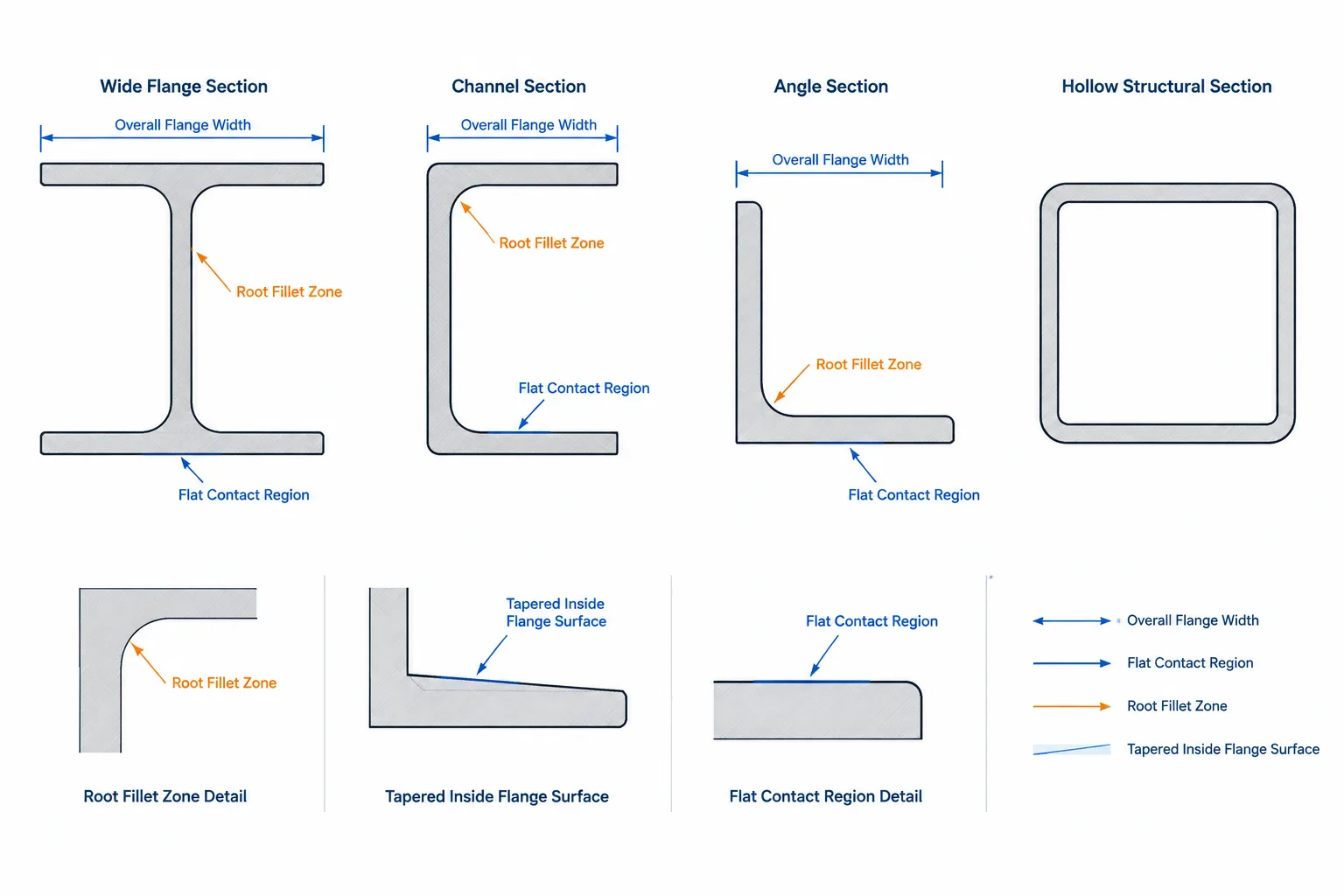
This profile includes an outer corner radius of 17.5 mm and an inner corner radius of 10.5 mm. These rounded corners should be represented where accurate profile geometry is required. Replacing them with sharp corners can affect section outlines, clearances, fit-up studies, and geometric calculations derived from a CAD model.
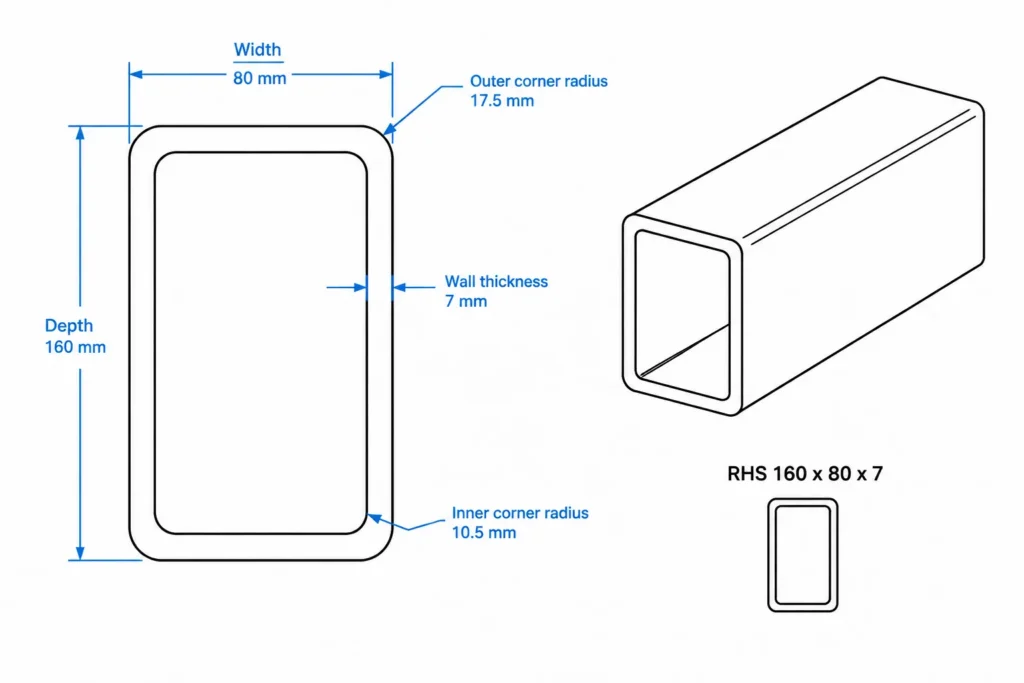
When using the DWG resource, inspect the file units, scale, layers, linework, and profile orientation before inserting it into another drawing. The downloaded geometry should also be checked against the values published on this page and against the requirements of the current project.
Understanding Sectional Area and Unit Weight
Sectional area describes the amount of material present in the cross-section. It is a geometric property used in several engineering calculations, but it does not by itself state the member capacity.
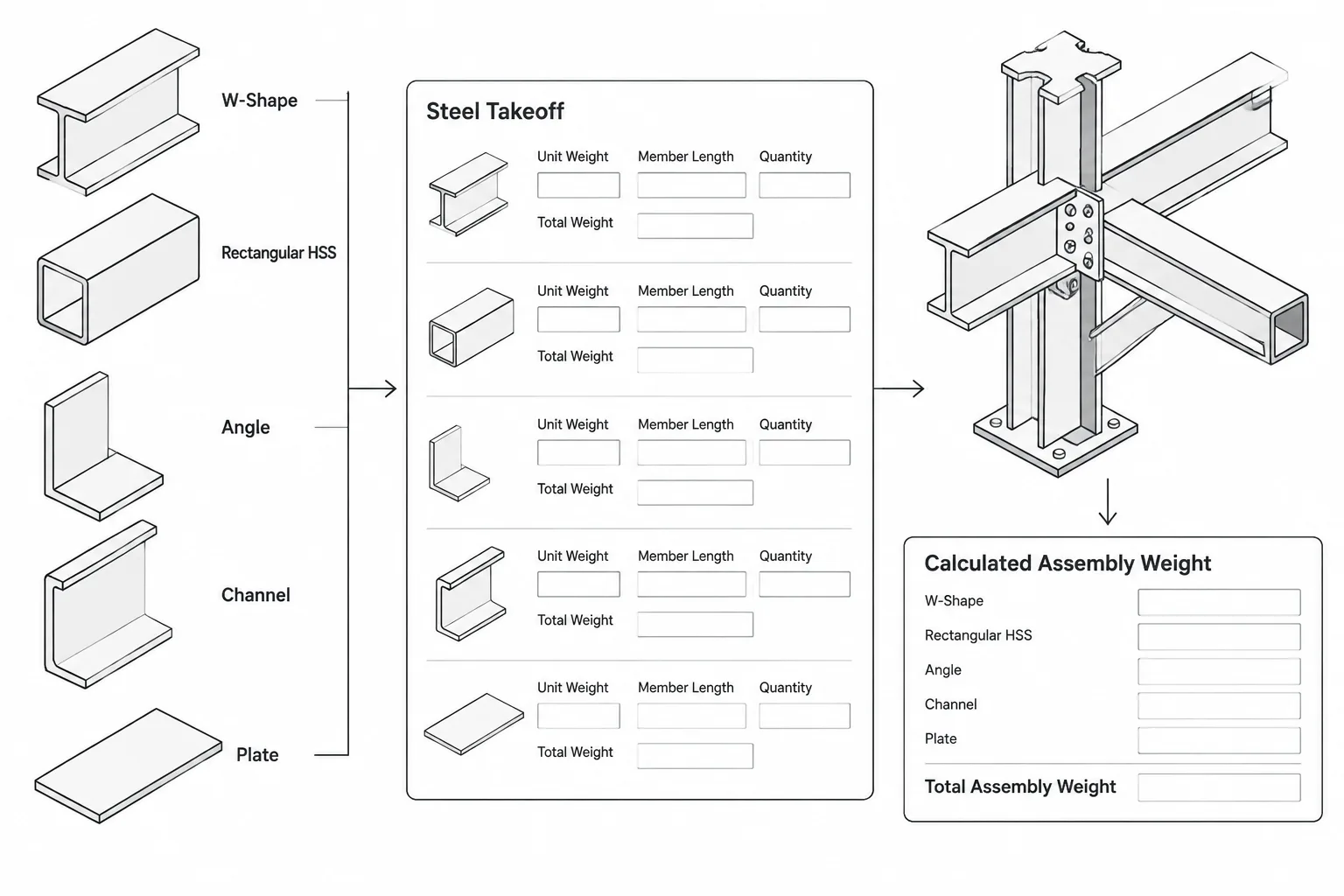
The listed unit weight in kg/m is a linear mass value. It can be combined with the required member length for material takeoff and estimating workflows. Connection components, coatings, end plates, bolts, weld metal, and other added items are not represented by the bare-section unit weight.
Standards Context
The source identifies EN 10219-2 as the dimensional and sectional-property reference for this cold-formed welded hollow section. It also notes the relationship to EN 10219-1 for technical delivery conditions. A dimensional reference does not independently establish every purchasing or design requirement, so the applicable steel grade, product documentation, tolerances, and project specifications should be confirmed separately.
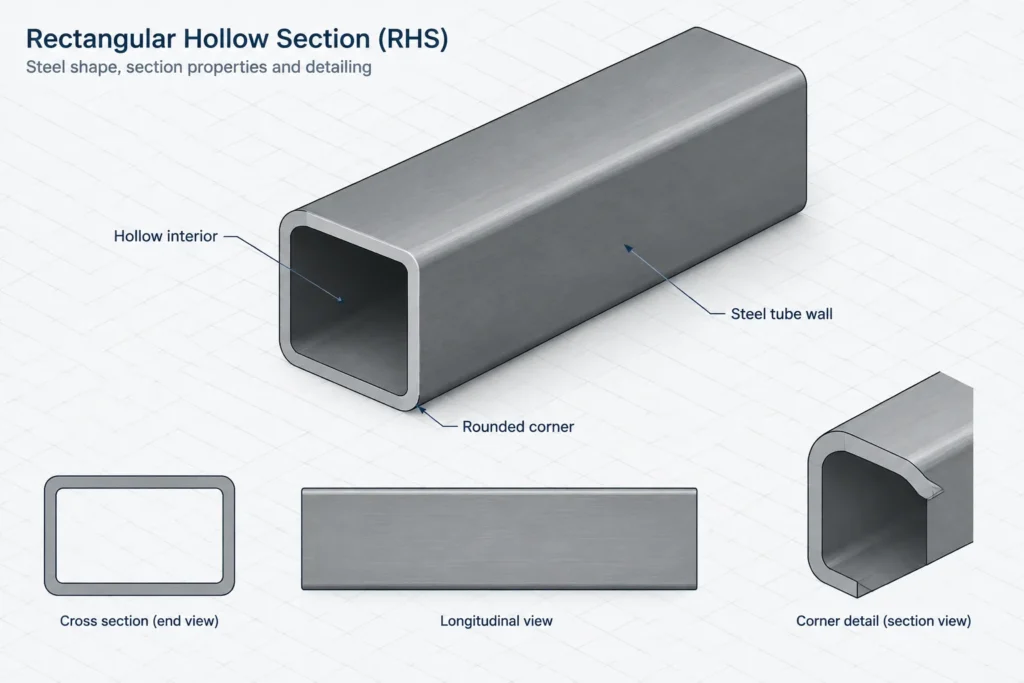
Related Reference Topics
Useful companion subjects include rectangular hollow section dimensions, HSS and RHS terminology, hollow-section property concepts, steel unit-weight calculations, CAD drafting practices, and bolted or welded hollow-section connections. These topics help connect the basic profile data to detailing, estimating, and design workflows.
Frequently Asked Questions
What does RHS 160x80x7 mean?
It identifies a rectangular hollow section with a listed depth of 160 mm, width of 80 mm, and wall thickness of 7 mm.
Why are the inner and outer corner radii important?
The radii define the rounded corner geometry of the section. They matter when preparing accurate CAD profiles, checking local clearances, or performing calculations that depend on the actual cross-sectional outline.
Can the listed unit weight be used for a material takeoff?
Yes, the published linear mass can support preliminary member-weight and quantity calculations when combined with the required length. Allow separately for plates, fasteners, weld metal, coatings, and other project-specific items.
Does this page provide the section’s structural capacity?
No. Dimensions, area, and unit weight do not establish a design capacity on their own. Capacity depends on factors such as material grade, member length, loading, orientation, stability, connections, and the applicable design rules.
Is the DWG ready to issue for fabrication?
The file should be treated as a reference resource until its units, scale, geometry, layers, and compatibility with the project requirements have been checked. Fabrication documents also require project-specific member lengths, cuts, connections, tolerances, and review.
Does the EN 10219-2 reference identify the steel grade?
Not on its own. This page provides a dimensional and sectional-property reference, but it does not identify a specific steel grade. Confirm material and delivery requirements from the project specification and relevant product documentation.