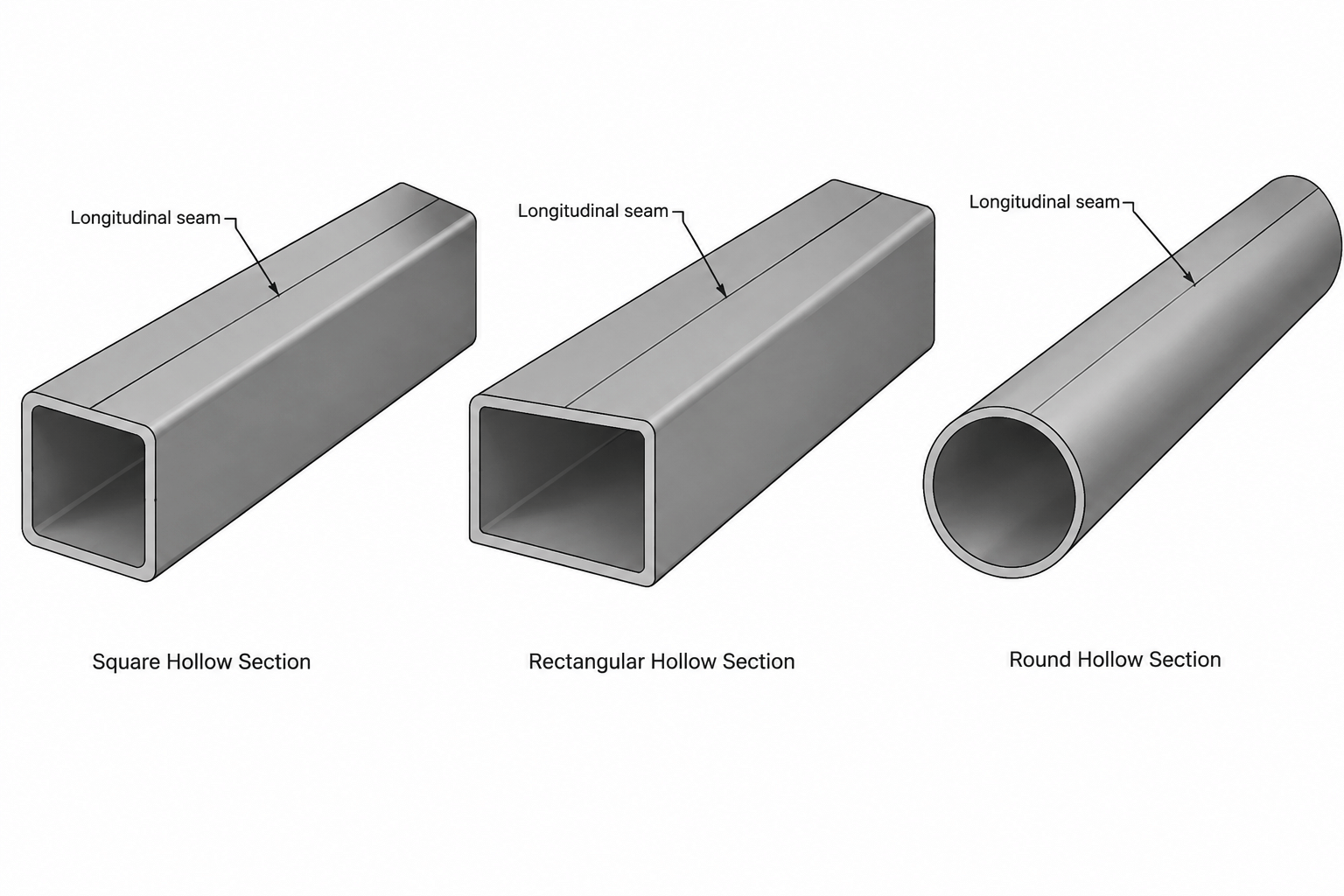
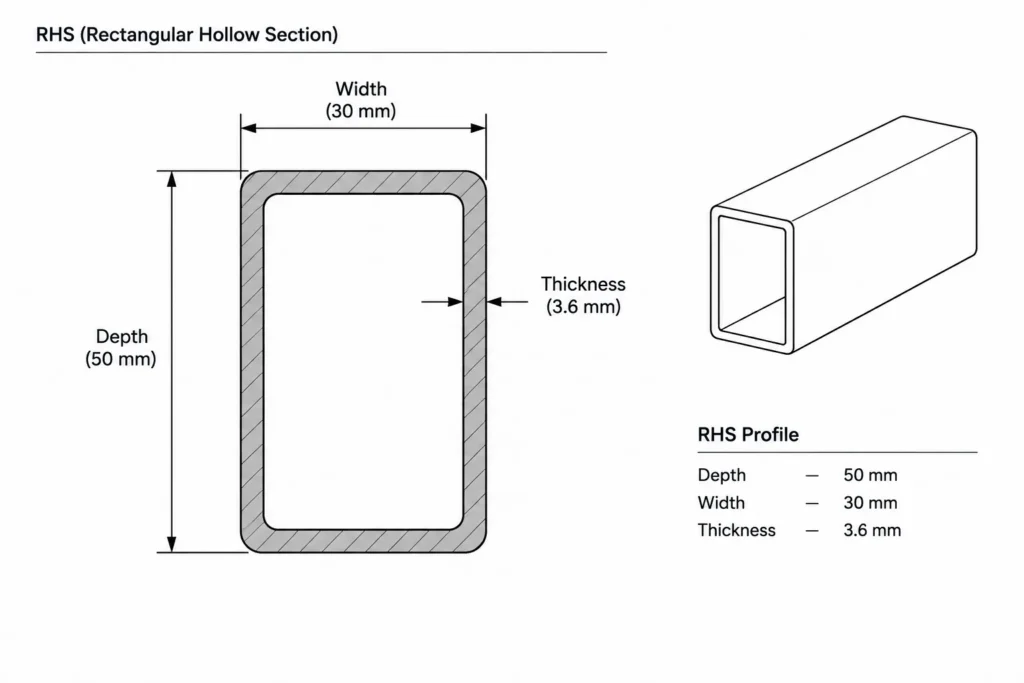
This page provides a dimensional and drafting reference for the Celsius 355 RHS 50x30x3.6 rectangular hollow section. The source data identifies a depth of 50 mm, width of 30 mm, and thickness of 3.6 mm, together with corner radii, sectional area, and unit weight.
Use the listed values to identify the section, review its basic geometry, and coordinate CAD details. The standard reference and downloadable drawing should be retained with the original technical data below.
Celsius 355 RHS 50x30x3.6
Celsius 355 Rectangular Hollow Sections
refer to : EN 10210-2:2006-04
the European standard that specifies tolerances, dimensions, and sectional properties for hot-finished structural hollow sections of non-alloy and fine grain steels. It supports EN 10210-1, which covers technical delivery conditions.
Dimension : 50x30x3.6
Depth : 50 mm
Width : 30 mm
Thickness : 3.6 mm
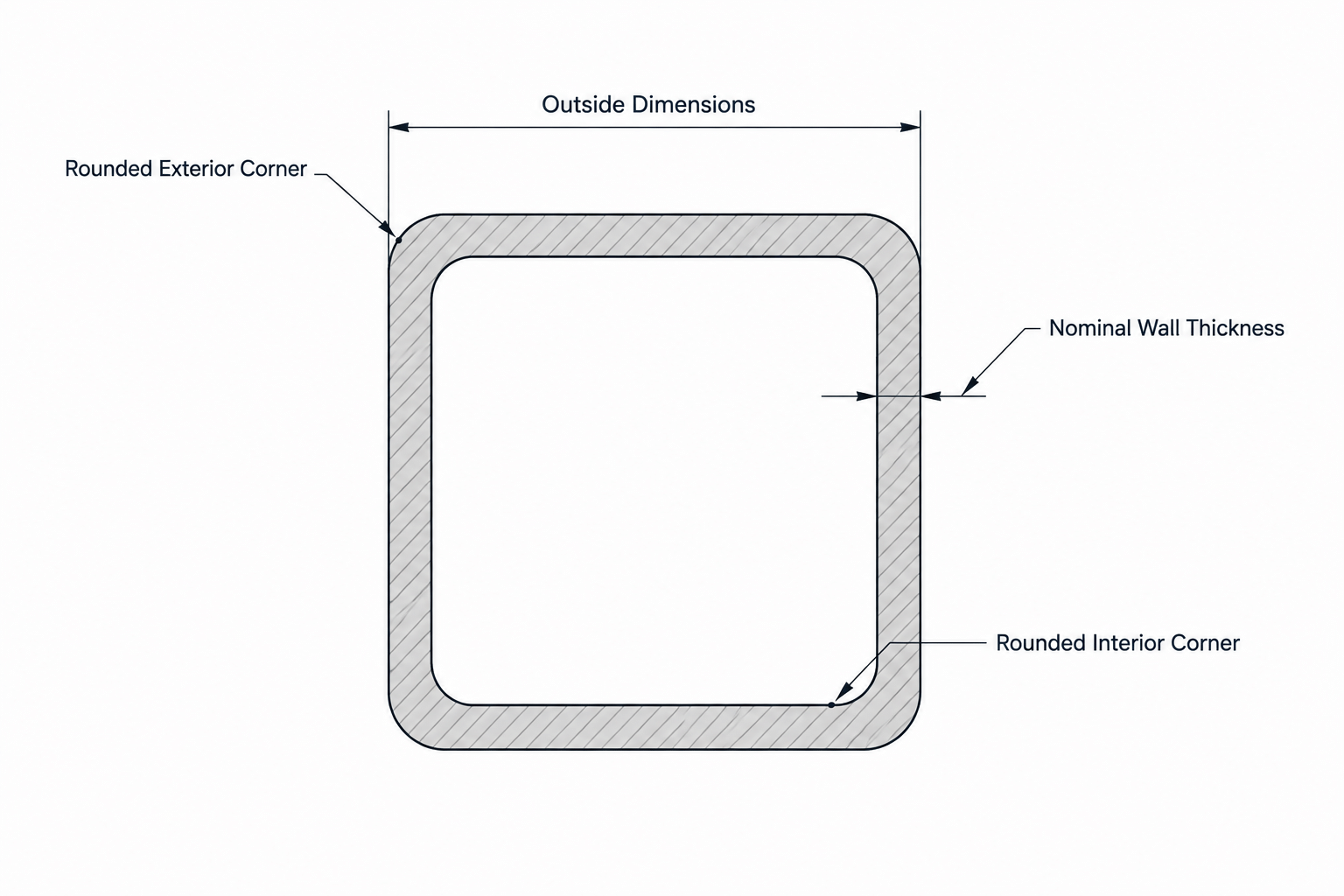
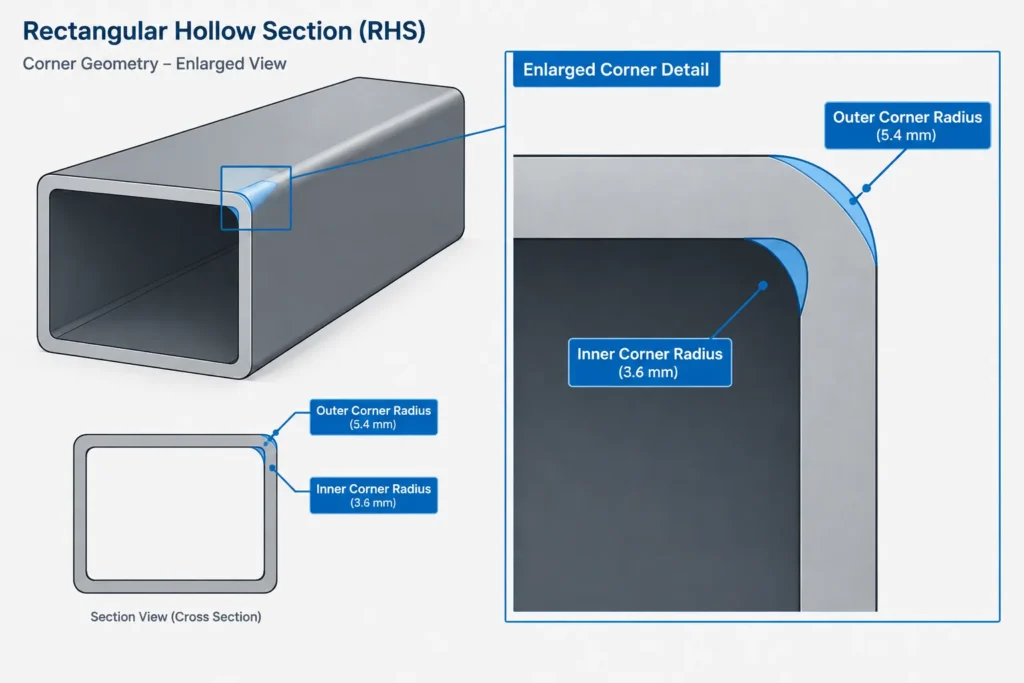
Outer Corner Radius : 5.4 mm
Inner Corner Radius : 3.6 mm
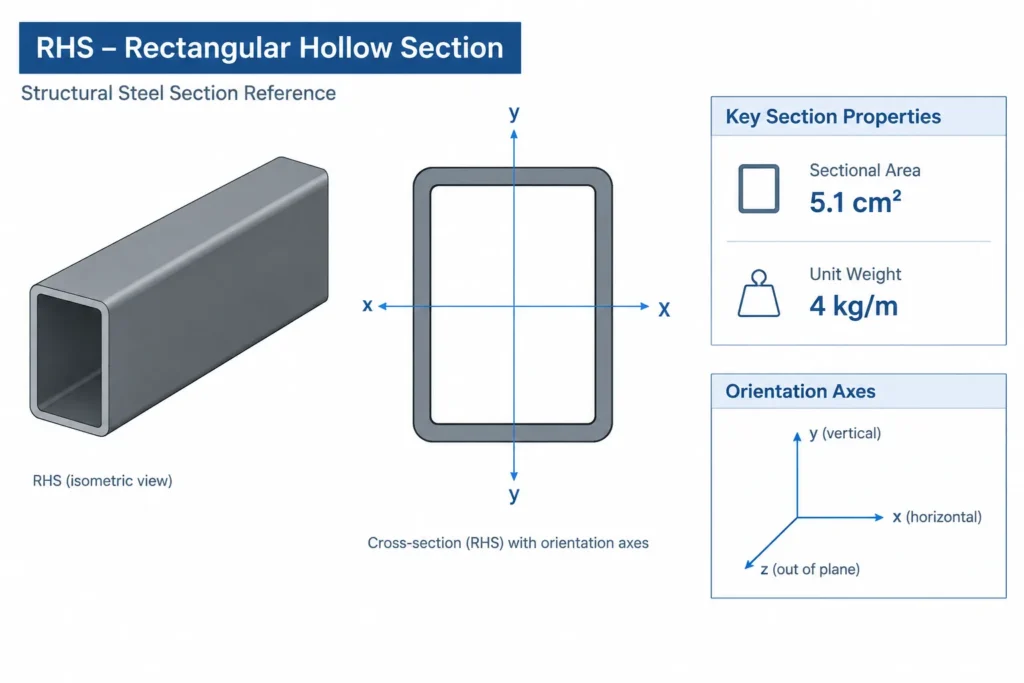
Sectional Area : 5.1 cm2
Unit Weight : 4 kg/m
How to read the RHS designation
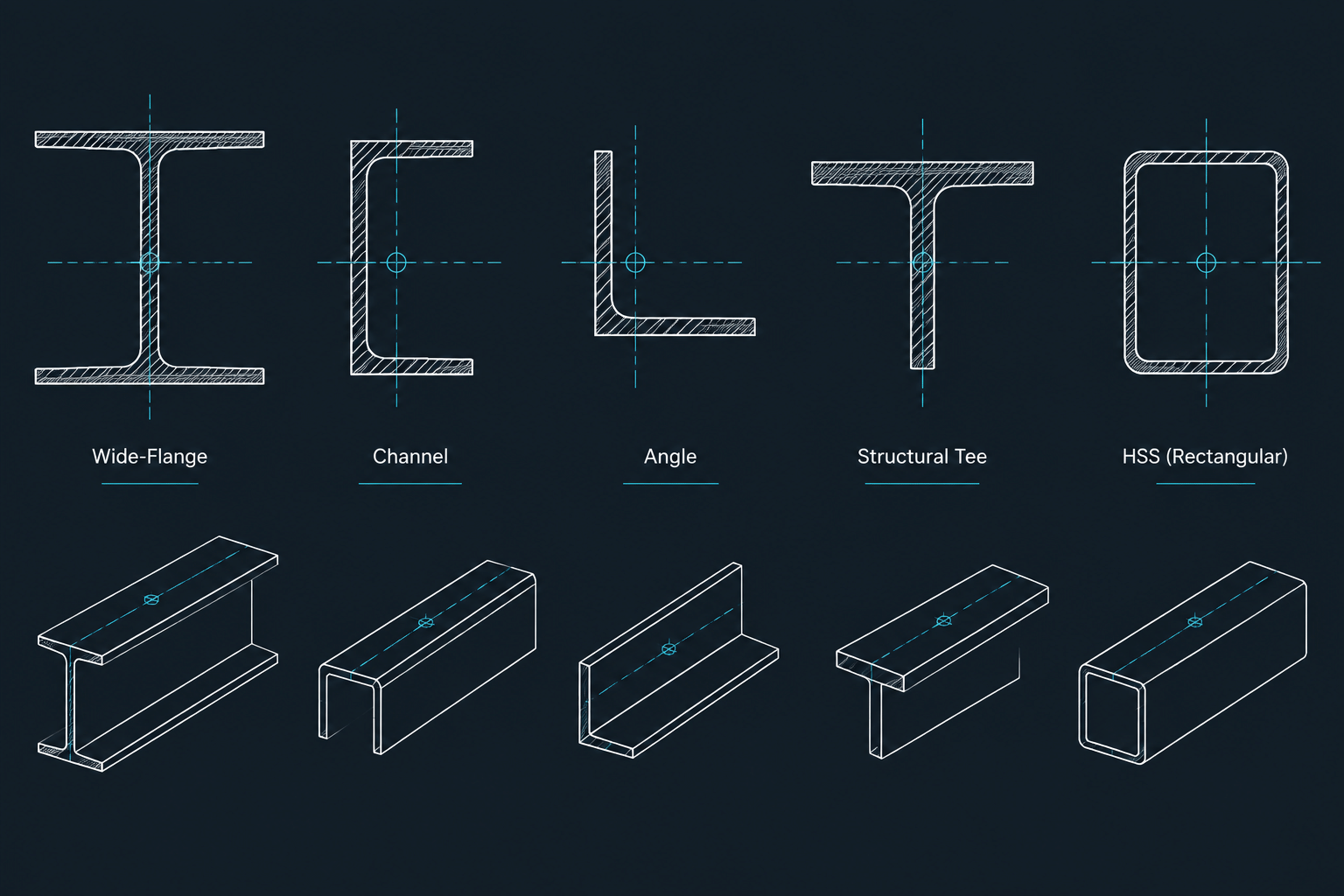
RHS means rectangular hollow section. For this entry, the designation corresponds to the listed 50 mm depth, 30 mm width, and 3.6 mm thickness. Keeping that order consistent is important when labeling drawings, schedules, and model objects because exchanging the depth and width changes the displayed orientation.
Section geometry and corner radii
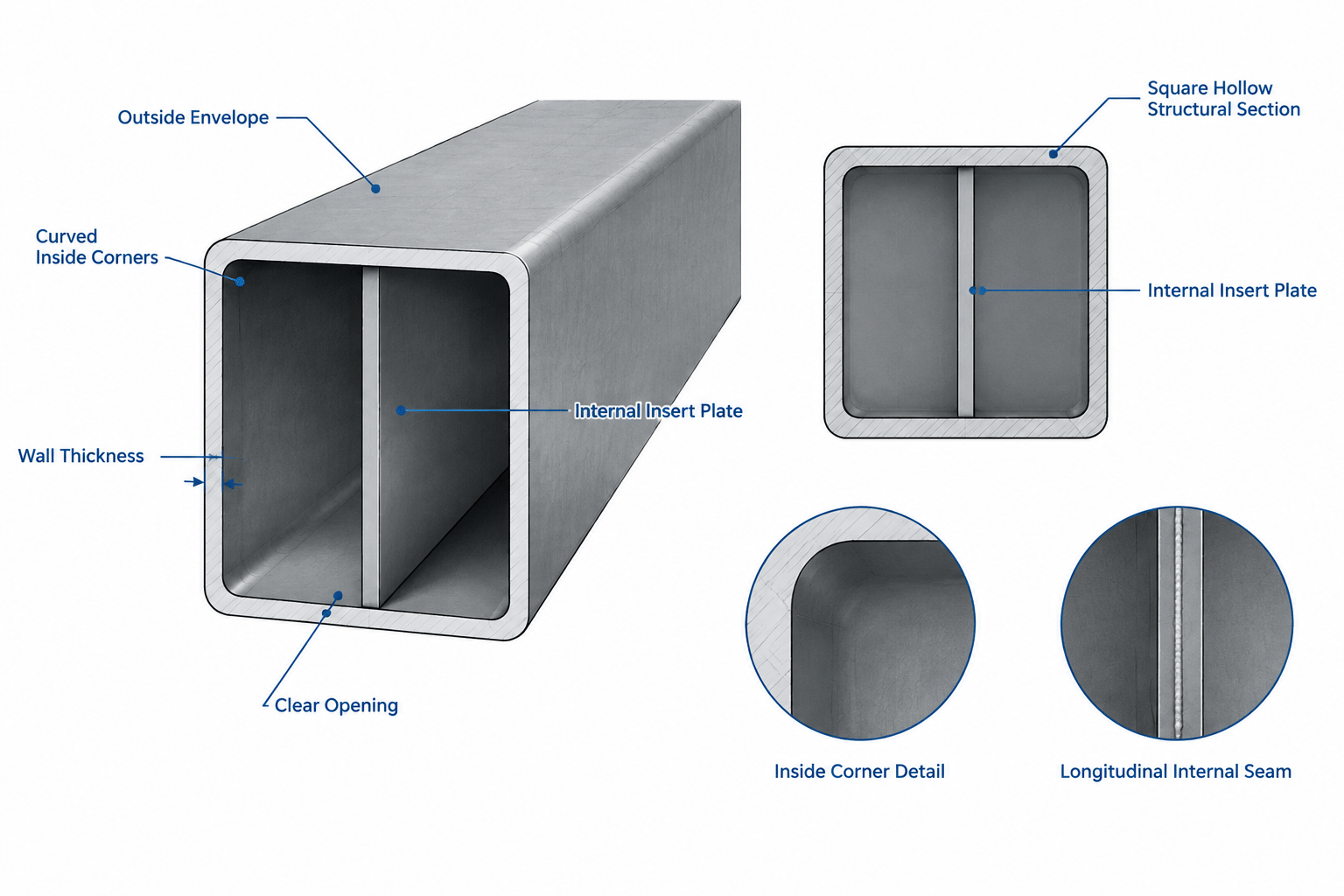
A rectangular hollow section is not represented accurately by drawing two sharp-cornered rectangles. This section lists an outer corner radius of 5.4 mm and an inner corner radius of 3.6 mm. Those values affect the profile near each corner and should be considered when preparing close-up details, checking fit, or creating a CAD section outline.
Do not infer unlisted fabrication dimensions from a simplified sketch. Where exact geometry matters, compare the listed data with the supplied DWG and the applicable product documentation.
Understanding the listed properties
- Sectional area: The listed 5.1 cm² represents the cross-sectional area of steel. It is a geometric property rather than a plan-view footprint.
- Unit weight: The listed 4 kg/m expresses mass per unit length and can support quantity takeoffs when used with the required member length.
- Corner radii: The outer and inner radius values describe the curved corner geometry rather than square corners.
Sectional area and unit weight do not, by themselves, establish structural capacity. Design checks also depend on loading, member length, restraint, connection behavior, material requirements, and the applicable design rules.
Standard context
The source identifies EN 10210-2:2006-04 as the dimensional reference for this hot-finished structural hollow section. It addresses dimensions, tolerances, and sectional-property information, while the related delivery-condition standard covers a different part of the product specification. Users should confirm which requirements apply to their drawing, procurement package, or calculation workflow.
Using the DWG reference
Before incorporating the drawing into a project file, inspect its units, orientation, layers, profile geometry, and annotation. Confirm that the CAD object agrees with the section designation and the verified source values shown on this page.
For detailing work, related reference topics include rectangular hollow section dimensions, HSS and RHS terminology, hollow-section corner geometry, section-property concepts, unit weight, welded connections, bolted attachments, and CAD drawing verification.
Frequently asked questions
What does 50x30x3.6 mean in this RHS designation?
For this entry, it corresponds to the listed 50 mm depth, 30 mm width, and 3.6 mm thickness.
Why are inner and outer corner radii listed?
RHS corners are curved rather than perfectly square. The listed 5.4 mm outer radius and 3.6 mm inner radius help describe the section profile for drafting and identification.
Can the 4 kg/m unit weight be used for a quantity takeoff?
It can be used as the listed mass per unit length when combined with the required member length. Allowances for connections, plates, fabrication items, coatings, and waste should be handled separately where applicable.
Does the sectional area provide the member capacity?
No. The listed 5.1 cm² is a geometric property. Structural capacity requires additional properties, design criteria, loading information, restraint conditions, and appropriate engineering checks.
Should the DWG be used without checking it?
No. Verify units, section orientation, geometry, layers, and agreement with the listed source data before using it in a drawing or model.