Category: How to
-
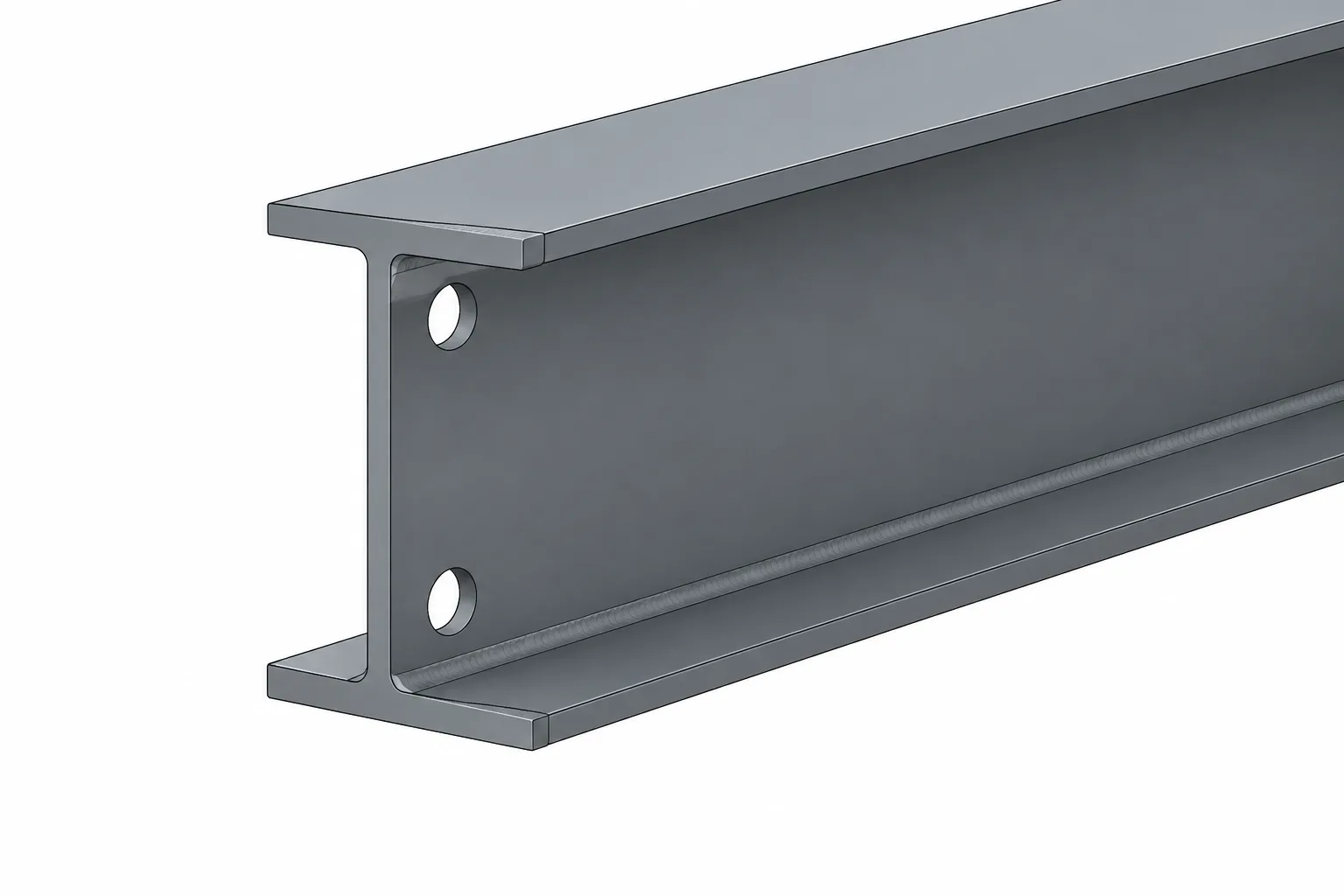
Weld Access Holes in Structural Steel: Purpose, Geometry, and Detailing Coordination
Learn how structural steel weld access holes differ from copes, what controls their geometry, and how to detail them clearly in shop drawings and CAD models.
Written by
-
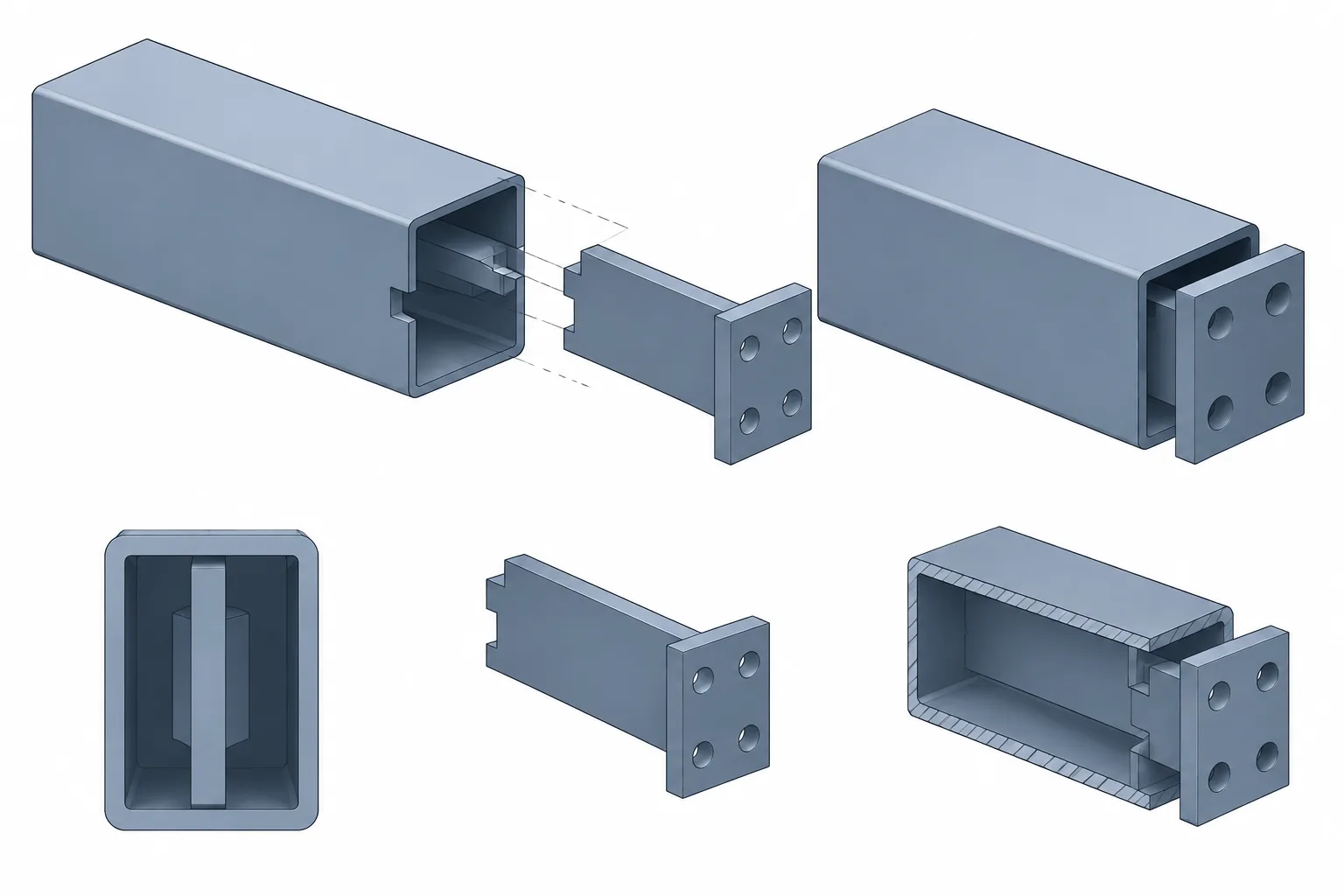
HSS Knife-Plate Connections: Slot Geometry, Fit-Up, Welding, and Detailing
Learn how to detail HSS knife-plate connections, including slot geometry, plate alignment, weld access, bolt layout, tolerances, drainage, and CAD checks.
Written by
-
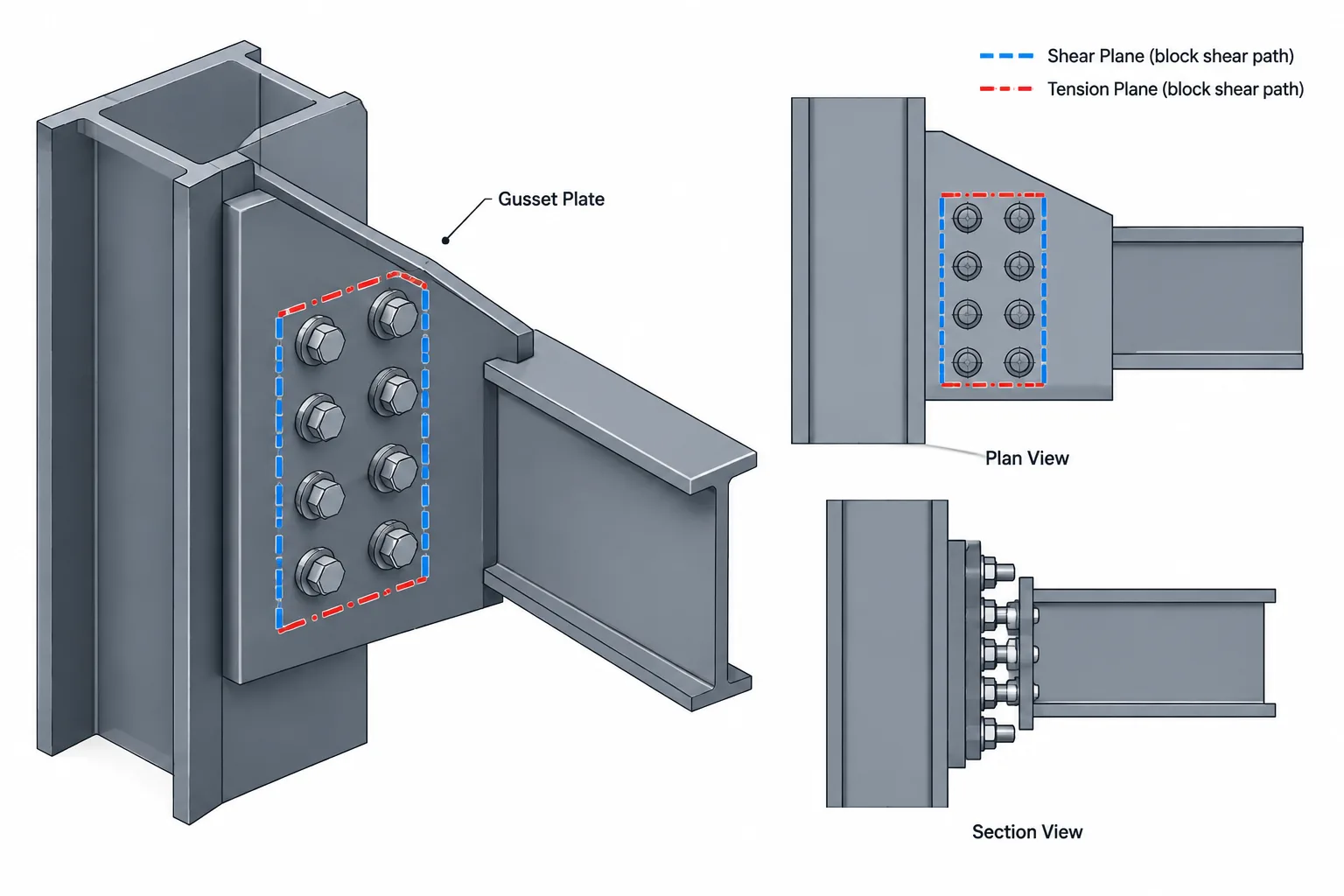
Block Shear Paths in Steel Connections: A Practical Guide to Plates, Angles, Tees, and Gussets
Learn how to identify block shear paths around bolt groups in steel plates, angles, tees, and gussets, including tension planes, shear planes, and CAD checks.
Written by
-
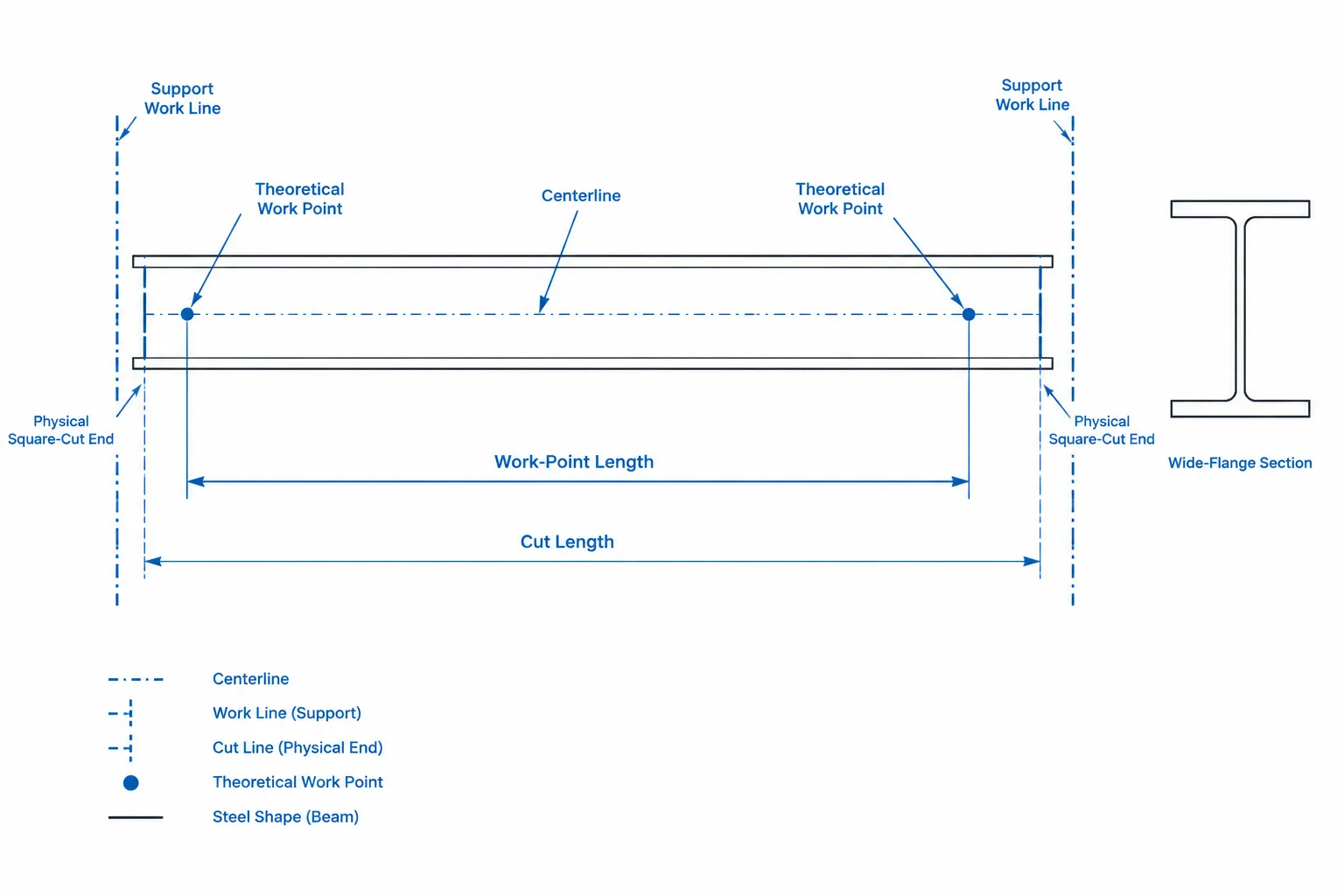
Structural Steel Member Lengths: Work-Point, Detailed, Cut, and Ordered Length
Learn how work-point, detailed, cut, and ordered lengths differ in structural steel drawings, fabrication models, bills of material, and field layout.
Written by
-
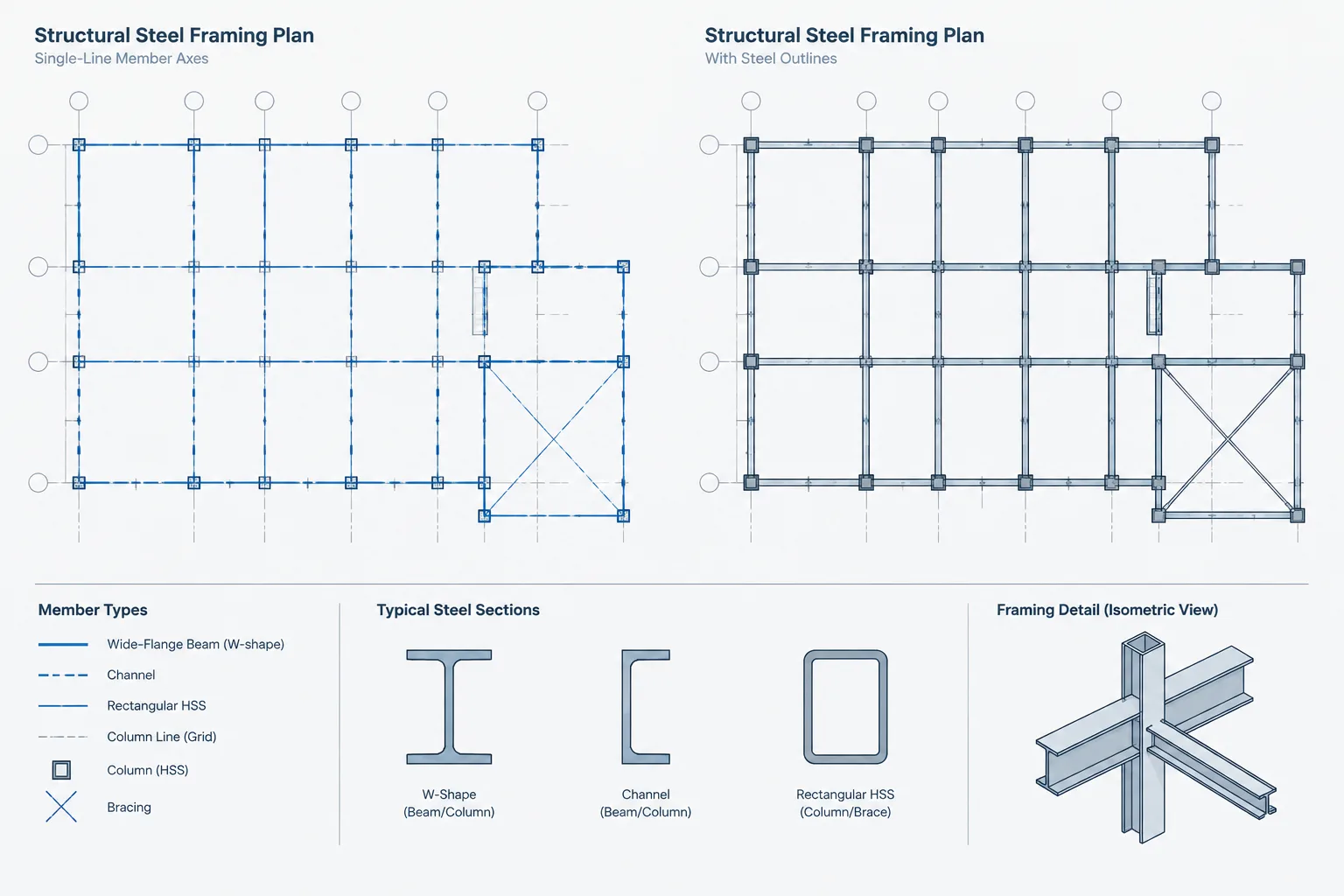
Single-Line vs. Double-Line Structural Steel Drawings: Representation, Scale, and Detailing
Learn when structural steel members are shown as centerlines, symbolic lines, or full outlines, and how to coordinate dimensions, orientation, and CAD geometry.
Written by
-
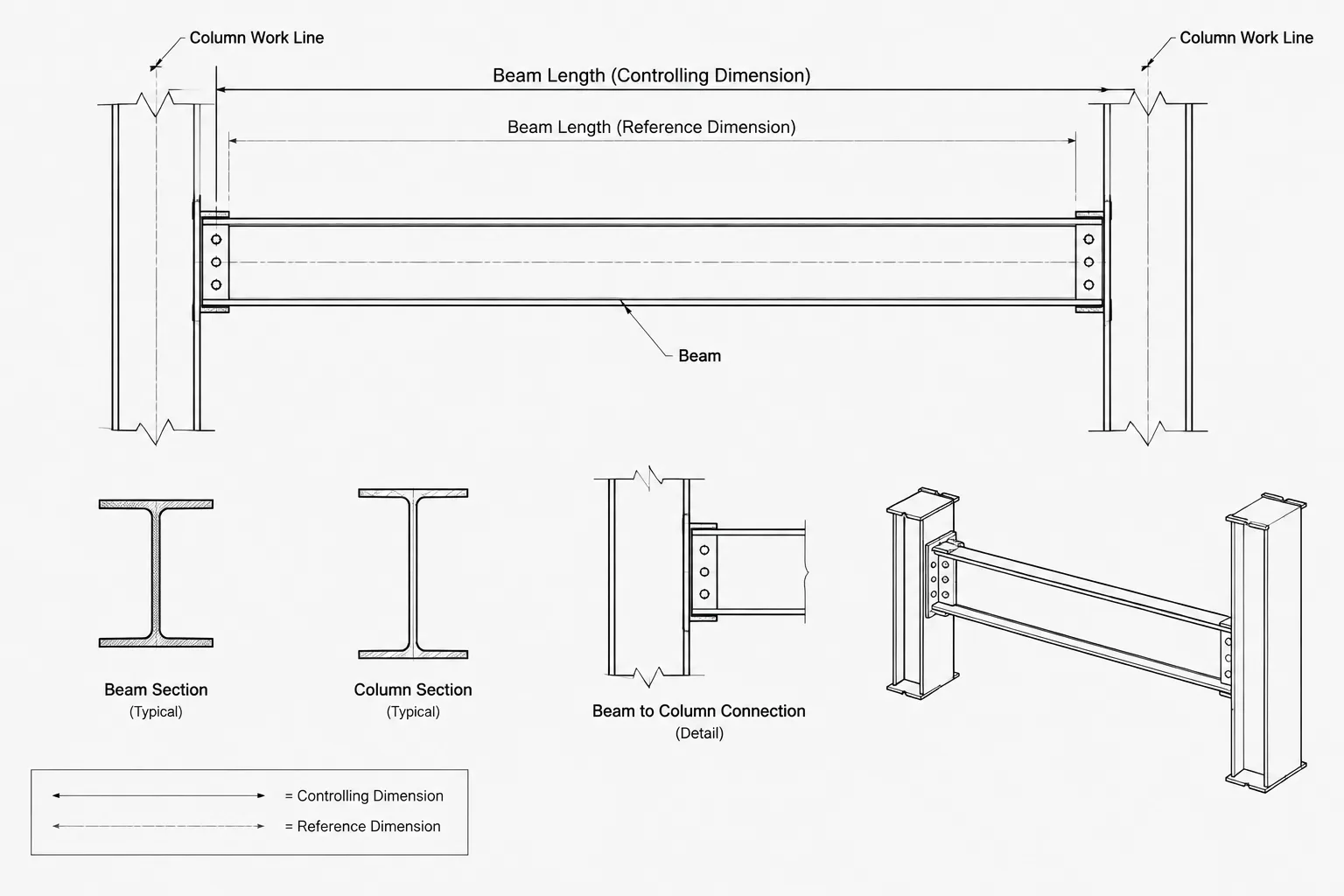
Reference Dimensions vs. Controlling Dimensions in Structural Steel Detailing
Learn how reference, controlling, redundant, and calculated dimensions affect structural steel shop drawings, CAD models, fabrication, and revision control.
Written by
-
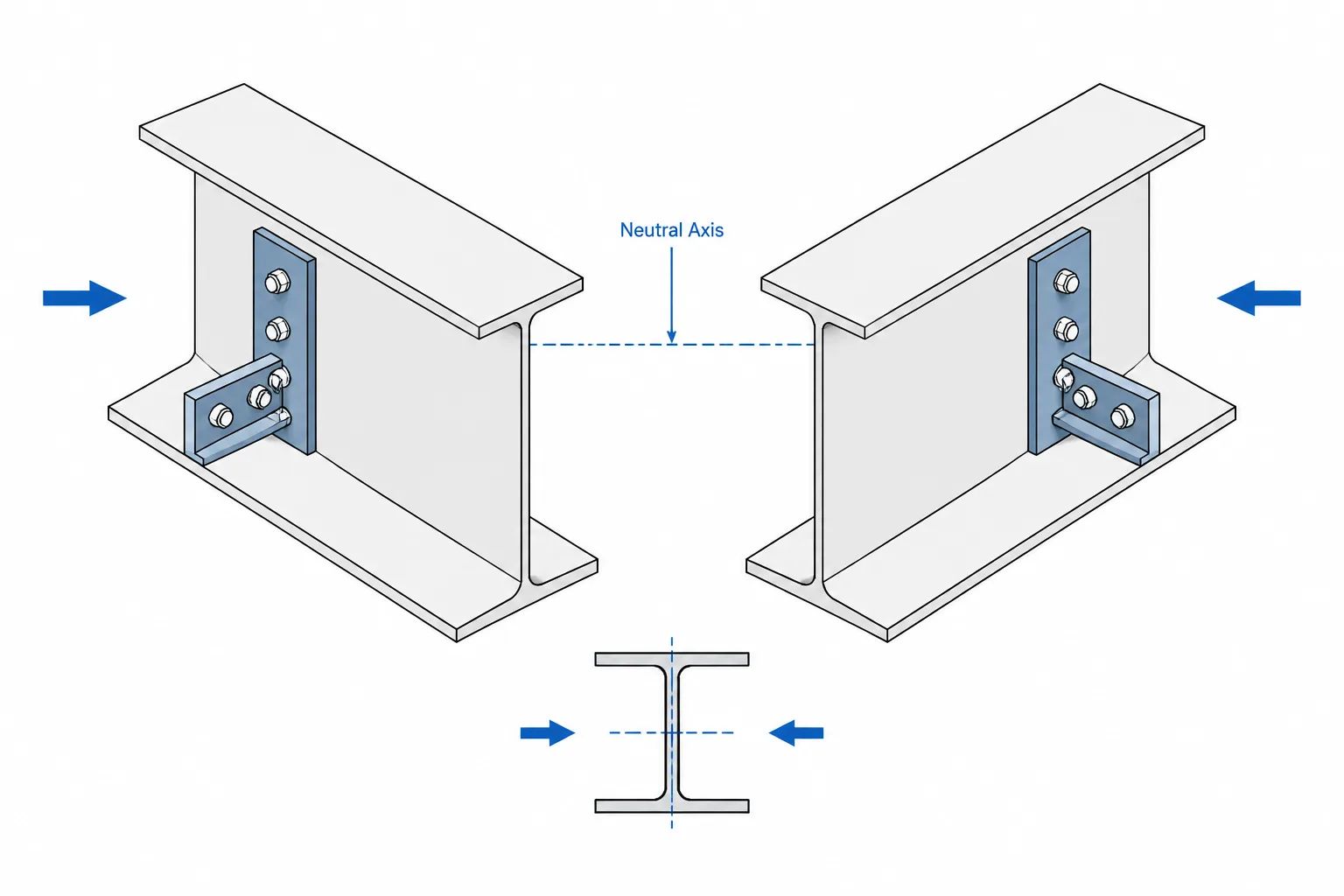
Handed Structural Steel Assemblies: Left-Hand, Right-Hand, and Mirror-Image Detailing
Learn how to identify, model, mark, and check left-hand, right-hand, and mirror-image structural steel assemblies without creating fabrication errors.
Written by
-
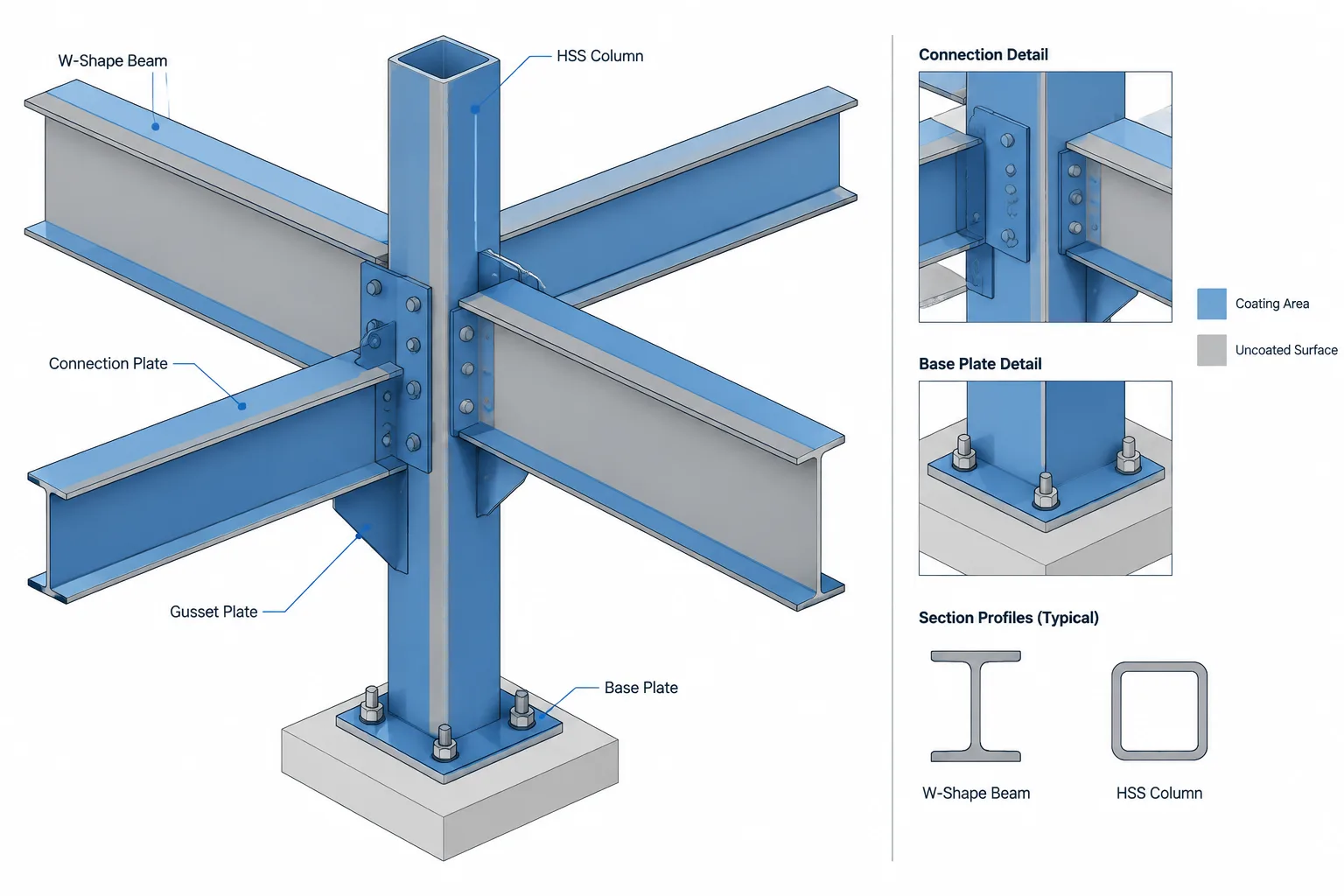
Estimating Structural Steel Surface Area for Paint and Coating Takeoffs
Learn how to estimate structural steel surface area using exposed perimeter, member length, end faces, plates, HSS interiors, and CAD geometry.
Written by
-
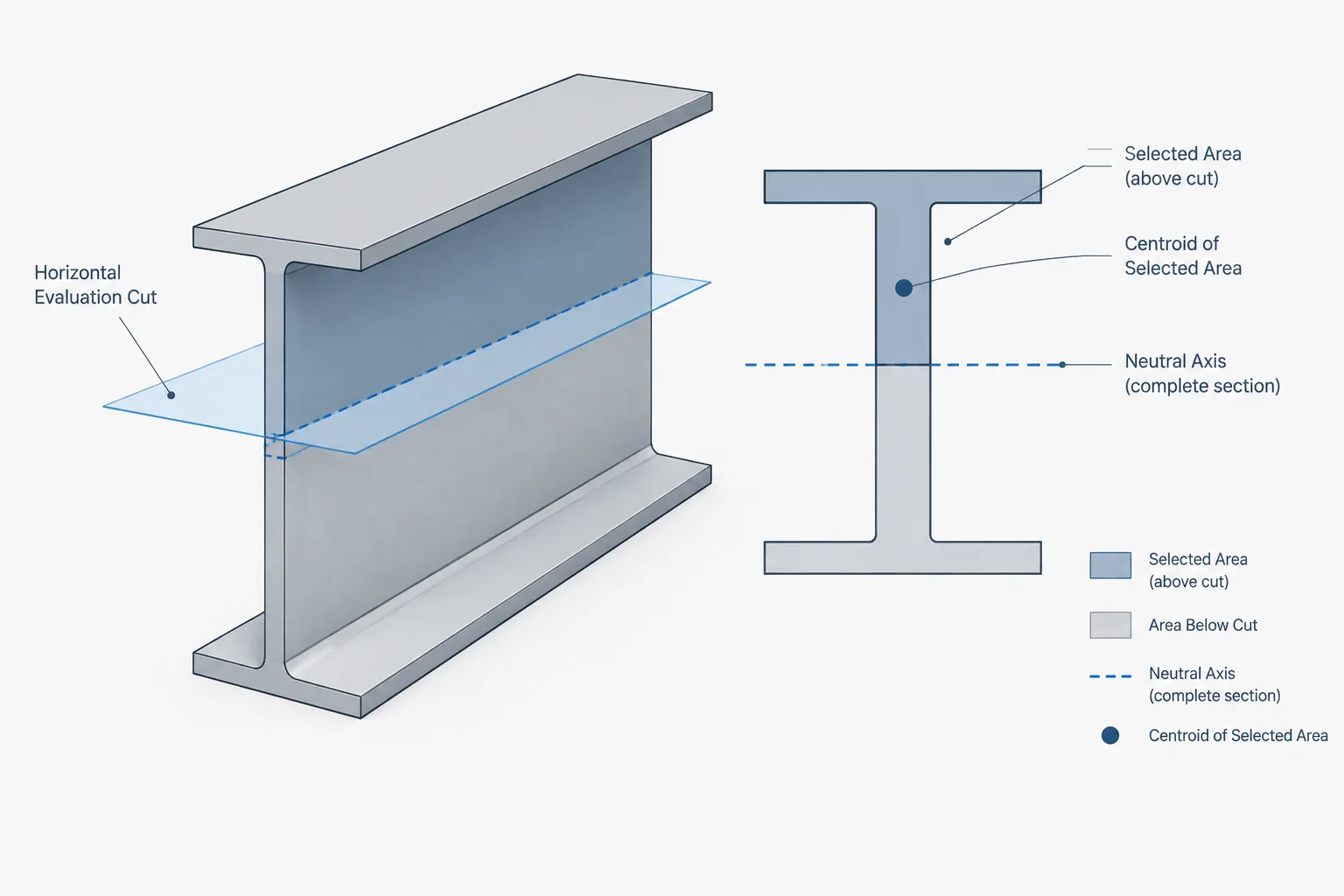
First Moment of Area Q in Steel Sections: Shear Stress, Shear Flow, and CAD Calculation
Learn how first moment of area Q is defined, where to measure it in steel sections, and how it is used for shear stress and shear flow calculations.
Written by
-
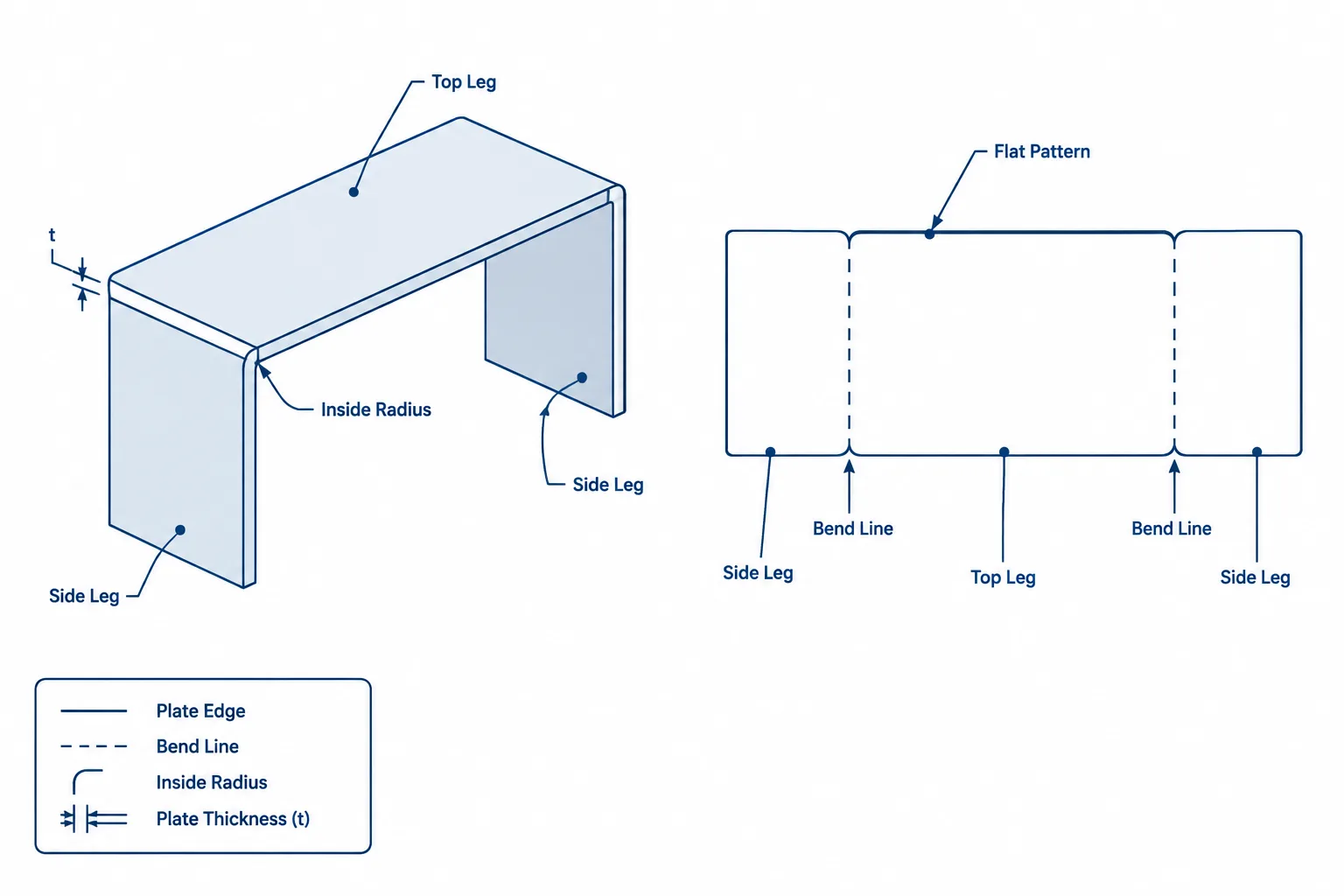
Bent Structural Steel Plates: Flat Length, Bend Lines, and CAD Detailing
Learn how to detail structural steel bent plates, including inside and outside dimensions, bend lines, flat length, bend allowance, orientation, and CAD checks.
Written by
-
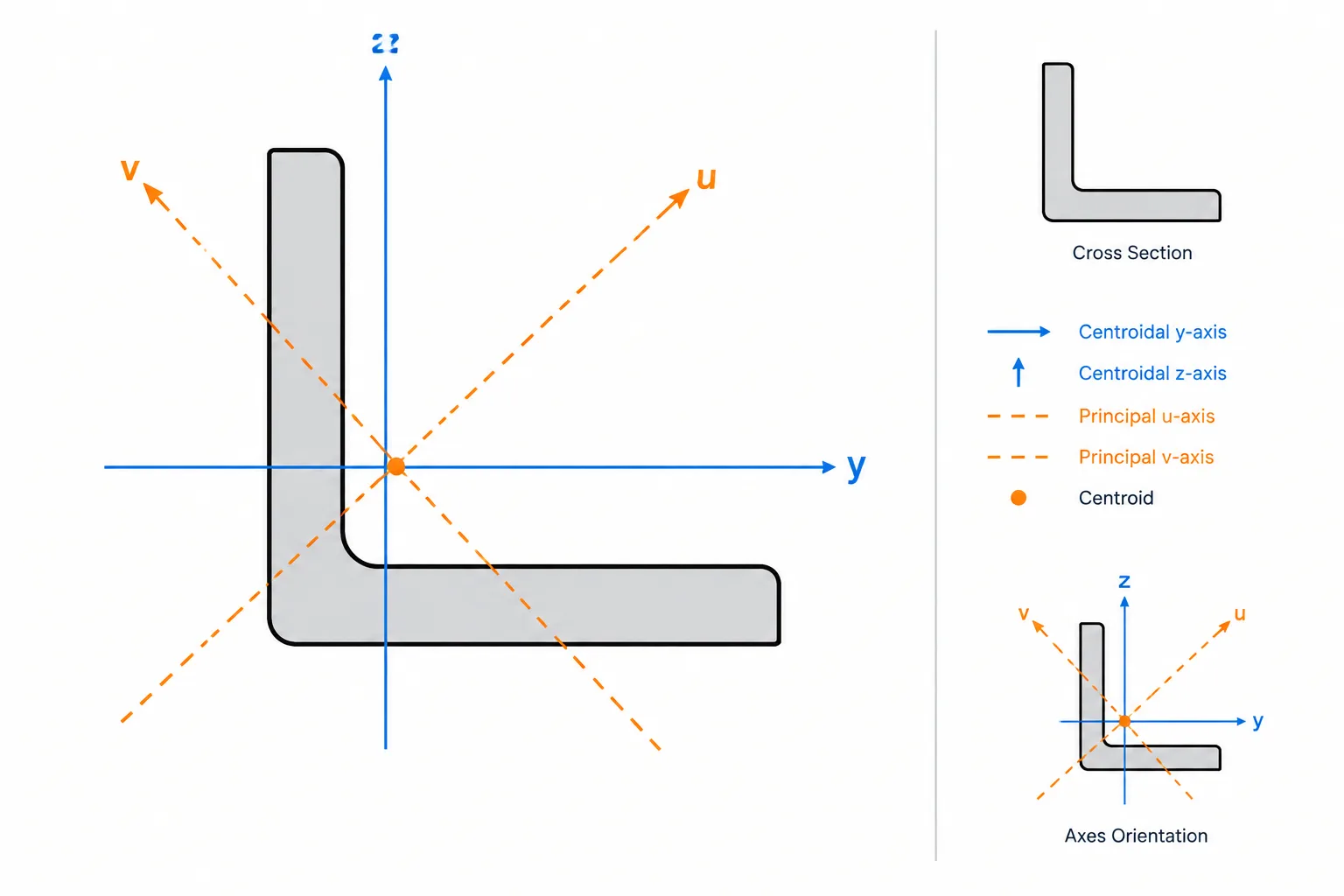
Product of Inertia Ixy in Steel Sections: Unsymmetric Bending and Principal Axes
Learn what product of inertia Ixy means for steel sections, why it matters for angles and built-up members, and how to verify axes and CAD properties.
Written by
-
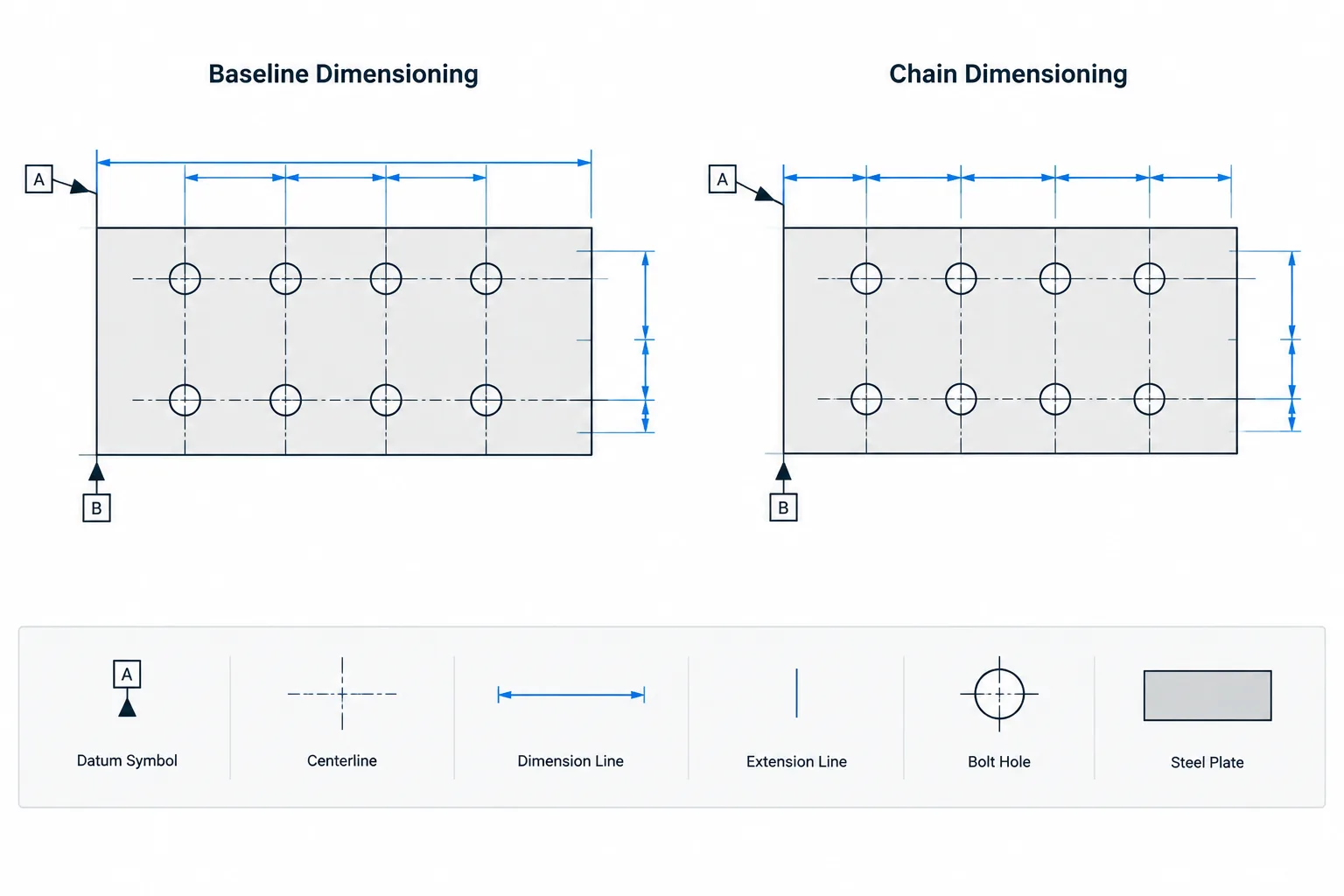
Baseline vs. Chain Dimensioning in Structural Steel Drawings: Controlling Layout and Accumulated Error
Learn when to use baseline, chain, running, and coordinate dimensions for steel members, plates, bolt holes, and connection layouts.
Written by