Category: How to
-
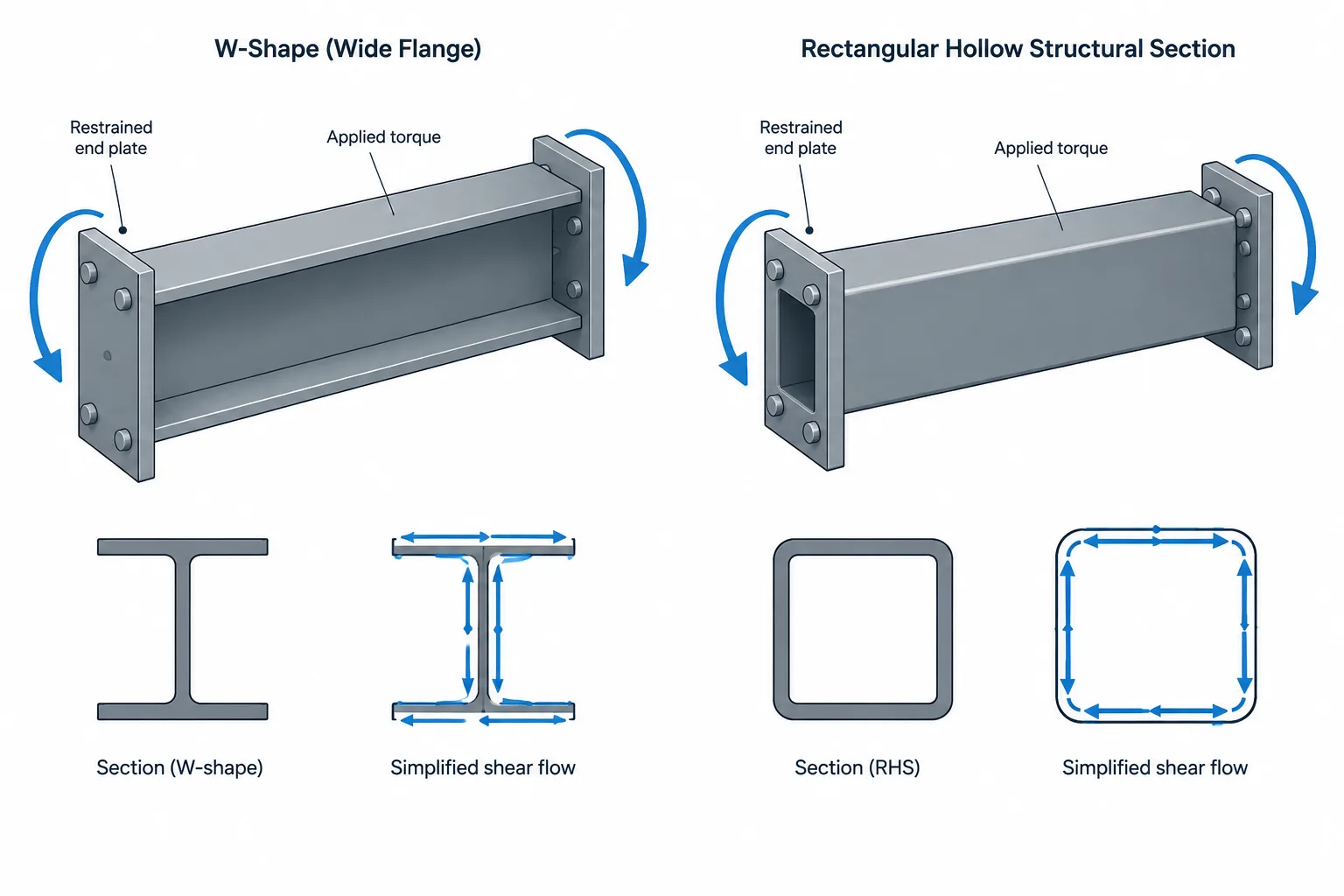
W-Shapes vs. HSS Under Torsion: Closed Sections, Warping, and Connection Effects
Compare how W-shapes and HSS resist torsion, including closed-section shear flow, warping, load position, connection behavior, and modeling checks.
Written by
-
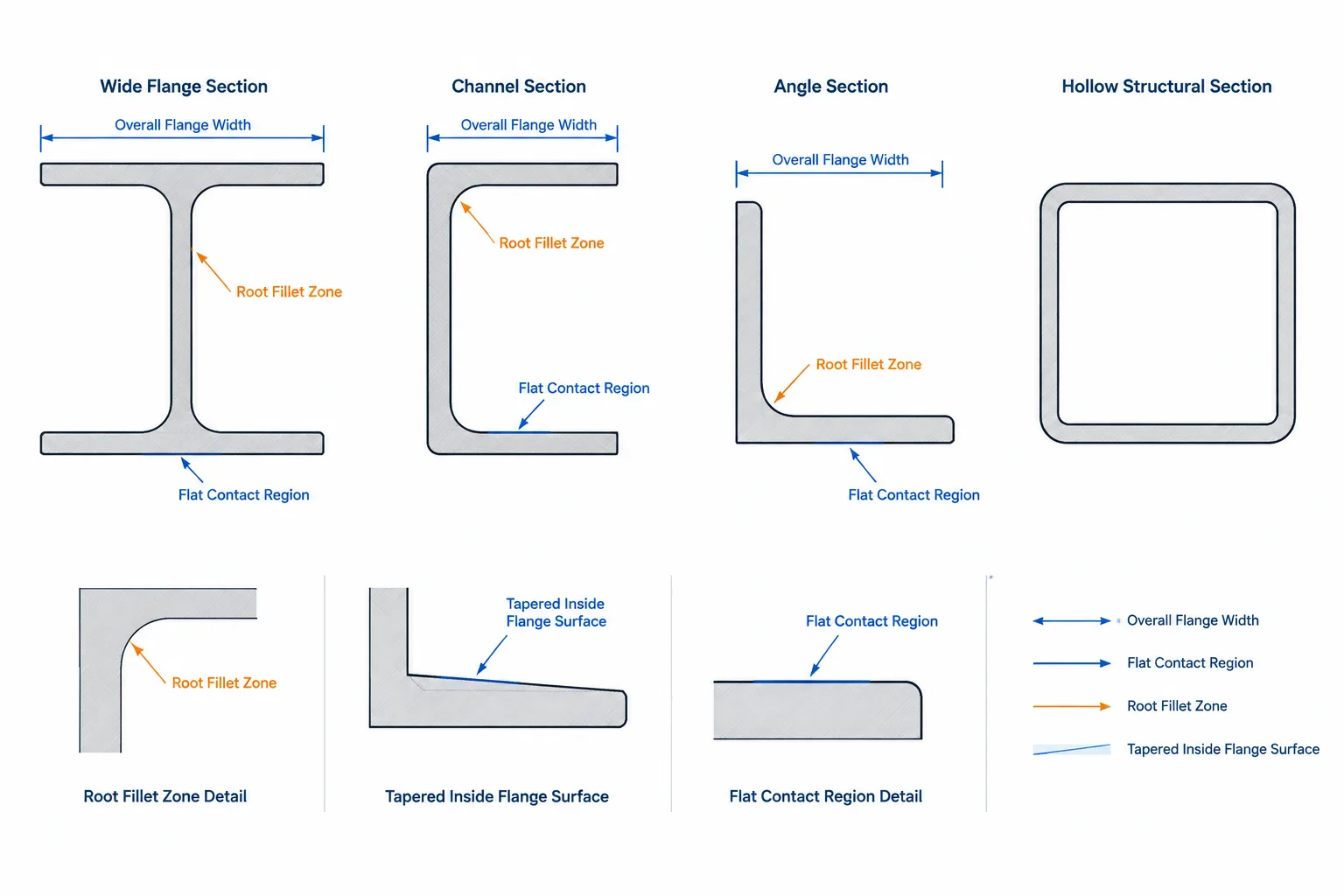
Usable Flat Width on Rolled Steel Flanges: Fillets, Tapers, and Connection Fit
Learn why flange width is not the same as usable flat width, and how fillets, tapered surfaces, washers, plates, and CAD geometry affect steel connection fit.
Written by
-
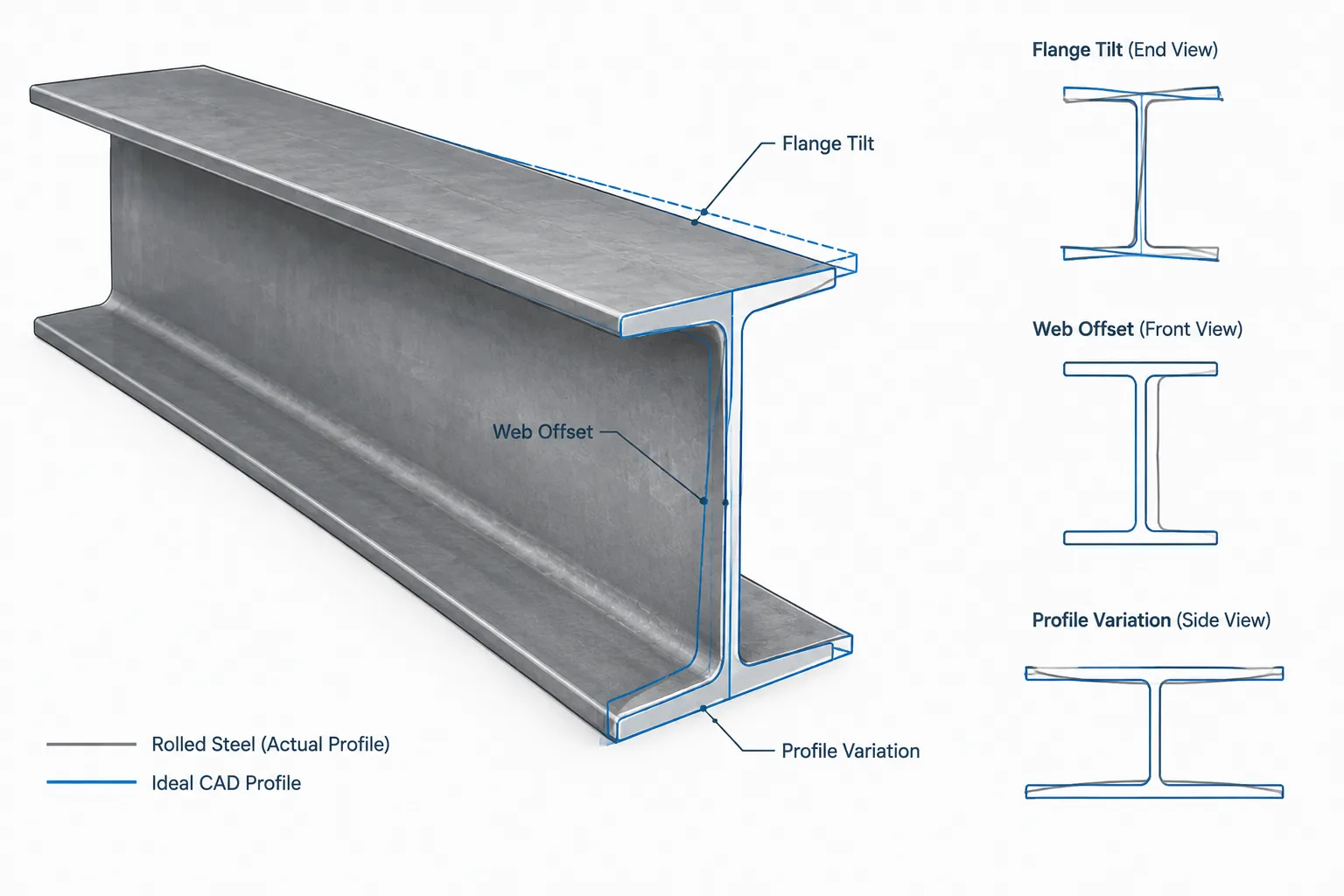
As-Rolled Steel Shape Variation: Mill Tolerances, Tabulated Dimensions, and Fit-Up
Learn how mill tolerances and as-rolled variation affect steel shape dimensions, CAD models, connections, clearances, and fit-critical detailing.
Written by
-
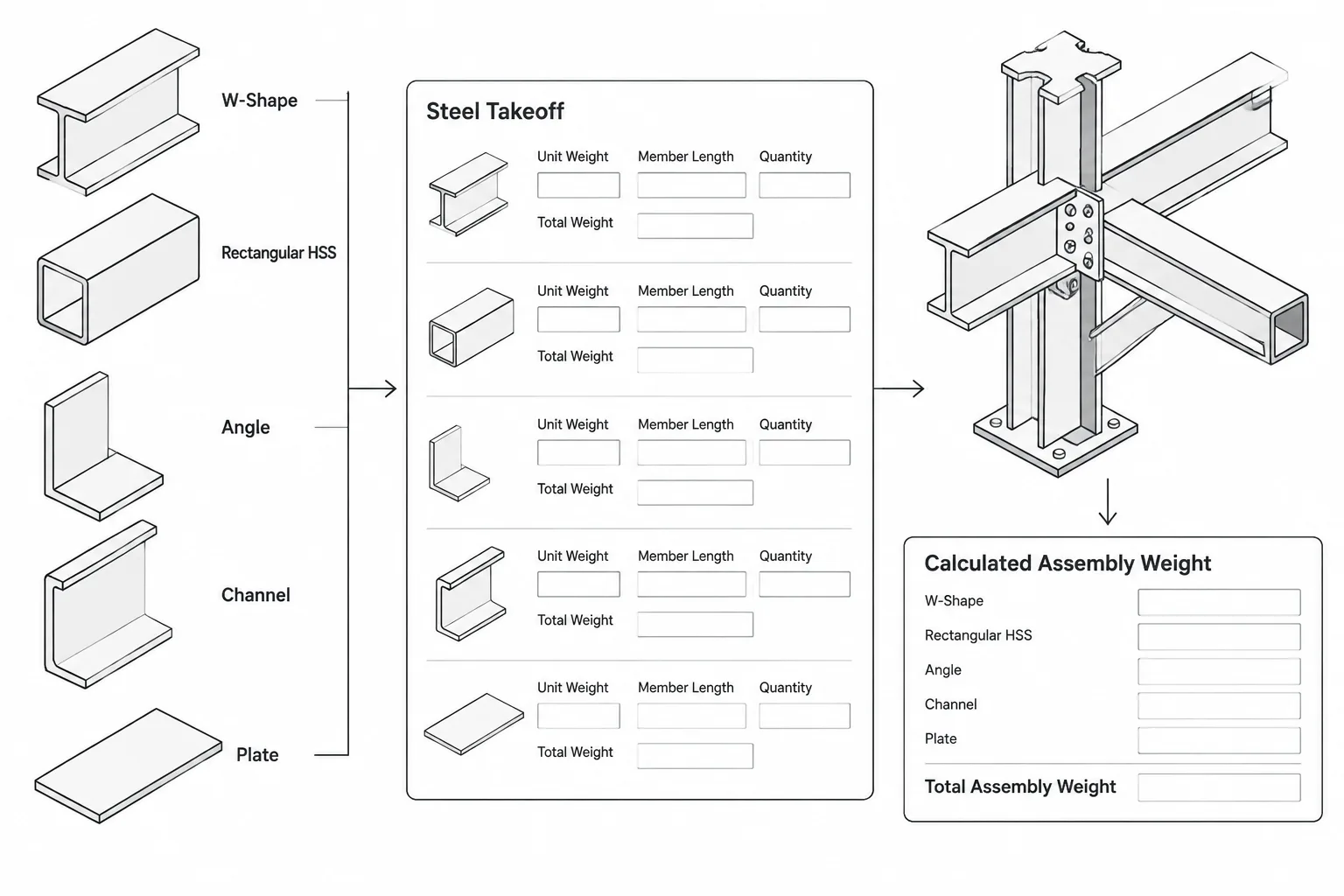
Calculating Structural Steel Member Weight from Shape Tables and CAD Geometry
Learn how to calculate structural steel member weight from lb/ft or kg/m tables, member lengths, plate geometry, quantities, and fabrication details.
Written by
-
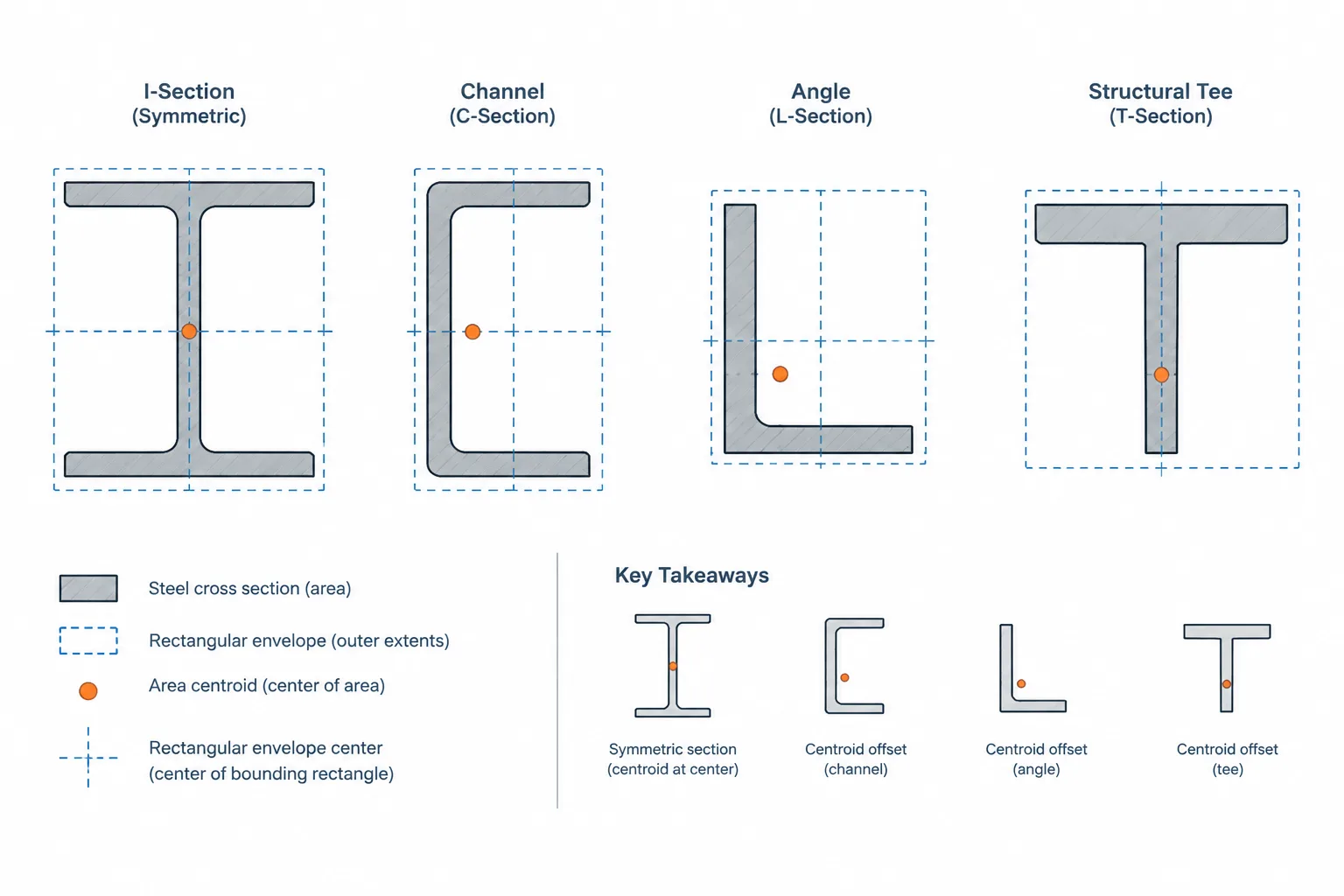
Centroid vs. Geometric Center in Structural Steel Shapes: Choosing the Correct Reference
Learn why a steel shape’s centroid may not match its overall geometric center and how that difference affects axes, dimensions, modeling, and detailing.
Written by
-
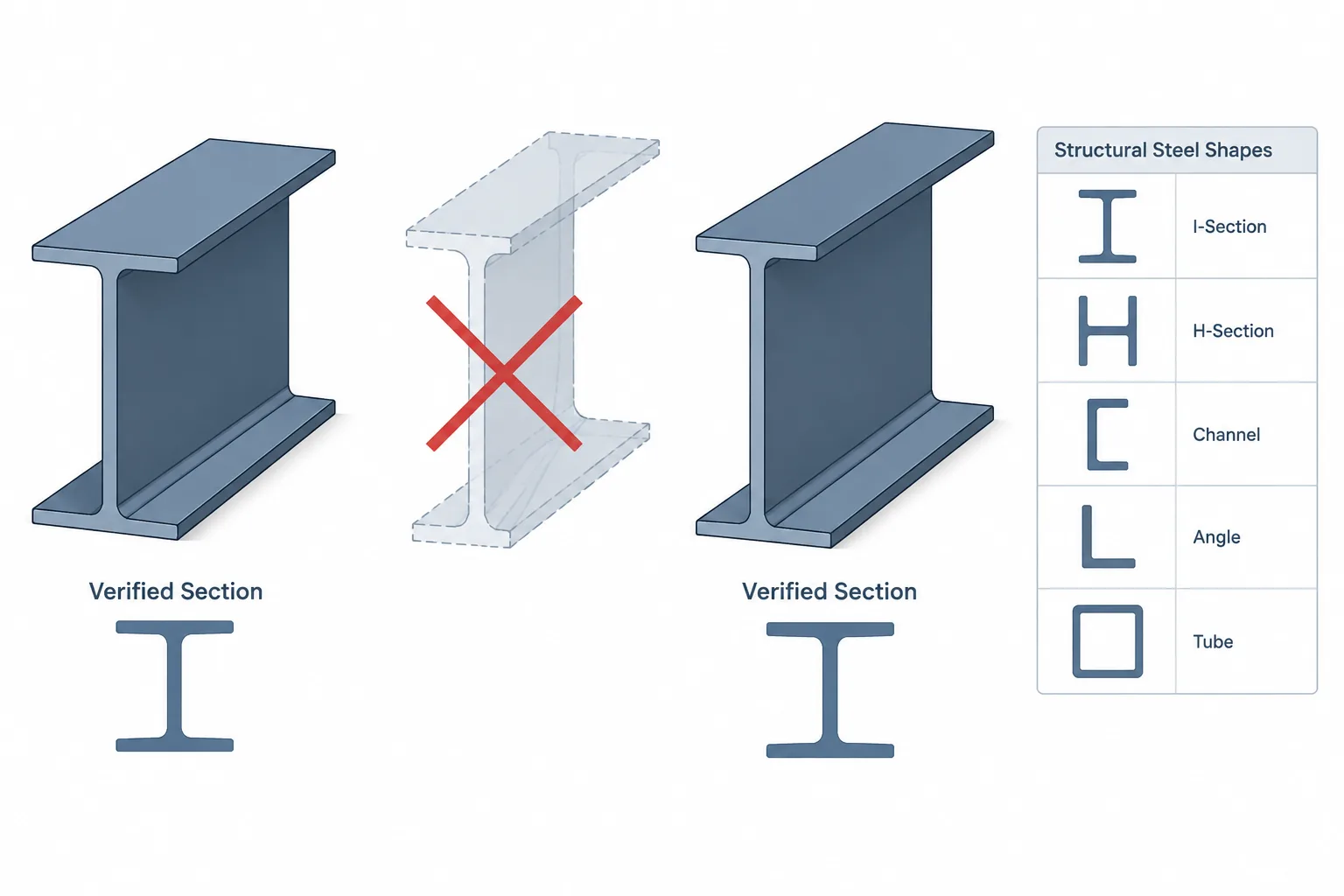
Why Structural Steel Shape Properties Should Not Be Interpolated Between Sizes
Learn why steel shape dimensions and section properties should not be interpolated between listed sizes, and how to compare or model alternatives safely.
Written by
-
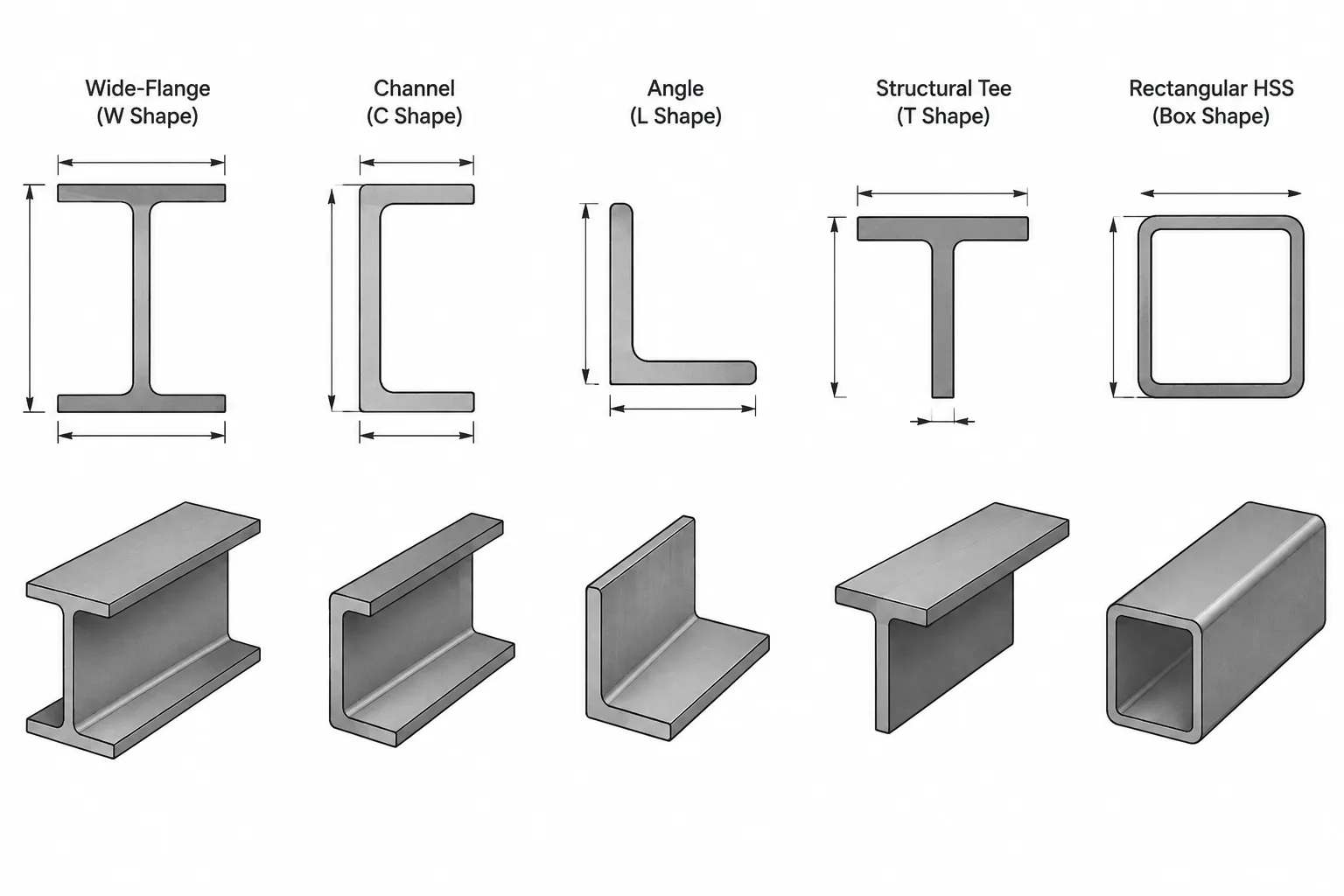
Steel Shape Designations vs. Tabulated Dimensions: What the Shape Name Does Not Tell You
Learn how W-shape, channel, angle, tee, HP, and HSS designations differ from tabulated dimensions, and which values should control CAD and detailing.
Written by
-
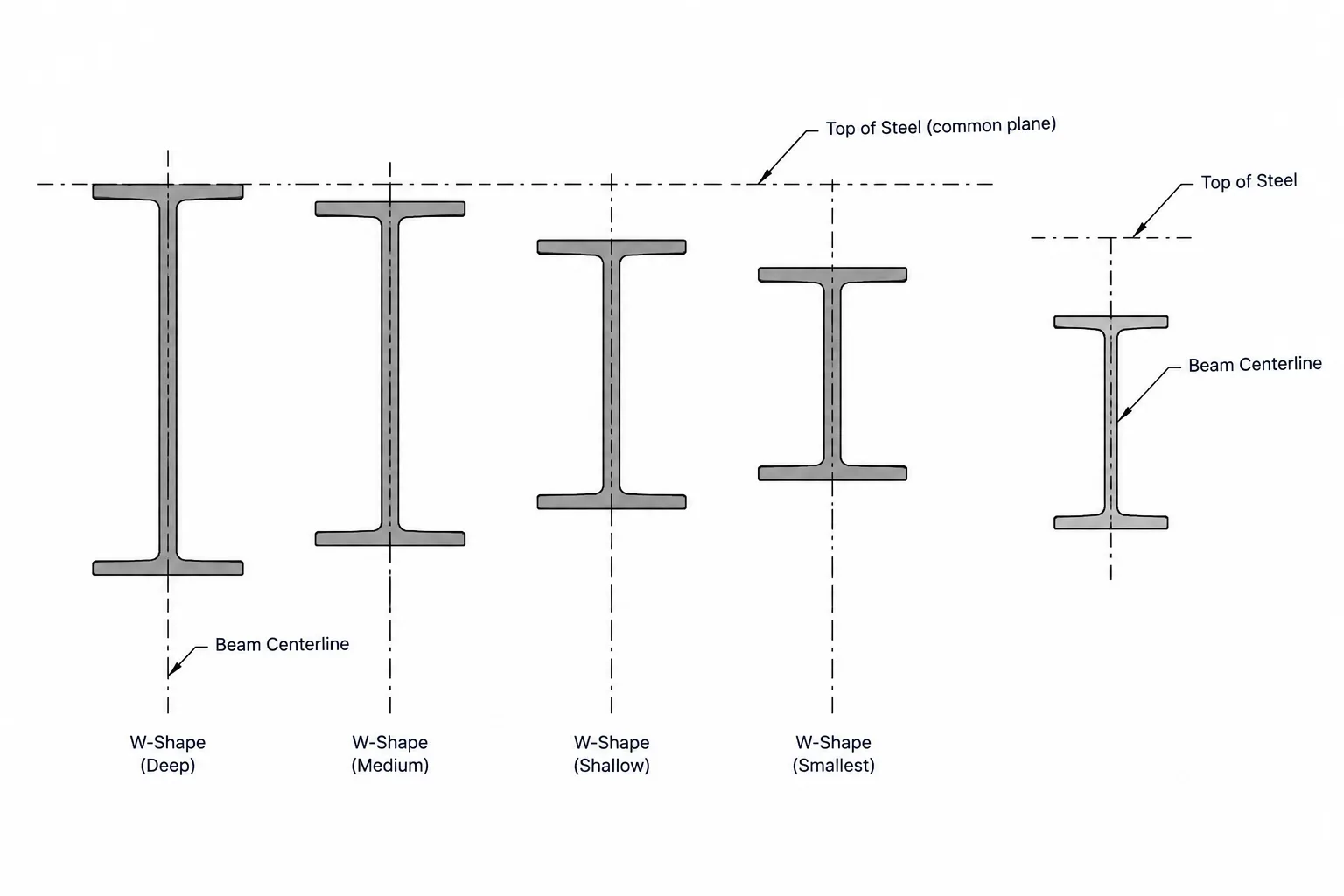
Top-of-Steel vs. Beam Centerline Elevations: Datums, Depth Changes, and Drawing Coordination
Learn how top-of-steel and beam centerline elevations affect steel beam placement, depth changes, slopes, framing alignment, and shop drawing coordination.
Written by
-
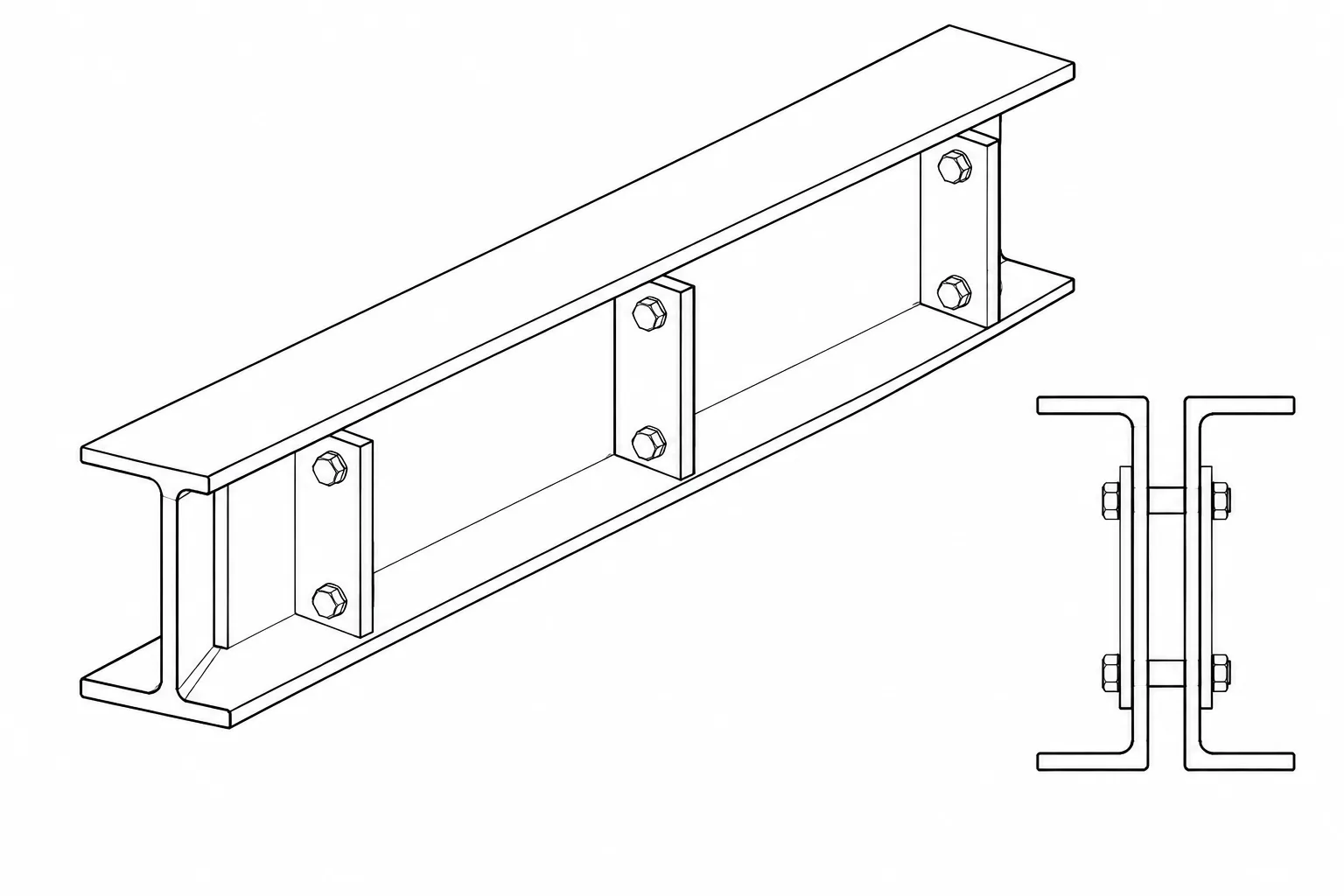
Back-to-Back Steel Channels: Spacing, Built-Up Properties, and Detailing Datums
Learn how back-to-back steel channels are oriented, spaced, modeled, dimensioned, and checked as built-up structural members.
Written by
-
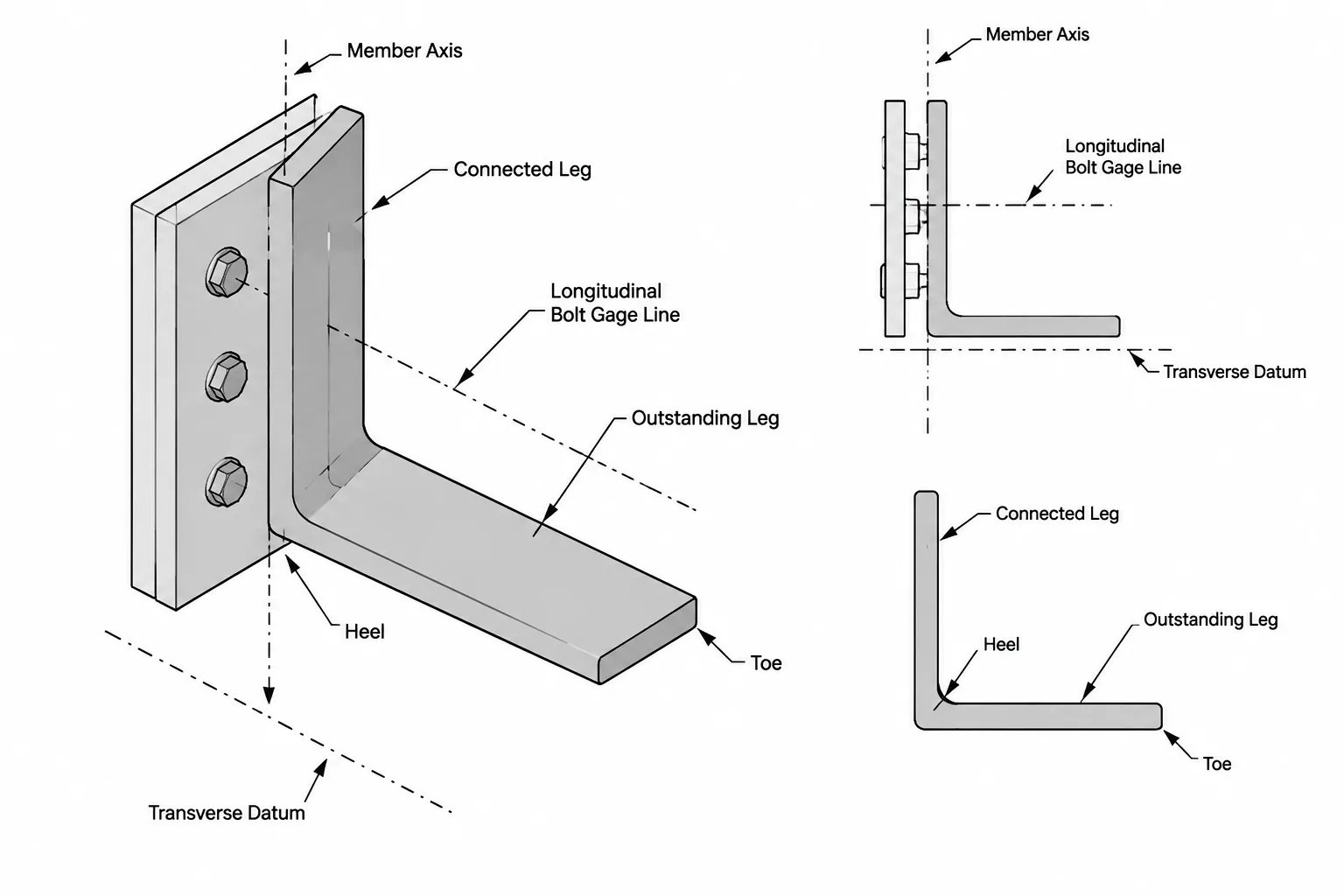
Steel Angle Bolt Gage: Heel, Toe, Leg Orientation, and Hole Layout
Learn how steel angle bolt gage relates to the heel, toe, connected leg, hole lines, edge clearance, and reliable shop drawing dimensions.
Written by
-
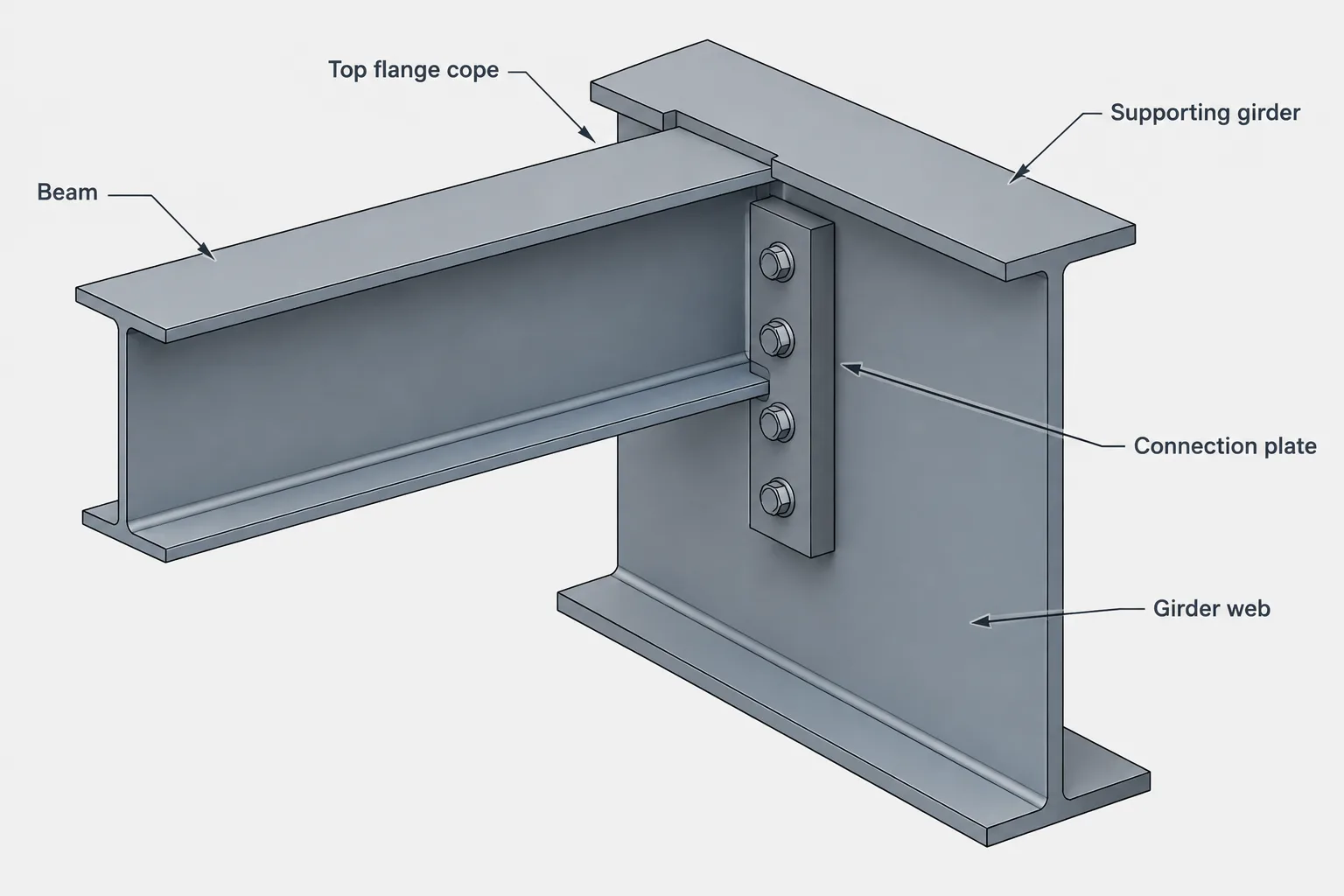
Steel Beam Copes, Notches, and Blockouts: Geometry, Datums, and Detailing Checks
Learn how steel beam copes, notches, and blockouts differ, which dimensions control their geometry, and how to coordinate cuts with connections and fabrication.
Written by
-
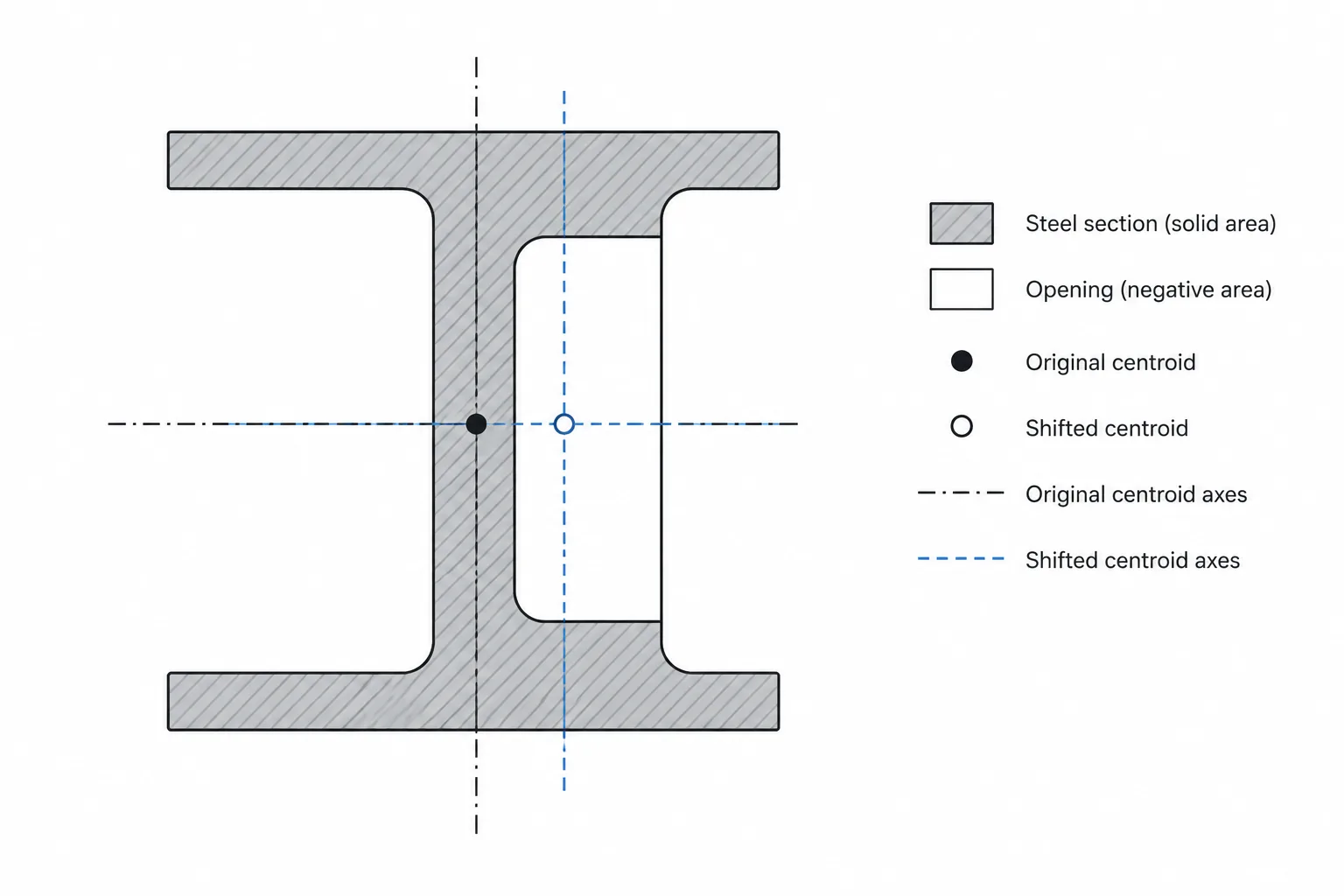
Calculating Steel Section Properties with Holes and Openings: A Practical CAD Workflow
Learn how holes and openings affect steel area, centroid, moment of inertia, and section modulus, with a practical CAD-based calculation workflow.
Written by