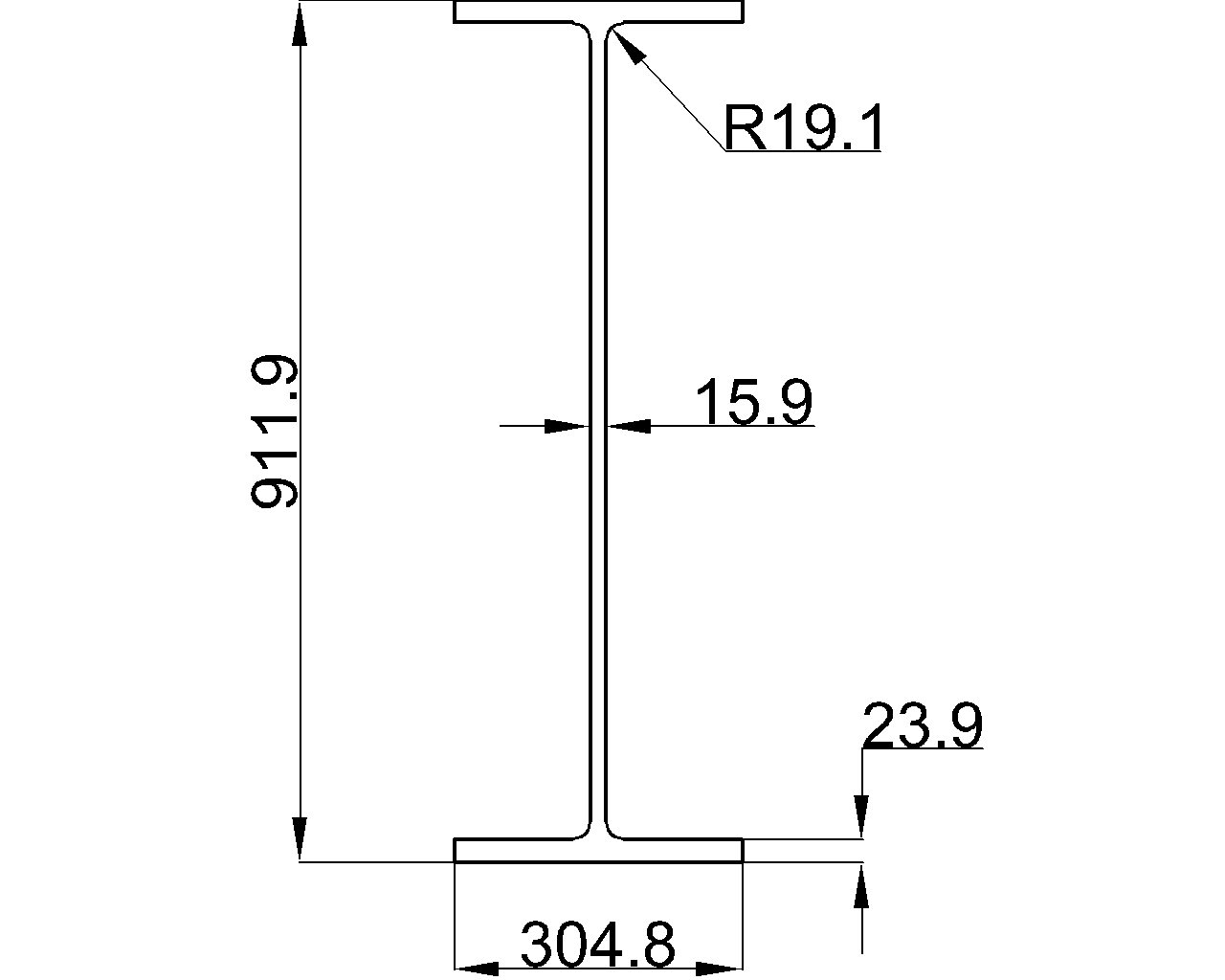
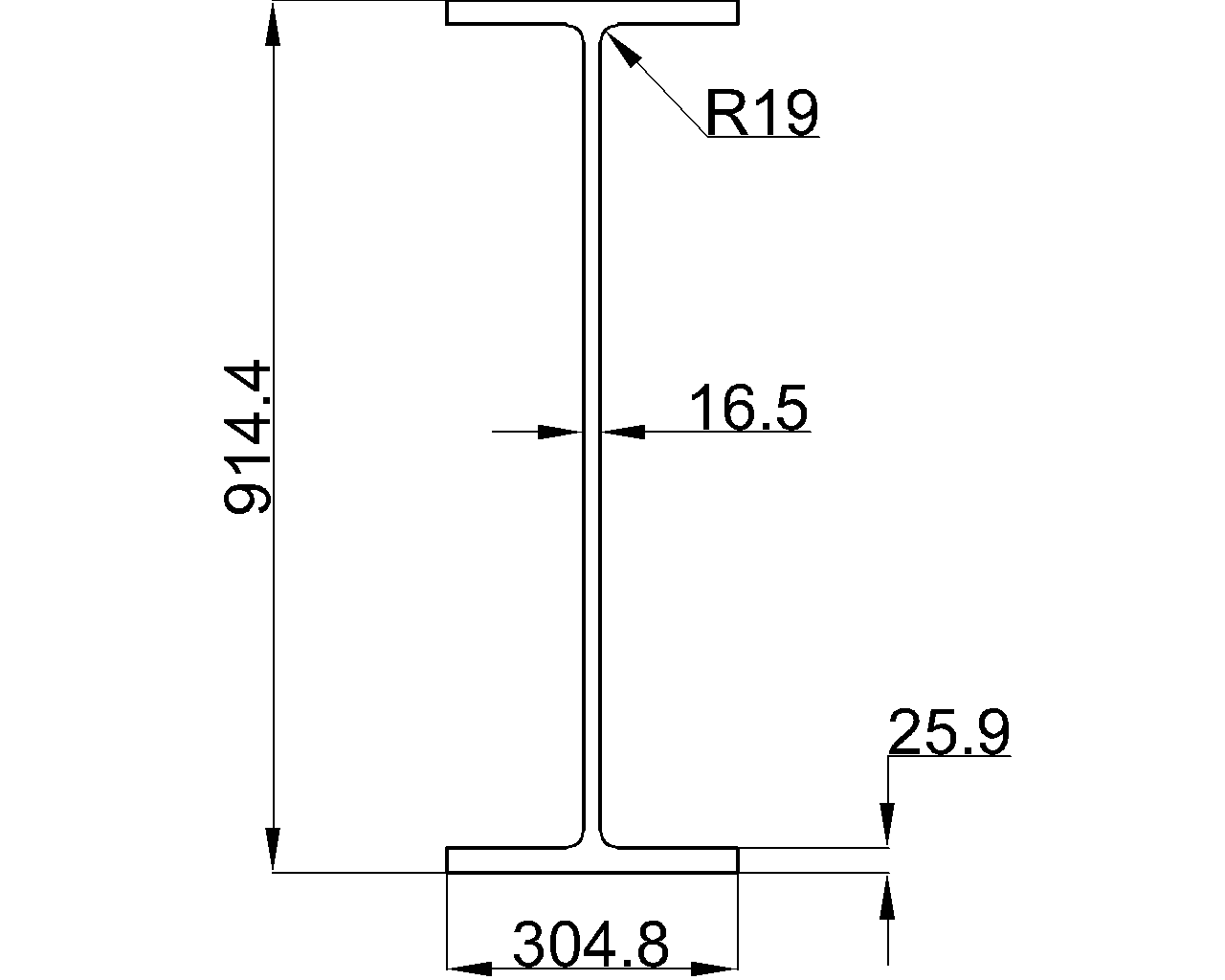
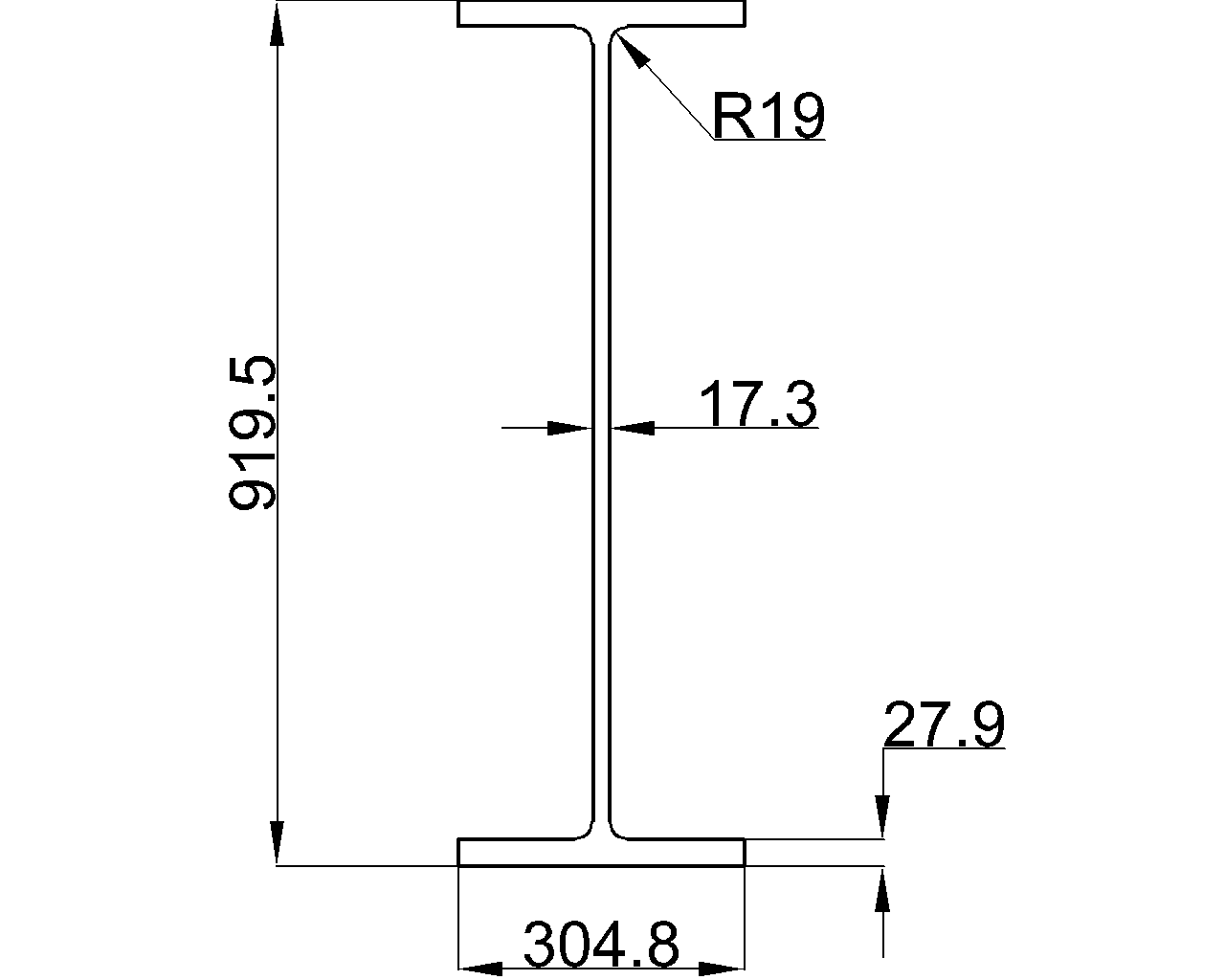
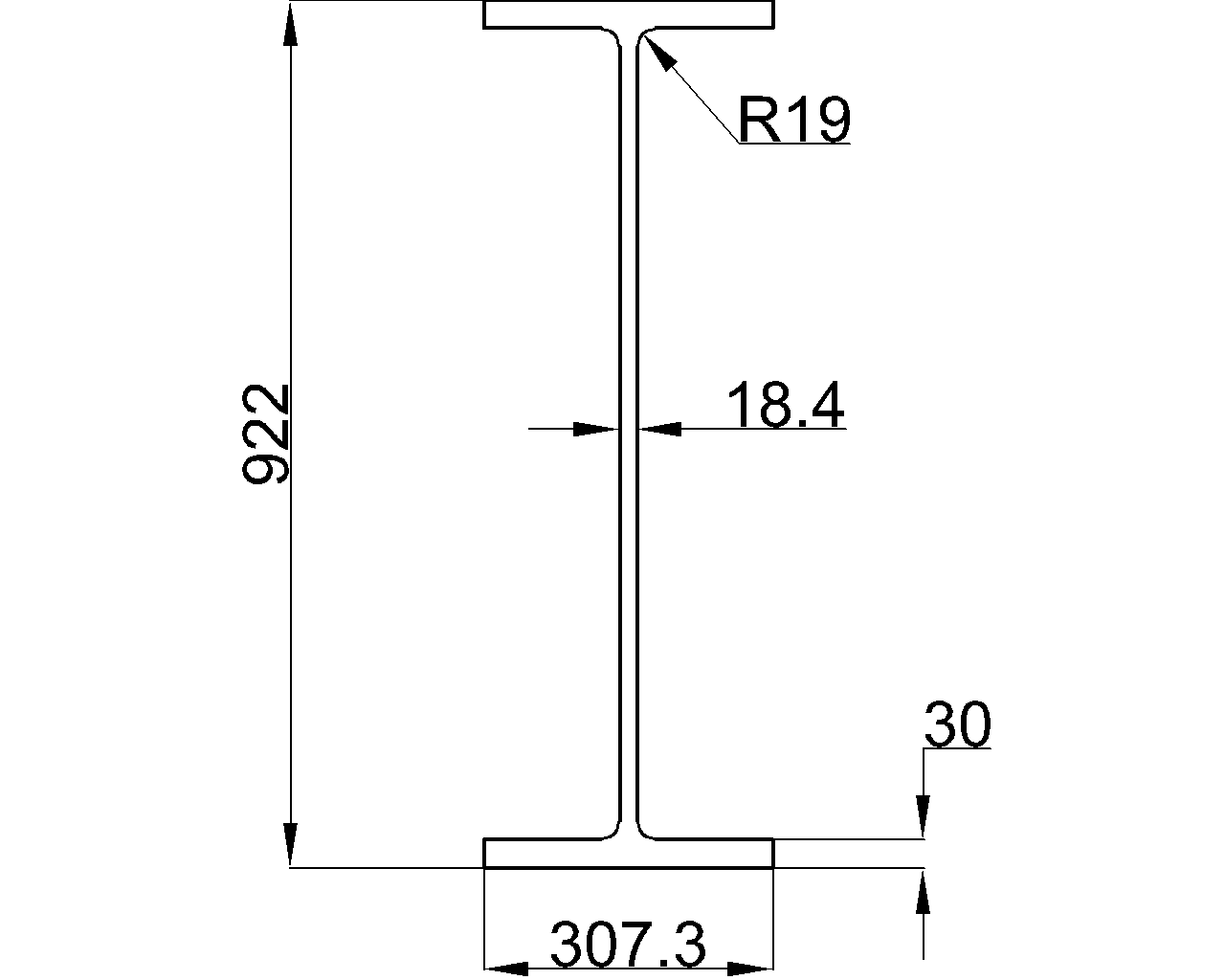
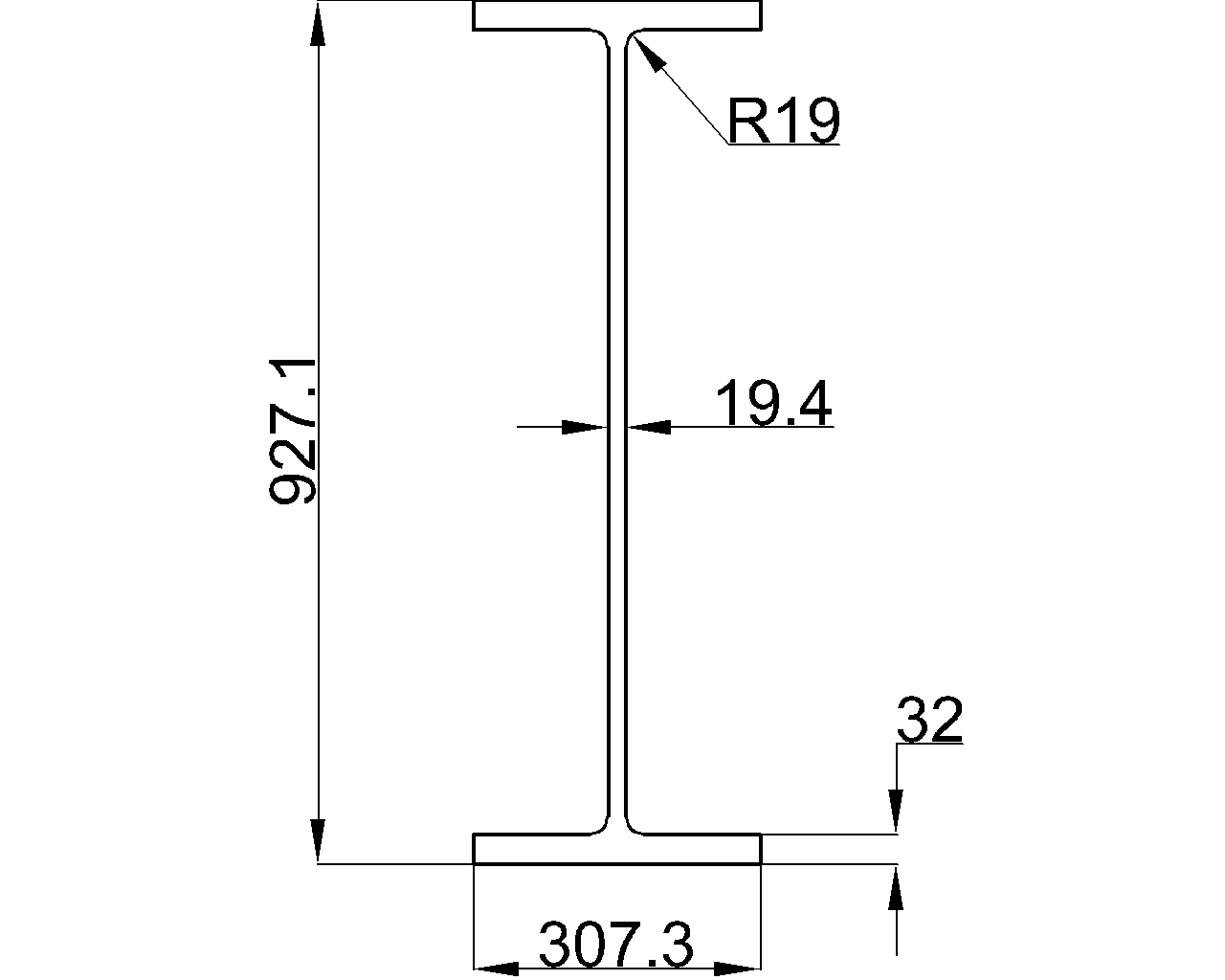
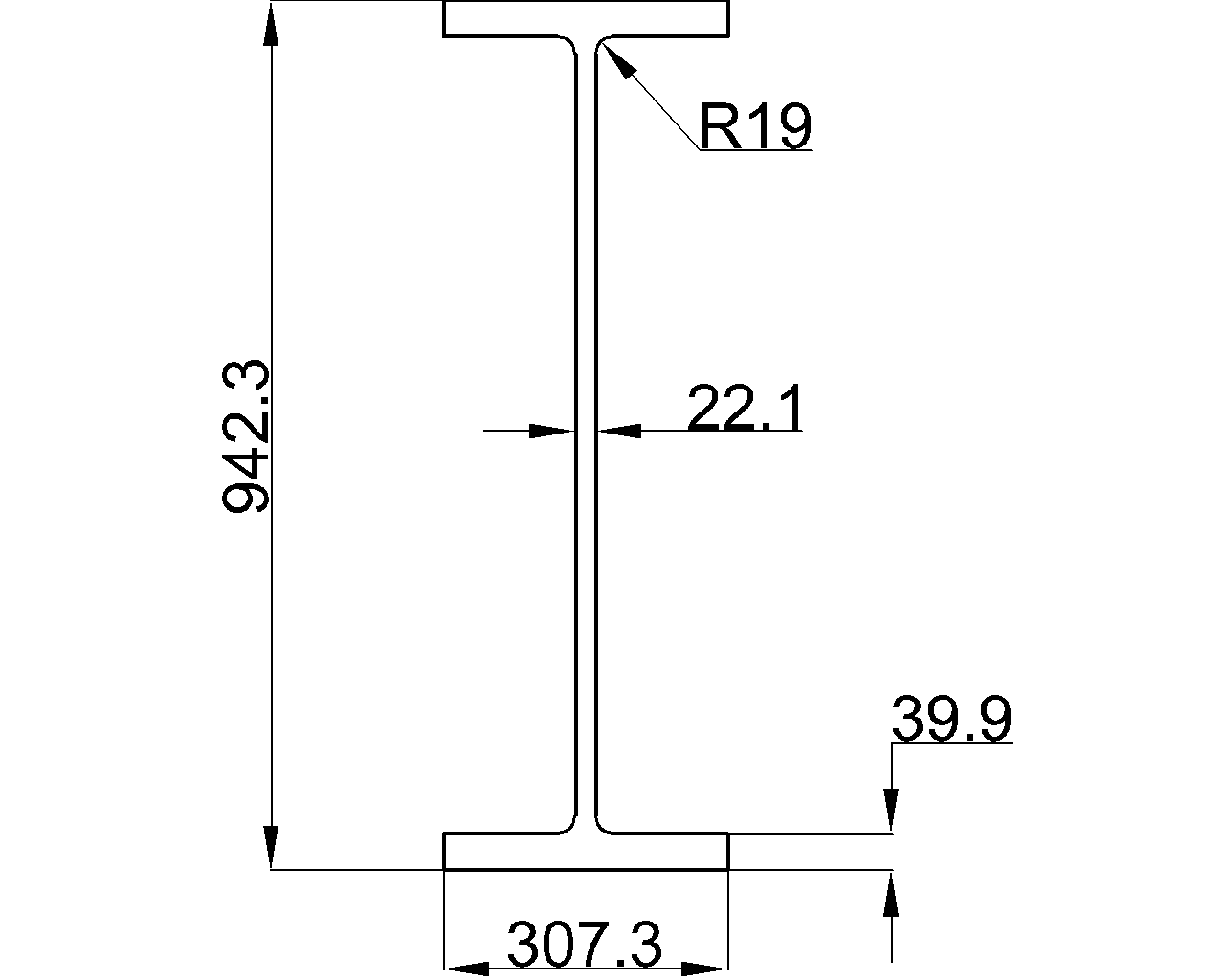
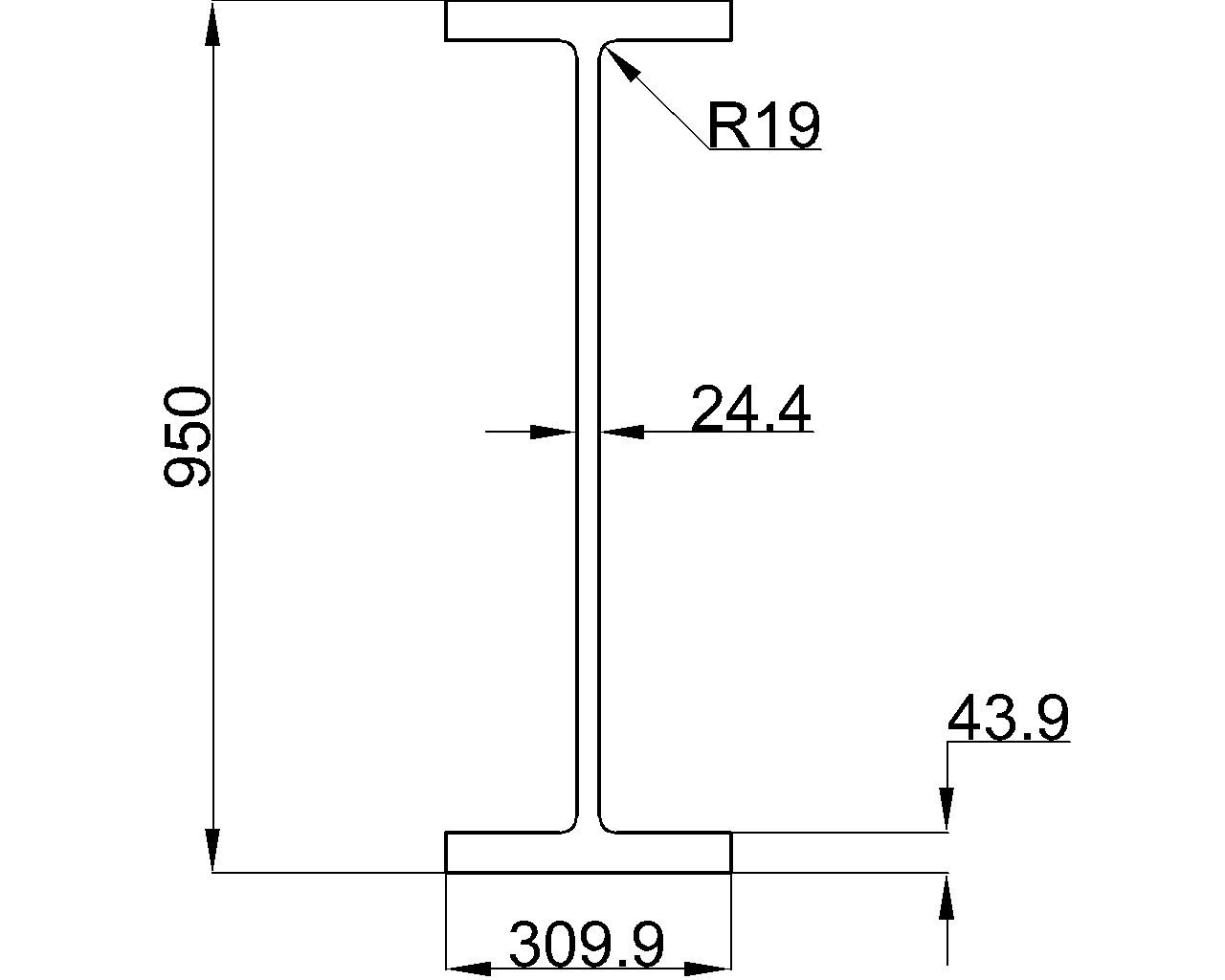
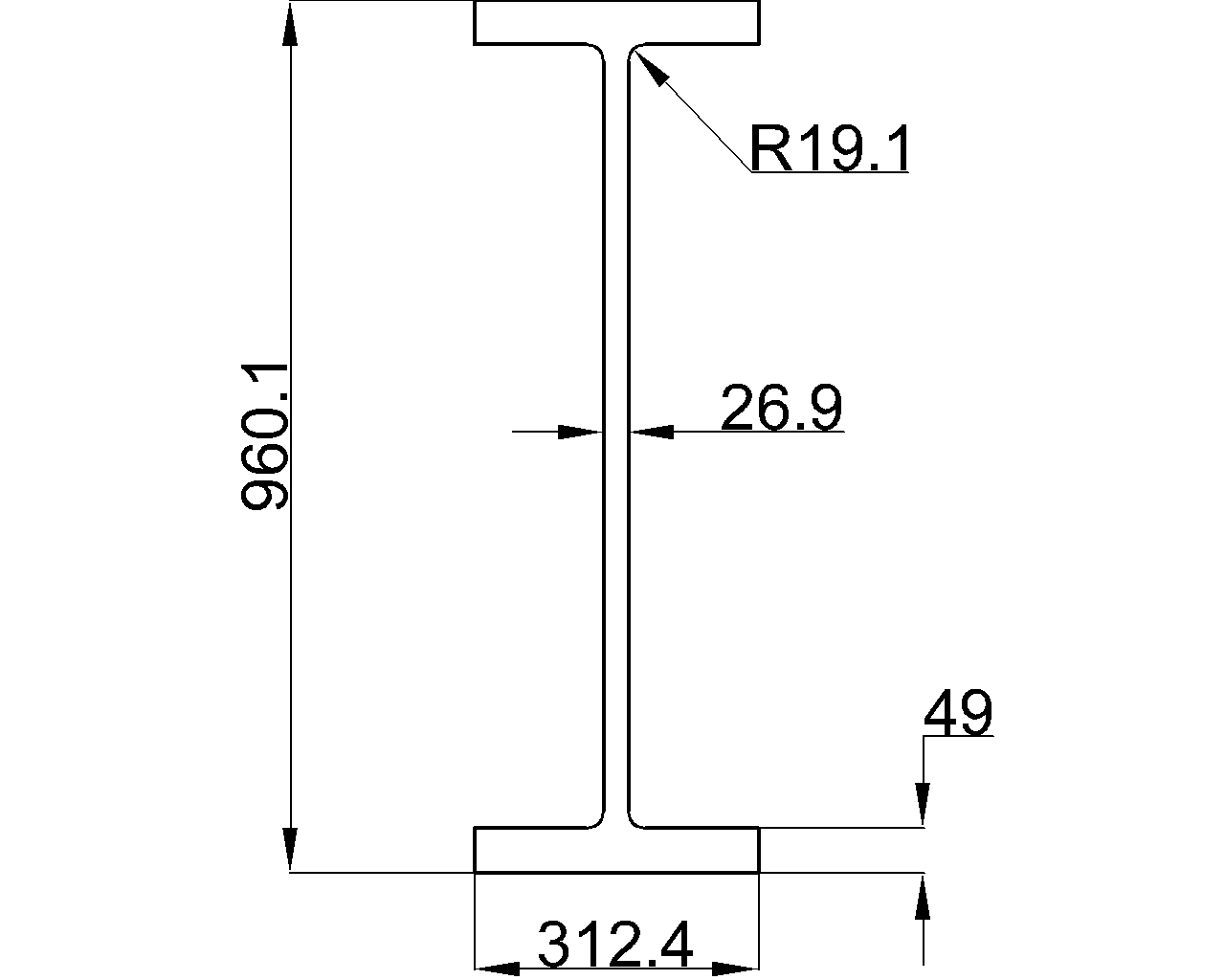
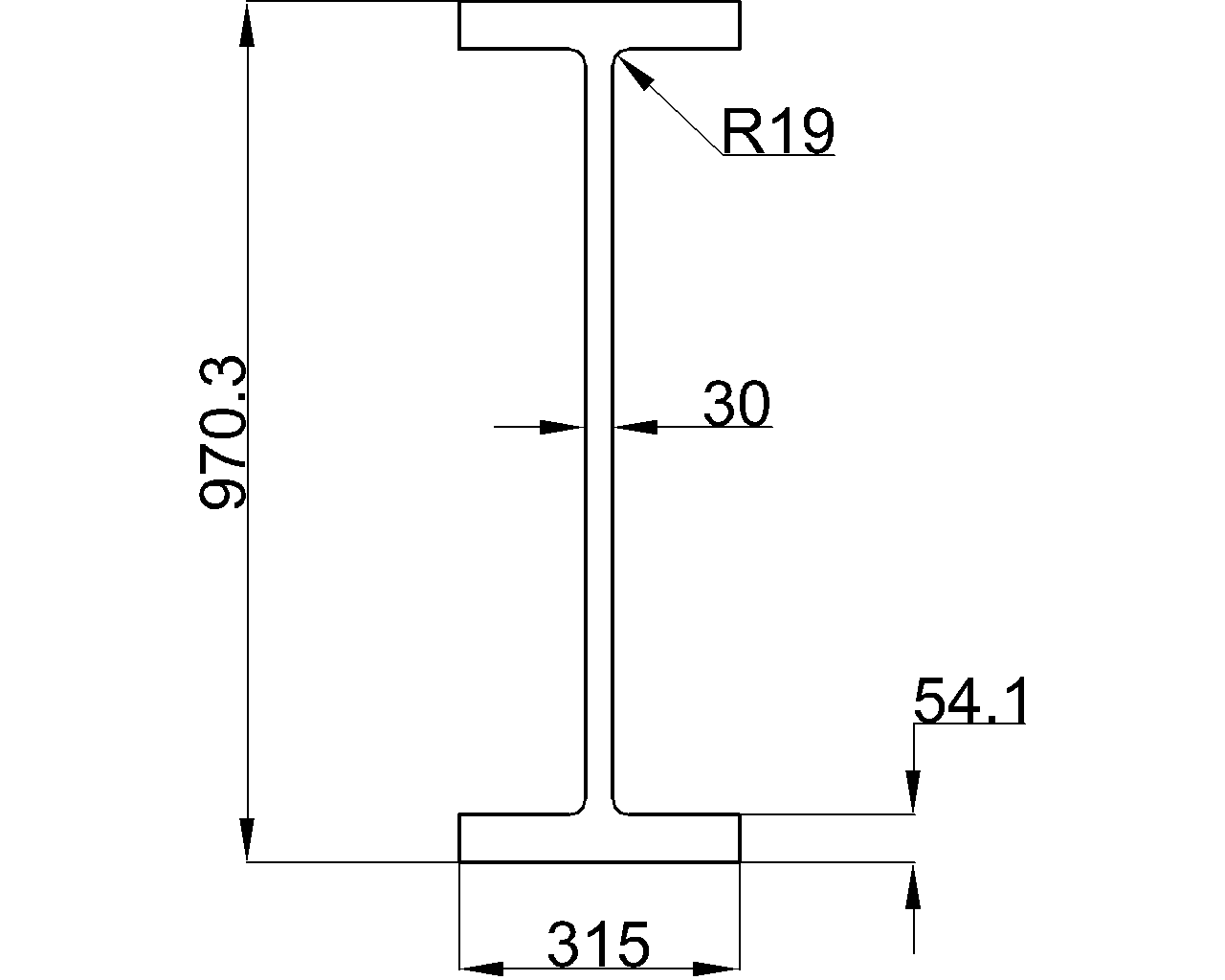
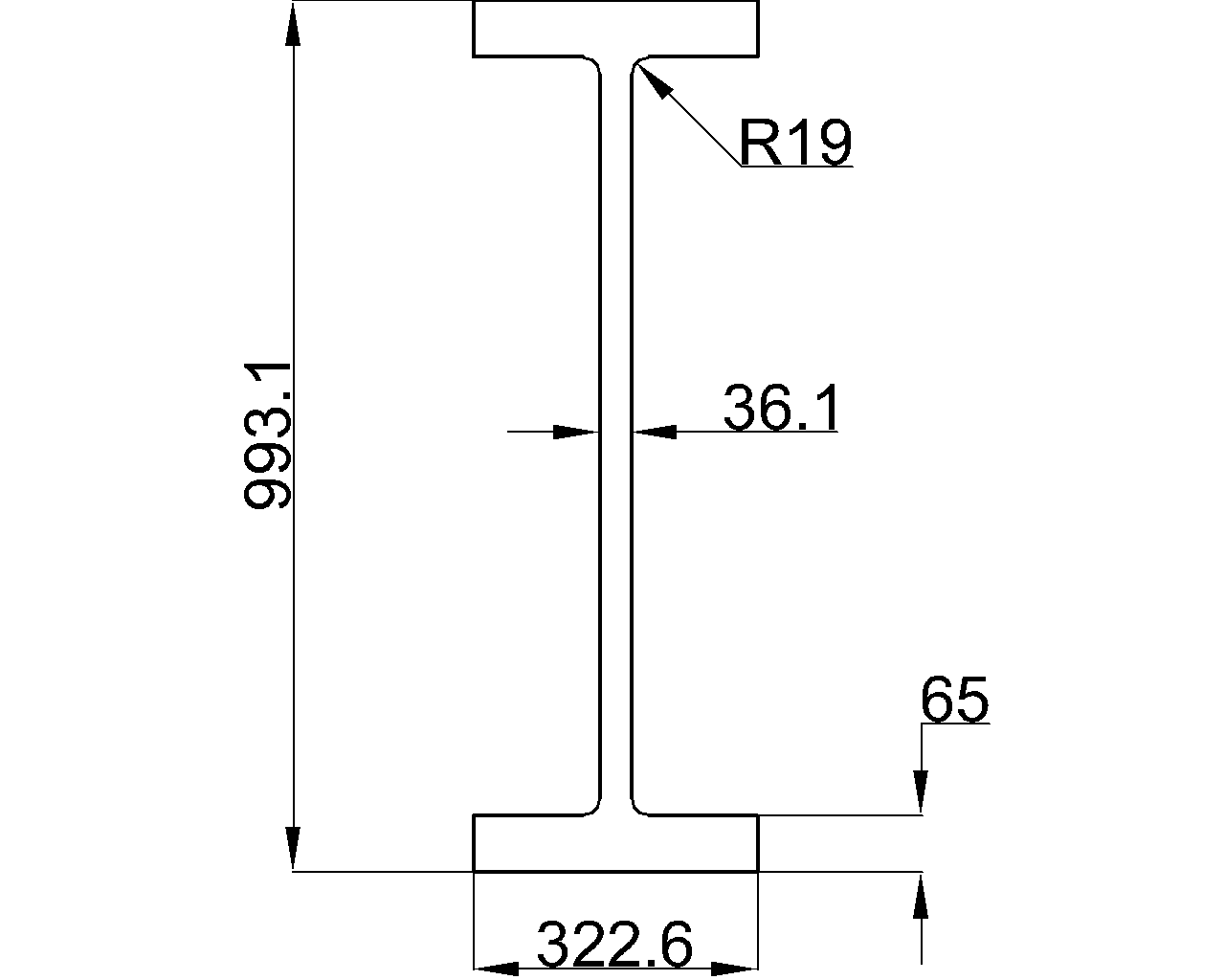
The W18x175 is a W-shape steel section identified in the source data as an AISC 16 reference. This page brings together its reported dimensions, sectional area, unit weight, and CAD drawing resource for engineers, detailers, fabricators, and students.
Use the dimensional information as a reference when reviewing W-shape terminology, comparing section records, or preparing preliminary drawings. Final member selection, connection detailing, and structural verification must follow the applicable project requirements and be completed by a qualified engineer.
W Beam
refer to : AISC 16
the American Institute of Steel Construction (AISC) Specification for Structural Steel Buildings (AISC 360-16), which is the 2016 edition of the AISC Specification for Structural Steel Buildings. It provides guidelines and requirements for the design, fabrication, and erection of steel structures in the United States.
Depth : 508 mm
Width : 289.6 mm
Web Thickness : 22.6 mm
Flange Thickness : 40.4 mm
Root Fillet Radius : 10.2 mm
Sectional Area : 331.61 cm2
Unit Weight : 260.3 kg/m
How to read the W18x175 reference
The designation W18x175 identifies a wide-flange, or W, shape. The nominal designation is used to locate the section in a shape database; the listed dimensions and properties provide the more precise reference for drafting, checking, and engineering work.
Dimensions and section terminology
The source content reports the section’s overall depth, flange width, web thickness, flange thickness, and root fillet radius. These terms describe the basic geometry of the rolled shape:
- Depth is the overall section depth used when coordinating member geometry.
- Width refers to the flange width across the section.
- Web thickness describes the thickness of the central vertical element.
- Flange thickness describes the thickness of the top and bottom projecting elements.
- Root fillet radius describes the curved transition between the web and each flange.
These dimensions should be distinguished from design properties such as area, moment of inertia, radius of gyration, and section modulus. Those properties are used for strength, stability, and serviceability checks, but they should be taken from the applicable verified section-property reference rather than inferred from a drawing.
Sectional area and unit weight
The source lists both sectional area and unit weight for this shape. Sectional area is commonly used in calculations involving material quantity and axial behavior, while unit weight supports estimating, material scheduling, and handling discussions. The reported values should be retained as the controlling local data for this page; do not substitute estimates derived from rounded dimensions.
Using the DWG resource
The linked DWG file can support CAD coordination and drafting workflows. Before using it for fabrication or construction documentation, check the drawing units, layer conventions, orientation, and any project-specific detailing requirements. A CAD profile is a geometry reference, not a substitute for connection design, fabrication review, or the governing engineering documents.
Related reference topics
This page provides useful context for internal references covering W-shapes, steel section properties, AISC terminology, structural steel connections, and DWG detailing resources. Linking those topics from this entry can help readers move from shape identification to calculation methods and detailing practice without mixing reference geometry with design decisions.
W18x175 FAQ
What does W18x175 mean?
W18x175 is the designation for a W-shape steel section. The designation helps identify the section, while the detailed dimensions and properties on this page provide the reference data needed for closer review.
What information is provided for the W18x175?
The source provides the section depth, flange width, web thickness, flange thickness, root fillet radius, sectional area, and unit weight. It also identifies an AISC 16 reference and provides a DWG download.
Can the DWG file be used as a structural design document?
No. The DWG should be treated as a drafting and geometry reference. Structural design, connection design, fabrication requirements, and final document approval require project-specific engineering review.
Why are the root fillet and web dimensions important?
They describe features that affect the physical shape and detailing interface of the section. They can matter when checking clearances, modeling the profile, or coordinating connected components, so they should be taken from the authoritative section data rather than approximated.