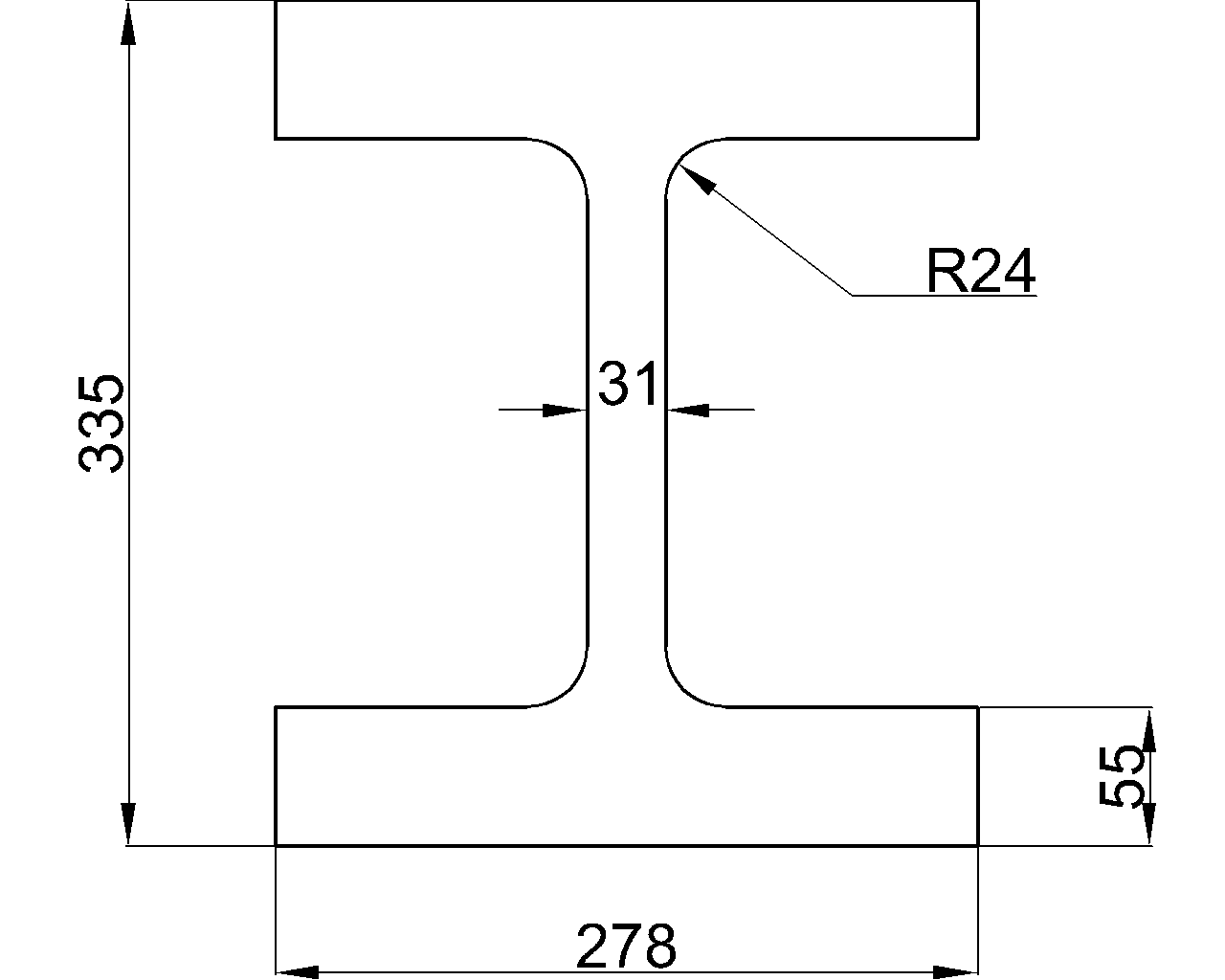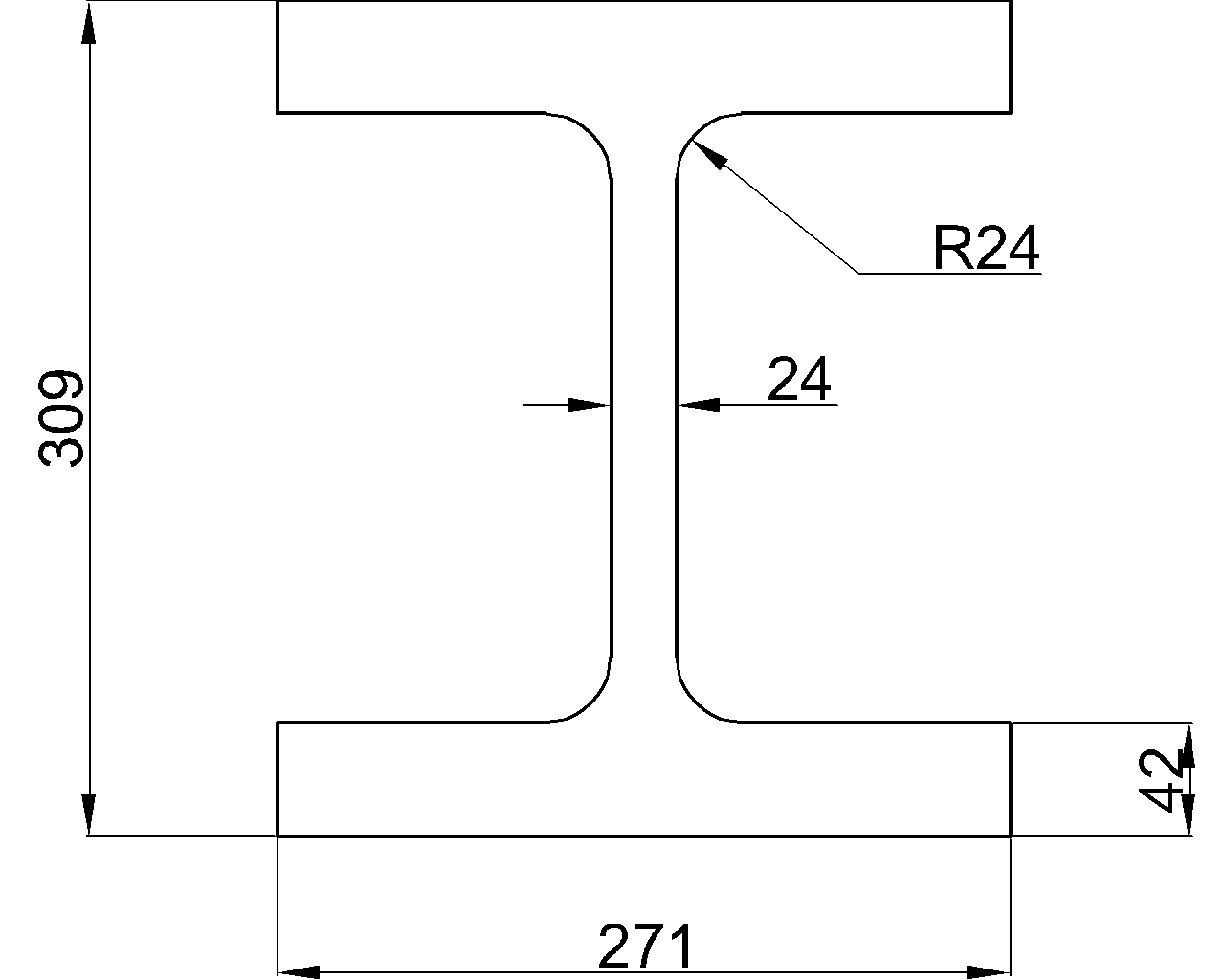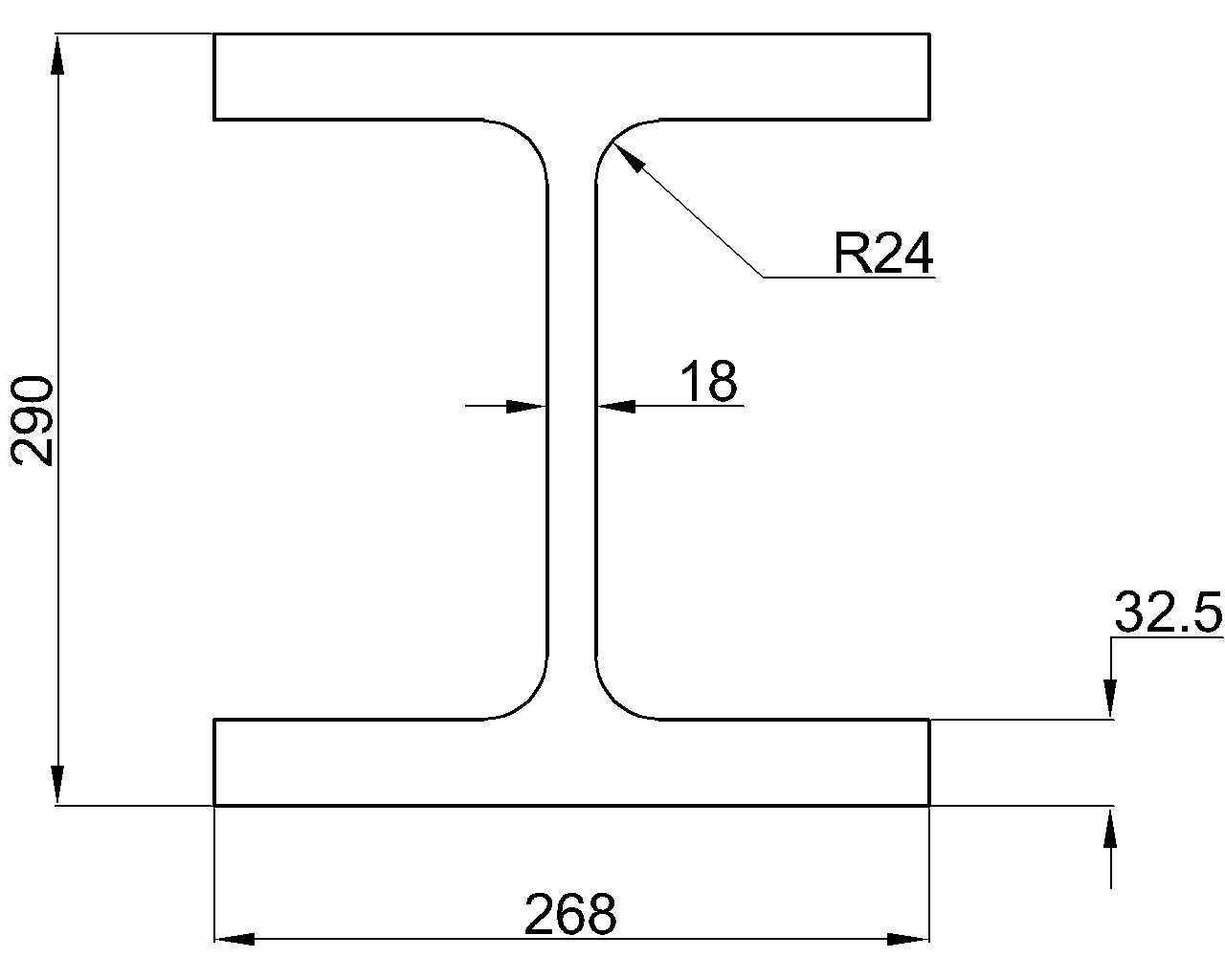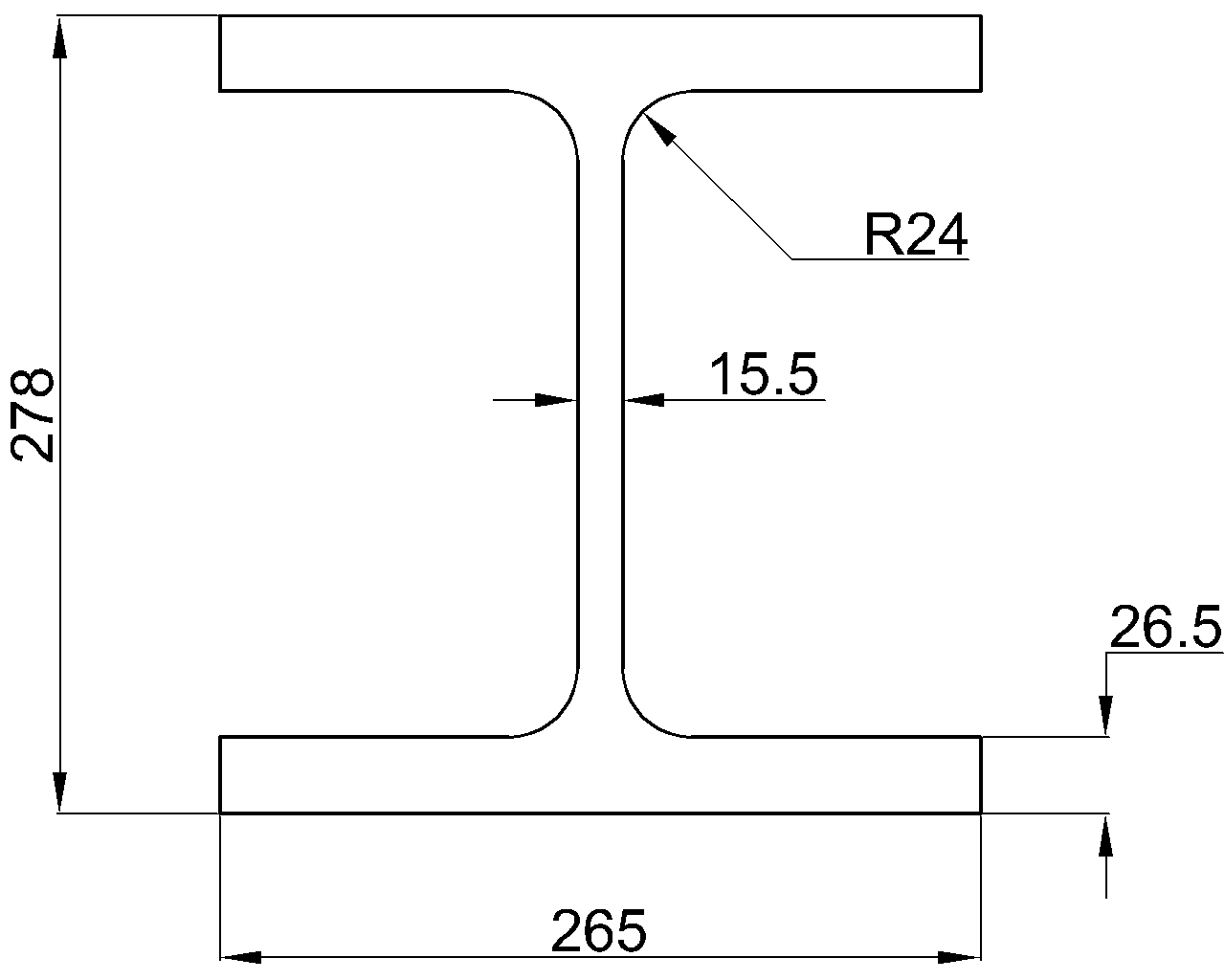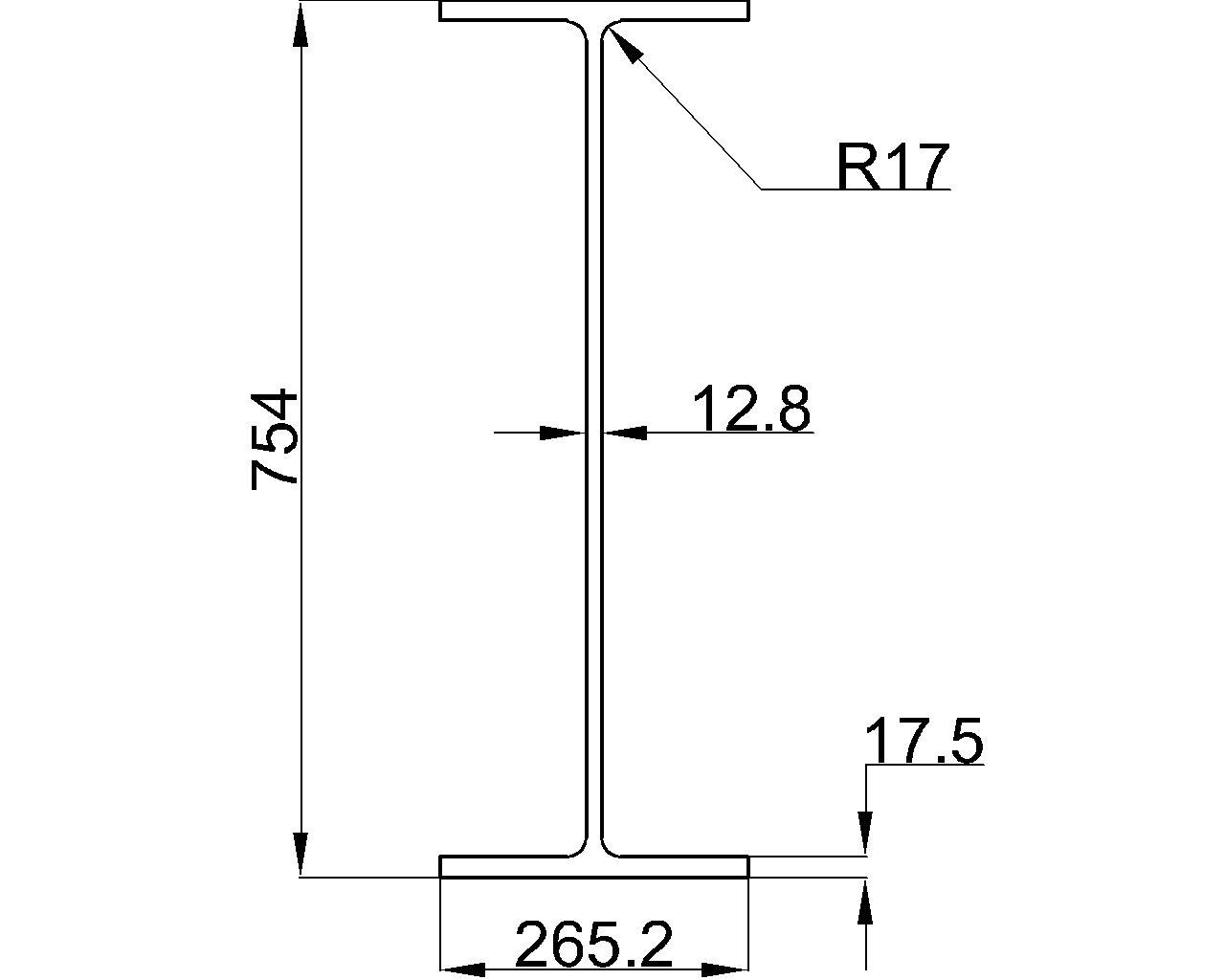
UB 762x267x147 is a Universal Beam designation used to identify a specific hot-rolled steel section. This reference page brings together the section dimensions, root fillet, sectional area, unit weight, cited standard, and associated CAD resource.
The designation provides a convenient section-family reference, but drafting and modeling should use the listed dimensions rather than treating the nominal designation as exact geometry. This distinction is especially important when checking flange edges, web alignment, clearances, and connection layouts.
UB 762x267x147
Universal Beams
refer to : EN 10365:2017
a European standard that defines the dimensions, tolerances, and sectional properties for hot-rolled steel channels, I-beams, and H-beams used in construction and engineering. It ensures uniformity and compatibility across European structural steel products.
Dimension : 754×265.2×12.8×17.5
Depth : 754 mm
Width : 265.2 mm
Web Thickness : 12.8 mm
Flange Thickness : 17.5 mm
Root Fillet Radius : 17 mm
Sectional Area : 187.2 cm2
Unit Weight : 147 kg/m
How to read the section information
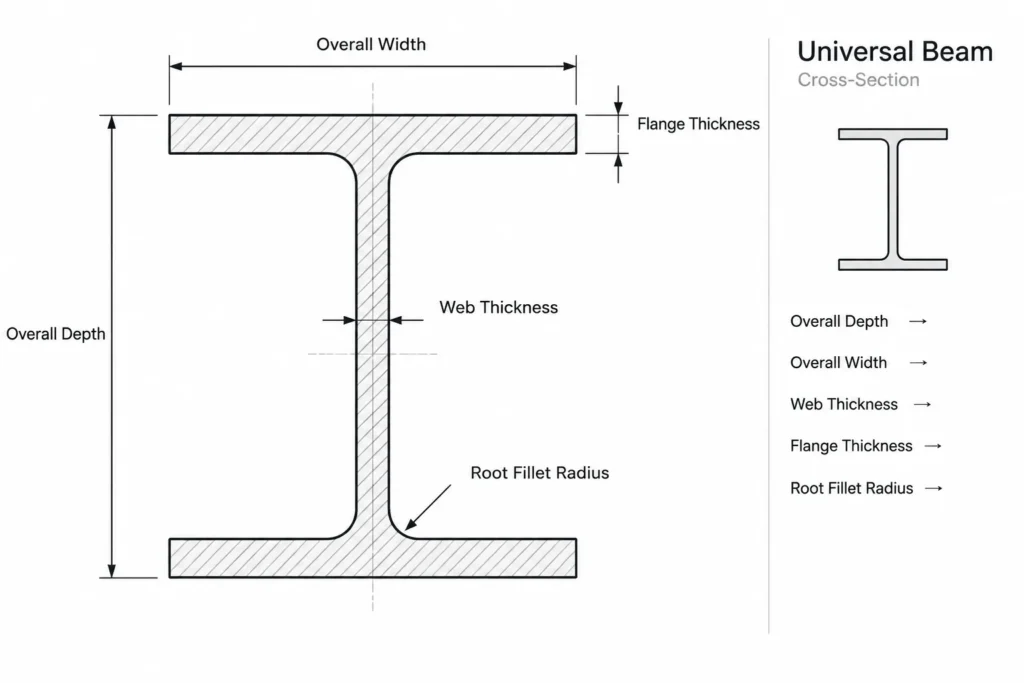
The dimensional data describes the overall depth and width together with the web and flange thicknesses. These values define the primary I-shaped profile used in section drawings and structural models. The root fillet radius describes the curved transition between the web and flange, so this region should not be represented as a sharp internal corner where accurate geometry or connection clearance matters.
Designation versus listed dimensions
A Universal Beam designation is a section identifier rather than a complete fabrication specification. Its nominal size reference may differ from the detailed dimensions shown in the source data. For CAD work, coordination, and fit-up checks, use the published depth, width, thickness, and radius values presented on this page.
Sectional area and unit weight
Sectional area describes the amount of steel in the cross-section and is relevant to section-property calculations. Unit weight is the mass per unit length, not the total mass of a beam. Determining total mass also requires the actual member length and any project-specific additions or deductions.
The listed area and unit weight should not be used as substitutes for other properties that are not shown here. Structural comparison or design may also require verified values for bending, shear, torsion, buckling, material grade, restraint, and connection behavior.
Using the DWG reference
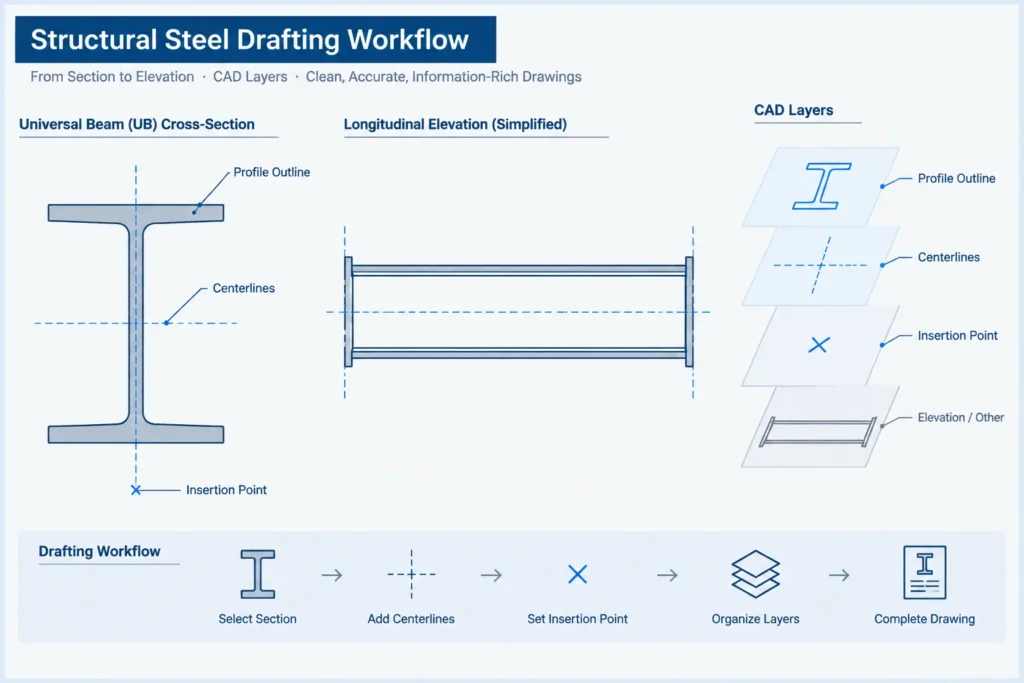
The downloadable drawing can support section-library creation, detailing, layout, and visual comparison. Before incorporating it into a project model, confirm the drawing units, scale, layer conventions, profile geometry, and insertion point. Also check that the root region and thicknesses agree with the verified source data.
A section-profile drawing does not establish member capacity or provide a complete connection design. End plates, stiffeners, copes, bolt holes, welds, and other fabrication features require project-specific engineering and detailing checks.
Related reference topics
- Universal Beam dimensions: compare depth, flange width, web thickness, flange thickness, and root geometry.
- Steel section properties: understand how area and geometric properties serve different calculation purposes.
- Unit weight: distinguish linear mass from the total mass of a cut member.
- I-section CAD details: review profile accuracy, drawing units, layers, and insertion points.
- Beam connections: evaluate flange, web, fillet, bolt, weld, and clearance constraints separately from the section profile.
Standards and project verification
The source identifies EN 10365:2017 as the dimensional reference. Users should verify that this reference, the selected section, and the required product information are appropriate for the governing project documents. Final design and fabrication decisions should be based on current approved data and qualified professional review.
Frequently asked questions
What does UB mean in this designation?
UB means Universal Beam, a hot-rolled I-shaped structural steel section with a web between two flanges.
Why are the listed dimensions different from the designation?
The designation identifies the nominal section family and unit mass, while the detailed data provides the dimensions used to represent the actual profile. Use the listed dimensions for drawing and coordination work.
Does the final part of the designation give the total beam weight?
No. The source lists it as a unit weight in kilograms per meter. Total member mass depends on the beam length and any fabrication changes.
Why is the root fillet radius important?
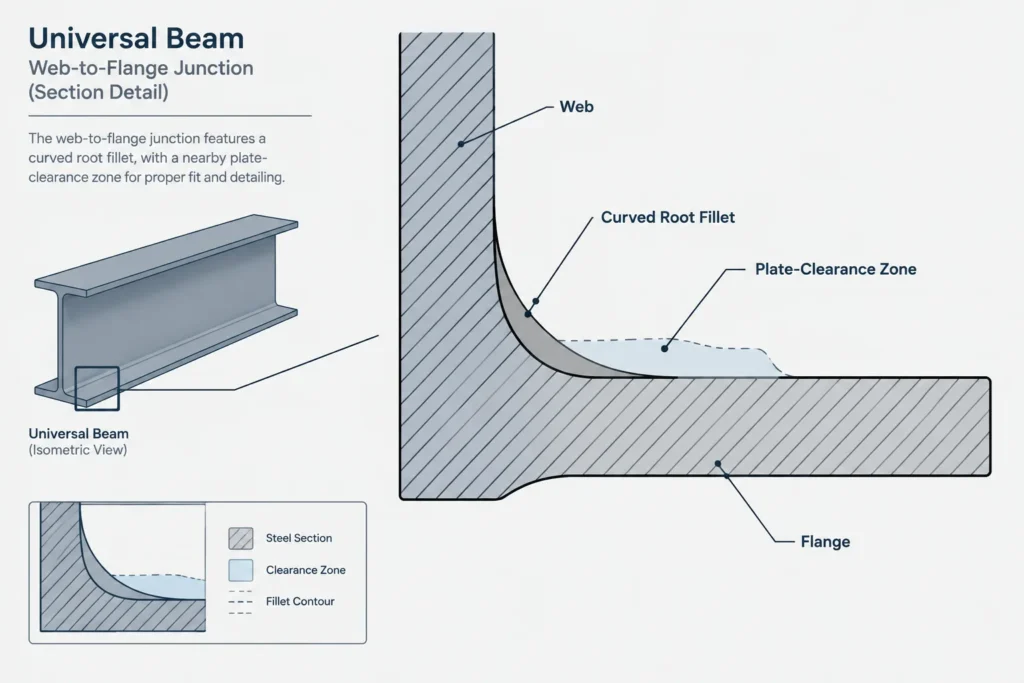
The root fillet forms the curved transition between the web and flange. It can affect clearances for plates, welds, bolts, notches, and other components placed near the web-to-flange junction.
Can the DWG file be used directly for fabrication?
It should first be checked for units, scale, geometry, layers, and compatibility with the applicable project requirements. A section drawing alone is not a complete fabrication or connection detail.
Is the information on this page enough to determine beam capacity?
No. Capacity depends on additional verified section properties, material information, member length, restraint, loading, stability, connections, and the applicable design rules.