The UB 610x178x92 is a Universal Beam reference entry for engineers, detailers, fabricators, and CAD users working with structural steel sections. The source data identifies the section dimensions, mass per unit length, sectional area, and root fillet radius.
Use the dimensional data below when checking drawings, selecting a matching profile in a steel library, or coordinating beam geometry with connections and adjacent members. Section selection and structural adequacy still require project-specific engineering verification.
UB 610x178x92
Universal Beams
refer to : EN 10365:2017
a European standard that defines the dimensions, tolerances, and sectional properties for hot-rolled steel channels, I-beams, and H-beams used in construction and engineering. It ensures uniformity and compatibility across European structural steel products.
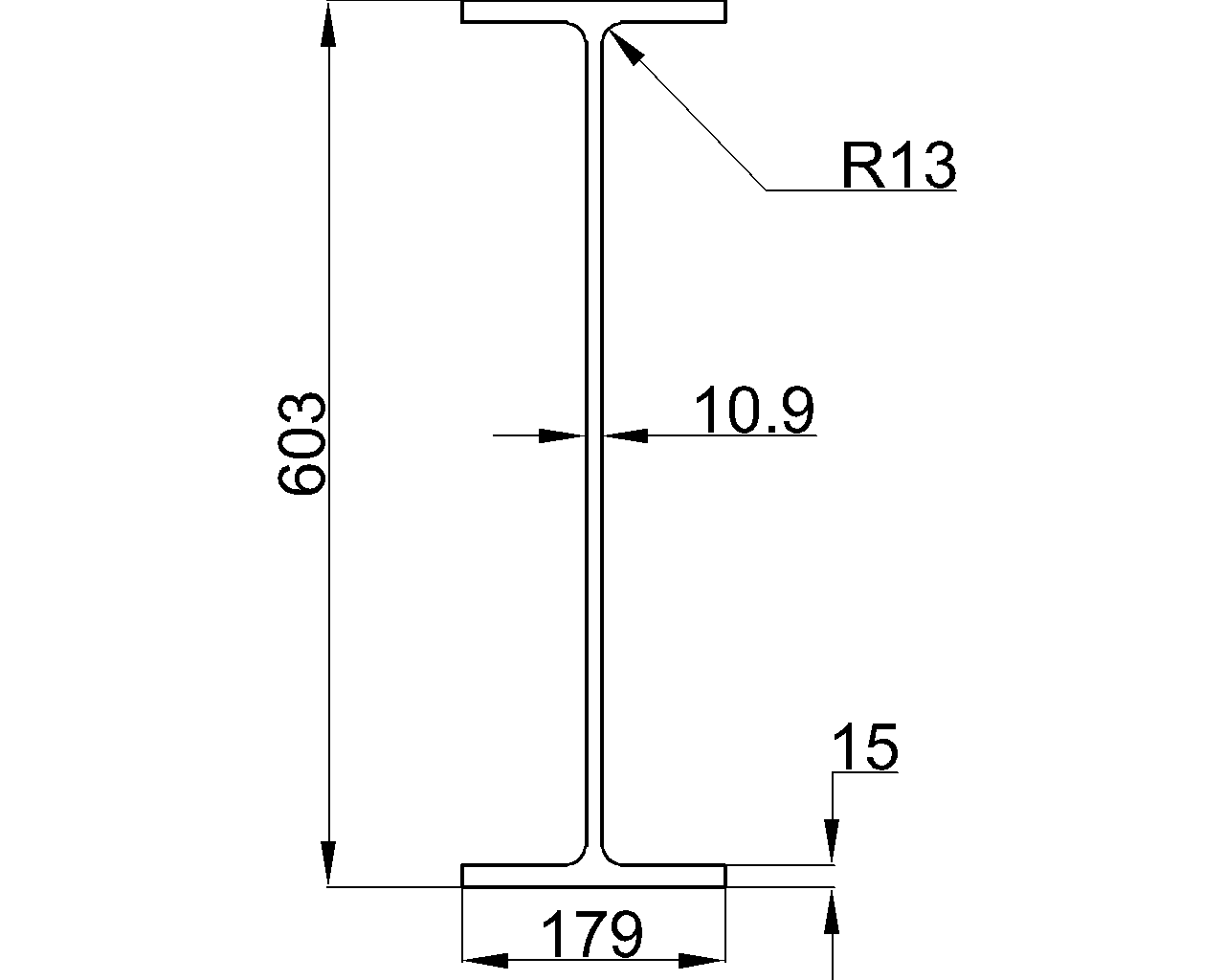
Dimension : 603x179x10.9×15
Depth : 603 mm
Width : 179 mm
Web Thickness : 10.9 mm
Flange Thickness : 15 mm
Root Fillet Radius : 13 mm
Sectional Area : 117.6 cm2
Unit Weight : 92.3 kg/m
How to read the UB 610x178x92 reference
The listed dimension string follows the common structural-section format of overall depth, flange width, web thickness, and flange thickness. The individual entries below the dimension line make each value easier to identify when reviewing a drawing or comparing the profile with a manufacturer or steelwork database.
What the section data describes
- Depth and width: These describe the overall envelope of the beam and are important for layout, clearance, connection detailing, and coordination with floors or supporting members.
- Web and flange thickness: These describe the main plate elements of the I-shaped section. They are relevant to detailing, fabrication, local checks, and connection interfaces.
- Root fillet radius: The fillet is the curved transition between the web and flange. It should be considered when a plate, angle, end plate, or connection component must fit close to the section corner.
- Sectional area and unit weight: These are reference properties used in material schedules, quantity estimates, member self-weight calculations, and section-property comparisons. They do not by themselves establish a member’s load capacity.
Standard and CAD reference
This entry refers to EN 10365:2017, which provides a common framework for dimensions, tolerances, and sectional properties for hot-rolled structural steel sections. Confirm the applicable project specification, material grade, tolerances, and design standard before issuing fabrication or construction information.
A DWG download is provided with the entry for drafting and coordination workflows. Treat downloaded geometry as a reference: verify units, layer conventions, section orientation, and any required fillet representation before incorporating it into a project drawing.
Related engineering references
For broader context, connect this reference with resources on Universal Beam terminology, steel section properties, structural steel connections, and DWG standards for engineering drawings. These topics help users interpret the profile without confusing geometric reference data with a completed structural design.
Practical checking notes
- Check that the beam designation and dimensional line agree with the project schedule.
- Allow for the root fillet when detailing plates or components against the web-to-flange transition.
- Confirm the section orientation before using the profile in plans, elevations, or connection details.
- Use the listed unit weight for estimating and coordination only after confirming the required project units and specification.
Frequently asked questions
What is the UB 610x178x92?
It is a Universal Beam designation identifying a specific hot-rolled structural steel profile. The reference entry provides its dimensional and section data.
Which standard is referenced for this section?
The entry refers to EN 10365:2017. Always confirm the governing project documents and applicable edition or specification before final use.
What does the dimension string mean?
It presents the overall section depth, flange width, web thickness, and flange thickness in that order. The labeled entries provide the corresponding values.
Why is the root fillet radius important?
The root fillet affects the available contact area near the web-to-flange junction. It matters when detailing plates, connection components, or other elements that fit against the section.
Can the listed unit weight be used for structural design?
It can support self-weight estimates and material takeoffs, but member design requires additional information, including loading, restraint, span, material specification, connection behavior, and the governing design rules.
Is the DWG file ready for fabrication?
The DWG is a drafting reference and should be checked for units, orientation, geometry, tolerances, and project-specific detailing requirements before fabrication information is issued.