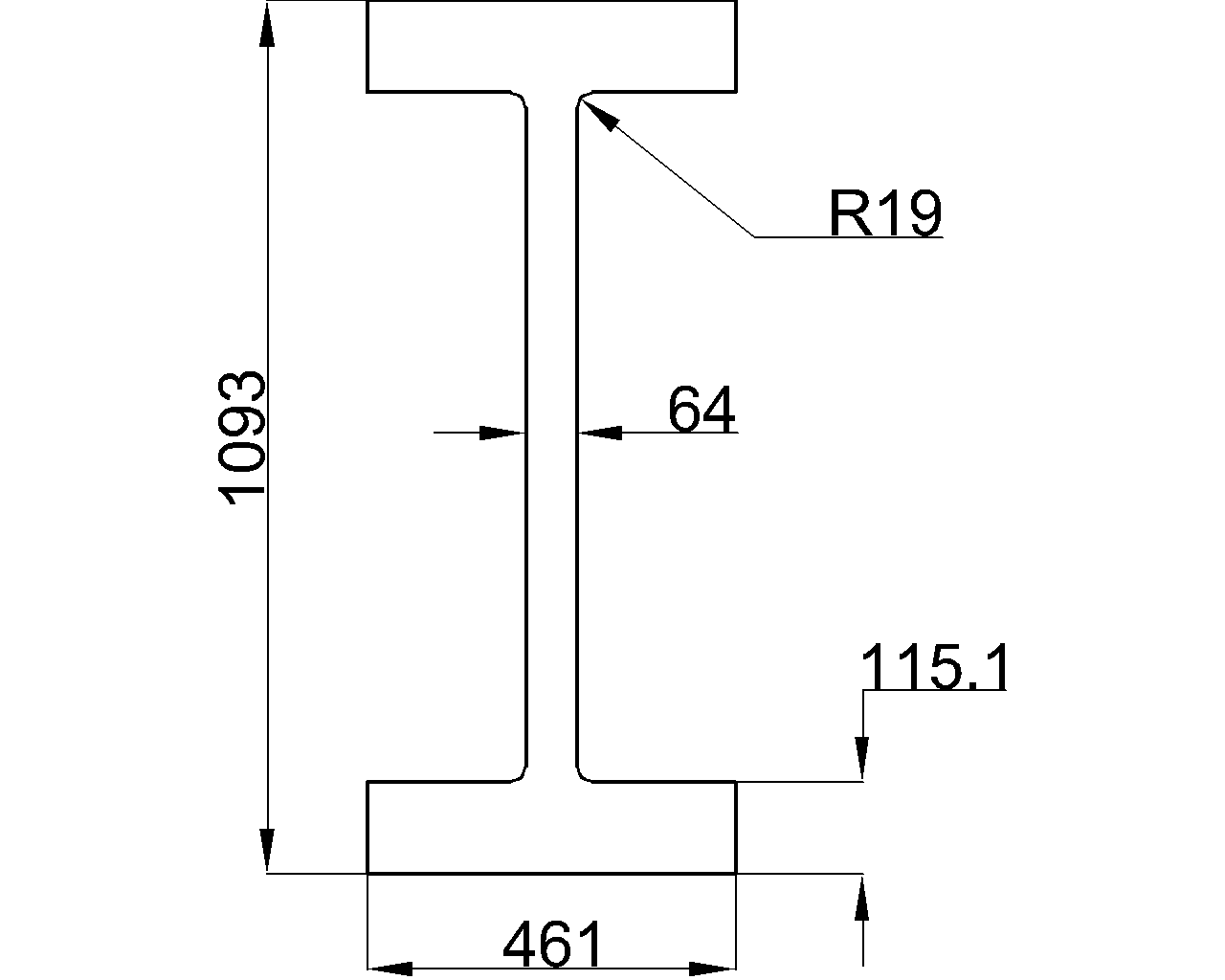
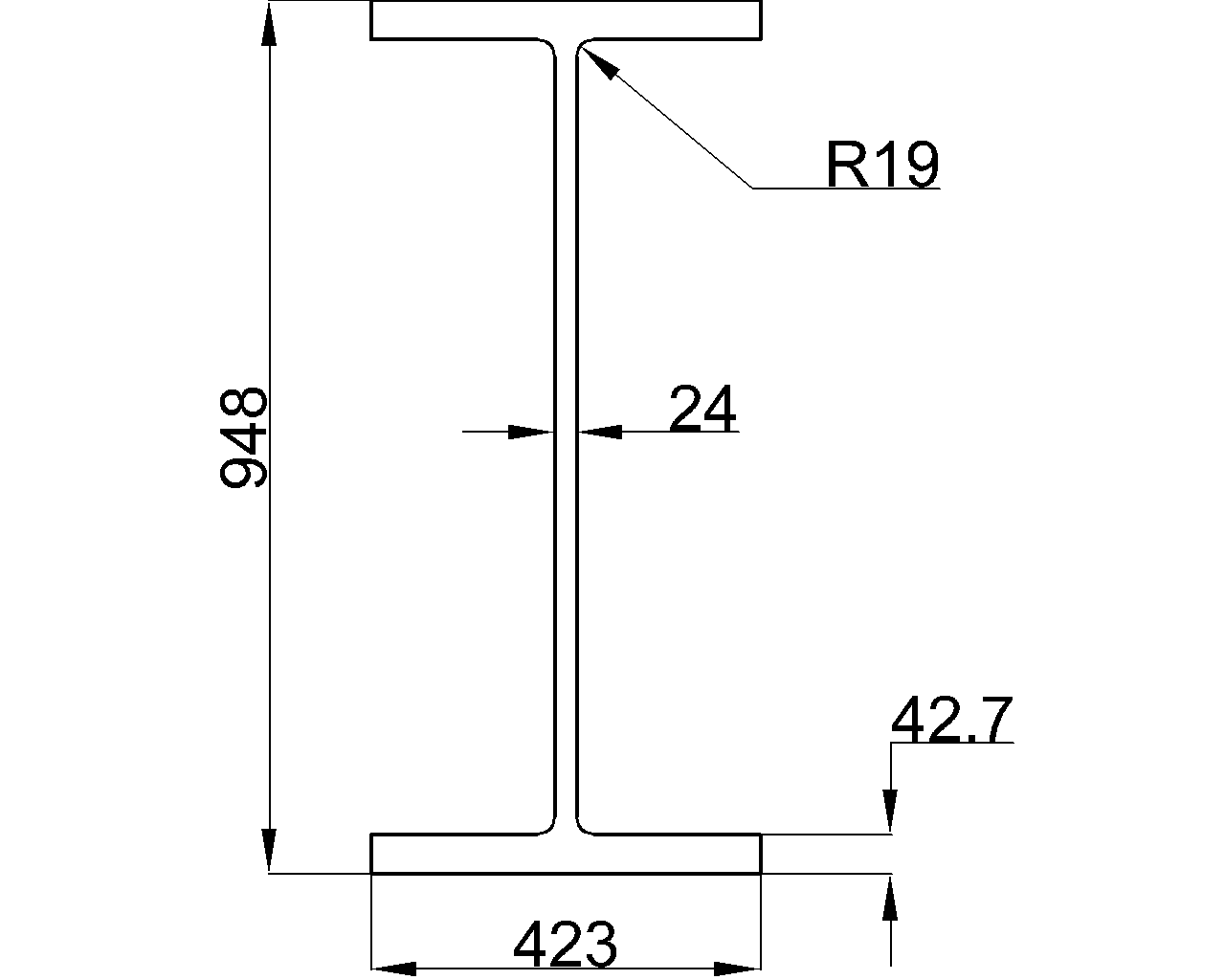
The UB 305x102x33 is a Universal Beam reference for identifying the section geometry and basic data used in structural steel drafting and preliminary design review. This page keeps the published dimensions and section values together with the applicable European reference, while adding guidance on how to interpret each item.
Use the dimensional data when checking drawings, selecting a profile for further engineering review, or coordinating a steel model. For related guidance, see the site’s resources on Universal Beam dimensions, steel section properties, and connection and detailing concepts.
UB 305x102x33
Universal Beams
refer to : EN 10365:2017
a European standard that defines the dimensions, tolerances, and sectional properties for hot-rolled steel channels, I-beams, and H-beams used in construction and engineering. It ensures uniformity and compatibility across European structural steel products.
Dimension : 312.7×102.4×6.6×10.8
Depth : 312.7 mm
Width : 102.4 mm
Web Thickness : 6.6 mm
Flange Thickness : 10.8 mm
Root Fillet Radius : 8 mm
Sectional Area : 41.8 cm2
Unit Weight : 32.8 kg/m
How to read the UB 305x102x33 reference
The designation identifies a Universal Beam profile, while the listed dimension string describes the overall depth and width together with the web and flange thicknesses. These values are useful for drawing checks, clearance reviews, fabrication communication, and comparison with other beam profiles. They should not be treated as a substitute for a project-specific structural design check.
Geometry and detailing terms
- Depth and width: These describe the principal outside dimensions of the rolled section and help establish its envelope in a model or detail.
- Web thickness: This identifies the thickness of the central web. The web is commonly considered when reviewing shear behavior, bearing details, stiffeners, and connection geometry.
- Flange thickness: This identifies the thickness of each flange and is relevant to flange connections, detailing clearances, and section-property interpretation.
- Root fillet radius: The rounded transition between the web and flange affects the true rolled profile. Drawings and connection details should account for this transition rather than assuming a sharp internal corner.
Section area and unit weight
The sectional area is a cross-sectional property used in engineering calculations and material takeoffs. The unit weight expresses the mass associated with a unit length of the beam and can support estimating, handling, and framing coordination. Final design decisions require the applicable material grade, loading, restraint conditions, connection details, and governing project requirements to be checked by a qualified engineer.
Reference and CAD workflow
The source identifies EN 10365:2017 as the dimensional reference for this profile. Use the accompanying DWG resource when a CAD representation is needed, then verify scale, units, orientation, and project-specific detailing requirements before incorporating it into production documentation.
Frequently asked questions
What does UB 305x102x33 mean?
It is the designation for a Universal Beam profile. The page’s dimension and property entries provide the corresponding geometry, sectional area, and unit weight for reference and coordination.
Which standard is referenced for this beam?
The source references EN 10365:2017, which covers dimensions, tolerances, and sectional properties for specified hot-rolled structural steel sections.
Why is the root fillet radius important?
The root fillet is the curved transition between the web and flange. It can affect fit-up, connection detailing, and the clearance available around the inside corner of the section.
Can the listed unit weight be used for a final project quantity?
It can support preliminary estimating and coordination, but final quantities should account for the project’s cutting, splicing, connection, fabrication, and detailing requirements.
Is the DWG file ready for fabrication?
The DWG is a reference resource for CAD use. Check its units, scale, profile orientation, and project-specific requirements before using it in fabrication or issued-for-construction documentation.