Tag: structural steel shapes
-
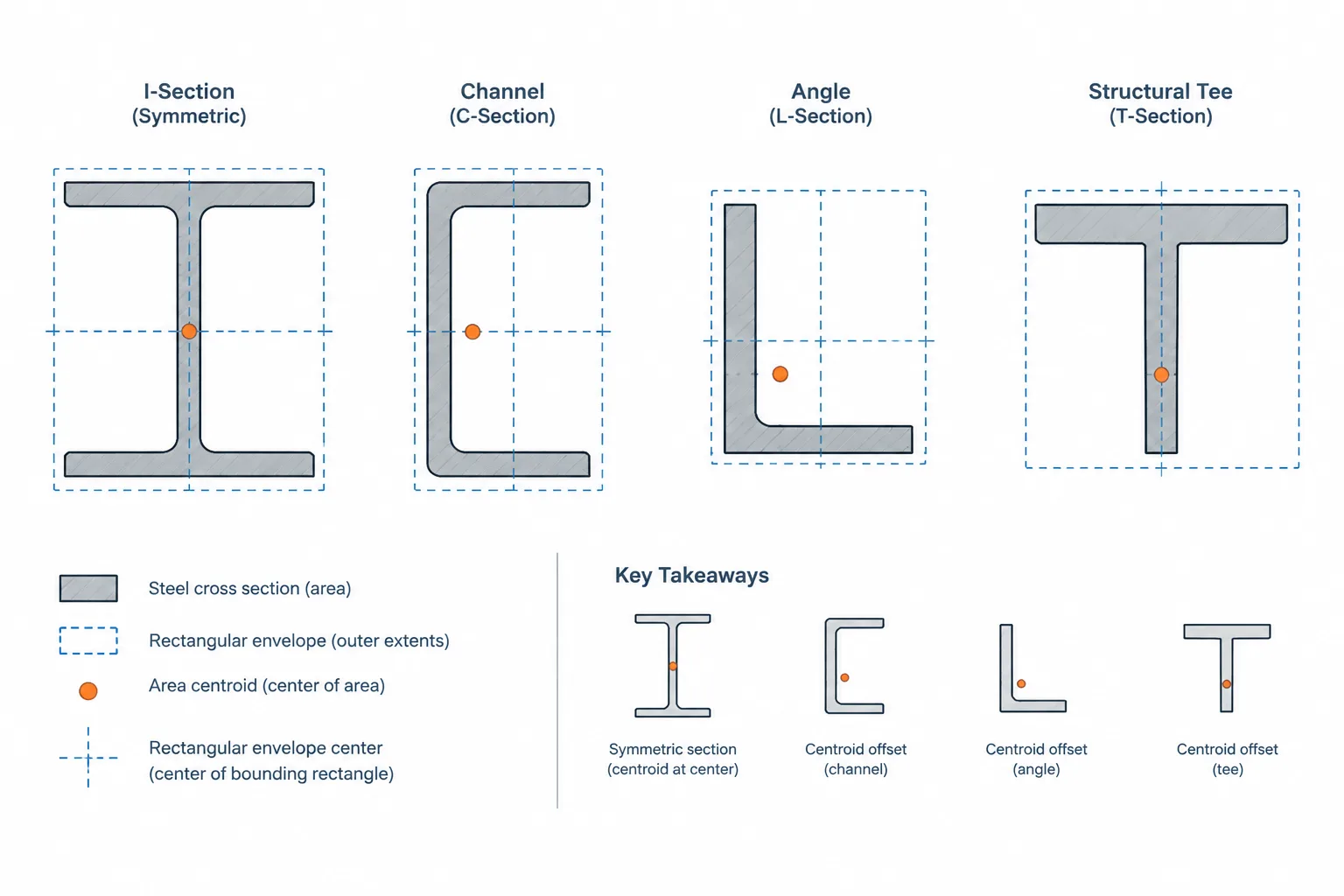
Centroid vs. Geometric Center in Structural Steel Shapes: Choosing the Correct Reference
Learn why a steel shape’s centroid may not match its overall geometric center and how that difference affects axes, dimensions, modeling, and detailing.
Written by
-
Why Structural Steel Shape Properties Should Not Be Interpolated Between Sizes
Learn why steel shape dimensions and section properties should not be interpolated between listed sizes, and how to compare or model alternatives safely.
Written by
-
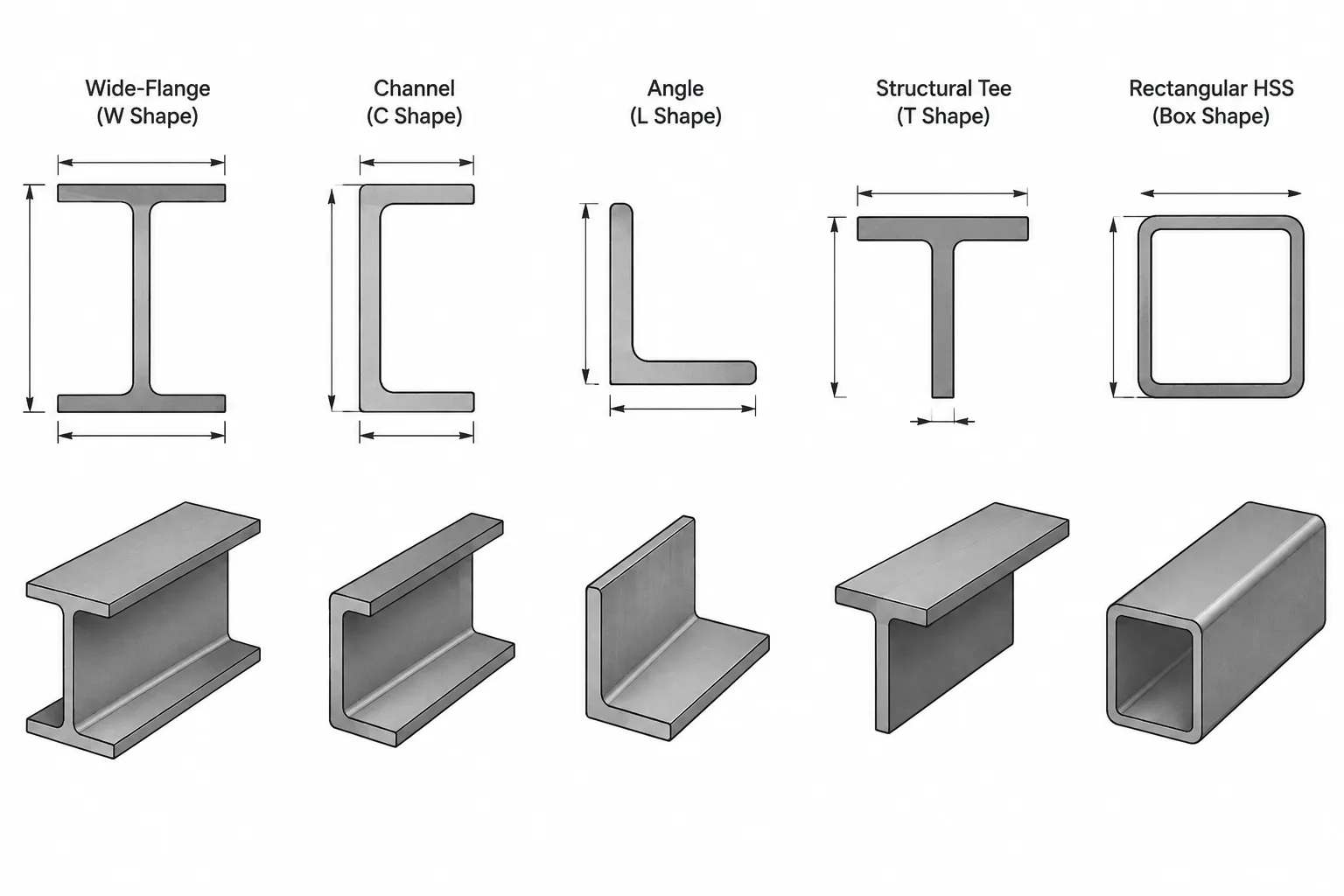
Steel Shape Designations vs. Tabulated Dimensions: What the Shape Name Does Not Tell You
Learn how W-shape, channel, angle, tee, HP, and HSS designations differ from tabulated dimensions, and which values should control CAD and detailing.
Written by
-
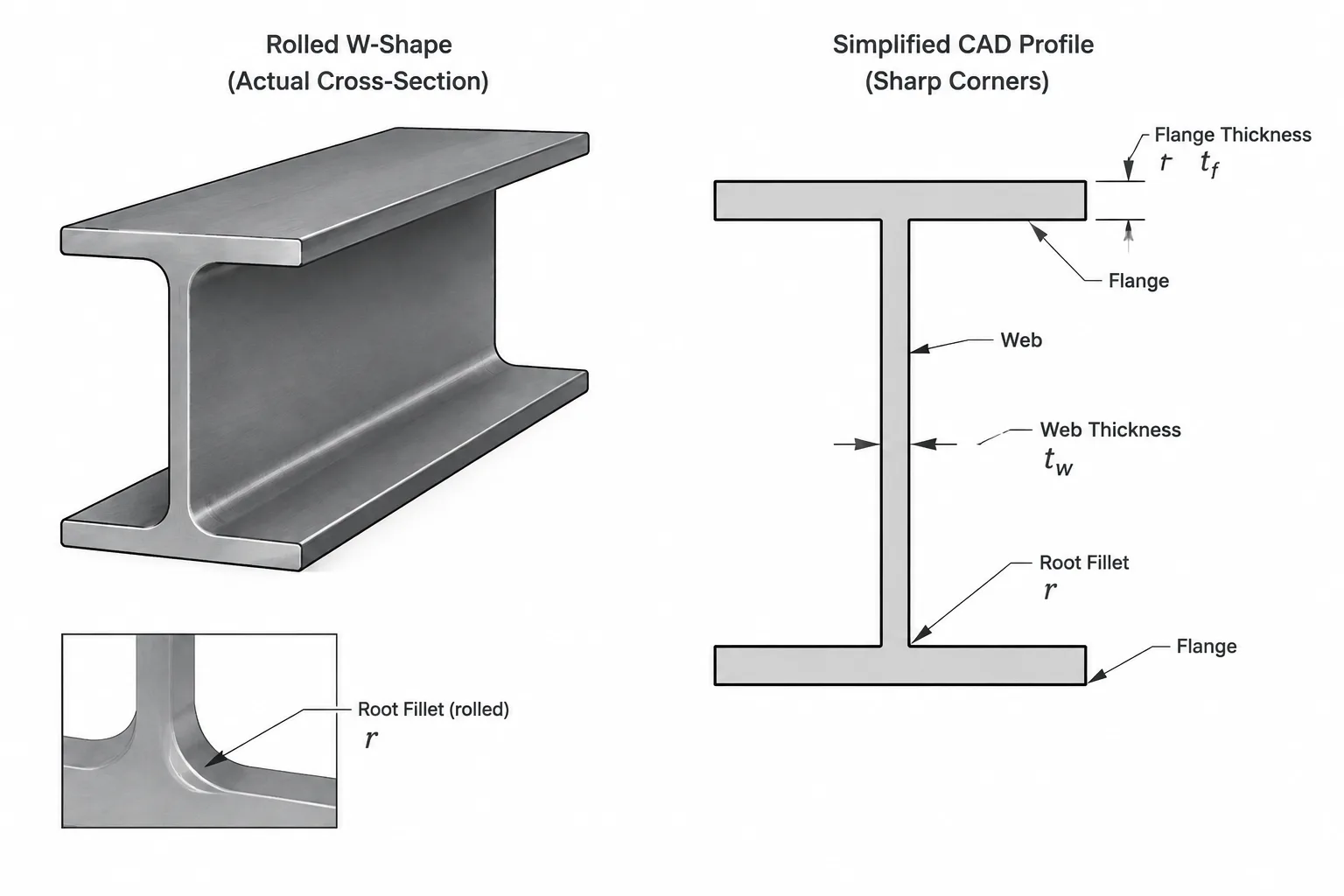
Web Thickness and Flange Thickness in Structural Steel Shapes: Reading tw and tf Correctly
Learn how to interpret tw and tf in steel shape tables, CAD profiles, connection details, and fit-up checks for W-shapes, channels, tees, and related sections.
Written by
-
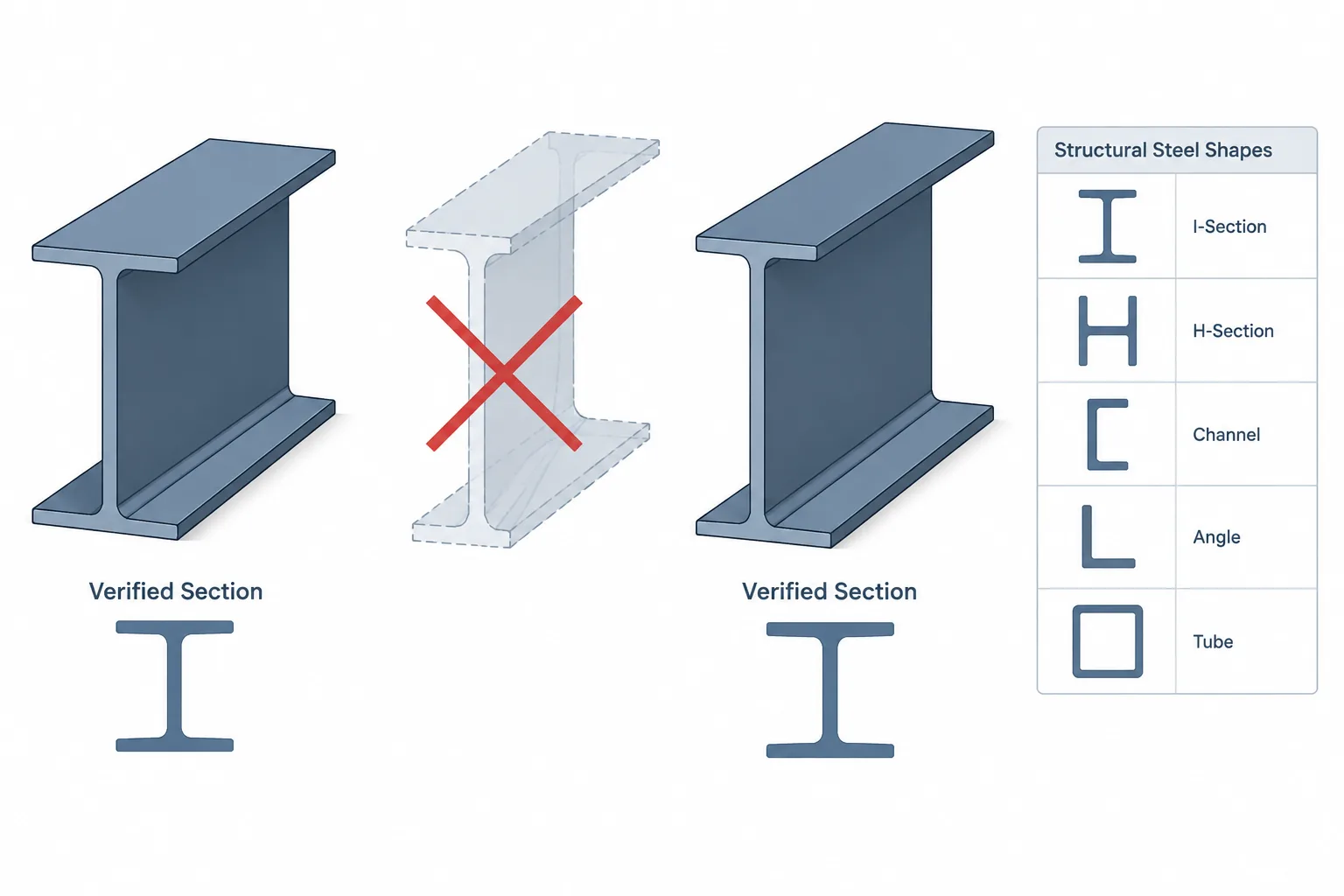
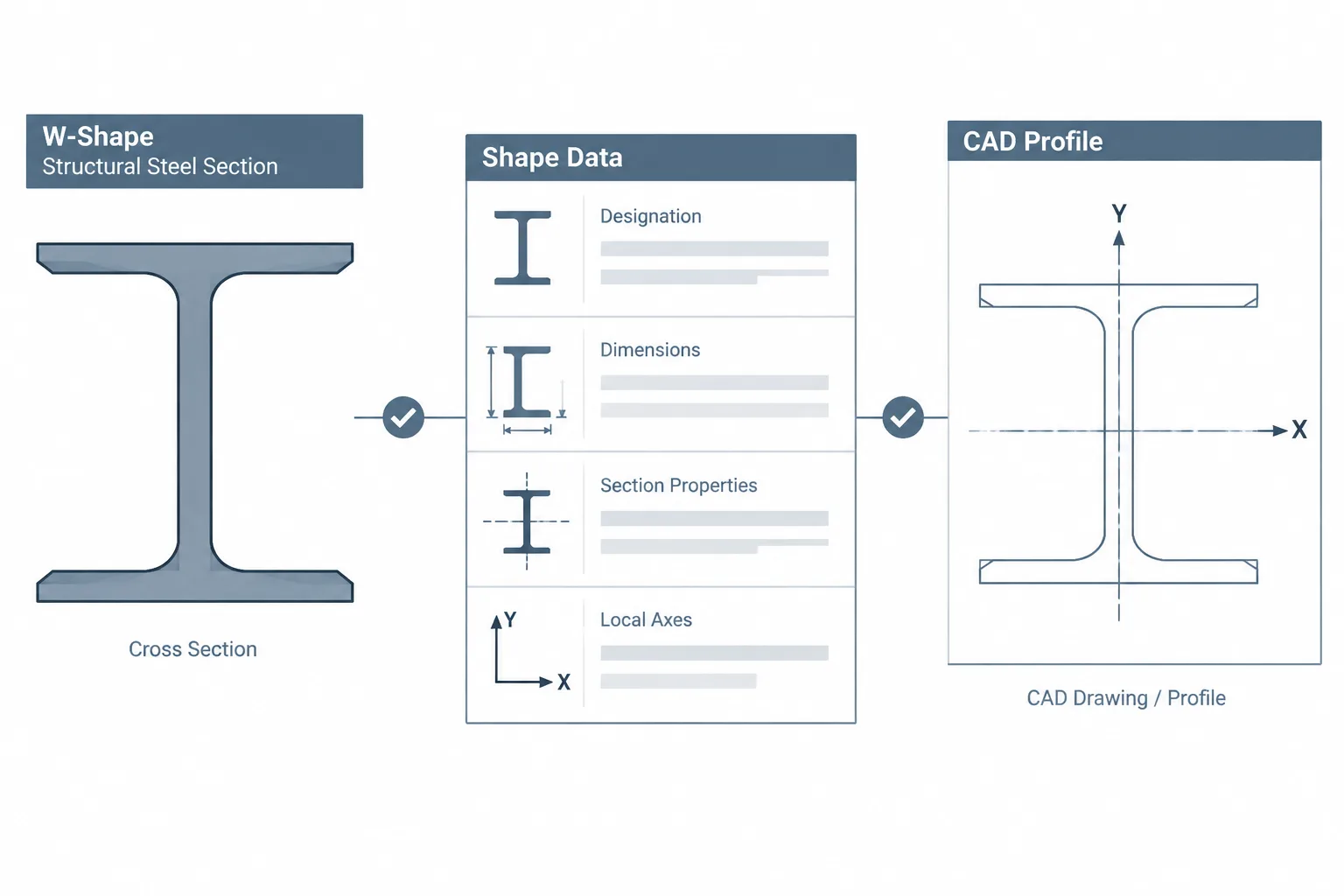
How to Verify Structural Steel Shape Data Before Using It in CAD or Calculations
A practical workflow for checking steel shape designations, dimensions, units, section properties, CAD geometry, and source consistency before use.
Written by
-
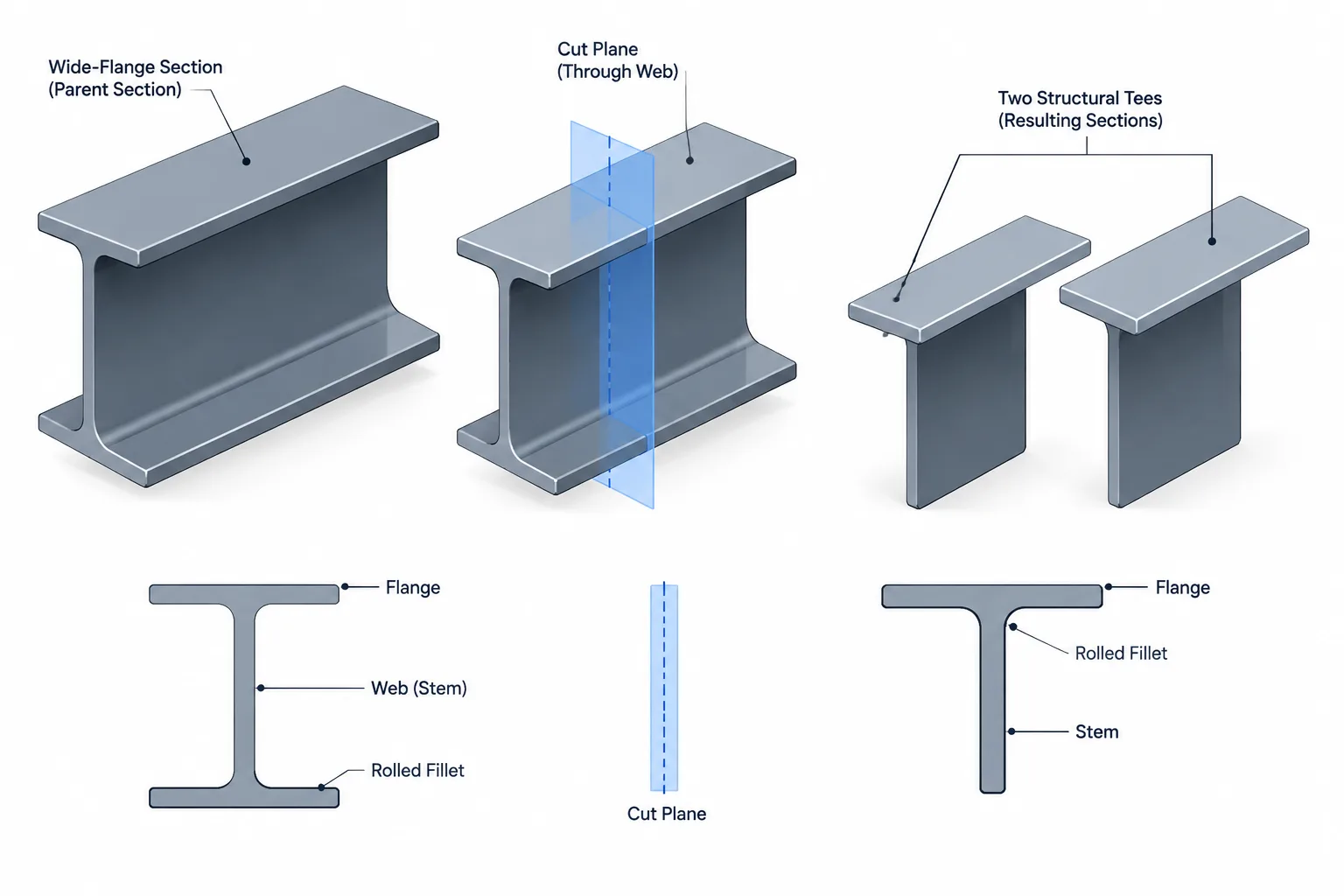
Split Structural Tees: Parent Shapes, Cut Lines, and Detailing Coordination
Learn how split structural tees relate to parent I-shapes, cutting methods, stem geometry, section properties, availability, and CAD detailing.
Written by
-
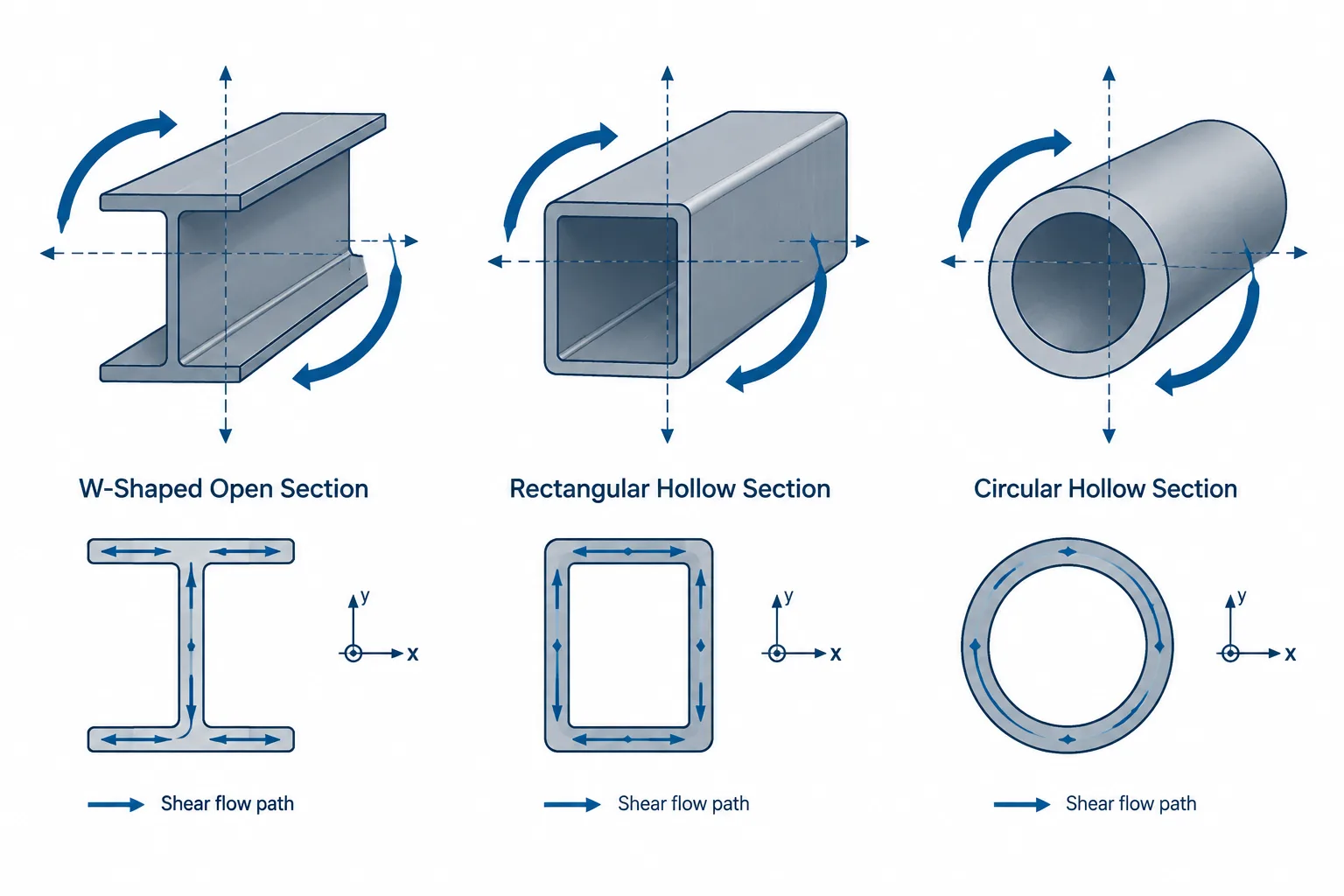
Polar Moment of Area vs. Torsional Constant J in Structural Steel Sections
Learn why polar moment of area and torsional constant J are not interchangeable for W-shapes, channels, angles, HSS, and other steel sections.
Written by
-
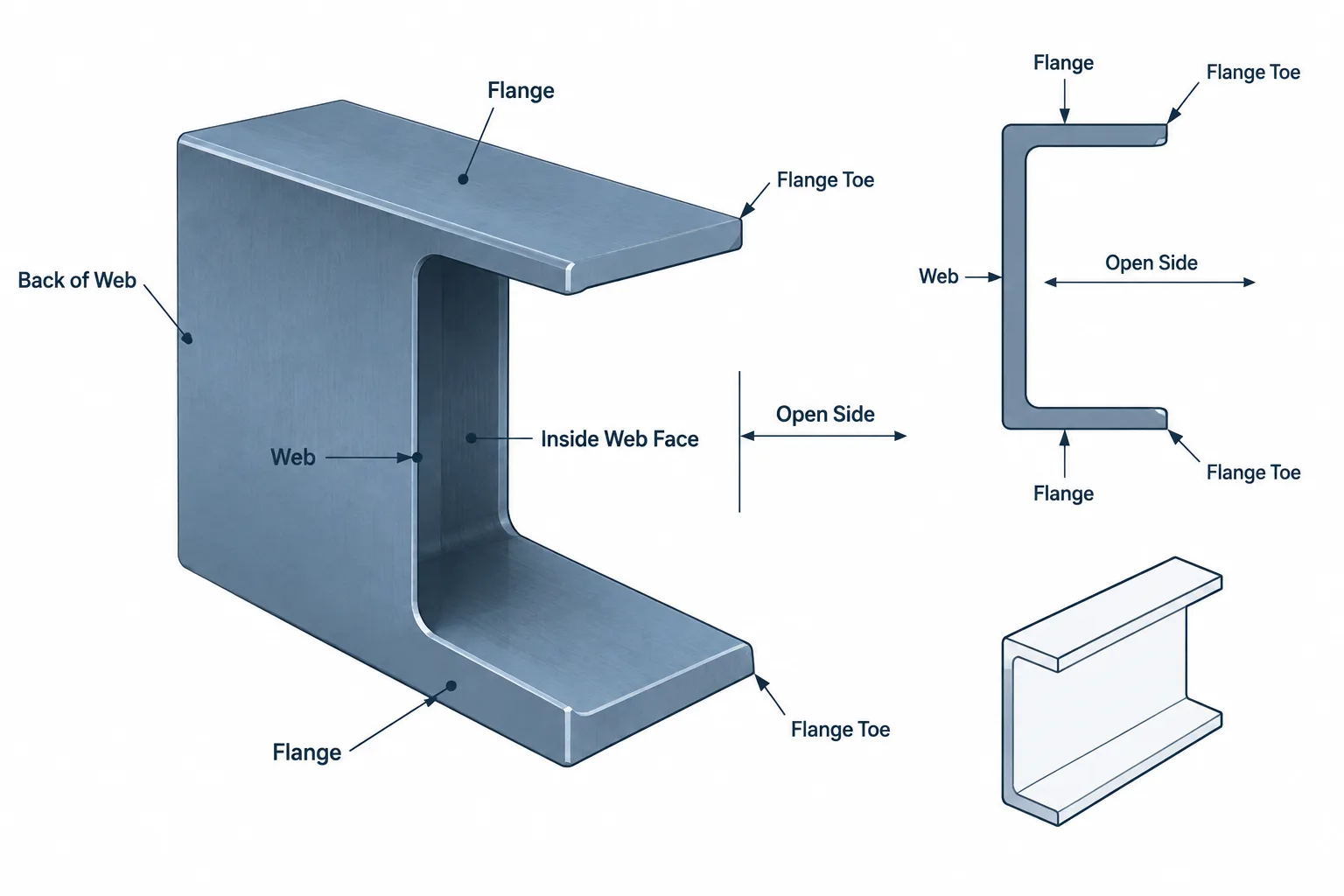
Steel Channel Orientation: Web Back, Flange Toes, Open Side, and Drawing References
Learn how to identify and document steel channel orientation using the web back, flange toes, open side, work lines, section views, and CAD references.
Written by
-
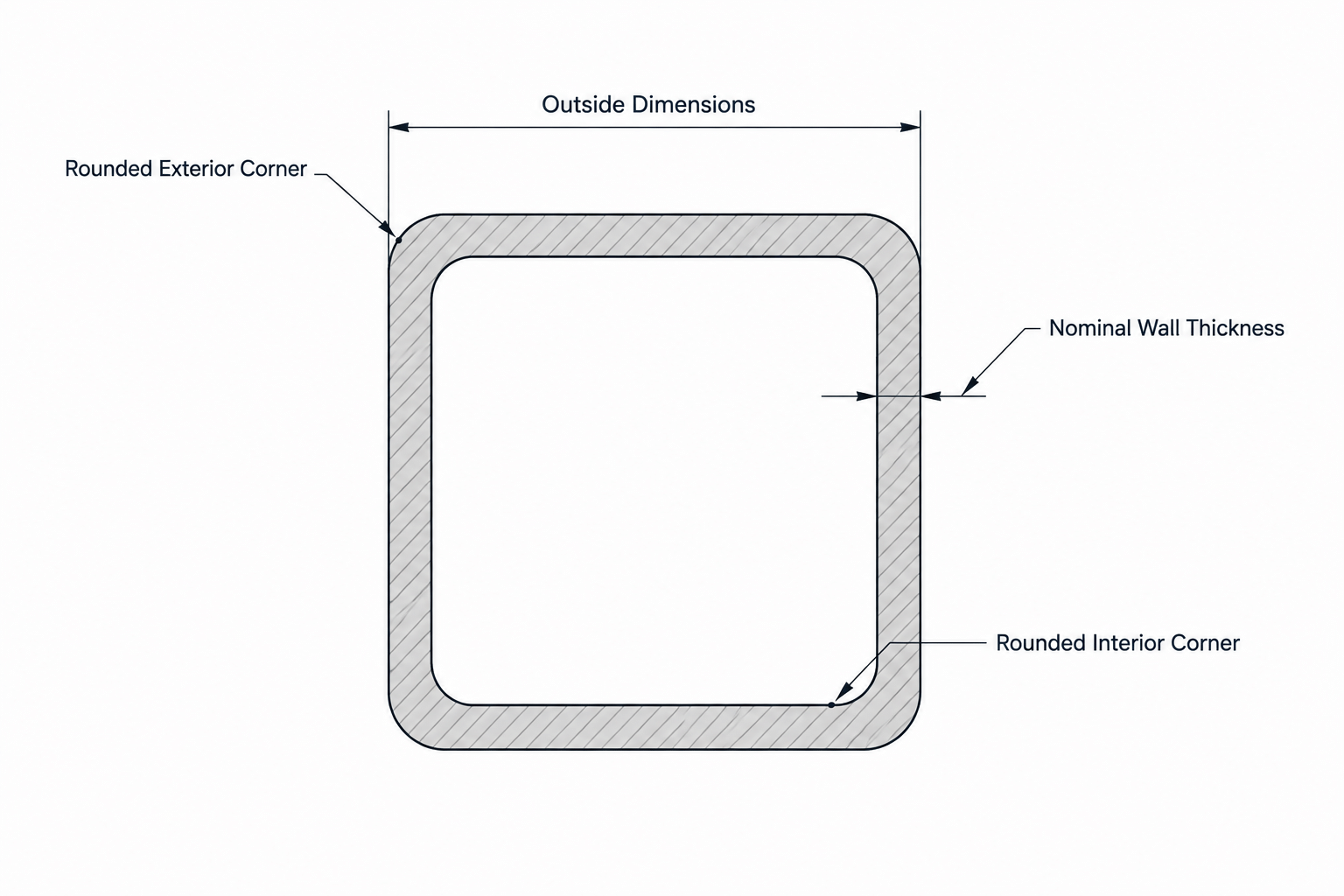
HSS Nominal Wall Thickness vs. Design Thickness: What Tables, Drawings, and CAD Models Mean
Learn how HSS nominal wall thickness differs from design thickness and measured wall, and how each should be handled in steel tables, drawings, and CAD models.
Written by
-
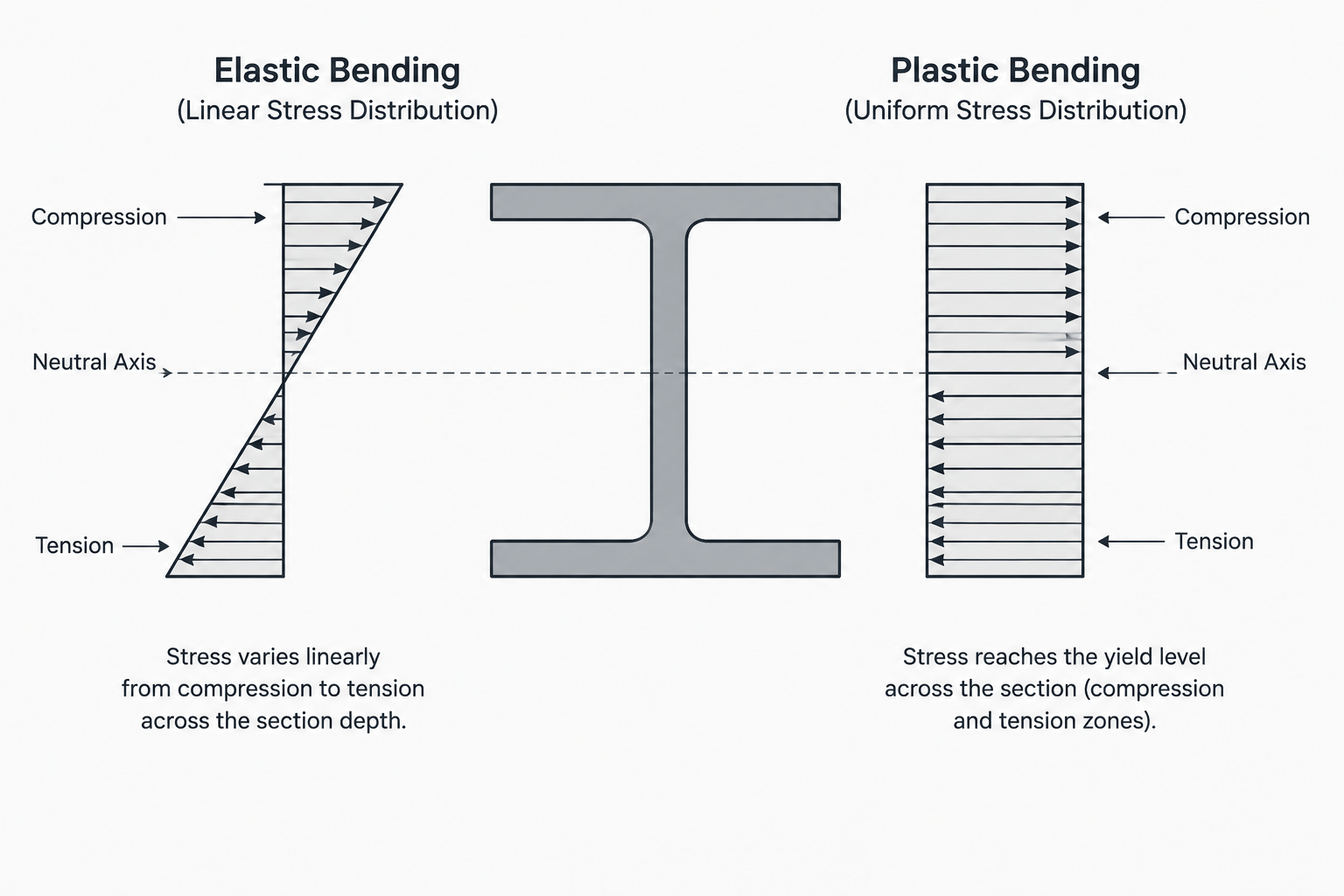
Elastic vs. Plastic Section Modulus: S and Z in Steel Shape Tables
Learn the difference between elastic section modulus S and plastic section modulus Z, how each relates to steel shape geometry, and how to read them in section tables.
Written by
-
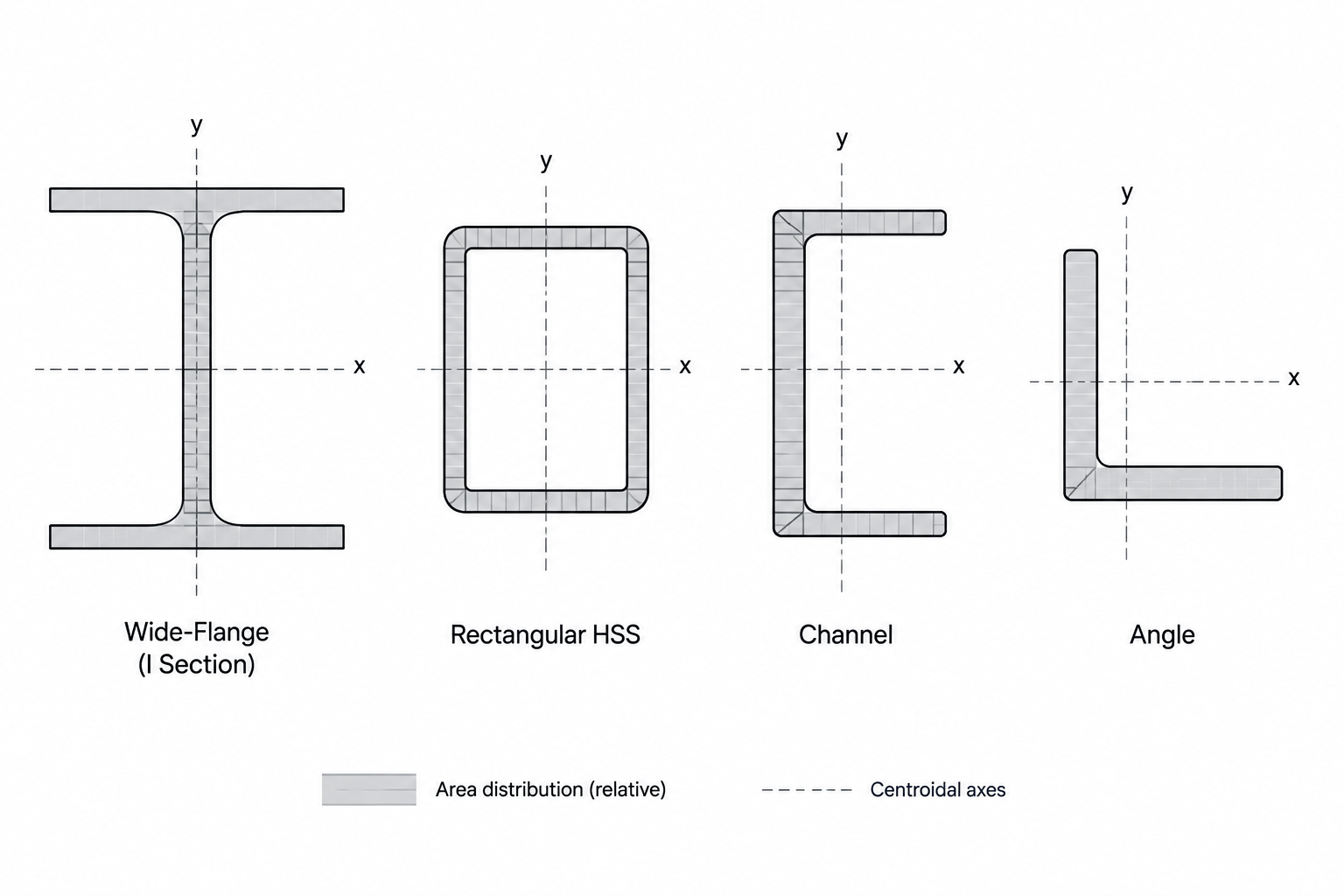
Radius of Gyration in Steel Shape Tables: Understanding rx, ry, and Slenderness
Learn what rx and ry mean in structural steel shape tables, how radius of gyration relates to moment of inertia, and why it matters in column slenderness.
Written by
-
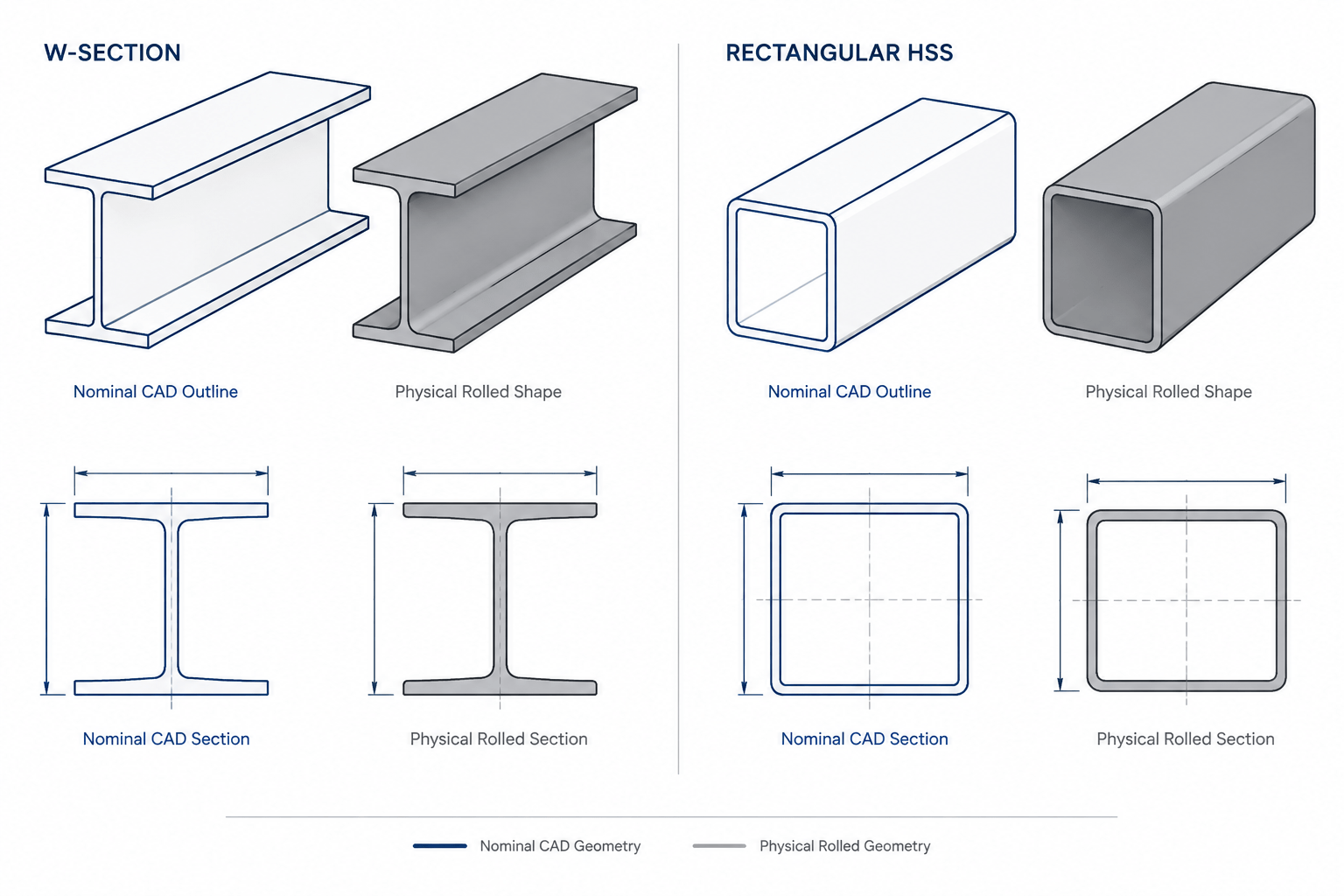
Nominal vs. Actual Structural Steel Dimensions: A Guide for CAD and Detailing
Learn how nominal steel dimensions, mill tolerances, fillets, HSS corners, and field conditions affect structural detailing and CAD geometry.
Written by