Tag: section properties
-
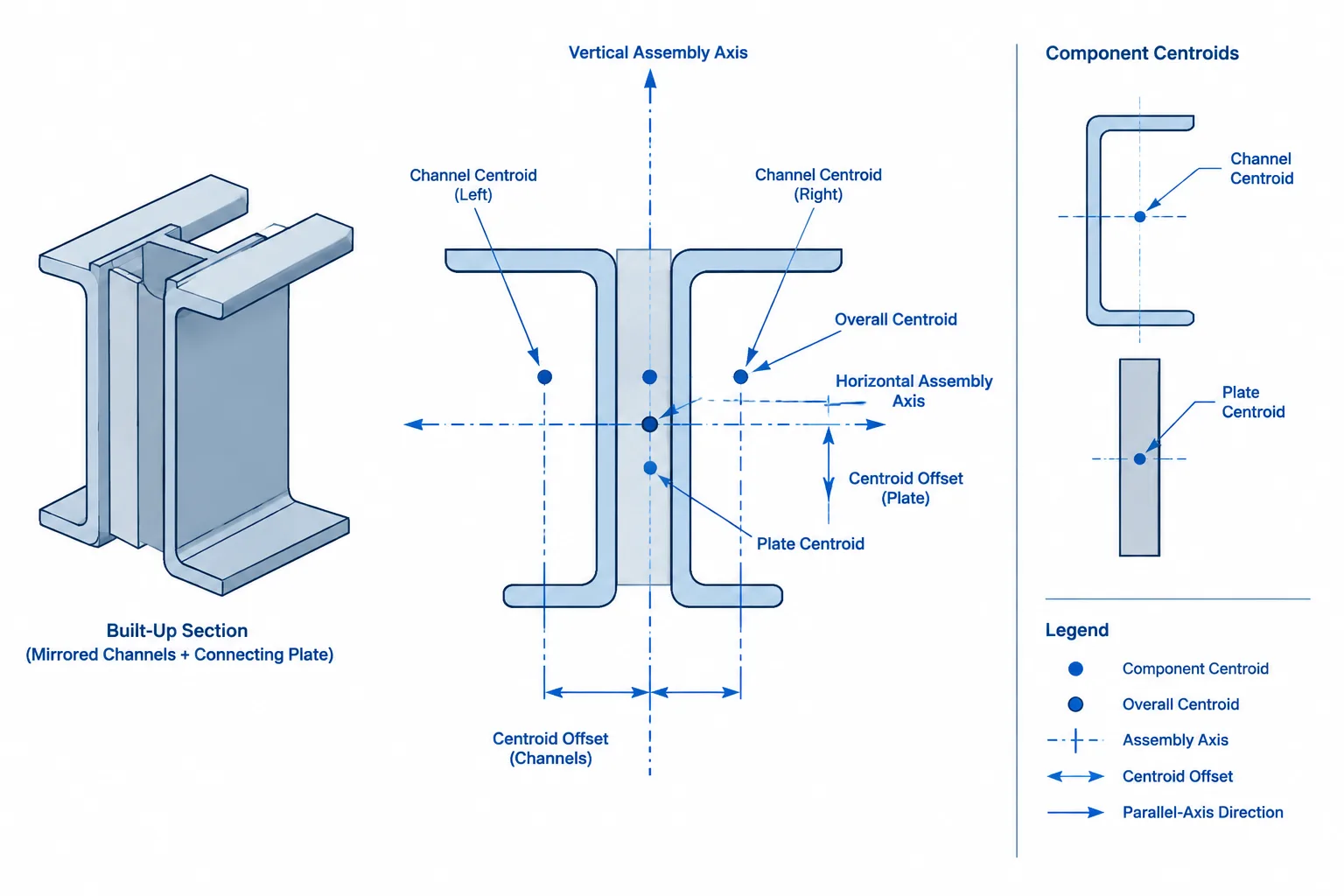
Parallel-Axis Theorem for Built-Up Steel Sections: A Practical Calculation and CAD Guide
Learn how to calculate centroid, area, moment of inertia, and section modulus for built-up steel sections using verified shape properties and the parallel-axis theorem.
Written by
-
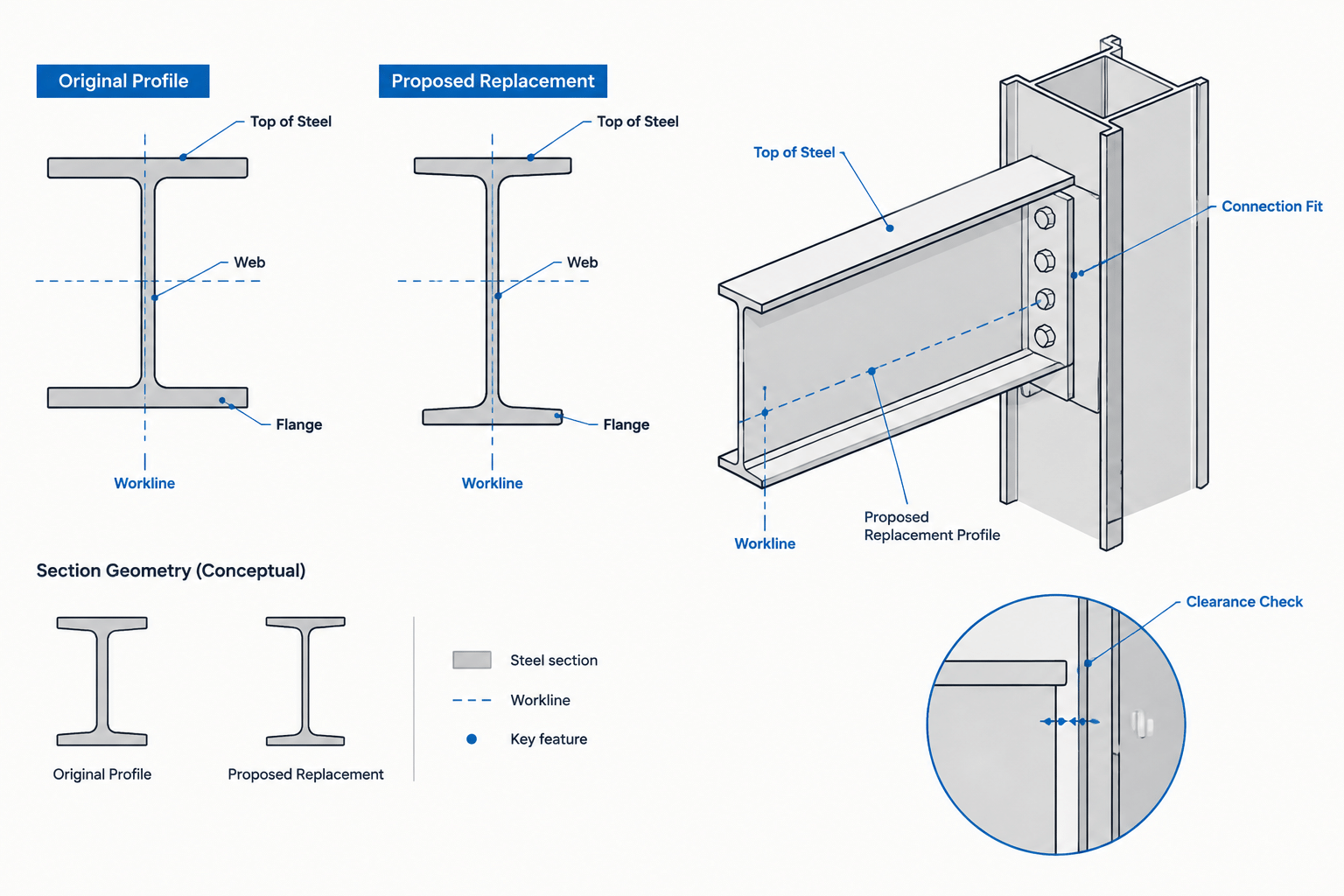
Steel Shape Substitution Checklist: What to Recheck When a Member Size Changes
Use this steel shape substitution checklist to review section properties, connection fit, elevations, weight, fabrication details, and CAD revisions.
Written by
-
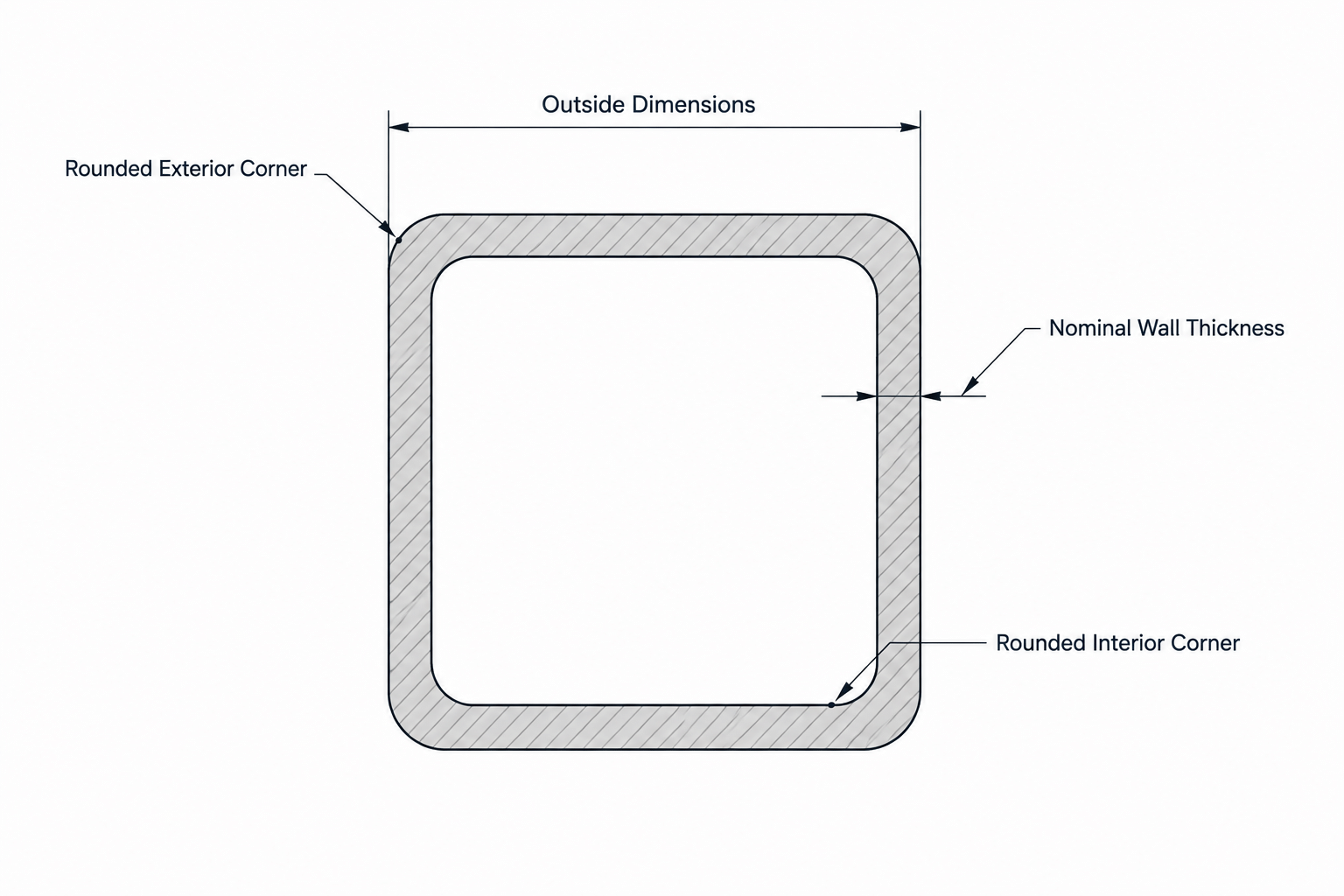
HSS Nominal Wall Thickness vs. Design Thickness: What Tables, Drawings, and CAD Models Mean
Learn how HSS nominal wall thickness differs from design thickness and measured wall, and how each should be handled in steel tables, drawings, and CAD models.
Written by
-
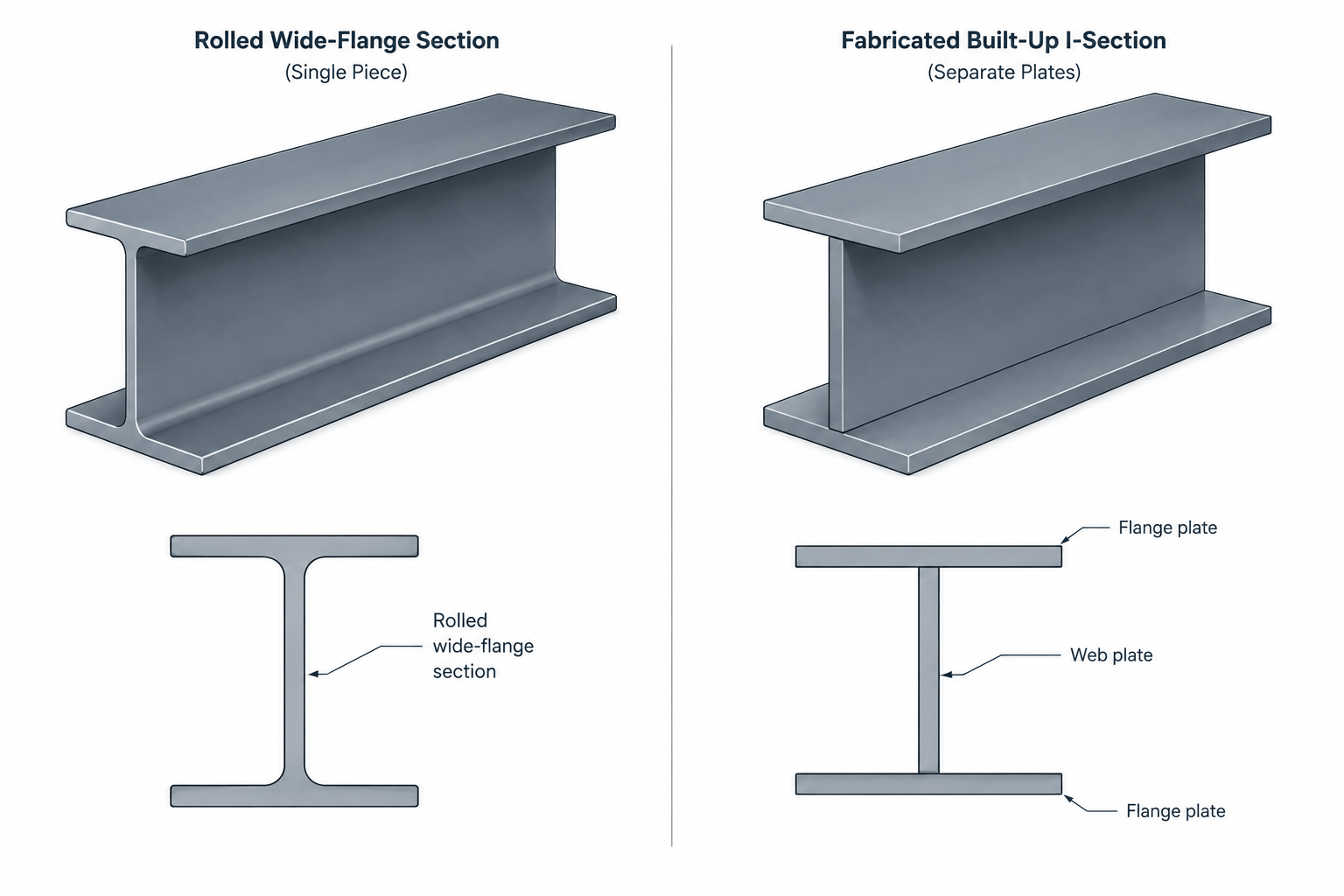
Rolled Shapes vs. Built-Up Steel Members: How to Read, Model, and Detail the Difference
Learn how rolled shapes differ from built-up steel members, how each appears on structural drawings, and what drafters should verify before modeling or fabrication.
Written by
-
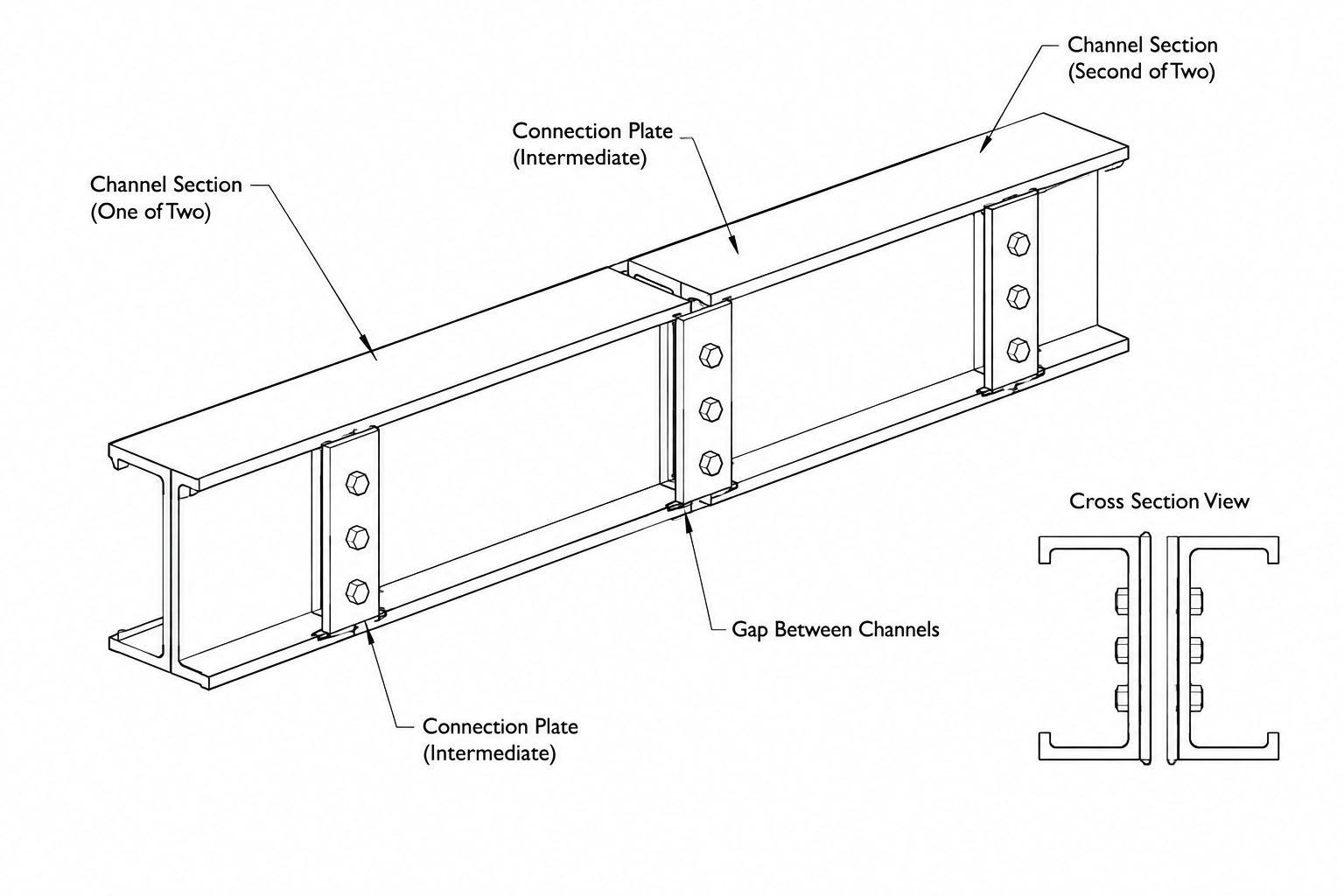
Back-to-Back Steel Channels and Angles: Orientation, Spacing, and Detailing
Learn how to detail back-to-back steel channels and angles, including orientation, spacing, built-up behavior, section properties, and CAD drawing practice.
Written by
-
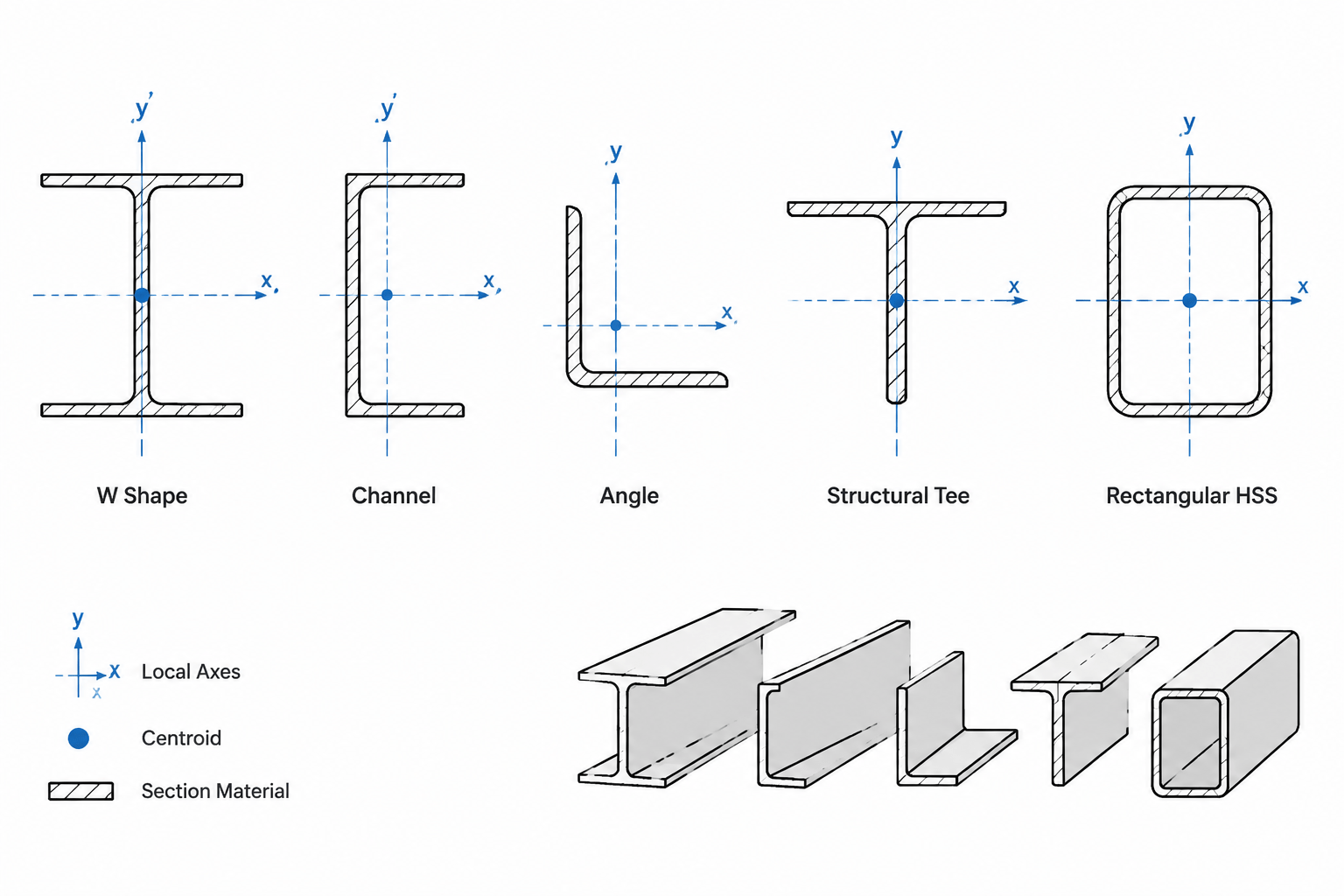
Centroid Coordinates in Steel Shape Tables: x̄, ȳ, Reference Axes, and CAD Placement
Learn how to interpret x-bar and y-bar centroid coordinates for W shapes, channels, angles, tees, and HSS, including reference origins and CAD checks.
Written by
-
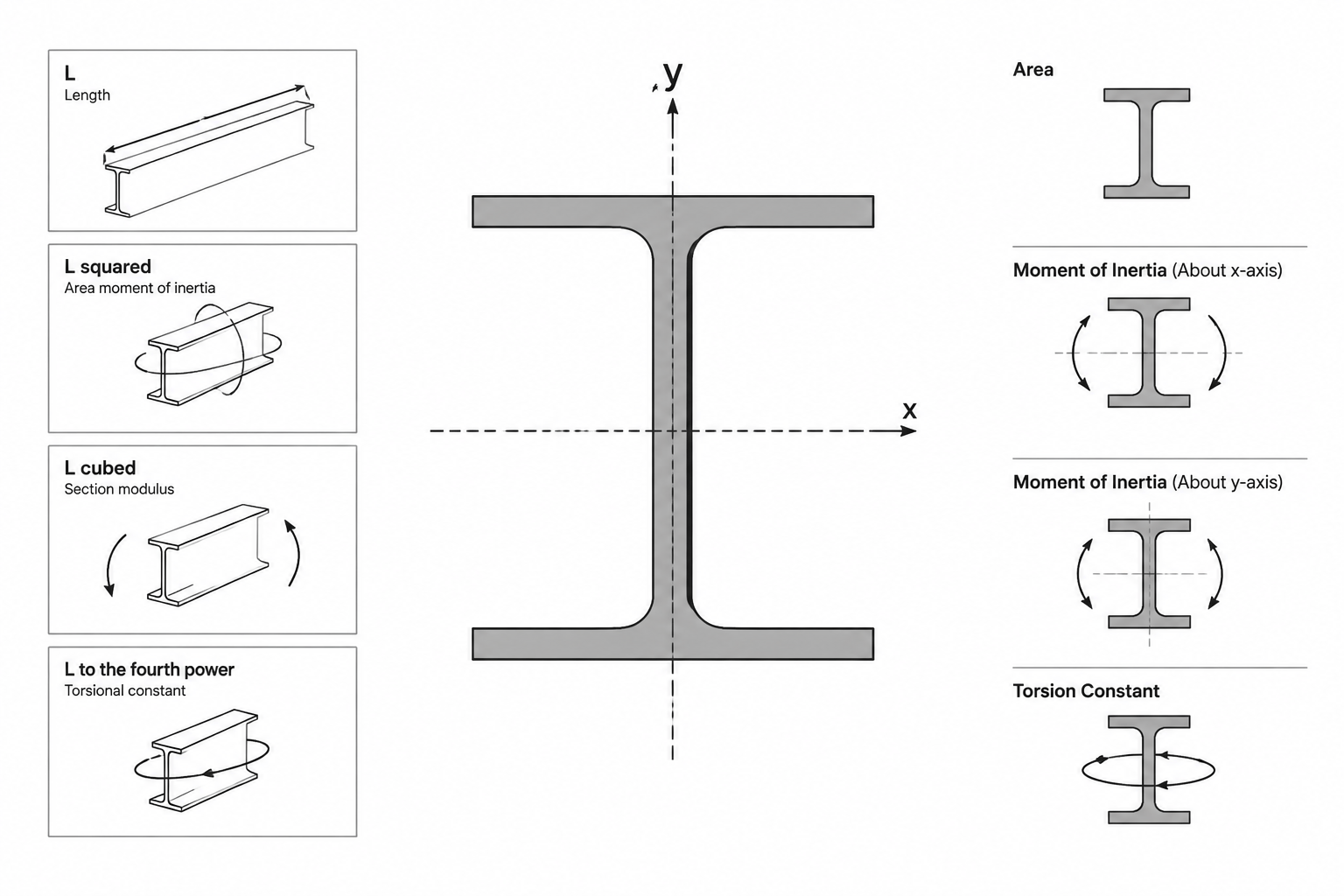
Steel Section Property Units: How to Read and Convert A, I, S, Z, r, J, and Cw
Learn the units used for steel section properties, why dimensional exponents matter, and how to convert shape data without common CAD and calculation errors.
Written by
-
Gross Area vs. Net Area in Structural Steel Members
Learn how gross, net, and effective net area differ in steel members, why shape tables list gross area, and how holes and connection geometry affect calculations.
Written by
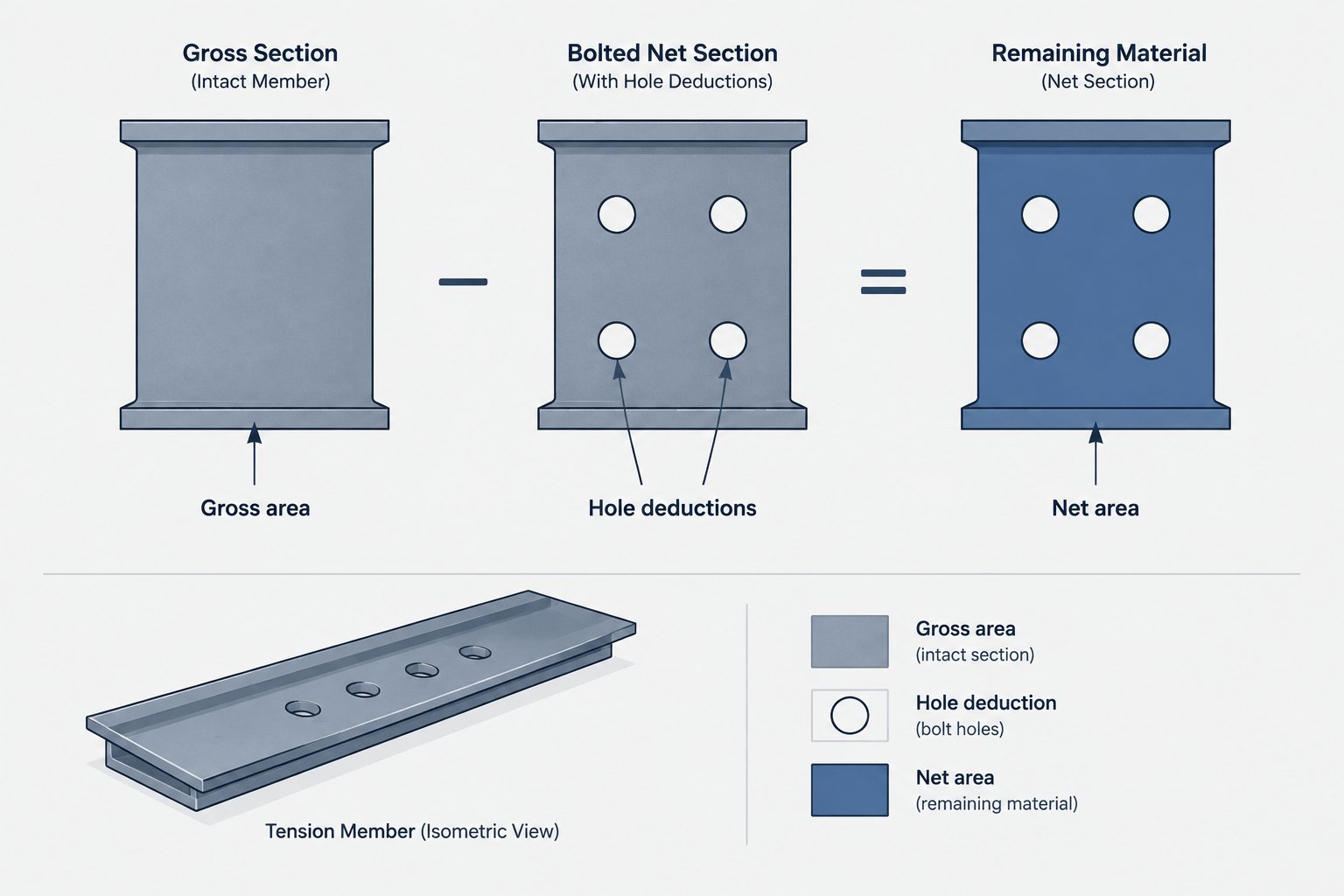
-
Principal Axes of Steel Angles: How to Read and Use Rotated Section Properties
Learn why steel angles have rotated principal axes, how principal properties differ from x-y values, and how to represent them correctly in CAD.
Written by
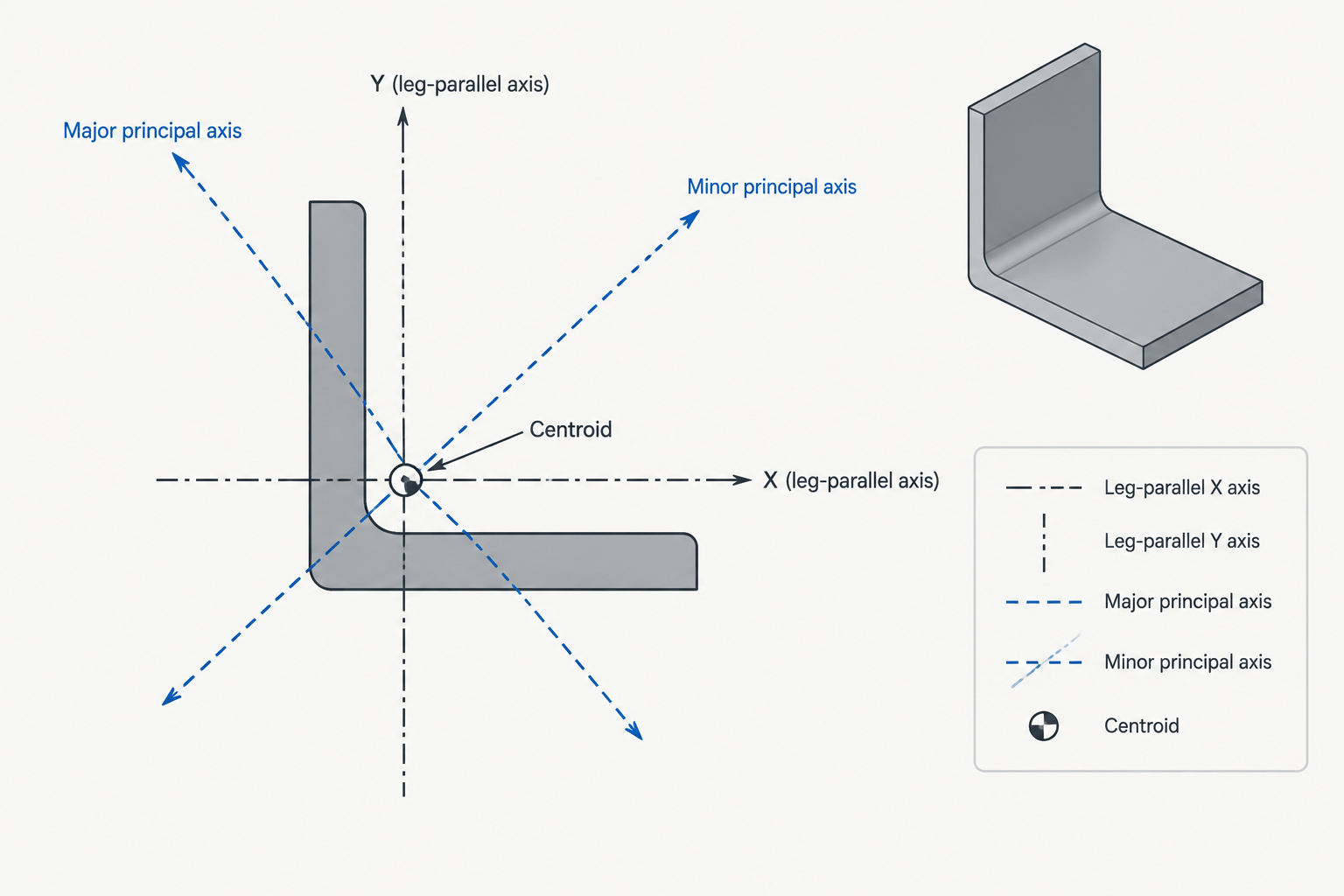
-
Structural Tee (WT) Shapes: Designations, Orientation, and Detailing Geometry
Learn how structural tee WT shapes are designated, oriented, detailed, and modeled, including centroid location, cut edges, fillets, and connection geometry.
Written by
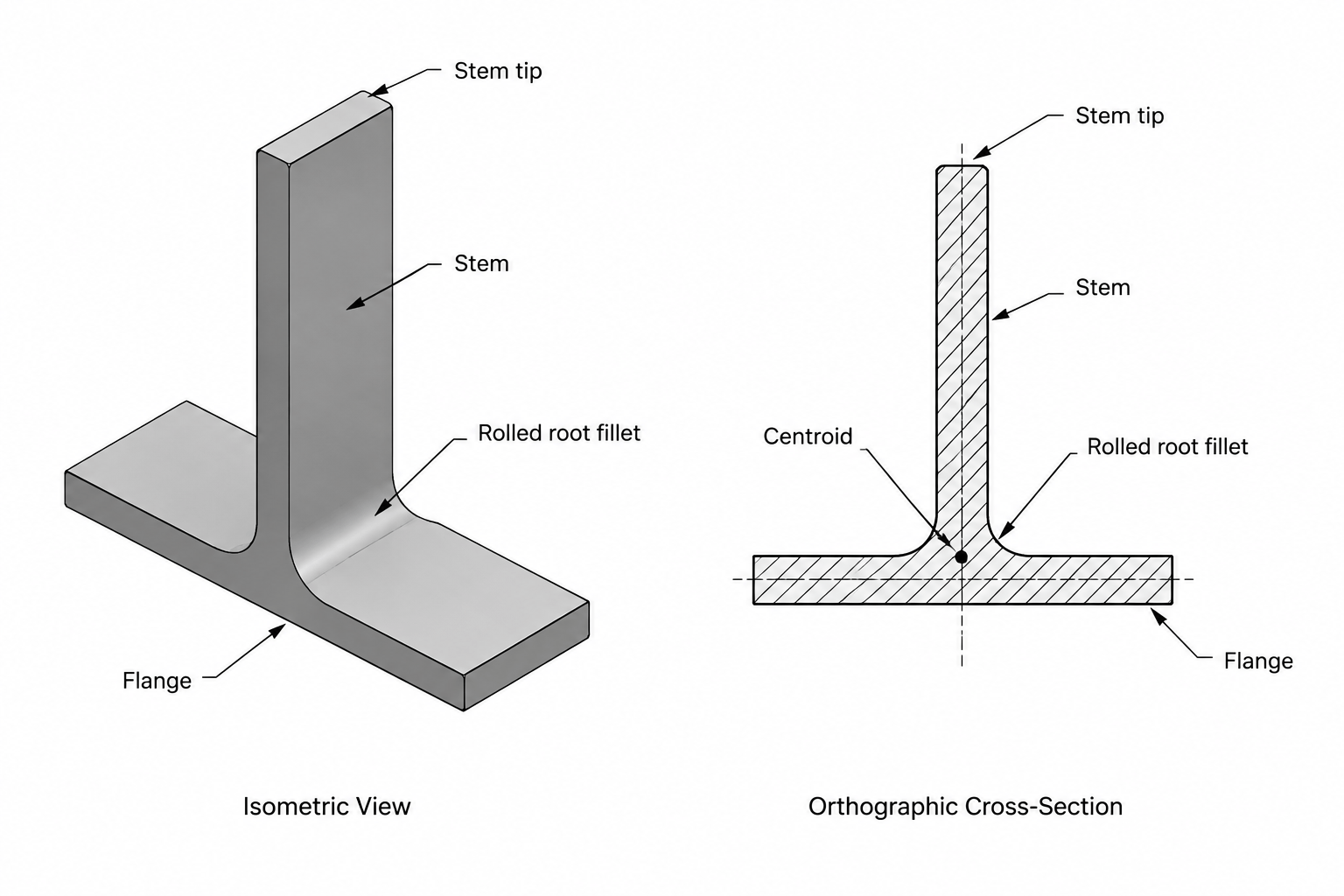
-
Strong Axis vs. Weak Axis in Structural Steel Sections
Learn how strong-axis and weak-axis bending relate to Ix, Iy, Sx, Sy, orientation, and detailing for W-shapes, channels, angles, tees, and HSS.
Written by
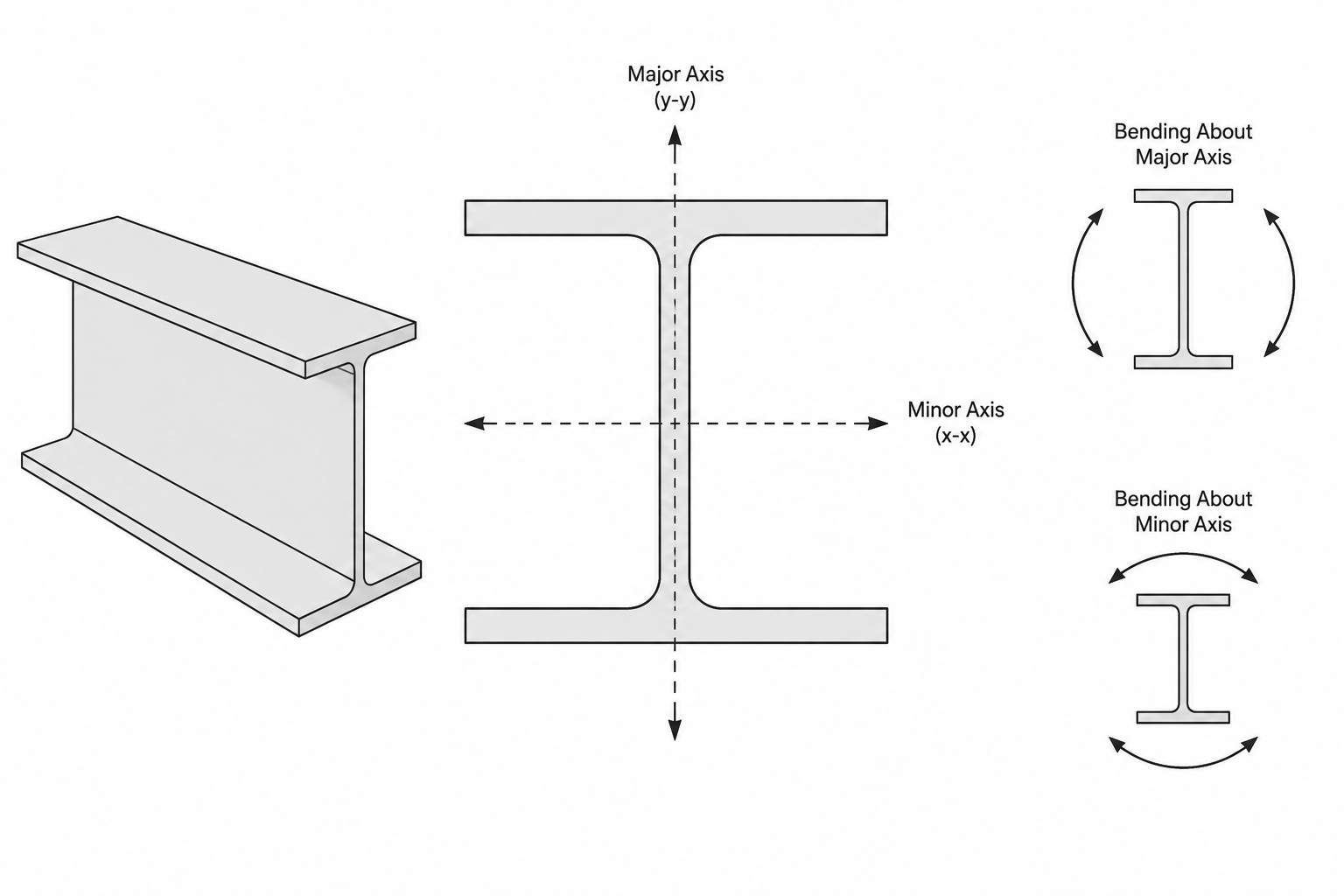
-
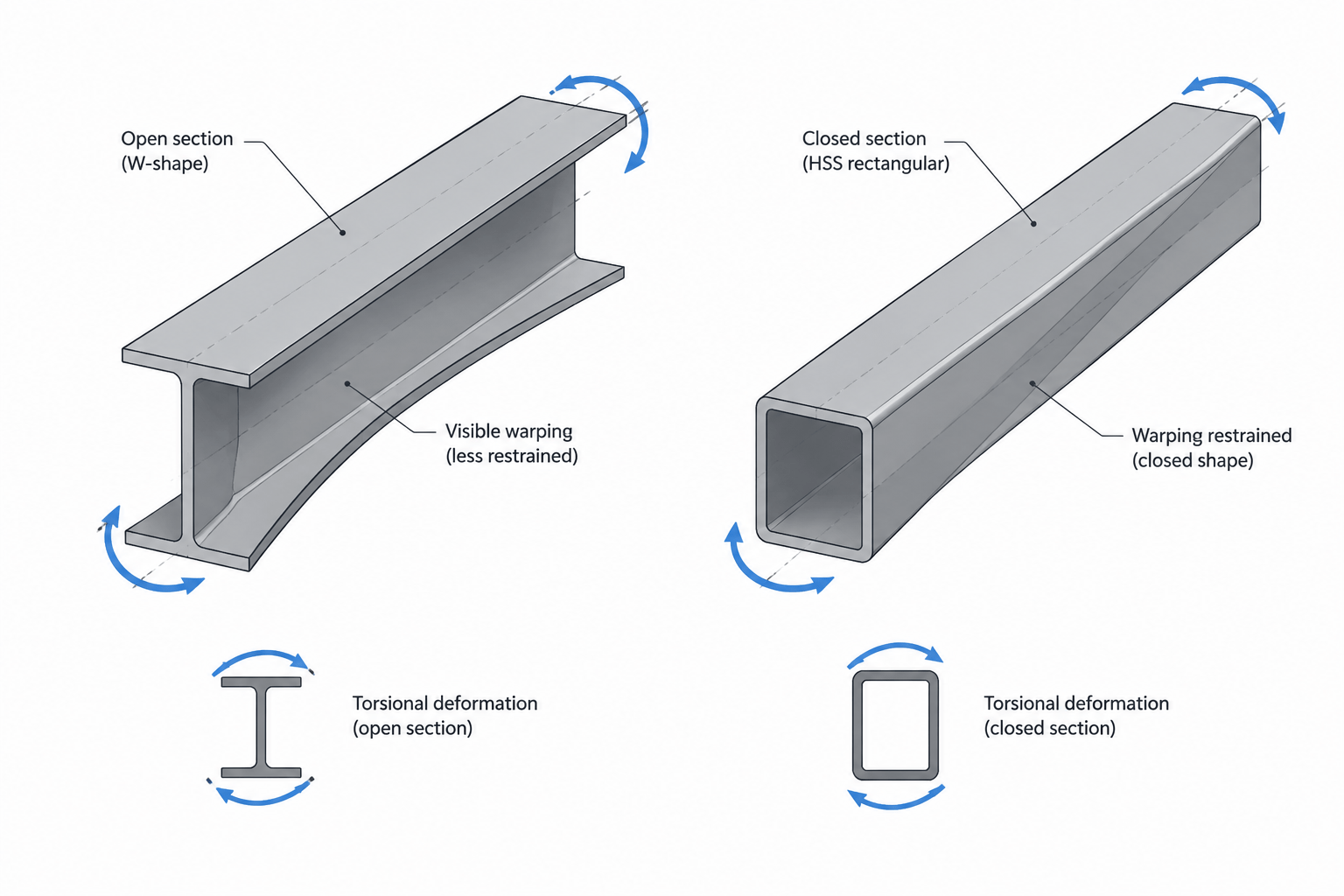
Torsional Constant J and Warping Constant Cw in Steel Shape Tables
Learn what J and Cw mean in structural steel shape tables, how open and closed sections resist torsion, and how to use these properties in design and CAD workflows.
Written by