RHS 150x50x3 is a cold-formed welded rectangular steel tube identified by its depth, width, and wall thickness. The reference information below brings together its principal dimensions, corner radii, sectional area, unit weight, and downloadable DWG resource.
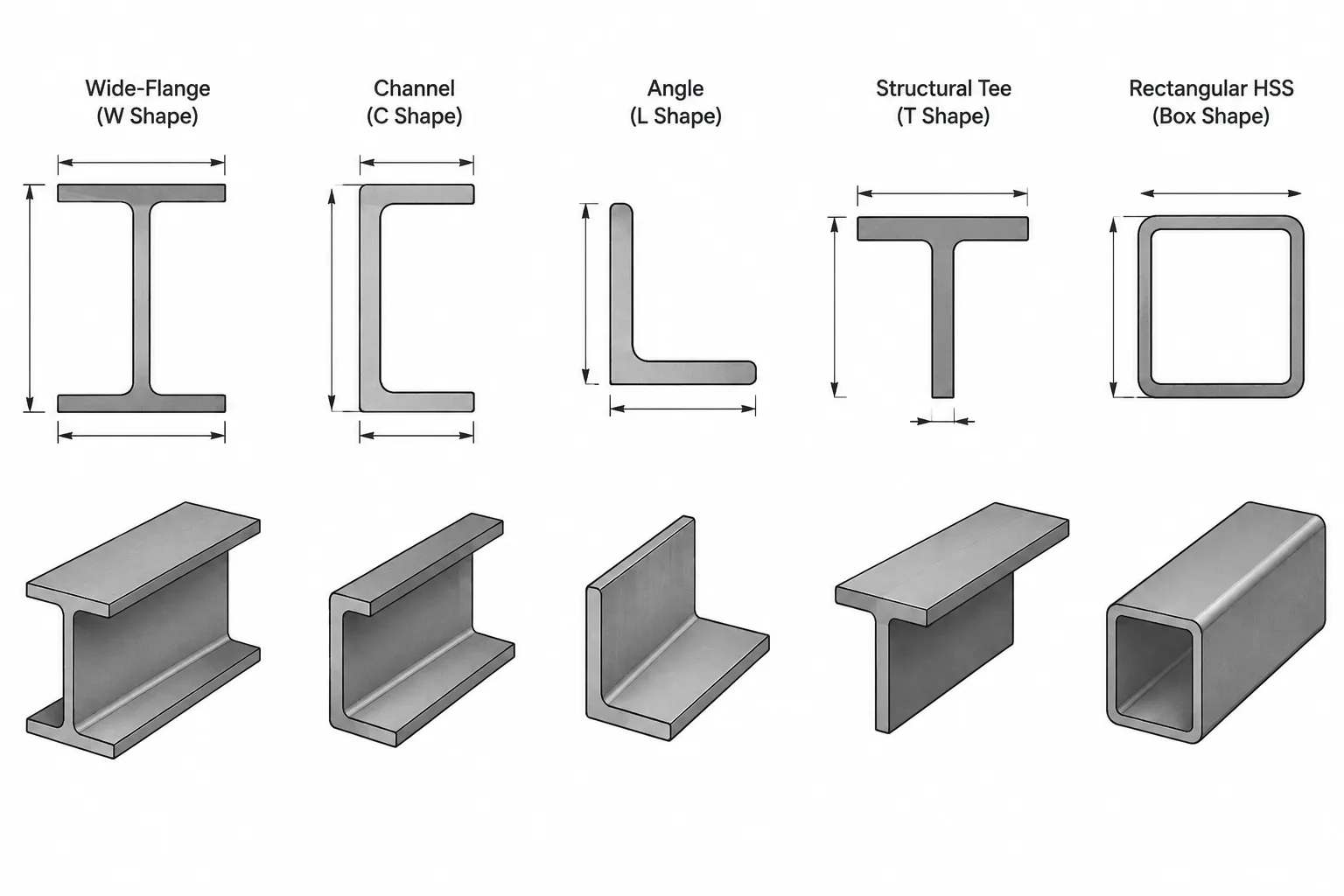
In United States terminology, this general shape is commonly described as rectangular HSS. That terminology does not make this European-standard section interchangeable with a section produced to a different specification. Confirm the governing standard, material requirements, tolerances, and availability before using the designation in project documents.
RHS 150x50x3
Cold Formed Welded Rectangular Steel Tubes
refer to : EN 10219-2
the European standard that specifies tolerances, dimensions, and sectional properties for cold-formed welded structural hollow sections made of non-alloy and fine grain steels. It complements EN 10219-1, which covers technical delivery conditions.
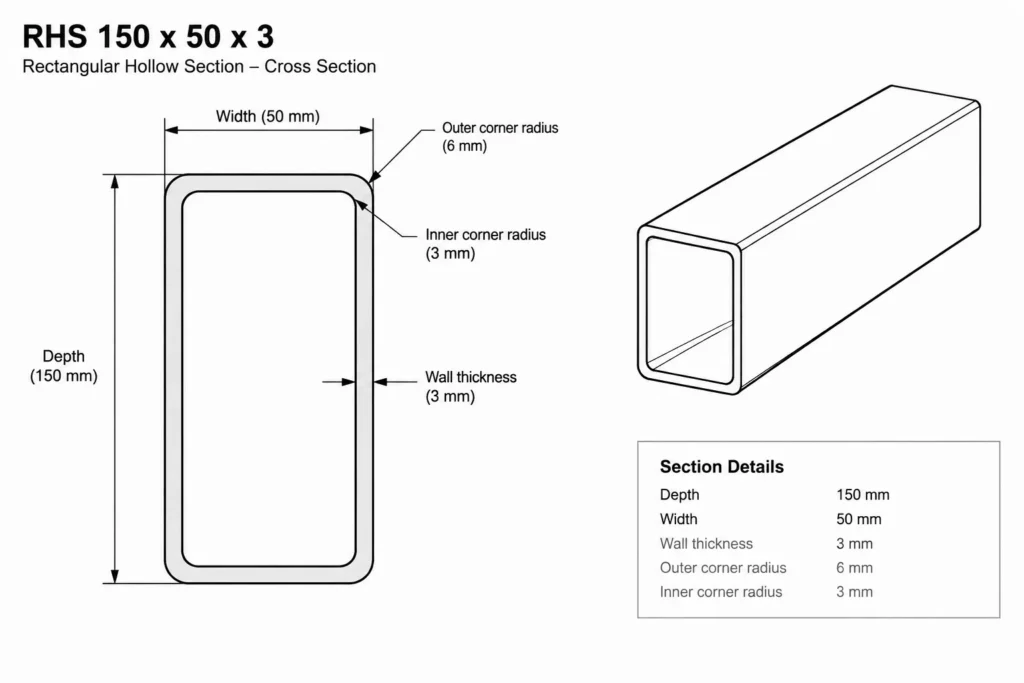
Dimension : 150x50x3
Depth : 150 mm
Width : 50 mm
Thickness : 3 mm
Outer Corner Radius : 6 mm
Inner Corner Radius : 3 mm
Sectional Area : 11.41 cm2
Unit Weight : 9 kg/m
Understanding the RHS 150x50x3 designation
The designation lists the rectangular tube’s overall depth and width followed by its wall thickness. Keeping this order clear is important when selecting a section, orienting it in a drawing, or comparing it with another rectangular hollow section.
Depth and width also establish the section’s orientation. Rotating the member changes which face is treated as the deeper side, so CAD views, connection details, and member schedules should use a consistent orientation.
Standard and geometry context
The source identifies this section with EN 10219-2, which addresses dimensional tolerances and section information for cold-formed welded structural hollow sections. EN 10219-1 addresses technical delivery conditions. A geometric designation or CAD file alone does not confirm material grade, certification, manufacturing tolerances, or compliance for a supplied product.
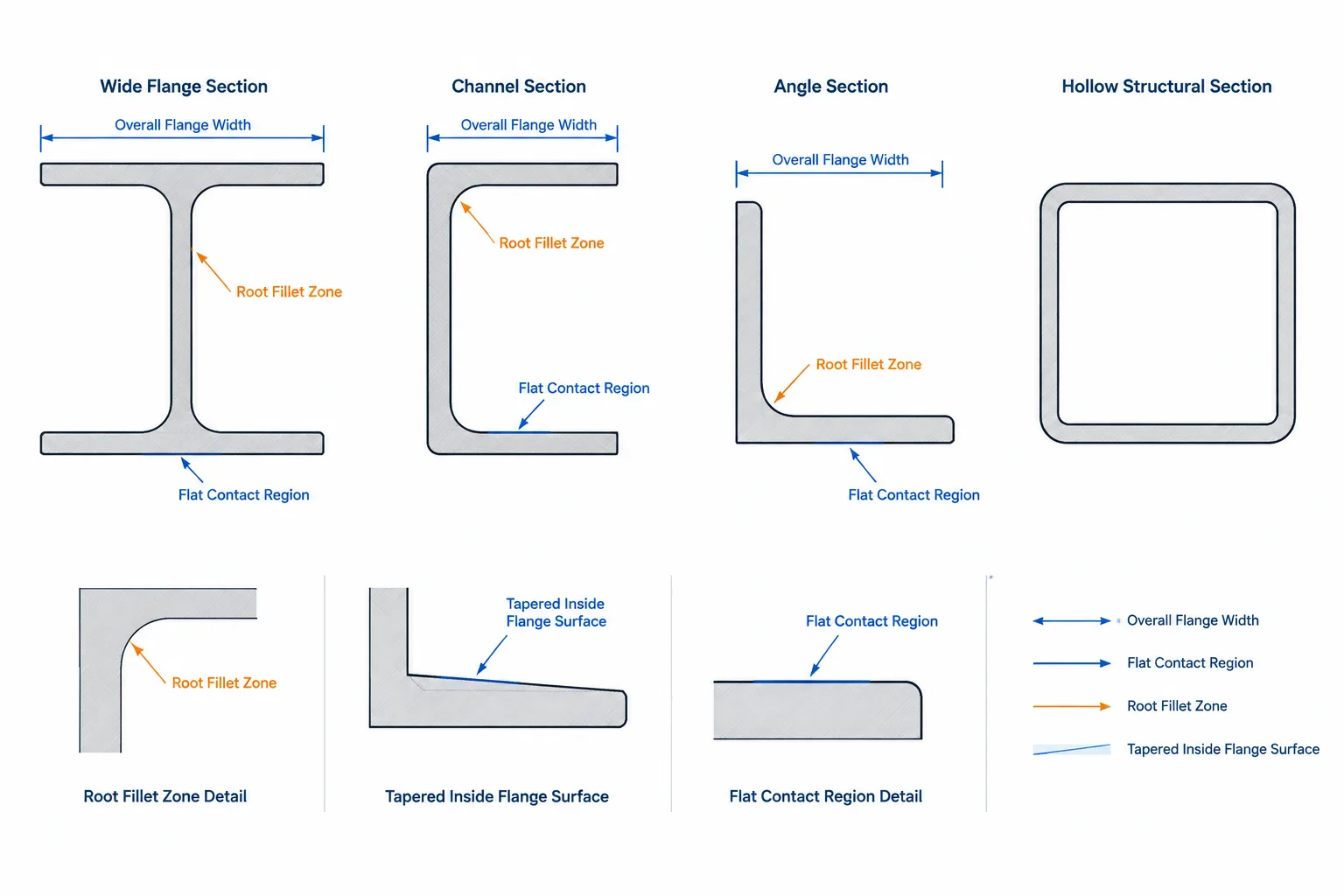
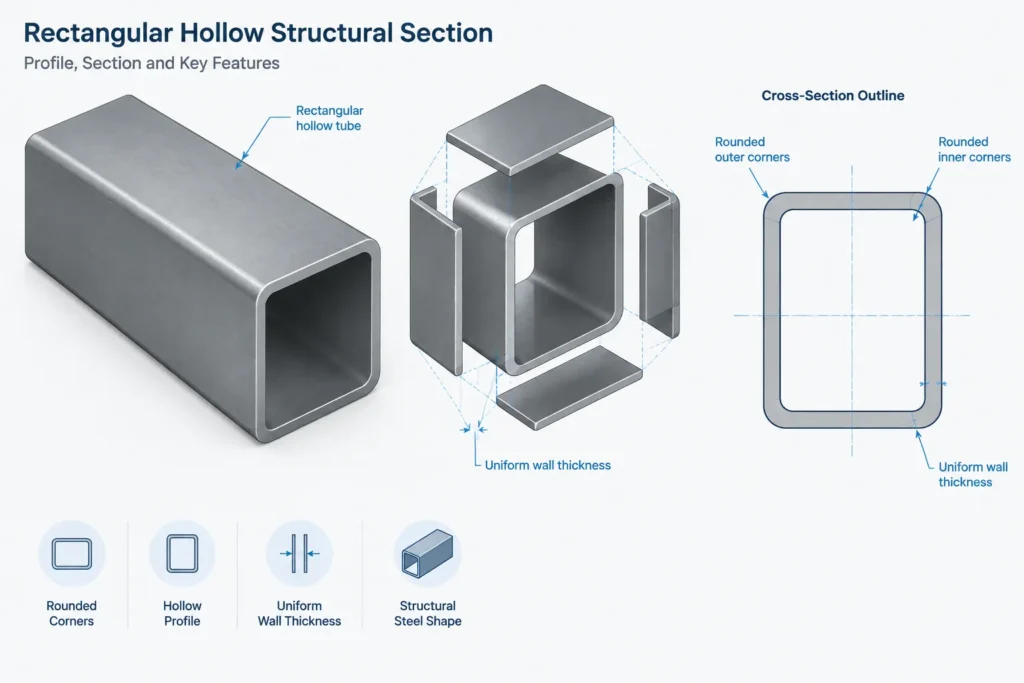
The listed outer and inner corner radii are relevant to more than appearance. Rounded corners affect the true cross-sectional outline and should be represented correctly when preparing close-fitting plates, connection components, fabrication details, or section-property models.
Using the listed properties
- Sectional area describes the amount of steel in the cross section and is used in section-property and stress calculations.
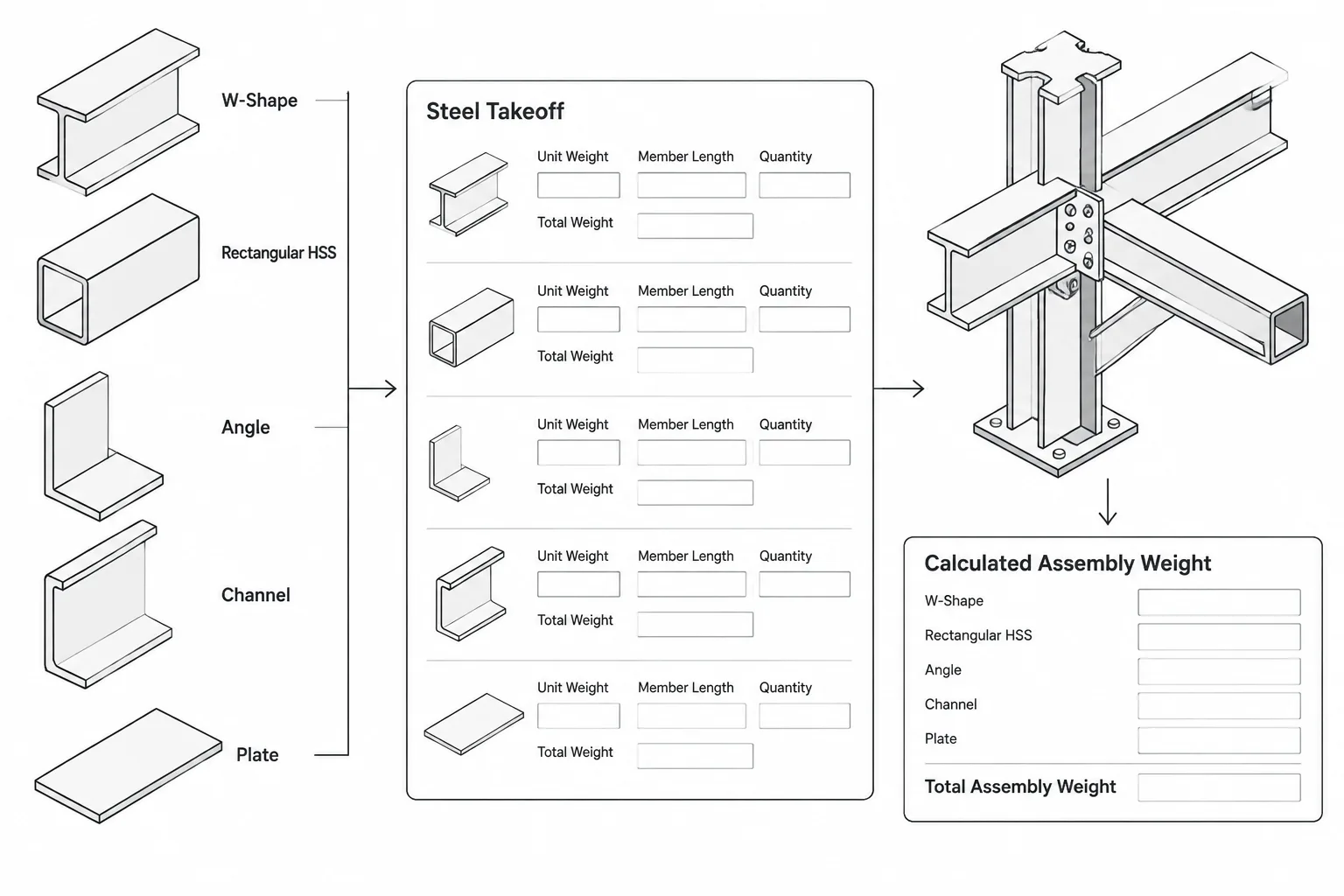
- Unit weight expresses weight per unit length and can support material takeoffs when applied to the required member length.
- Corner radii help define the actual hollow-section profile rather than an idealized sharp-corner rectangle.
- Depth, width, and thickness provide the primary geometry needed to identify and draft the section.
Do not infer unlisted properties or structural capacities from these fields alone. Design checks may also require verified material data, additional section properties, connection behavior, member length, restraint conditions, loading, and the applicable design standard.
DWG drafting workflow
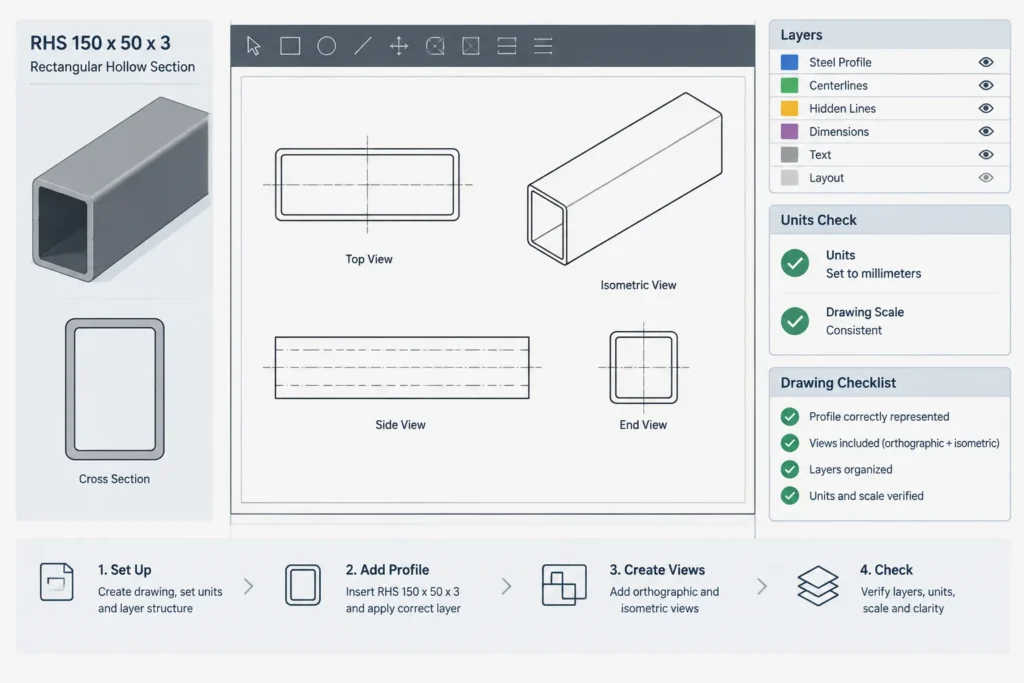
Use the downloadable DWG as a drafting reference and inspect its units, layer organization, profile geometry, and corner treatment after opening it. Because the source dimensions are presented in millimeters, confirm the receiving drawing’s unit settings before inserting, scaling, or referencing the file.
For schedules and details, keep the full section designation visible and distinguish it from material grade or product specification information. Before fabrication or construction, compare the drawing against approved project documents and current supplier data.
Related reference topics
Useful companion subjects include rectangular HSS terminology, hollow-section properties, cold-formed steel tubes, section weight concepts, steel connection detailing, and CAD or DWG drafting practices. These topics help connect the basic profile data with selection, documentation, and checking workflows.
Frequently asked questions
What does RHS 150x50x3 mean?
RHS identifies a rectangular hollow section. In this designation, the values describe the section depth, width, and wall thickness in the order shown by the source data.
Is RHS the same as rectangular HSS?
The terms describe the same general shape family, but they may appear within different regional standards and product systems. Do not assume specification, tolerance, material, or property equivalence based only on the shape name.
Why are inner and outer corner radii listed?
Cold-formed rectangular tubes have rounded corners rather than perfectly sharp corners. The radii help define the profile accurately for CAD representation, fit-up considerations, and section-property work.
Can unit weight be used for a material takeoff?
Yes. Unit weight can be applied to the required member length when preparing a takeoff. Account separately for quantities, cuts, attachments, plates, connections, and any project-specific allowances.
Does the DWG confirm that a supplied tube complies with EN 10219-2?
No. A DWG represents geometry for drafting or reference use. Product compliance must be established through the applicable project requirements, supplier documentation, and material certification.
Can structural capacity be determined from this page alone?
No. Capacity depends on additional section properties, material data, loading, member behavior, connections, restraints, and the governing design method. A qualified professional should complete project-specific verification.