This page provides a concise reference for the RHS 150x120x5 cold-formed welded rectangular steel tube. The source record below identifies its external dimensions, wall thickness, corner radii, sectional area, unit weight, applicable EN reference, and associated DWG resource.
Use the information as a shape-identification and drafting aid. For design or procurement, confirm that the section designation, material specification, tolerances, and delivery requirements match the governing project documents.
RHS 150x120x5
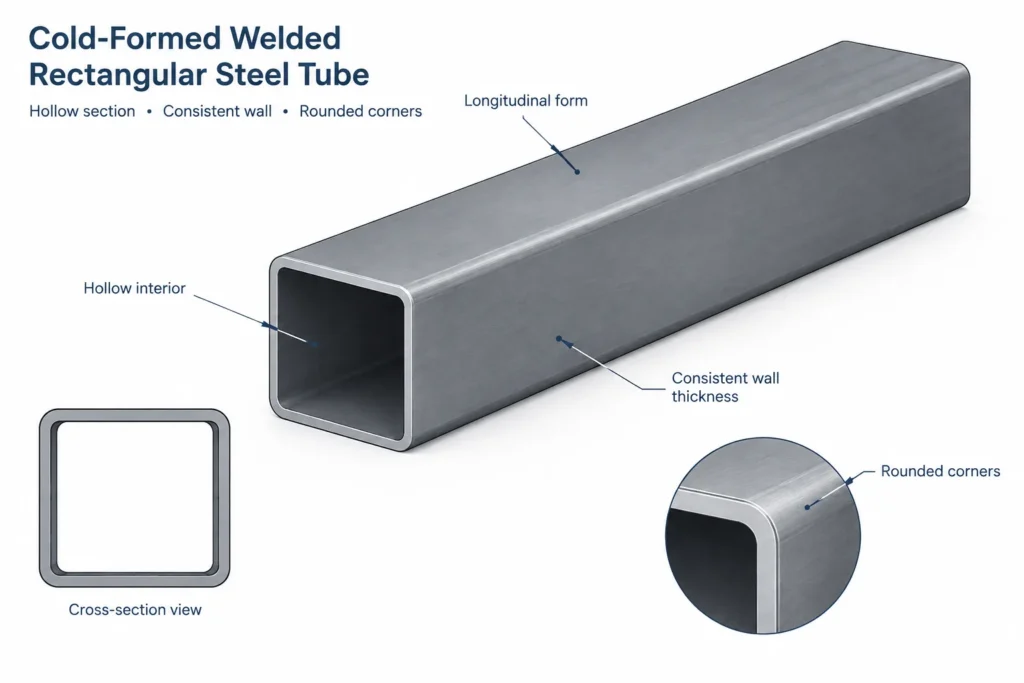
Cold Formed Welded Rectangular Steel Tubes
refer to : EN 10219-2
the European standard that specifies tolerances, dimensions, and sectional properties for cold-formed welded structural hollow sections made of non-alloy and fine grain steels. It complements EN 10219-1, which covers technical delivery conditions.
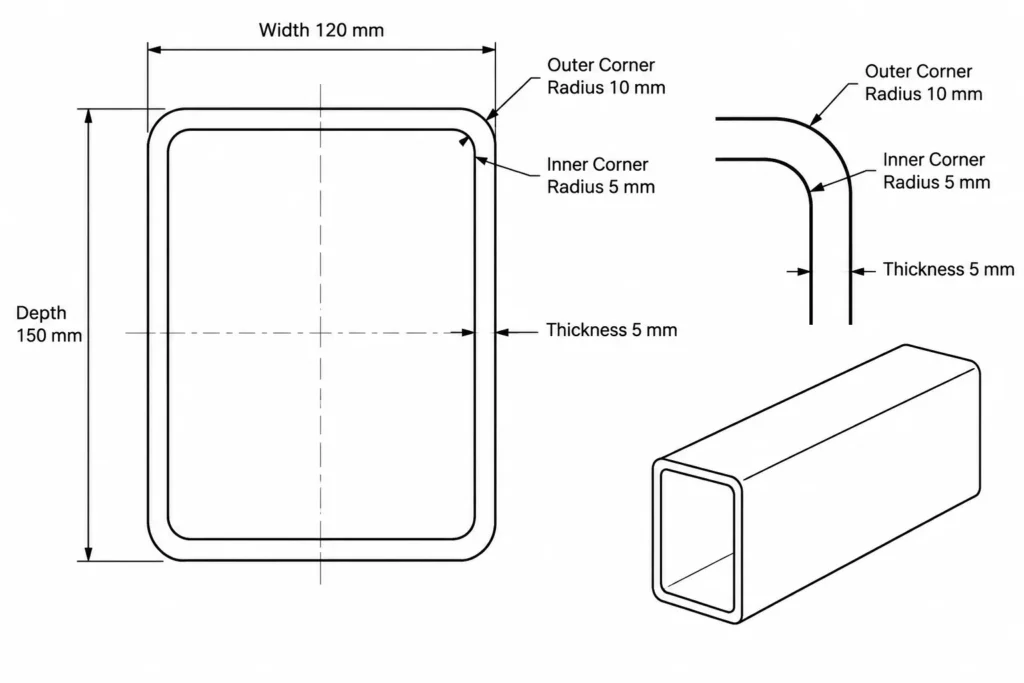
Dimension : 150x120x5
Depth : 150 mm
Width : 120 mm
Thickness : 5 mm
Outer Corner Radius : 10 mm
Inner Corner Radius : 5 mm
Sectional Area : 25.36 cm2
Unit Weight : 19.9 kg/m
How to Read the RHS Designation
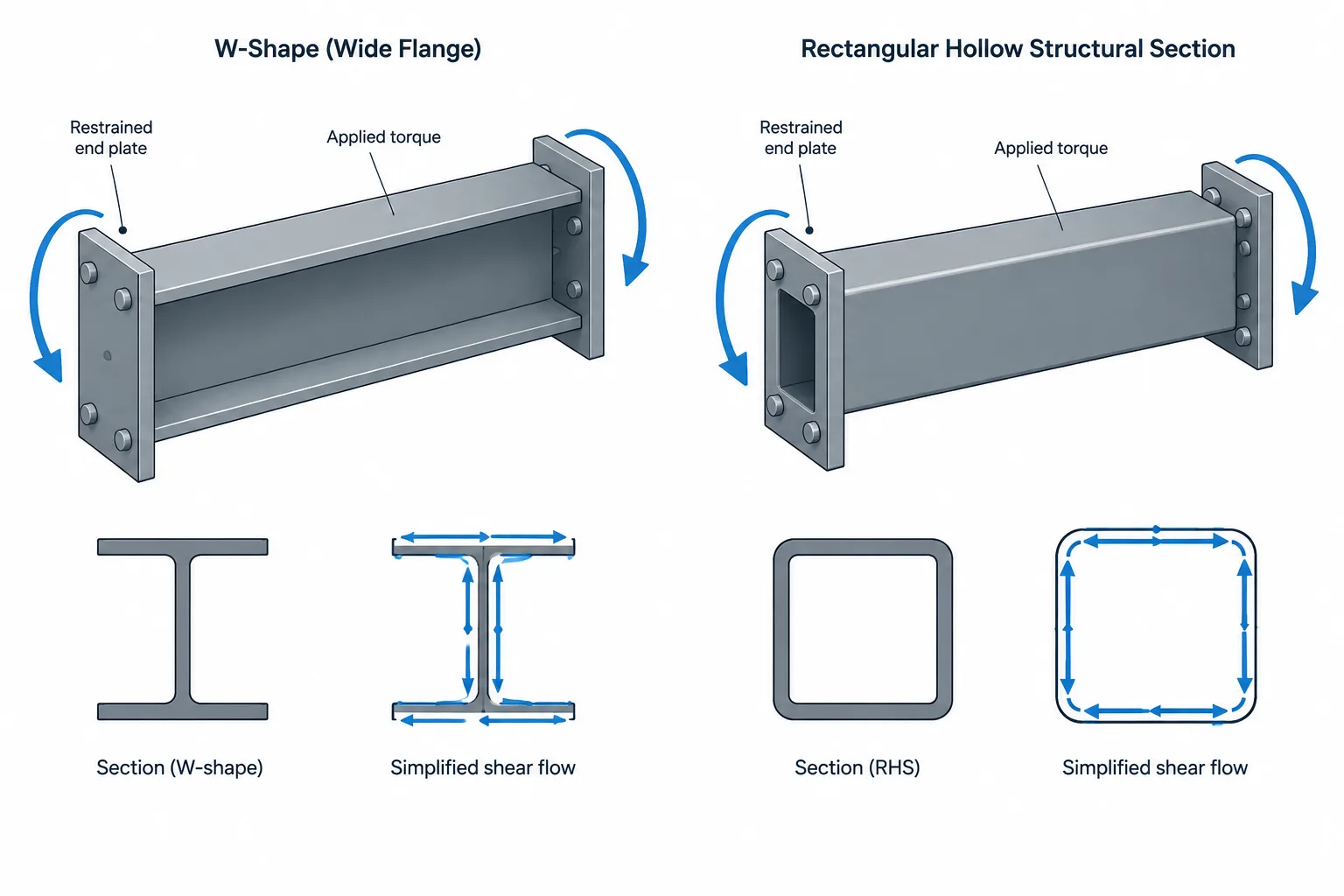
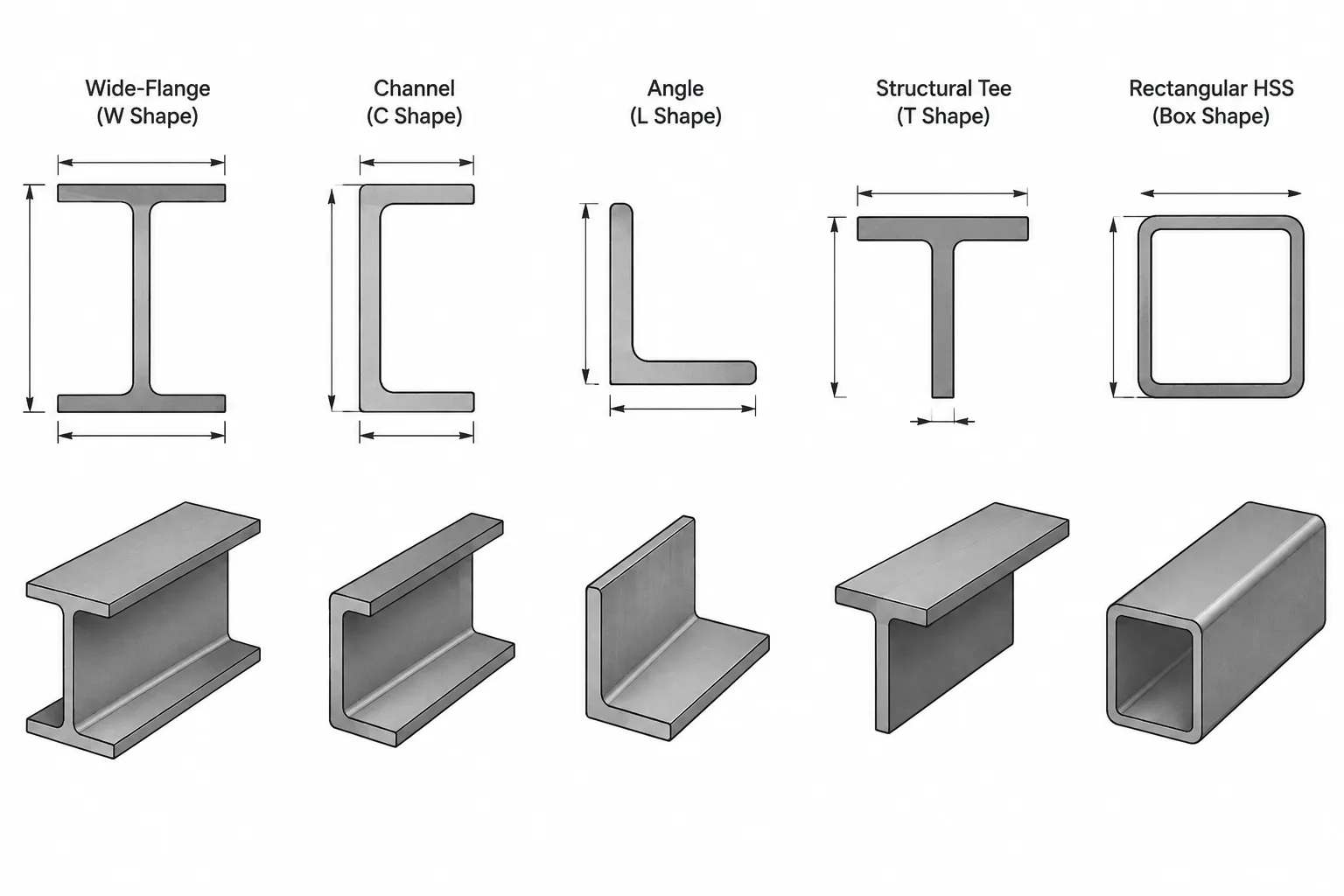
RHS means rectangular hollow section. In the designation RHS 150x120x5, the listed values correspond to the section depth, width, and wall thickness. The unequal external dimensions distinguish an RHS from a square hollow section and make section orientation important in drawings and calculations.
Quick Section Reference
- Section type: Cold-formed welded rectangular steel tube
- Depth: 150 mm
- Width: 120 mm
- Wall thickness: 5 mm
- Outer corner radius: 10 mm
- Inner corner radius: 5 mm
- Sectional area: 25.36 cm2
- Unit weight: 19.9 kg/m
- Dimensional reference: EN 10219-2
Depth, Width, and Orientation
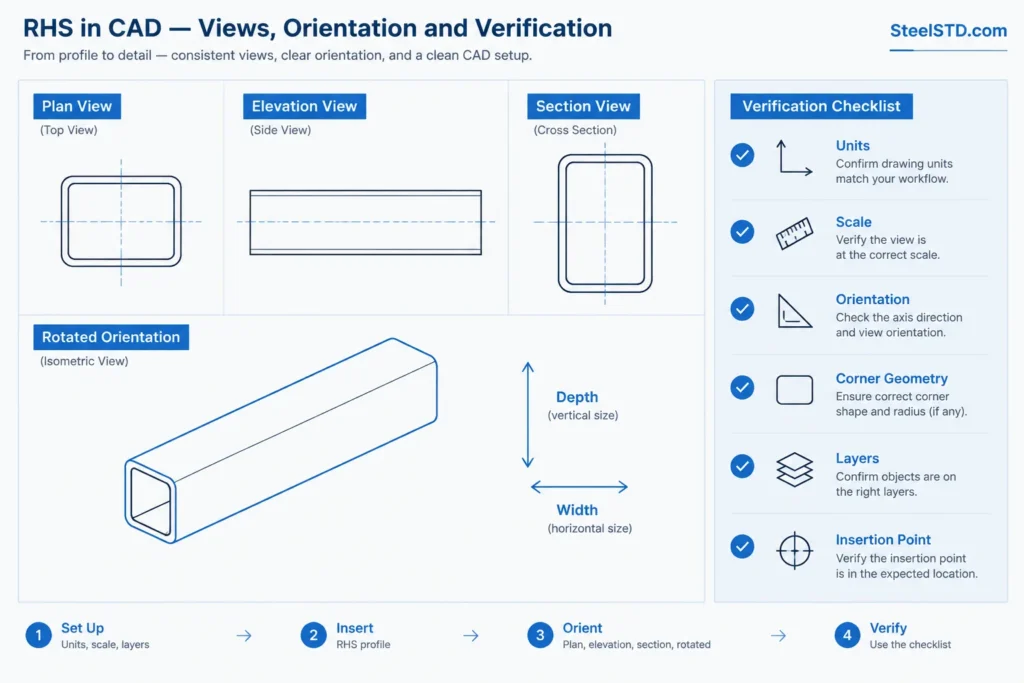
The depth and width labels establish the section axes used in technical documentation. Rotating the member does not change its sectional area or mass per unit length, but it changes which side is treated as the depth. That distinction matters when coordinating plans, elevations, connection details, and section-property calculations.
When inserting the profile into a CAD drawing, compare the DWG orientation with the intended member orientation. Do not rely only on the visual proportions; check the labeled depth and width against the project detail.
Why the Corner Radii Matter
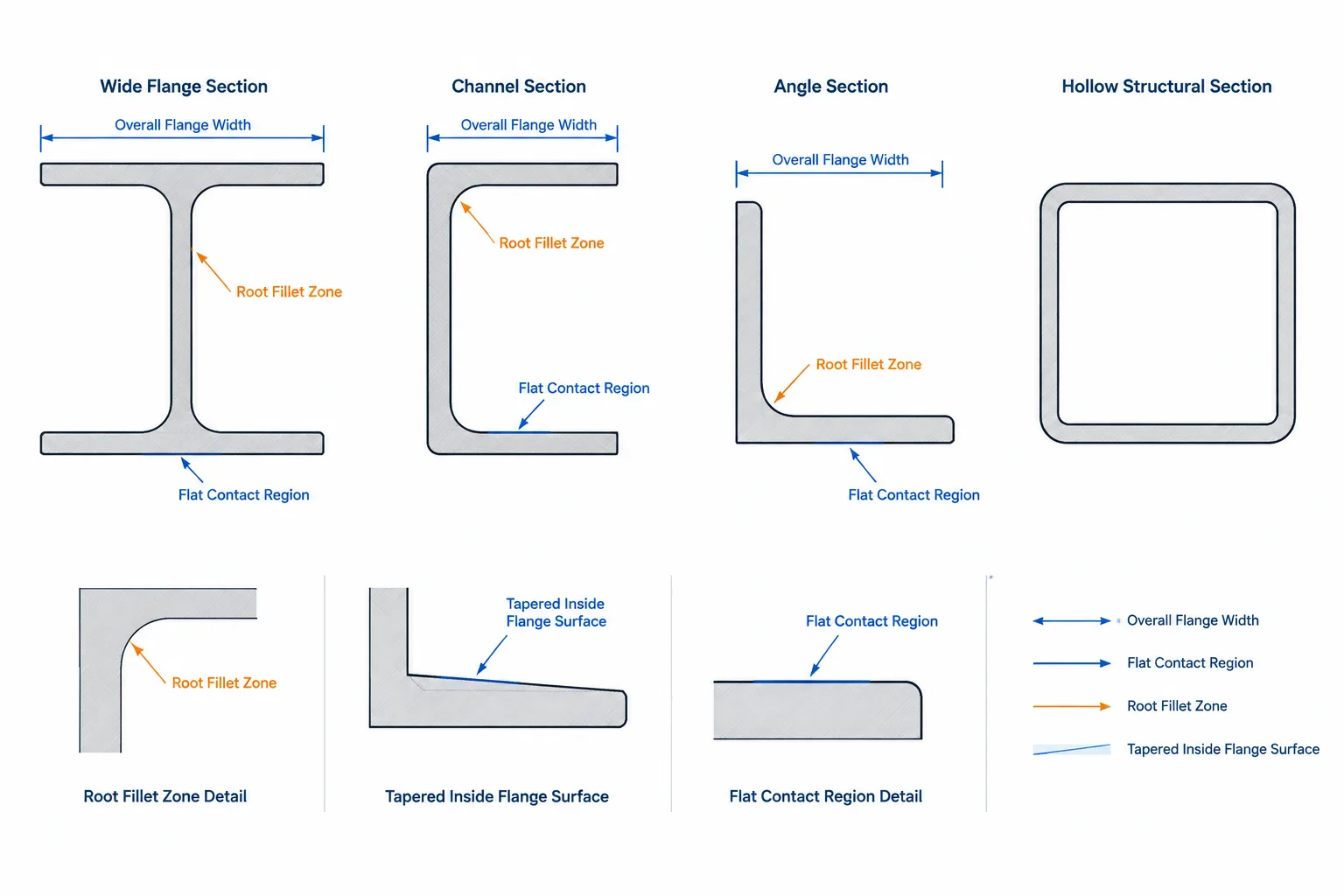
A cold-formed RHS has rounded corners rather than perfectly square corners. The outer and inner radii affect the true profile outline and should be retained where accurate section geometry is needed. Simplified sharp-corner rectangles may be adequate for some diagrammatic views, but they do not represent the listed cross section exactly.
Corner geometry can also affect the fit and placement of plates, weld details, openings, and nearby components. Connection detailing should therefore use the actual profile shape and allow for the applicable fabrication tolerances.
Sectional Area and Unit Weight
Sectional area describes the amount of steel in the cross section. It is a geometric property used in several engineering checks, but it is not a standalone statement of member capacity.
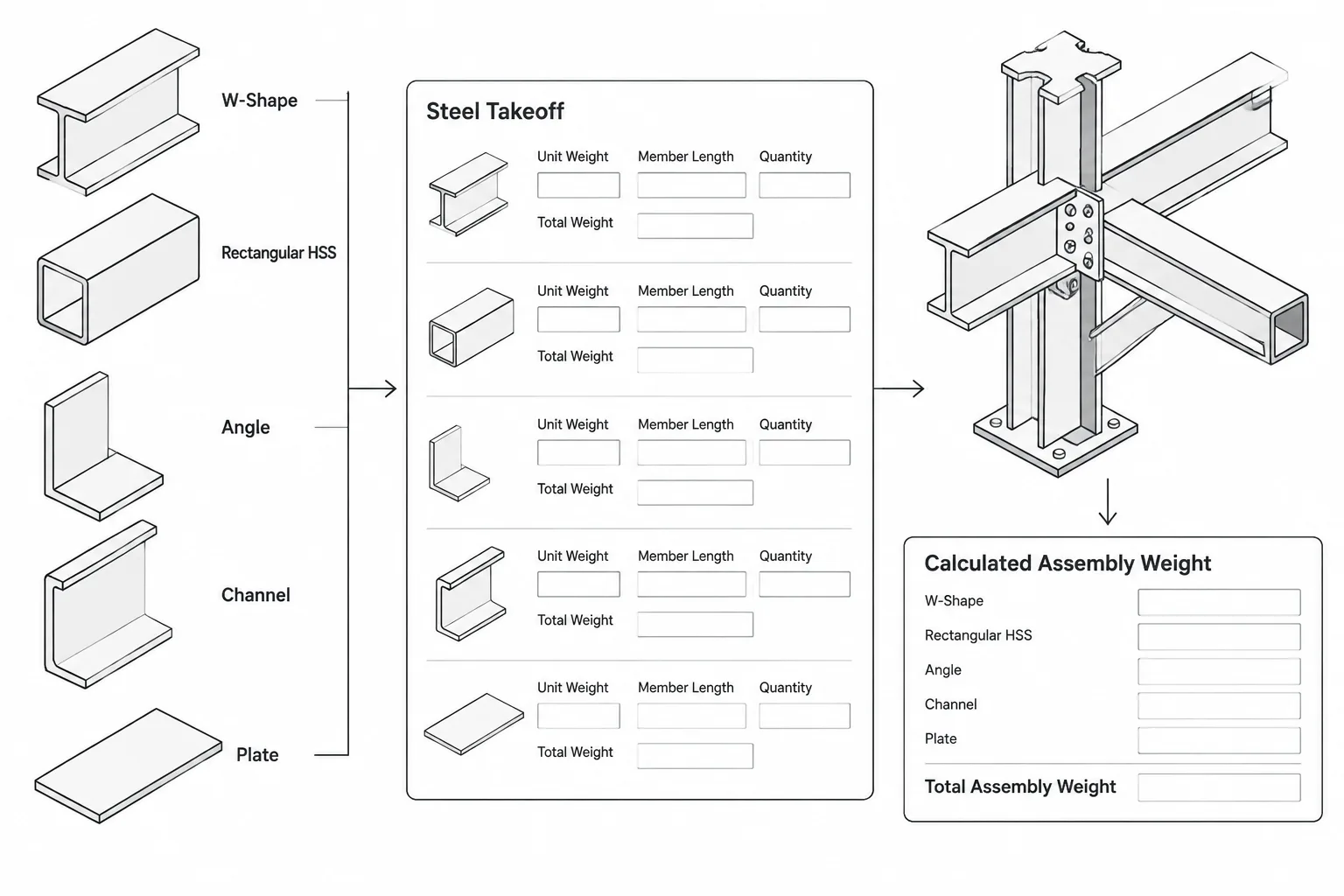
The listed unit weight is a mass-per-length reference. It can support quantity and material takeoff work by multiplying the listed value by the required member length. Allowances for plates, weld metal, bolts, coatings, fittings, and fabrication items must be handled separately where applicable.
EN 10219-2 Context
EN 10219-2 addresses dimensional tolerances, sizes, and section-property information for cold-formed welded structural hollow sections. Its companion part addresses technical delivery conditions. A dimensional reference does not by itself establish every material, inspection, fabrication, or design requirement for a project.
For United States work, confirm whether the contract documents permit an EN-designated section and whether additional specification coordination is required. Similar-looking hollow sections from different standards should not be assumed to be interchangeable.
Using the DWG Resource
The drawing resource can help with profile layouts, member callouts, detail development, and CAD coordination. After inserting or opening the file, verify drawing units, scale, profile orientation, corner geometry, layers, and insertion point before incorporating it into a working set.
The CAD geometry is a drafting reference rather than a substitute for structural design. Member selection, connection design, capacity checks, and compliance decisions should be completed using the governing project criteria and reviewed by the responsible professional.
Related Reference Topics
- Rectangular hollow section dimensions and designation conventions
- Cold-formed welded structural hollow sections
- HSS and RHS orientation in plans, elevations, and sections
- Sectional area, linear mass, and section-property concepts
- RHS connection detailing with plates, bolts, and welds
- Steel CAD profile verification and drawing-unit checks
Frequently Asked Questions
What does RHS 150x120x5 mean?
It identifies a rectangular hollow section with a depth of 150 mm, a width of 120 mm, and a wall thickness of 5 mm.
Is the 150 mm side the depth?
Yes. In this source record, 150 mm is identified as the depth and 120 mm as the width. Keep that orientation consistent when referencing section axes or preparing details.
Why are inner and outer corner radii listed?
The radii describe the rounded corner geometry created by the forming process. They help define the actual section outline and are relevant when checking clearances, plate fit, and CAD profile accuracy.
What does 19.9 kg/m represent?
It is the listed mass per unit length for the section. It can be used in material takeoffs when combined with member length, while connection components and other added items are accounted for separately.
Does sectional area indicate the load capacity?
No. Sectional area is one geometric property. Capacity also depends on the loading condition, member length, orientation, material requirements, stability, connection behavior, and the governing design rules.
Can the DWG be used directly in a project drawing?
It can be used as a drafting reference, but its units, scale, orientation, geometry, and compatibility with the project requirements should be checked before use.
Is an EN-designated RHS automatically equivalent to a US hollow section?
No. Sections governed by different standards may differ in designation, tolerances, material requirements, and availability. Equivalence should be established from the applicable specifications rather than appearance alone.