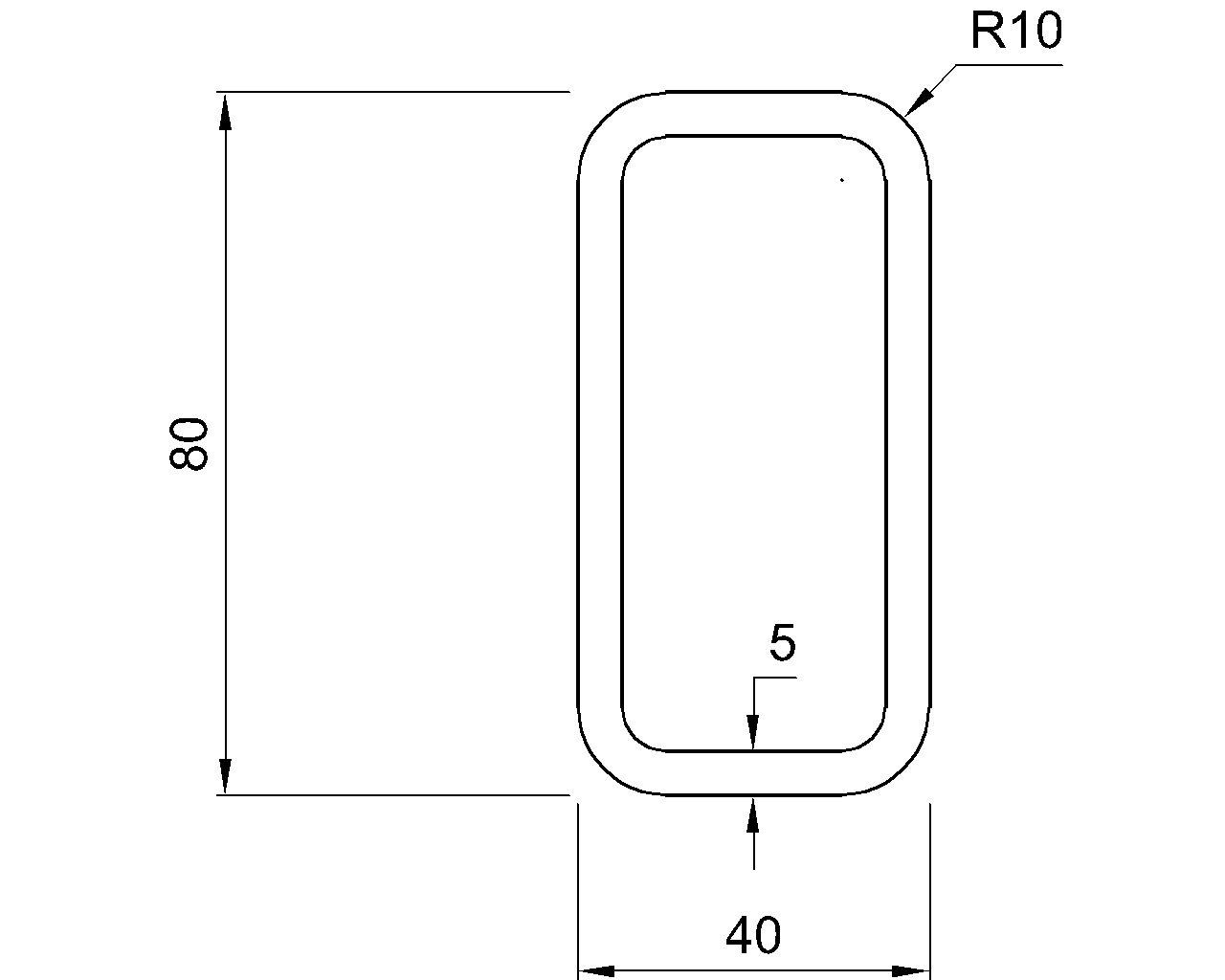
The Hybox 355 RHS 80x40x5 is a rectangular hollow section reference for steel detailing, section identification, and preliminary engineering review. This page brings together the listed geometry, corner-radius information, sectional area, unit weight, applicable standard reference, and the associated DWG resource.
Use the dimensional entries as a quick reference when coordinating drawings, schedules, and connection details. Final member selection and design checks should account for the complete project requirements, loading, restraint, connection configuration, material documentation, and applicable design rules.
Hybox 355 RHS 80x40x5
Hybox 355 Rectangular Hollow Sections
refer to : EN 10219-2:2006-04
the European standard that specifies tolerances, dimensions, and sectional properties for cold-formed welded structural hollow sections made of non-alloy and fine grain steels. It complements EN 10219-1, which covers technical delivery conditions.
Dimension : 80x40x5
Depth : 80 mm
Width : 40 mm
Thickness : 5 mm
Outer Corner Radius : 10 mm
Inner Corner Radius : 5 mm
Sectional Area : 10.4 cm2
Unit Weight : 8.2 kg/m
How to read the RHS reference
RHS means rectangular hollow section. The section is identified by its outside depth, outside width, and wall thickness. For this entry, the listed dimension is 80x40x5, with the depth, width, and thickness shown separately in the source data.
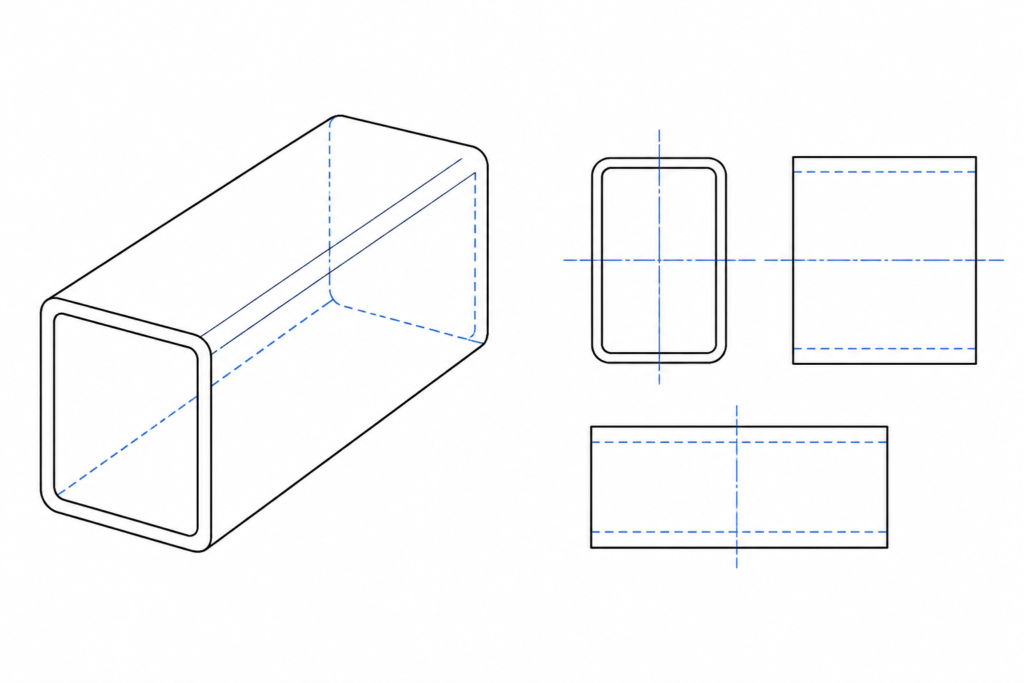
The outer and inner corner radii describe the curved transitions between the flat faces of the hollow section. These details matter when interpreting fabrication geometry, checking clearances, developing connection details, or comparing a drawn profile with a manufacturer or project schedule.
Section properties and weight
The listed sectional area is useful for reviewing the steel quantity represented by the profile and for comparing section entries within a design schedule. The unit weight supports material takeoff and shipping or handling estimates, but it should be used consistently with the project’s measurement and procurement conventions.
Sectional area and unit weight are different reference values: area describes the steel cross-section, while unit weight describes the mass assigned to a length of the section. Neither value alone confirms structural adequacy. Verification should also consider the governing design situation and the complete set of required section properties.
Standard context
The source identifies EN 10219-2:2006-04 as the dimensional and tolerance reference for cold-formed welded structural hollow sections made from non-alloy and fine grain steels. It also notes the relationship with EN 10219-1, which addresses technical delivery conditions. Confirm the project specification and material documentation before using a standard reference for procurement or compliance decisions.
Using the CAD resource
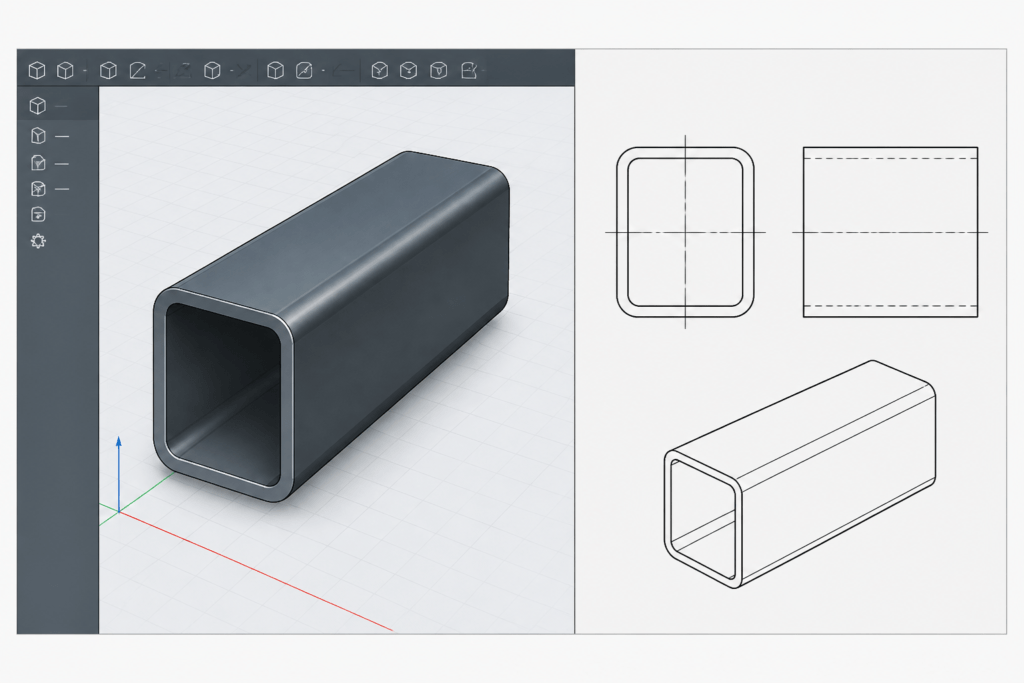
The linked DWG resource is intended to support drafting and coordination. Check the drawing units, layer conventions, insertion scale, and the way corner geometry is represented before incorporating the profile into a production drawing. CAD geometry is a drafting aid; it does not replace a design calculation, approved material documentation, or fabrication review.
Frequently asked questions
What does RHS mean?
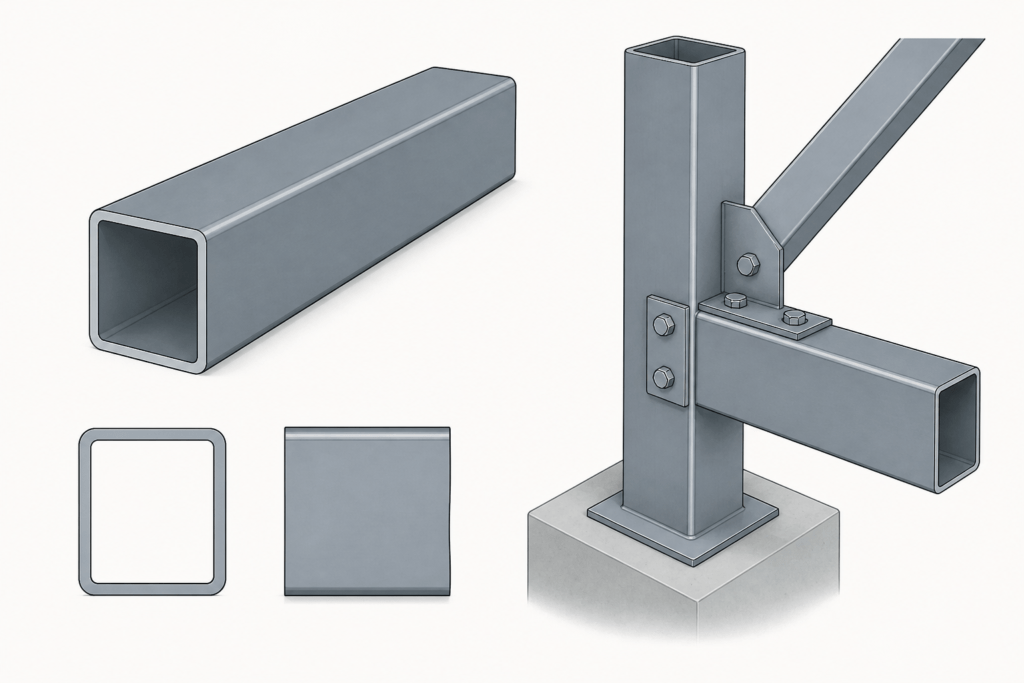
RHS stands for rectangular hollow section. It describes a hollow steel profile with rectangular outside geometry and formed corner transitions.
What does the 80x40x5 designation indicate?
For this reference, the designation identifies the listed outside depth, outside width, and wall thickness. The page also provides those dimensions as separate fields for easier checking.
Why are the corner radii listed?
Corner radii help describe the actual profile shape. They can affect drawing interpretation, clearances, connection detailing, and comparisons between nominal section labels and modeled geometry.
Can the DWG file be used as a design verification?
No. The DWG is a drafting and coordination resource. Structural adequacy, material compliance, connection behavior, and fabrication requirements still require appropriate engineering review.


