This reference page identifies the principal dimensions and listed section data for the Hybox 355 RHS 100x60x4 rectangular hollow section. It is intended as a quick resource for section identification, drawing coordination, preliminary material takeoffs, and CAD-based detailing.
The designation should be read together with the depth, width, wall thickness, corner radii, sectional area, and unit weight stated in the source content below. These values describe the section but do not, by themselves, establish structural capacity or suitability for a particular application.
Hybox 355 RHS 100x60x4
Hybox 355 Rectangular Hollow Sections
refer to : EN 10219-2:2006-04
the European standard that specifies tolerances, dimensions, and sectional properties for cold-formed welded structural hollow sections made of non-alloy and fine grain steels. It complements EN 10219-1, which covers technical delivery conditions.
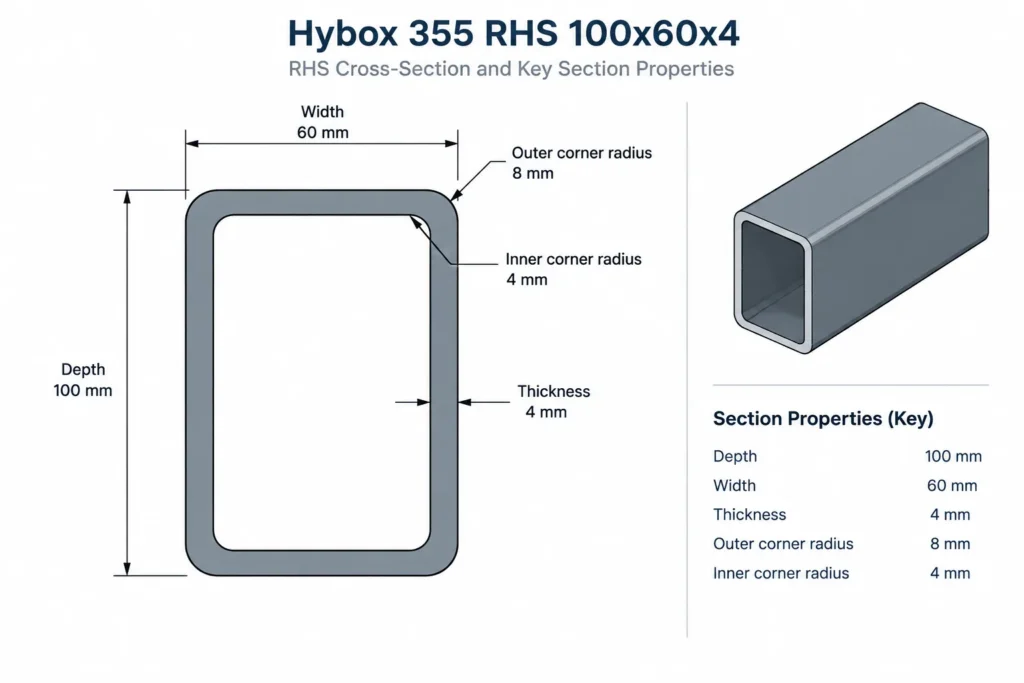
Dimension : 100x60x4
Depth : 100 mm
Width : 60 mm
Thickness : 4 mm
Outer Corner Radius : 8 mm
Inner Corner Radius : 4 mm
Sectional Area : 11.7 cm2
Unit Weight : 9.2 kg/m
How to Read the RHS Designation
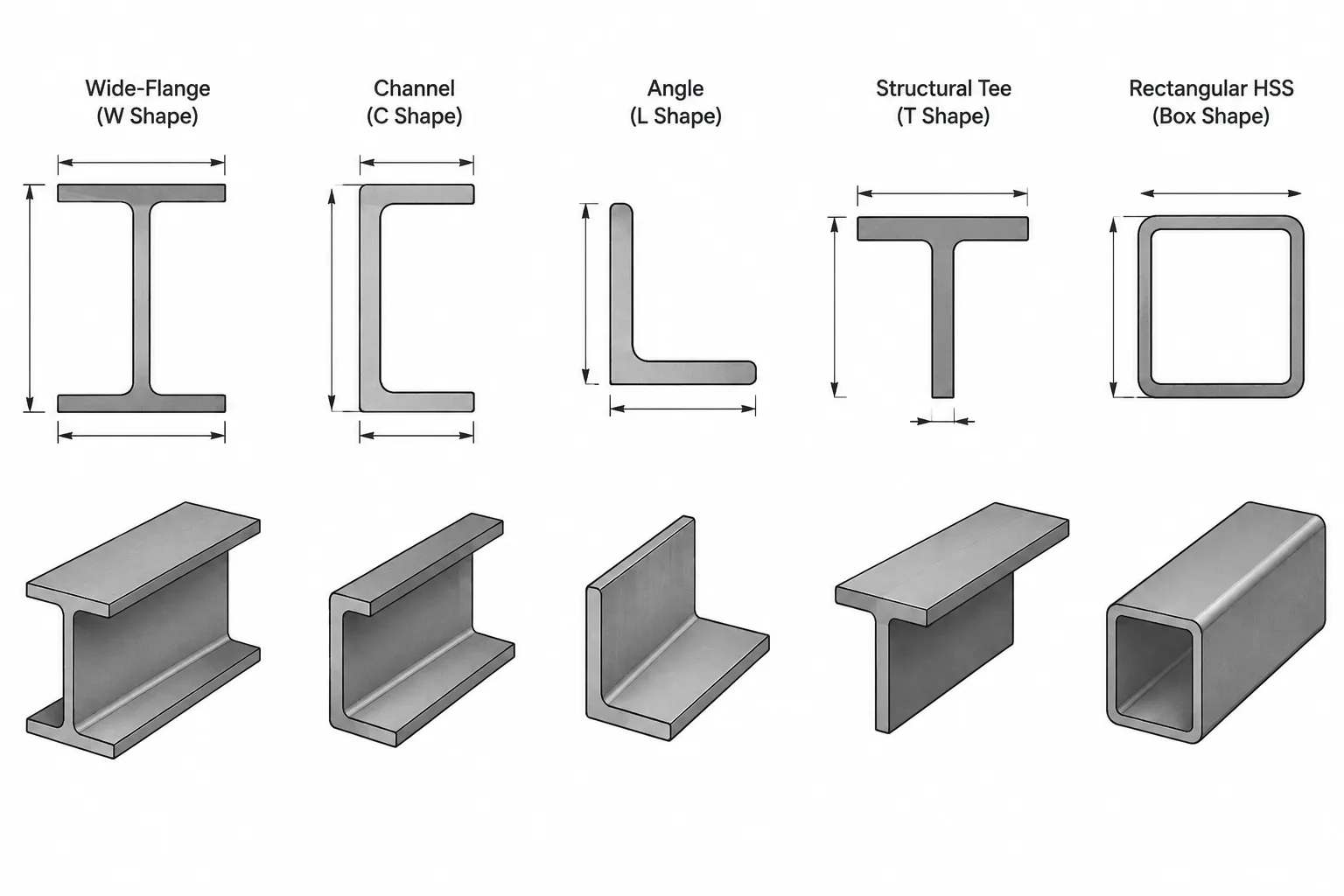
RHS means rectangular hollow section. In the listed designation, the first two components correspond to the section depth and width, while the final component identifies the wall thickness. Orientation matters in drawings and calculations because rotating a rectangular section exchanges its depth and width directions.
Understanding the Listed Properties
- Depth and width: These identify the overall rectangular envelope and help drafters orient the member correctly in plans, elevations, sections, and connection details.
- Thickness: The wall thickness is relevant to section-property interpretation, local connection behavior, weld detailing, and fabrication review.
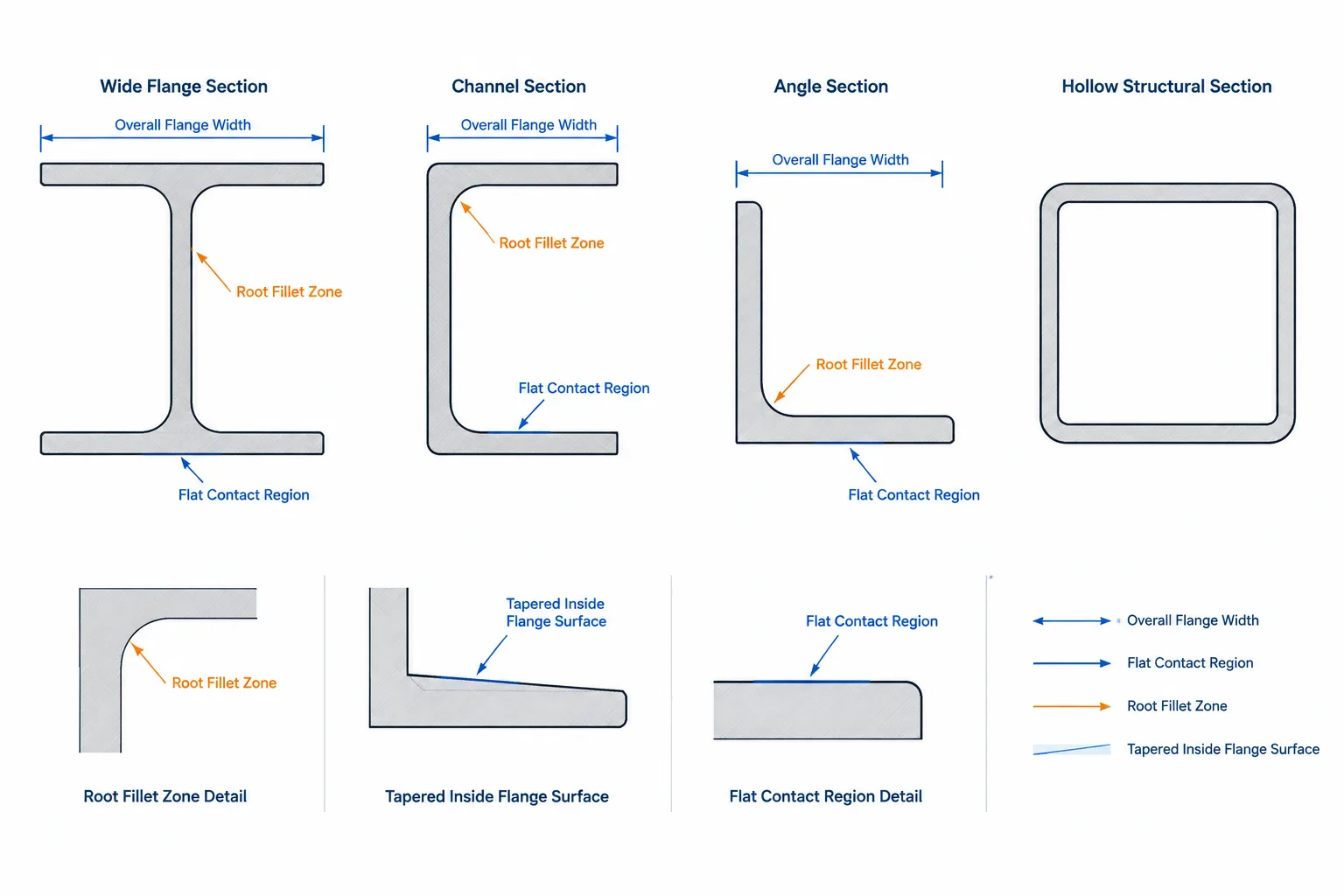
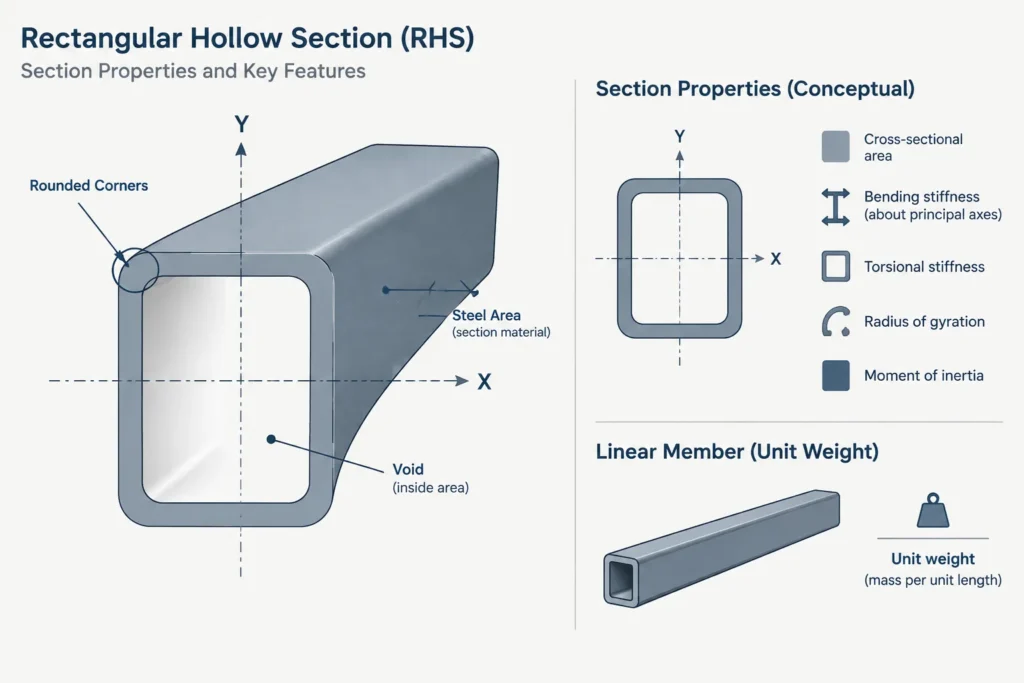
- Corner radii: Cold-formed RHS corners are rounded rather than square. Both inner and outer radii should be considered when checking fit-up, clearances, attached plates, and CAD geometry.
- Sectional area: This is the steel area in the cross-section, not the area enclosed by the hollow interior.
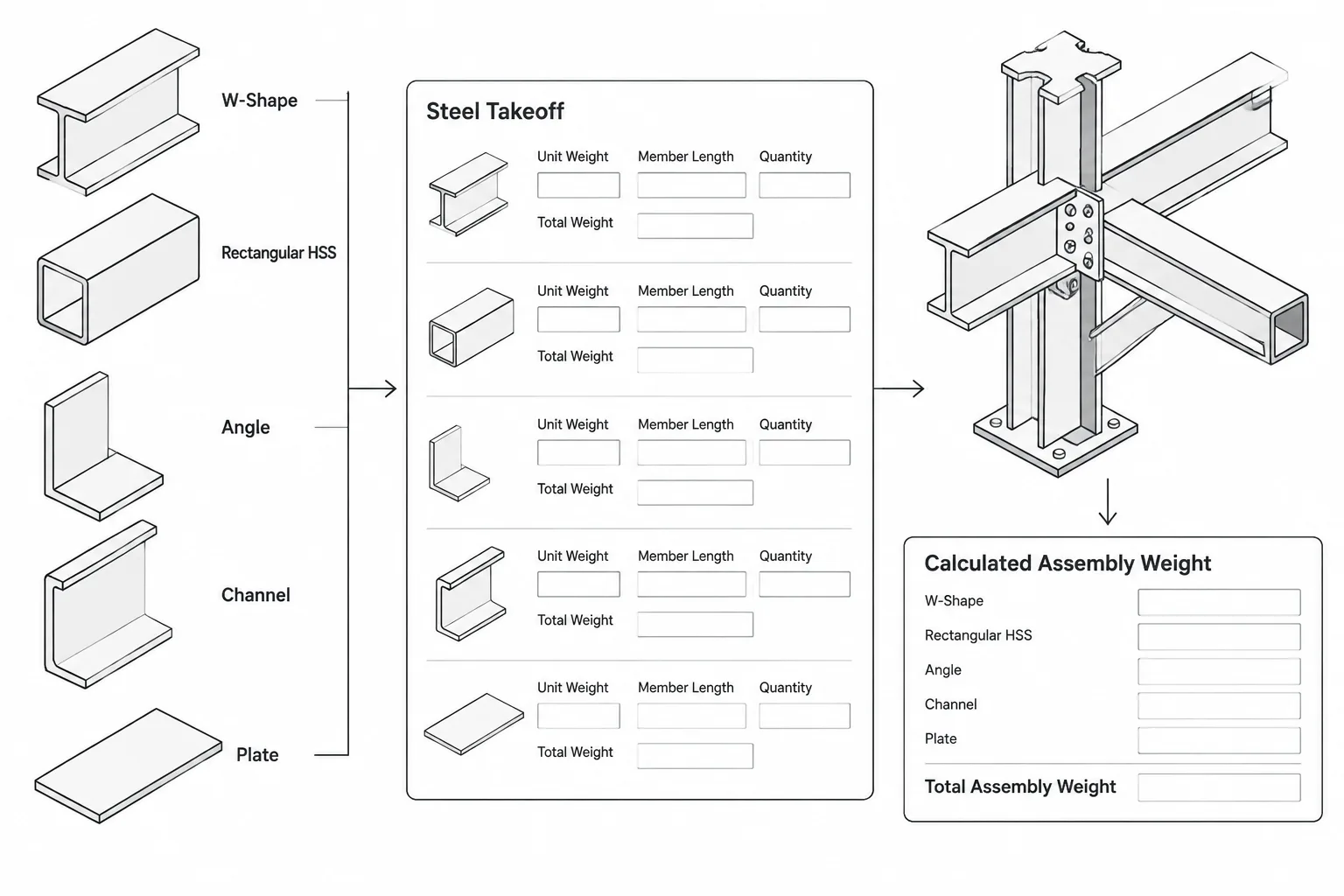
- Unit weight: The listed value is mass per unit length. It can support material takeoffs when used with the required member length, but it is not a load-capacity value.
Standard Context
The source associates this section with EN 10219-2:2006-04, which addresses dimensional tolerances and section properties for cold-formed welded structural hollow sections. Project specifications should be checked for the required standard, product designation, material requirements, and accepted tolerances. On United States projects, a European product reference should not be assumed to be directly interchangeable with a domestic section designation.
CAD and Detailing Checks
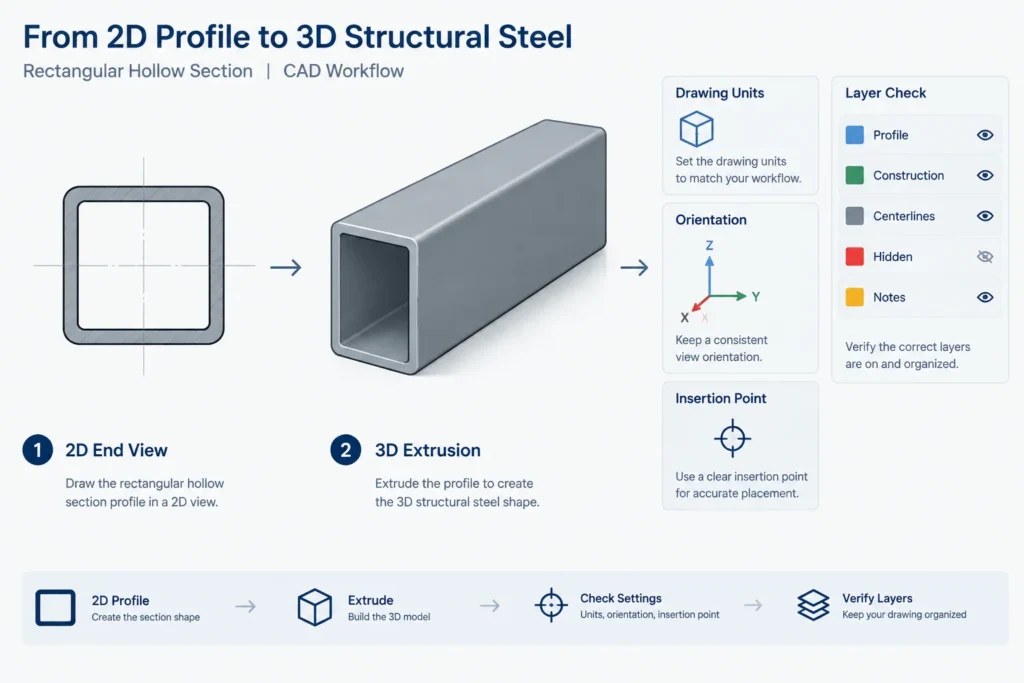
Before using the DWG in a production drawing, confirm the drawing units, section orientation, corner geometry, insertion point, layers, and scale. Compare the CAD profile with the dimensions stated on this page rather than relying only on the filename or visual appearance.
For connection detailing, consider the closed shape of the member, access to its interior, the available flat face width, and the transition into the radiused corners. Bolt placement, weld layout, end plates, cap plates, and other attachments require project-specific engineering and fabrication review.
Relationship to Other Steel References
This page can be used alongside broader references covering rectangular hollow sections, HSS and RHS terminology, section-property concepts, unit-weight calculations, welded hollow-section connections, and CAD detailing workflows. Comparisons should use consistent orientation, units, material requirements, and governing standards.
Frequently Asked Questions
What does Hybox 355 RHS 100x60x4 identify?
It identifies a Hybox 355 rectangular hollow section with the depth, width, and wall thickness stated in the source data. The full listing should be reviewed because it also provides corner radii, sectional area, unit weight, and standard context.
Does the listed unit weight indicate structural capacity?
No. Unit weight describes mass per unit length. Structural capacity depends on section properties, material requirements, member length, restraint, loading, connection behavior, and the governing design rules.
Why are the corner radii important?
The rounded corners affect the actual cross-sectional geometry and the space available for attachments. They are important when checking plate fit-up, weld access, bolt clearance, and the accuracy of a CAD profile.
Can the DWG be inserted directly into a fabrication drawing?
It should first be checked for units, scale, orientation, layers, insertion point, and agreement with the listed section data. Fabrication drawings also require project-specific connection details, tolerances, material notes, and professional review.
Is this section automatically equivalent to a U.S. HSS size?
No equivalence should be assumed from similar nominal dimensions alone. Compare the governing product standard, dimensions, corner geometry, material requirements, tolerances, sectional properties, and project specifications before considering a substitution.