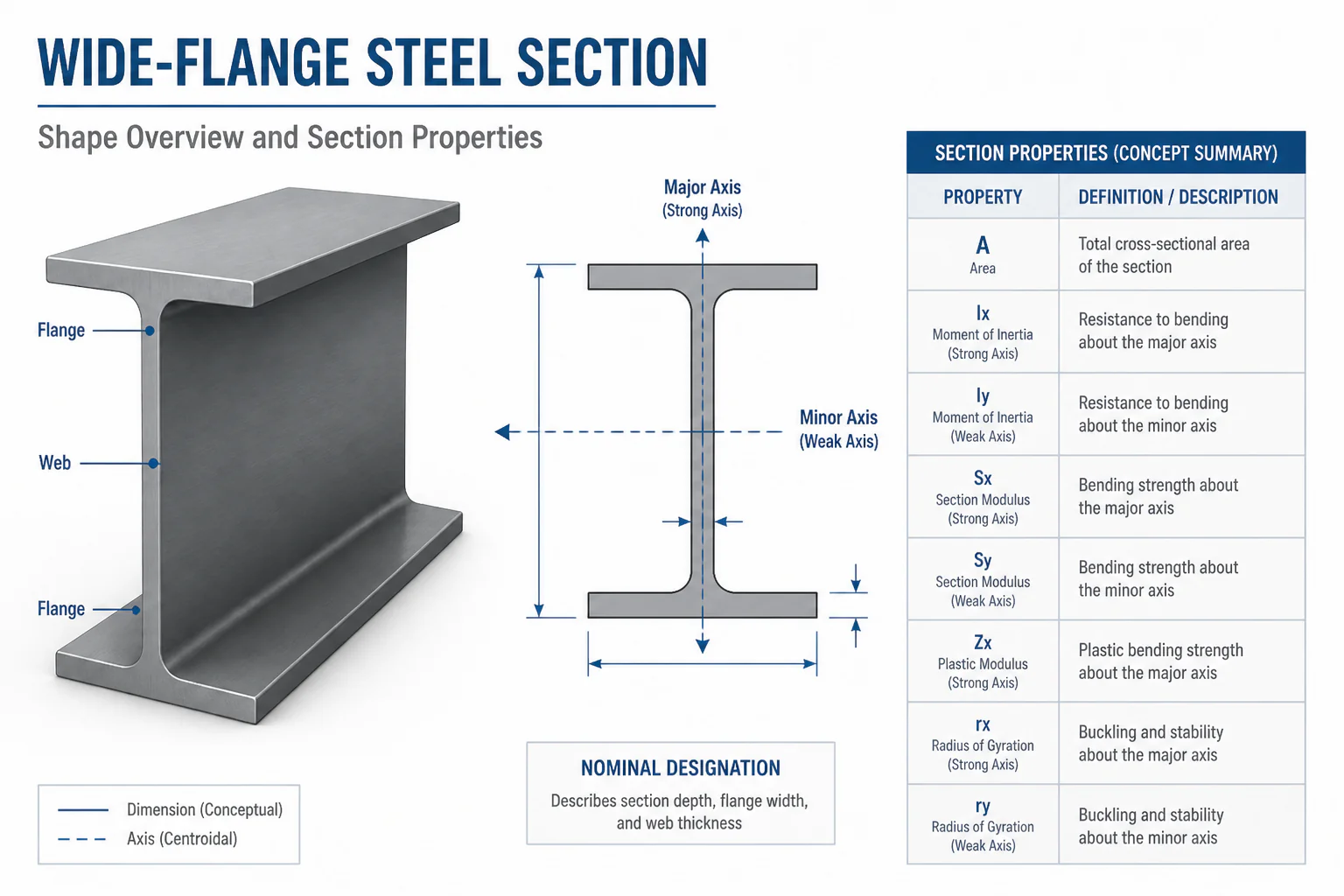
Tag: steel shape tables
-
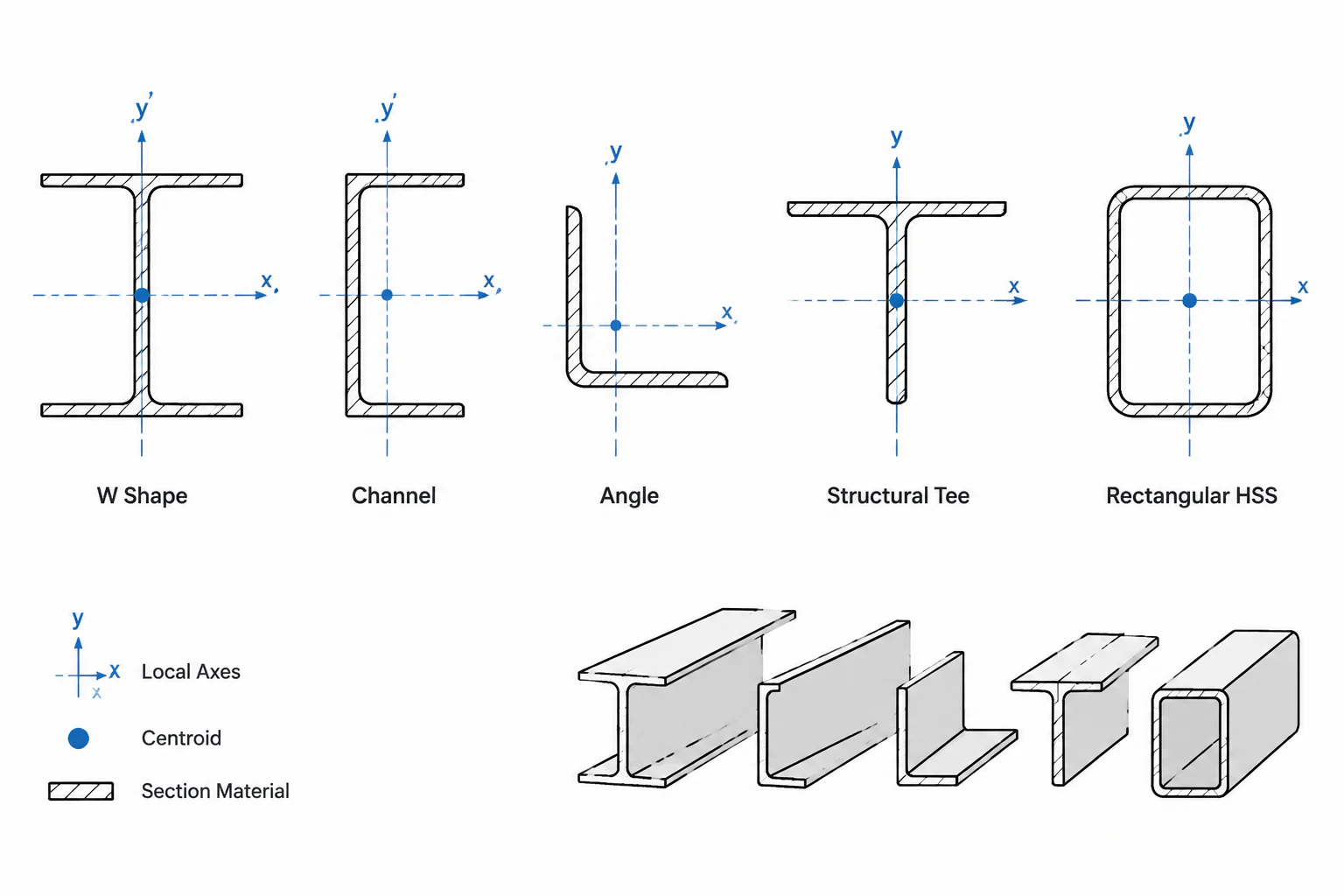
Centroid Coordinates in Steel Shape Tables: x̄, ȳ, Reference Axes, and CAD Placement
Learn how to interpret x-bar and y-bar centroid coordinates for W shapes, channels, angles, tees, and HSS, including reference origins and CAD checks.
Written by
-
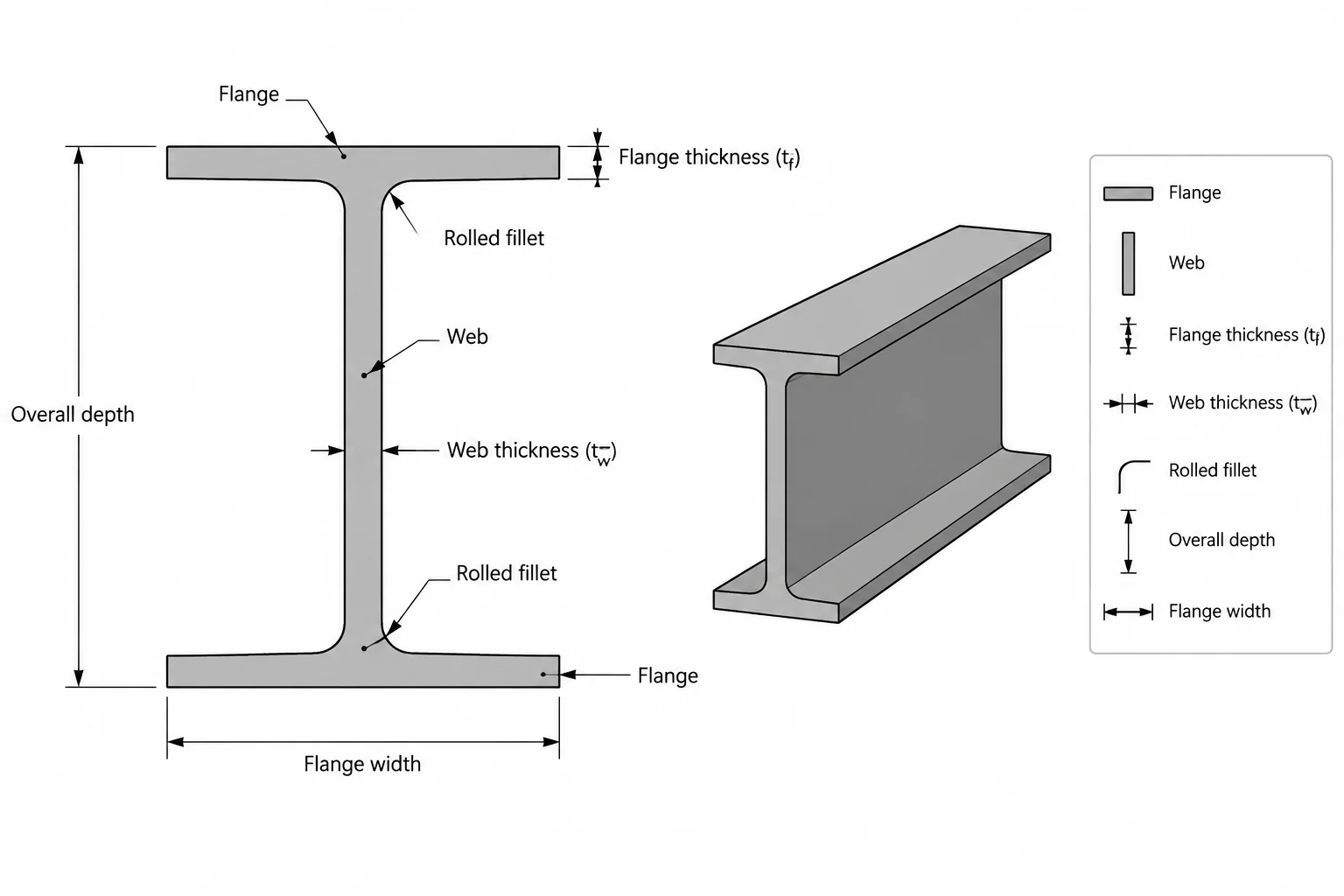
Flange and Web Thickness in Steel Shape Tables: Understanding tf and tw
Learn how to interpret flange thickness tf and web thickness tw in steel shape tables and apply them correctly in CAD, detailing, and connection layouts.
Written by
-
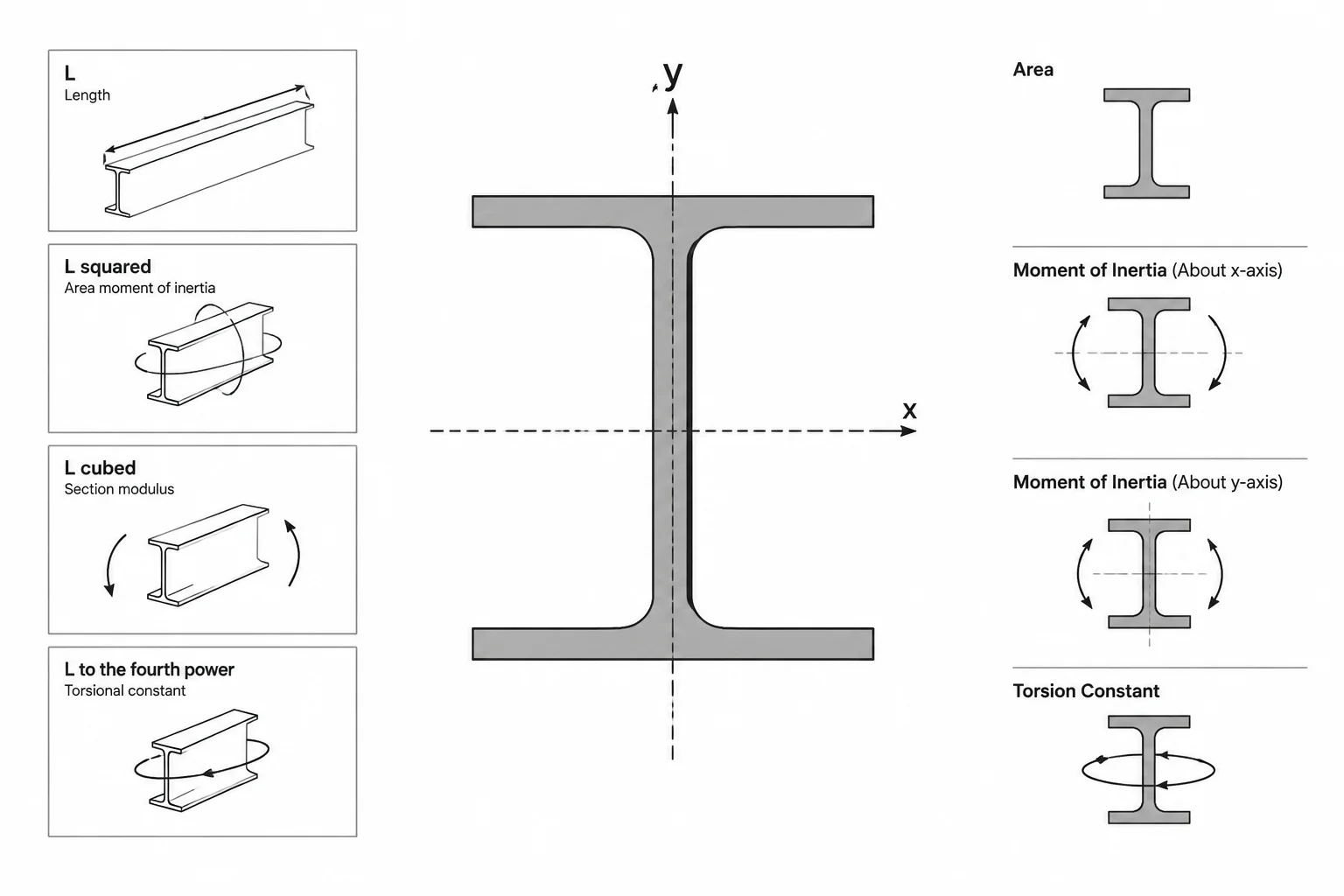
Steel Section Property Units: How to Read and Convert A, I, S, Z, r, J, and Cw
Learn the units used for steel section properties, why dimensional exponents matter, and how to convert shape data without common CAD and calculation errors.
Written by
-
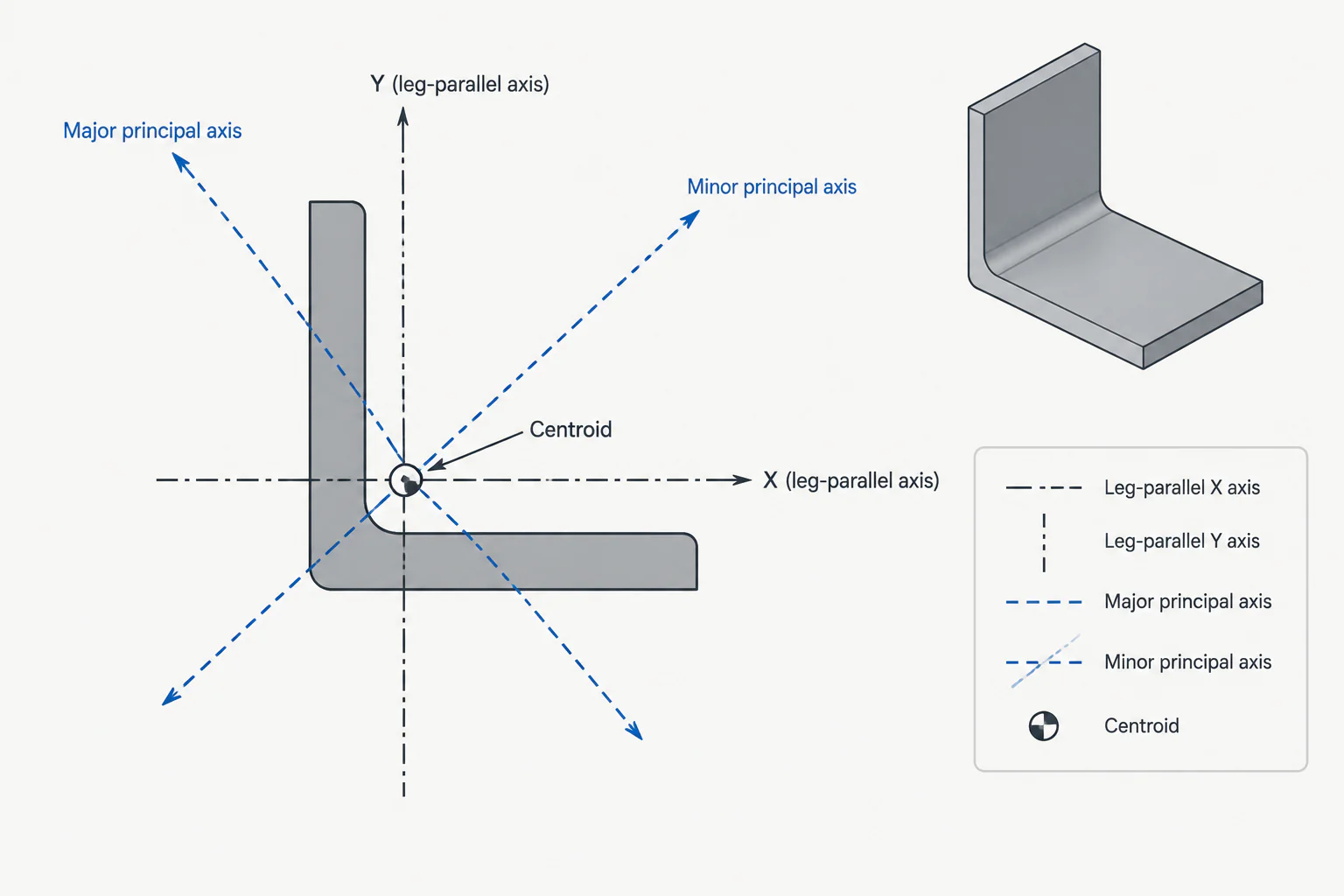
Principal Axes of Steel Angles: How to Read and Use Rotated Section Properties
Learn why steel angles have rotated principal axes, how principal properties differ from x-y values, and how to represent them correctly in CAD.
Written by
-
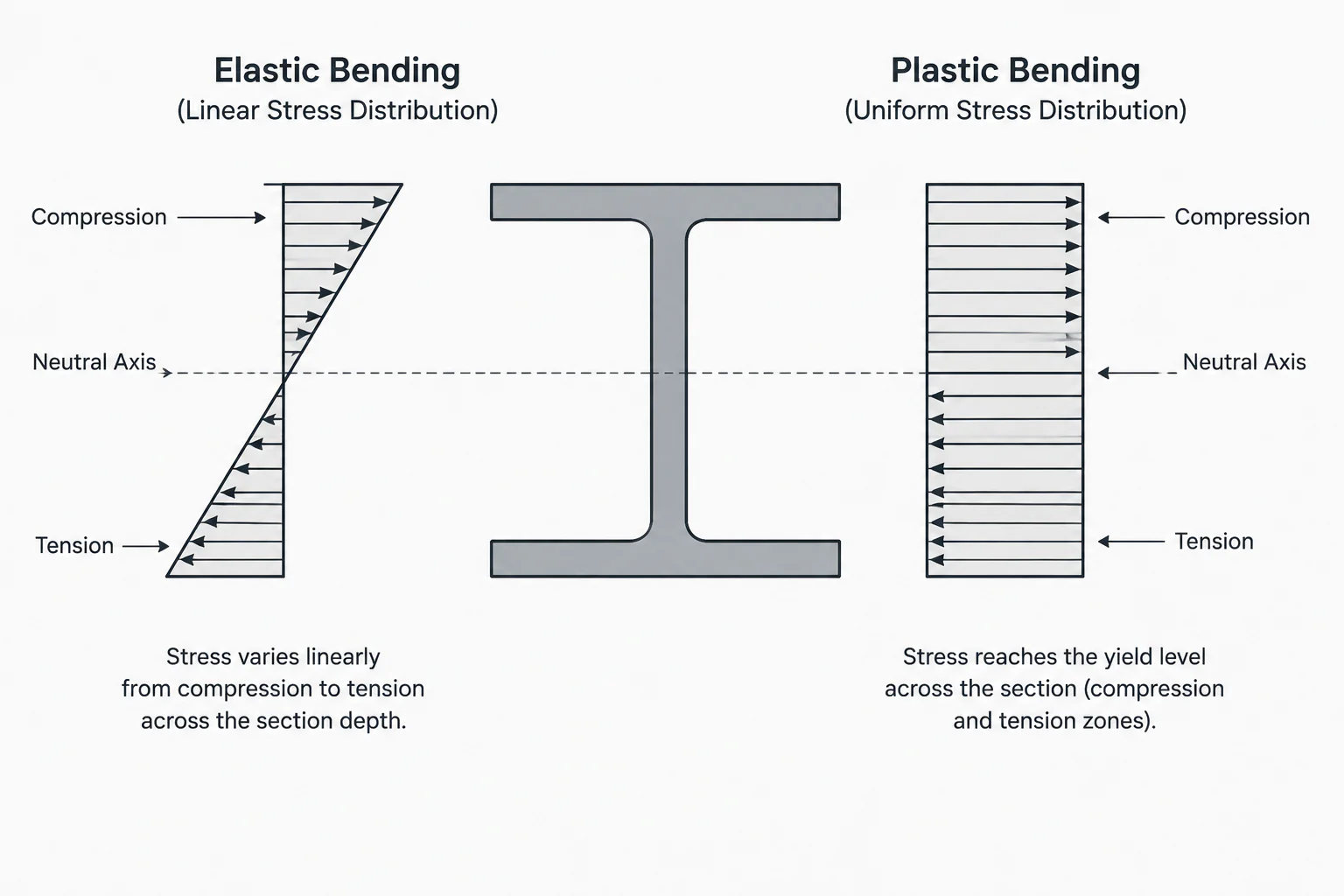
Elastic vs. Plastic Section Modulus: S and Z in Steel Shape Tables
Learn the difference between elastic section modulus S and plastic section modulus Z, how each relates to steel shape geometry, and how to read them in section tables.
Written by
-
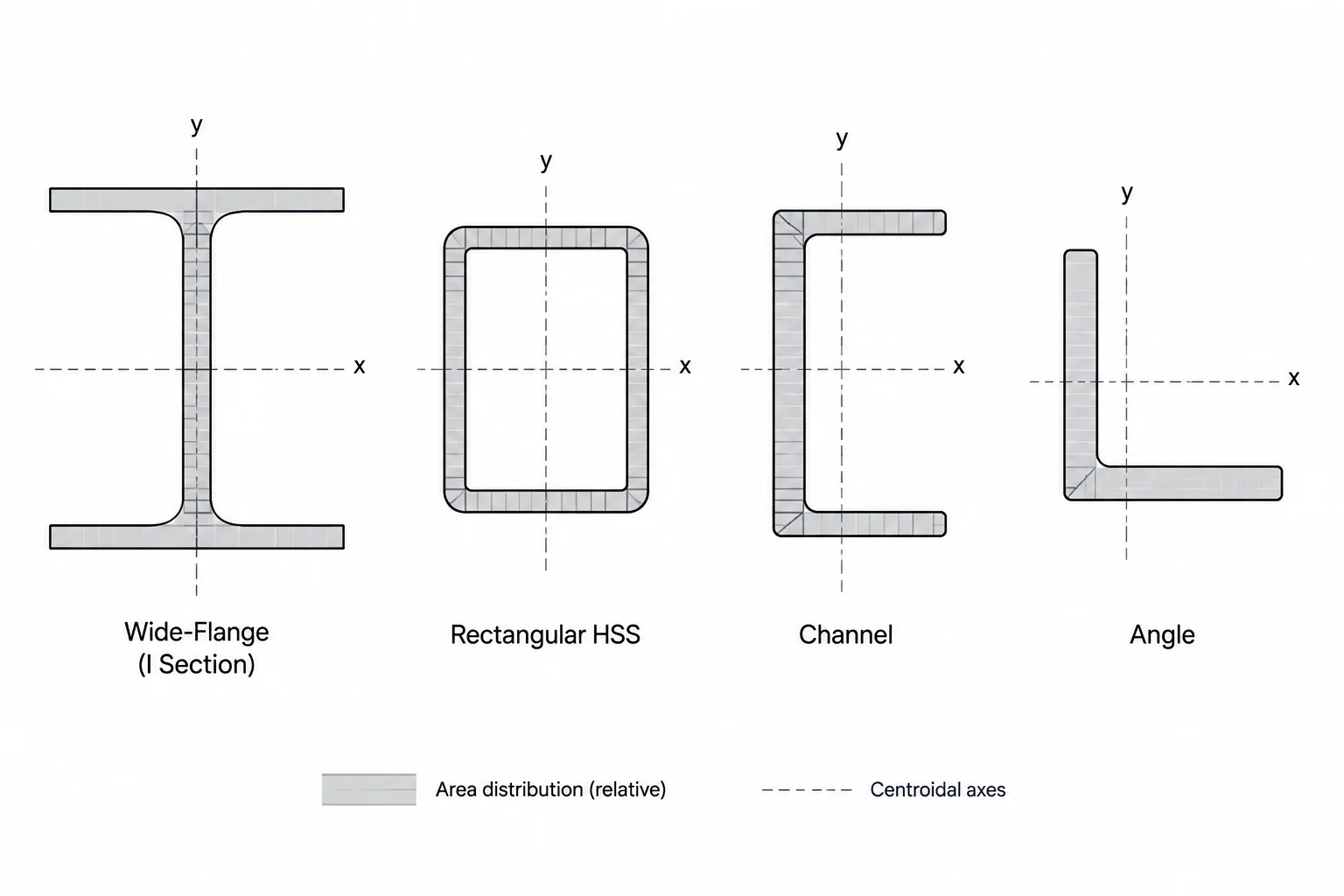
Radius of Gyration in Steel Shape Tables: Understanding rx, ry, and Slenderness
Learn what rx and ry mean in structural steel shape tables, how radius of gyration relates to moment of inertia, and why it matters in column slenderness.
Written by
-
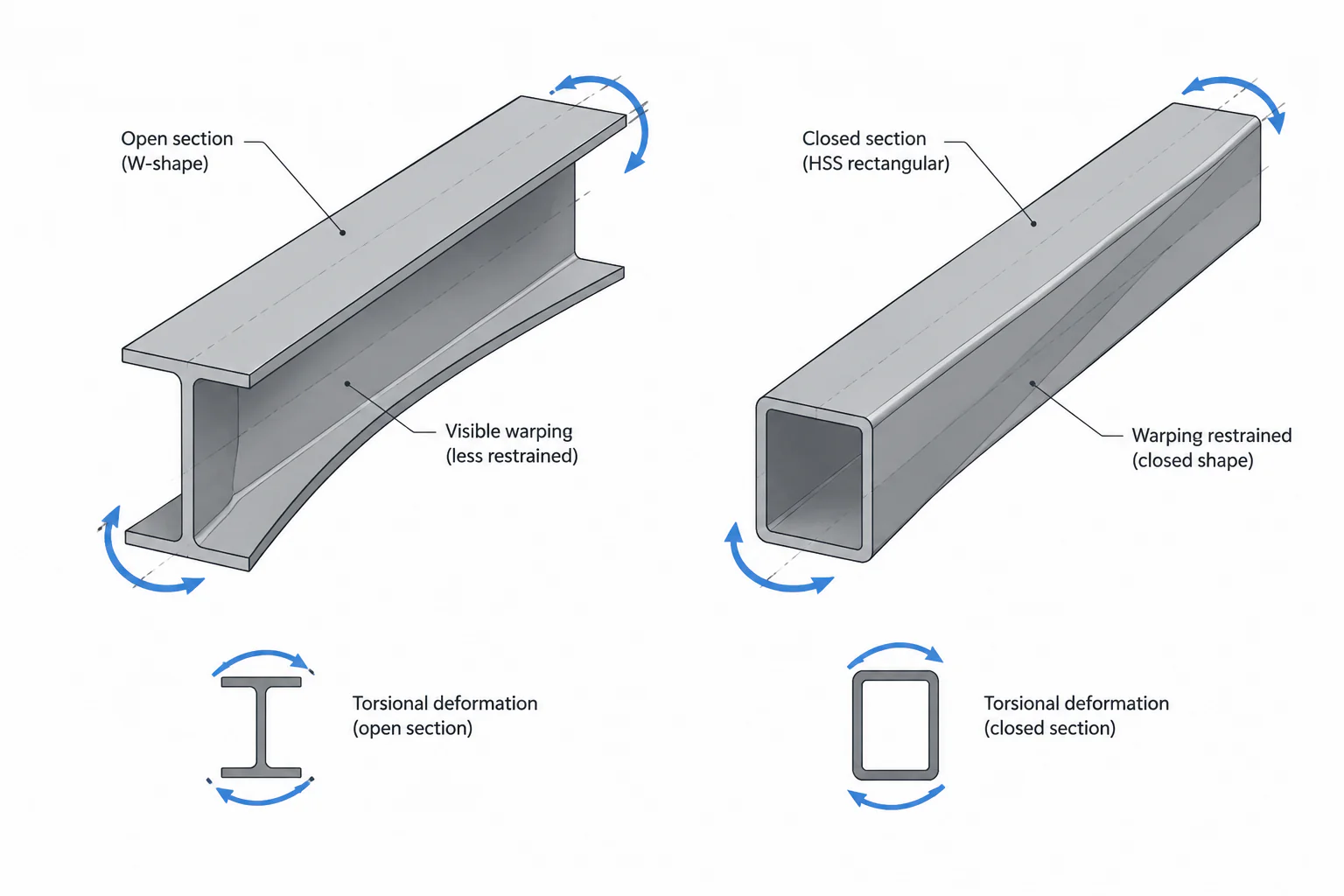
Torsional Constant J and Warping Constant Cw in Steel Shape Tables
Learn what J and Cw mean in structural steel shape tables, how open and closed sections resist torsion, and how to use these properties in design and CAD workflows.
Written by
-
How to Read a W-Shape Steel Section Table
Learn how W-shape steel designations work and how to interpret depth, weight, axes, section properties, and CAD reference data.
Written by