SHS 35x35x1.5 is a cold-formed welded square steel tube identified by its equal depth and width followed by its wall thickness. This page provides the verified dimensional and section data shown below, together with a CAD drawing resource for drafting and reference workflows.
Because the profile is square, its equal outside dimensions should be distinguished from the wall thickness and the curved corner geometry. These details affect how the section is represented in drawings, coordinated with adjoining parts, and interpreted in section-property calculations.
SHS 35x35x1.5
Cold Formed Welded Square Steel Tubes
refer to : EN 10219-2
the European standard that specifies tolerances, dimensions, and sectional properties for cold-formed welded structural hollow sections made of non-alloy and fine grain steels. It complements EN 10219-1, which covers technical delivery conditions.
Dimension : 35x35x1.5
Depth : 35 mm
Width : 35 mm
Thickness : 1.5 mm
Outer Corner Radius : 3 mm
Inner Corner Radius : 1.5 mm
Sectional Area : 1.95 cm2
Unit Weight : 1.5 kg/m
How to read the SHS designation
In the designation SHS 35x35x1.5, SHS means square hollow section. The first two values identify the equal outside depth and width, while the final value identifies the wall thickness. The listed outer and inner corner radii describe the curved transitions between adjacent faces rather than idealized sharp corners.
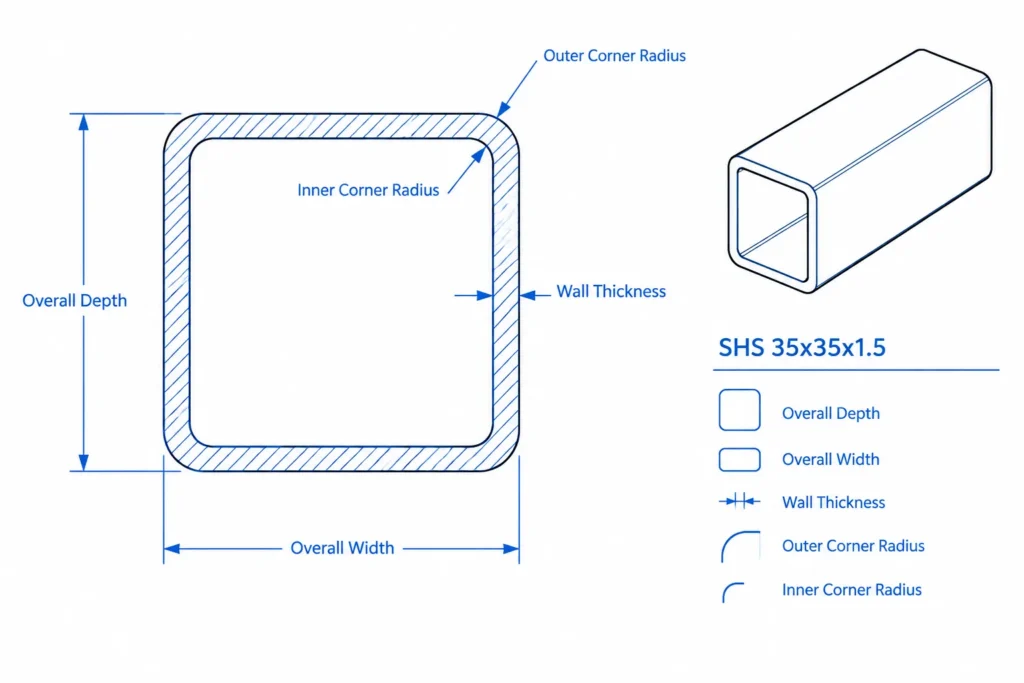
Dimensional and section-property context
The source data identifies this profile as a cold-formed welded square steel tube referring to EN 10219-2. That standard context is relevant when coordinating dimensional tolerances, section geometry, and published sectional properties. EN 10219-1 addresses the associated technical delivery conditions.
Sectional area represents the amount of steel in the cross section and is distinct from the hollow area enclosed by the tube. Unit weight expresses mass per unit length and can support material takeoffs when combined with the required member length. Final procurement quantities should still account for project requirements, permitted tolerances, cutting, and fabrication allowances.
Using the CAD drawing
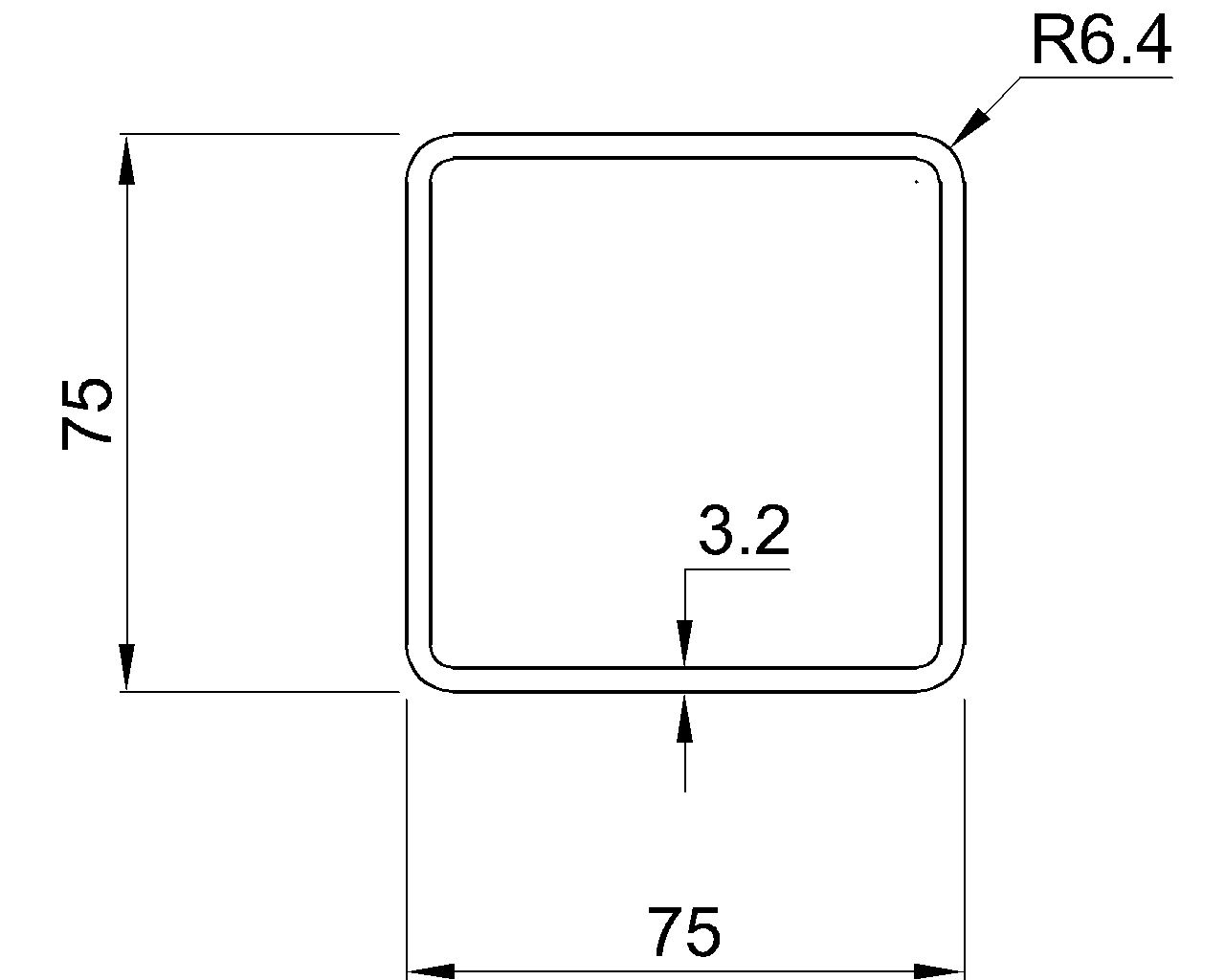
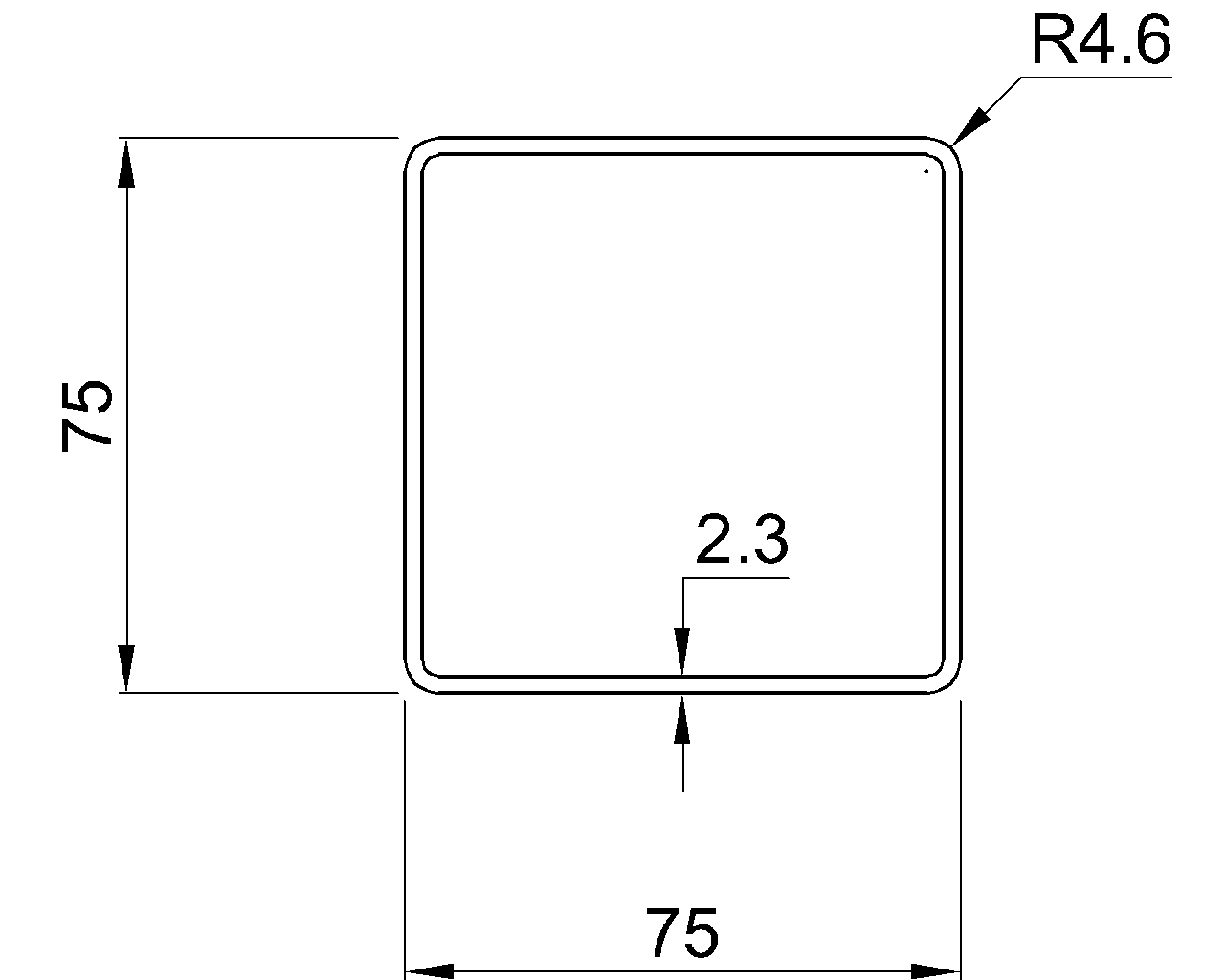
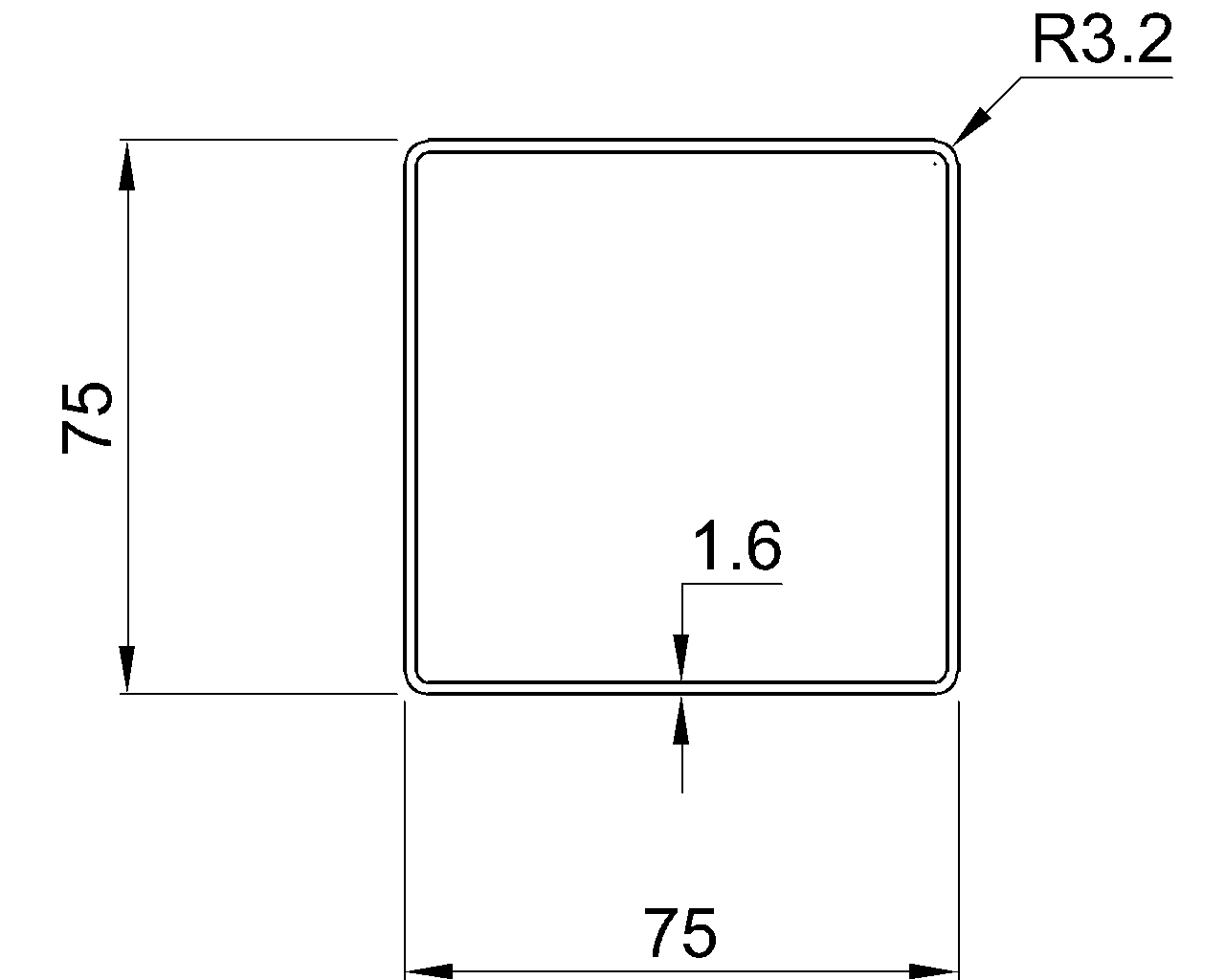
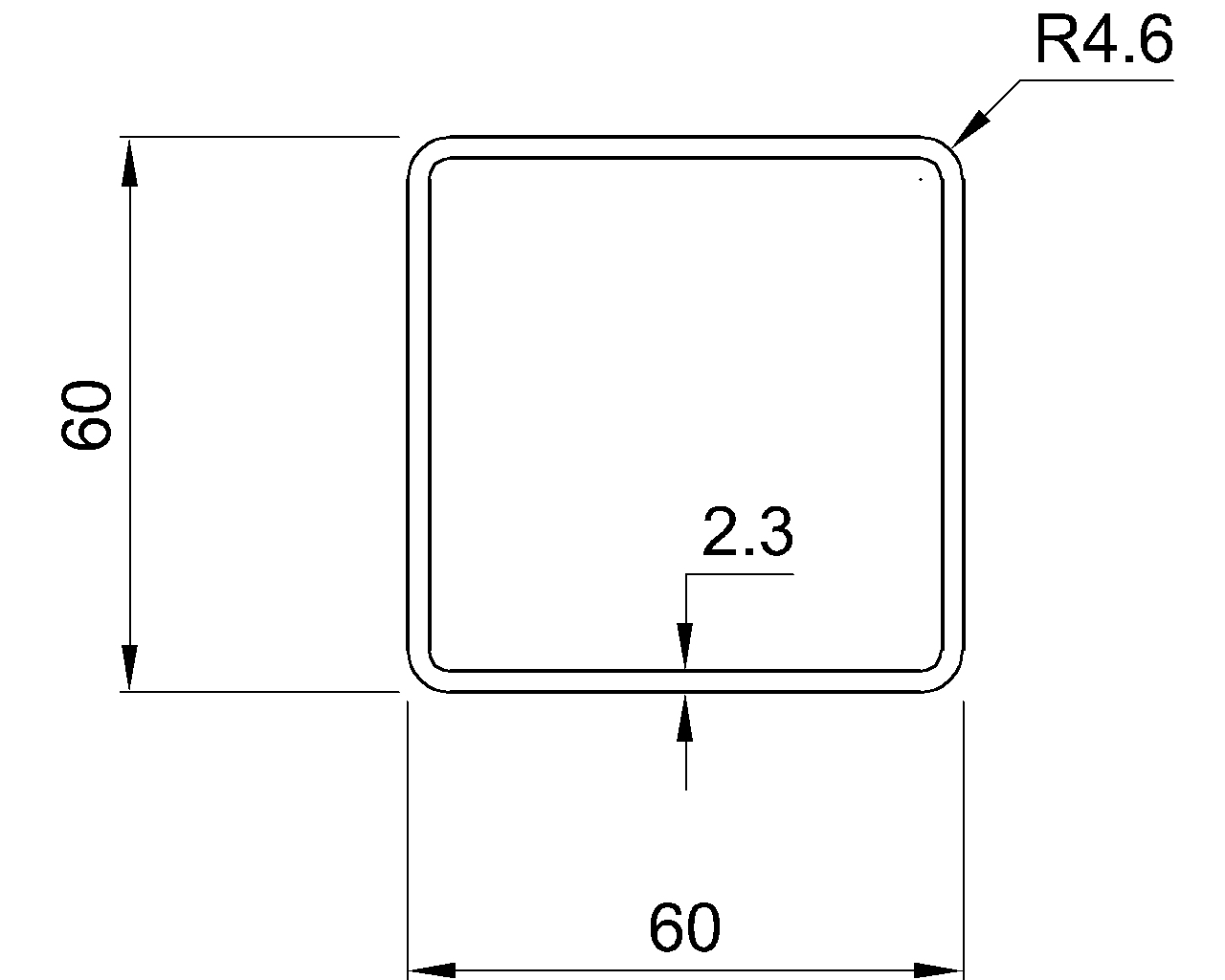
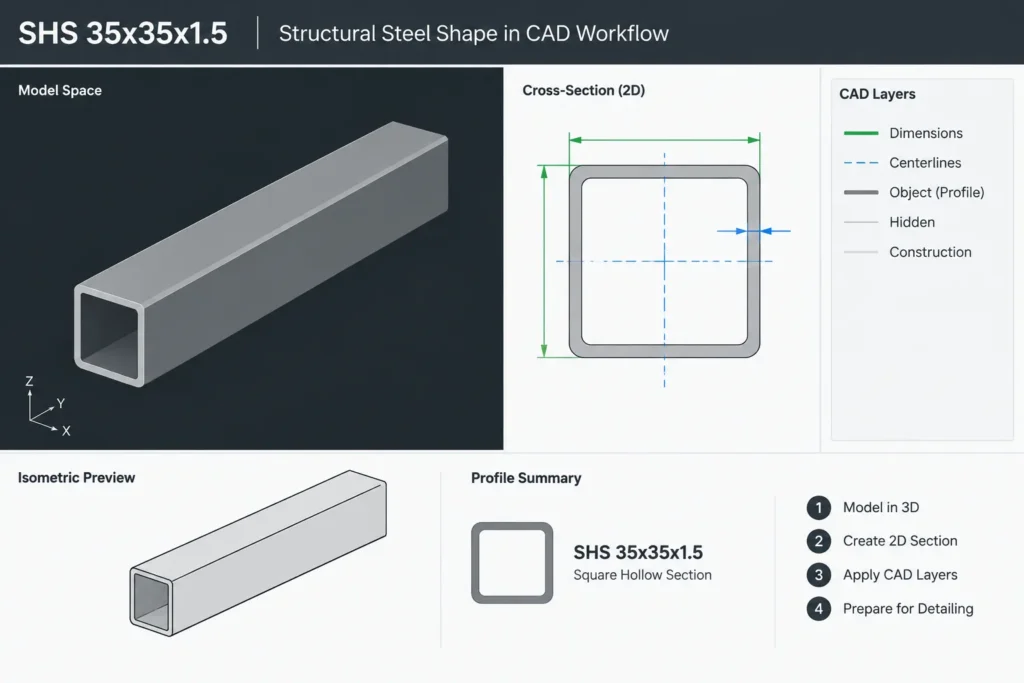
The drawing can support profile layout, drafting, and coordination, but it should not be treated as a complete fabrication or engineering design. Before using the geometry in a project model, confirm the drawing units, outside dimensions, wall thickness, corner treatment, and alignment with the intended reference point.
Connection detailing requires more than the outline of the tube. Bolts, welds, end plates, caps, slots, and adjoining members must be developed for the actual loads, material specification, fabrication method, access, and applicable design requirements. A section drawing alone does not establish connection capacity.
Related reference topics
- Square hollow section dimensions: interpreting depth, width, wall thickness, and corner radii.
- HSS and SHS terminology: understanding naming conventions used in different standards and markets.
- Section properties: distinguishing sectional area, geometric properties, and design resistance.
- Steel unit weight: using mass per unit length in preliminary takeoffs.
- Hollow-section connections: coordinating face geometry, weld access, fasteners, and attached plates.
Frequently asked questions
What does SHS 35x35x1.5 mean?
It identifies a square hollow section with a depth of 35 mm, a width of 35 mm, and a wall thickness of 1.5 mm.
Why are the corner radii important?
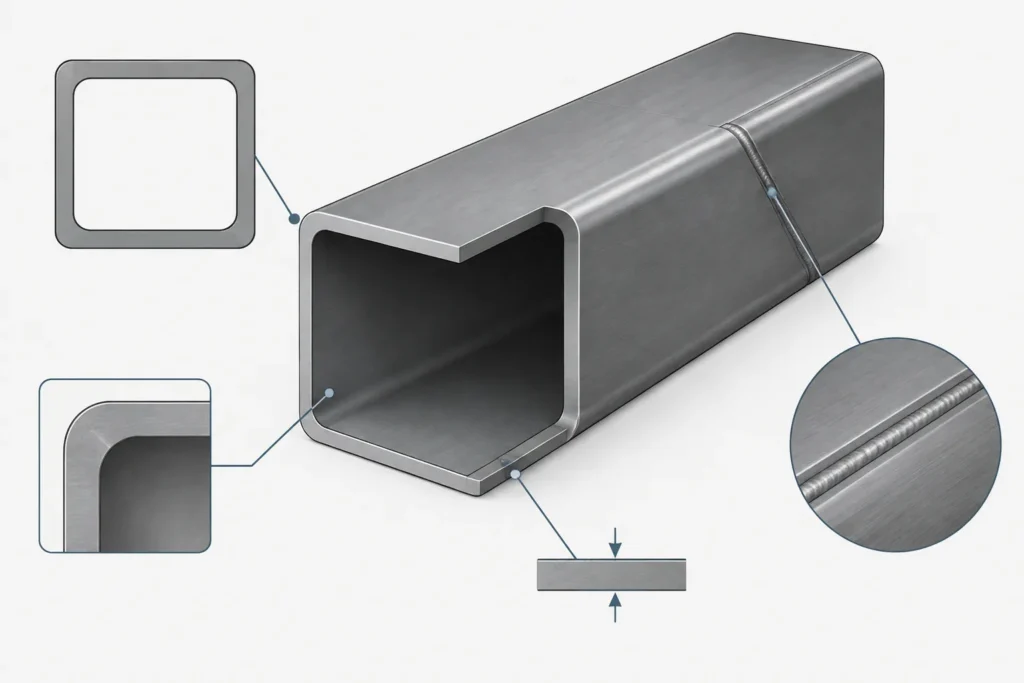
Cold-formed square tubes have curved corners rather than perfectly sharp intersections. The outer and inner radii influence the accurate section outline, sectional area, clearances, and the fit of adjoining details.
What does the listed unit weight represent?
The unit weight is the mass of the section per unit length. It can be combined with member length for estimating, subject to the applicable tolerances and fabrication requirements.
Does the CAD file define structural capacity?
No. A CAD profile represents geometry for drafting and coordination. Capacity depends on material, member length, loading, support conditions, connection behavior, applicable design rules, and professional verification.
What is the relevance of EN 10219-2?
The source identifies EN 10219-2 as the reference for tolerances, dimensions, and sectional properties of cold-formed welded structural hollow sections. It complements EN 10219-1, which addresses technical delivery conditions.