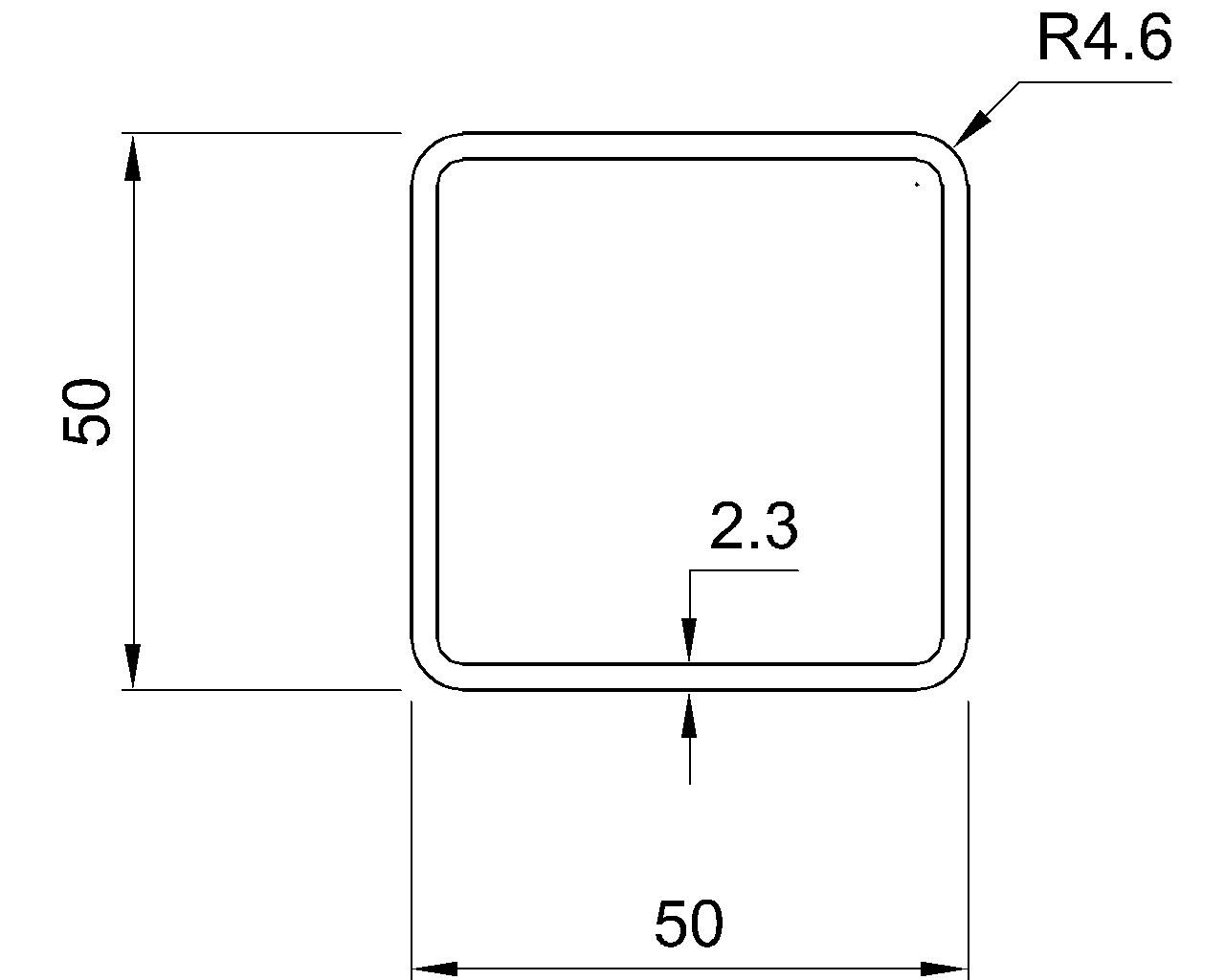
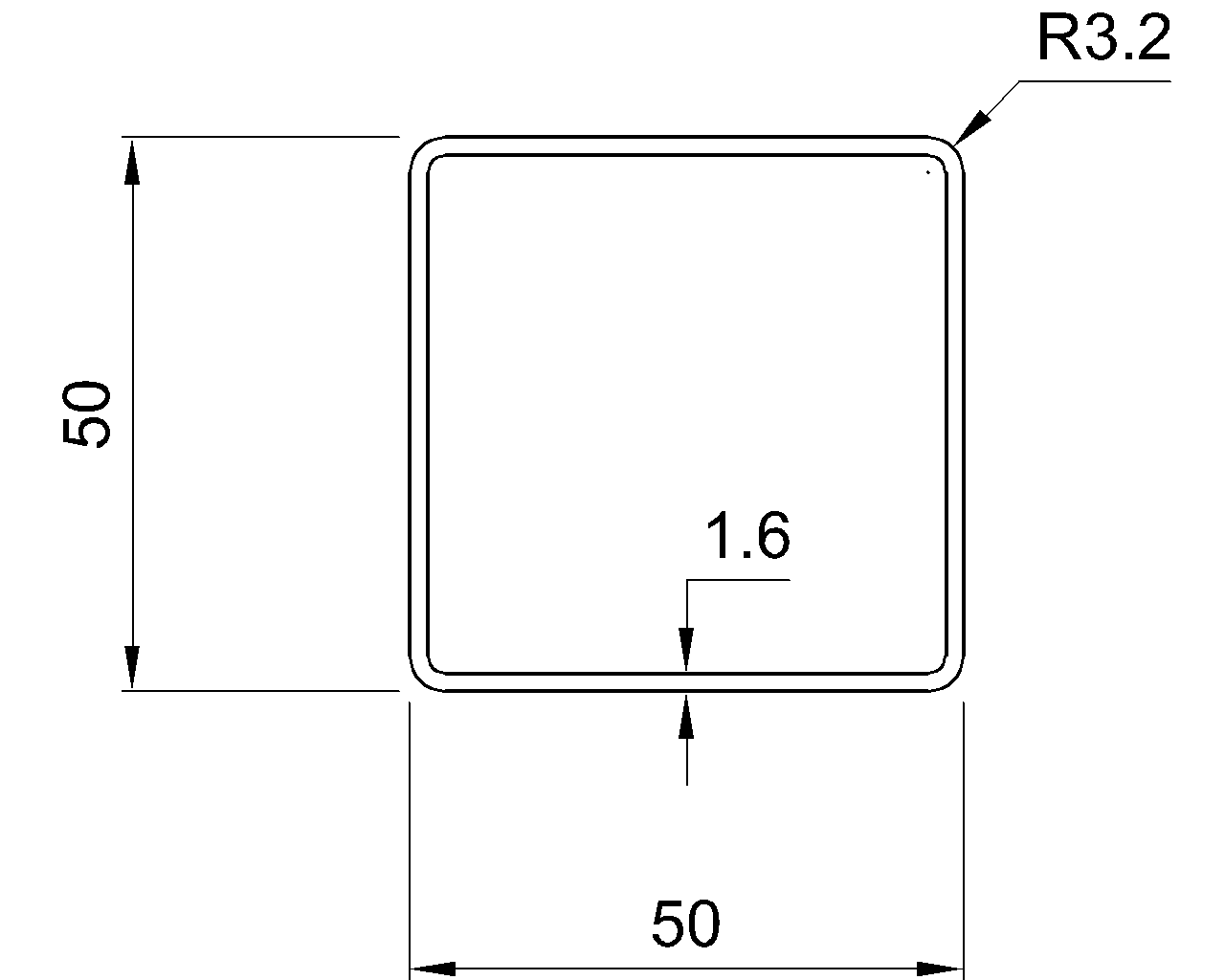
The Hybox 355 SHS 150x150x6 is a square hollow section reference for engineers, detailers, fabricators, and CAD users working with structural steel. This page brings together the section dimensions, corner radii, sectional area, unit weight, applicable standard reference, and a downloadable DWG file.
Use the dimensional data below when reviewing layouts, connection details, takeoffs, or preliminary section comparisons. Design resistance, stability, connection behavior, and fabrication requirements require project-specific engineering verification.
Hybox 355 SHS 150x150x6
Hybox 355 Square Hollow Sections
refer to : EN 10219-2:2006-04
the European standard that specifies tolerances, dimensions, and sectional properties for cold-formed welded structural hollow sections made of non-alloy and fine grain steels. It complements EN 10219-1, which covers technical delivery conditions.
Dimension : 150x150x6
Depth : 150 mm
Width : 150 mm
Thickness : 6 mm
Outer Corner Radius : 12 mm
Inner Corner Radius : 6 mm
Sectional Area : 33.6 cm2
Unit Weight : 26.4 kg/m
How to read the SHS designation
SHS means square hollow section. In the designation 150x150x6, the first two dimensions identify the nominal depth and width, while the final dimension identifies the wall thickness. The source data also identifies the outer and inner corner radii, which are important when modeling the section accurately in CAD or checking clearances at connections.
Section data and standard context
The listed sectional area and unit weight are useful for material takeoffs, mass estimates, and comparison with other hollow sections. They should be read together with the stated dimensions rather than treated as a substitute for a complete design check.
The reference to EN 10219-2:2006-04 places the dimensional and sectional-property information in the context of cold-formed welded structural hollow sections. The source also notes that EN 10219-1 covers technical delivery conditions. For project documentation, confirm that the selected material, manufacturing requirements, tolerances, and inspection provisions match the governing specification.
CAD and detailing use
The available DWG download can support drafting and coordination workflows. Before using the file for fabrication or construction, verify the drawing against the authoritative project requirements and the dimensional data on this page. Related resources on structural steel shapes, hollow section connections, steel section properties, and CAD/DWG details can help place this section in a broader design and drafting workflow.
What the listed properties do not establish
Sectional area and unit weight alone do not establish axial capacity, bending resistance, buckling performance, connection capacity, fire performance, or suitability for a particular structural application. Those checks depend on the design situation, material verification, restraints, loads, connections, and governing design rules.
Frequently asked questions
What does SHS mean?
SHS means square hollow section. It describes a hollow structural profile with nominally square external dimensions.
What do the dimensions 150x150x6 describe?
They describe the nominal depth, width, and wall thickness listed in the source data: 150 mm depth, 150 mm width, and 6 mm thickness.
Why are the corner radii included?
Corner radii describe the rounded transitions between the faces of the hollow section. They matter for accurate CAD modeling, fit-up, clearances, and connection detailing.
Which standard is referenced for this section?
The source refers to EN 10219-2:2006-04 for dimensions, tolerances, and sectional properties, and identifies EN 10219-1 as covering technical delivery conditions.
Can the listed unit weight be used for a material takeoff?
Yes, the listed unit weight can support preliminary length-based mass estimates. Confirm the project specification, supplied product, and actual fabrication requirements before final procurement or billing.
Is the DWG file sufficient for structural design?
No. A DWG supports drafting and coordination, but it does not replace engineering checks for resistance, stability, connections, fabrication, or compliance with the governing project requirements.