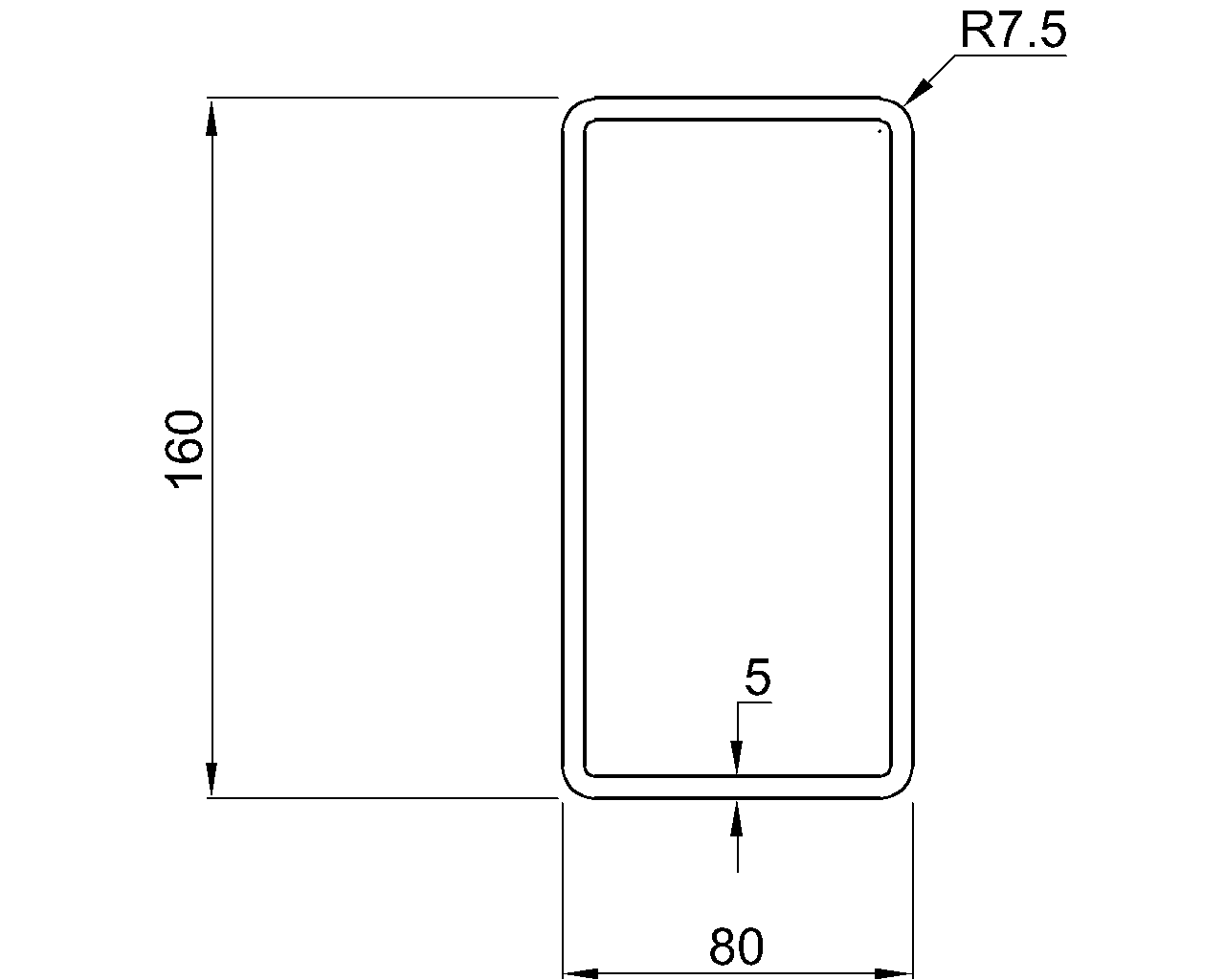
Celsius 355 RHS 160x80x5 is a rectangular hollow section reference for steel detailing, drafting, and preliminary section identification. This page brings together the published section dimensions, corner radii, sectional area, unit weight, standard reference, and a downloadable DWG resource.
Use the numeric data below as the controlling local reference for this section. For project work, confirm the applicable specification, material requirements, connection details, fabrication tolerances, and design assumptions with the responsible engineer or fabricator.
Celsius 355 RHS 160x80x5
Celsius 355 Rectangular Hollow Sections
refer to : EN 10210-2:2006-04
the European standard that specifies tolerances, dimensions, and sectional properties for hot-finished structural hollow sections of non-alloy and fine grain steels. It supports EN 10210-1, which covers technical delivery conditions.
Dimension : 160x80x5
Depth : 160 mm
Width : 80 mm
Thickness : 5 mm
Outer Corner Radius : 7.5 mm
Inner Corner Radius : 5 mm
Sectional Area : 22.7 cm2
Unit Weight : 17.8 kg/m
How to read the RHS designation
RHS means rectangular hollow section. In the designation 160x80x5, the listed values correspond to the section depth, section width, and wall thickness shown in the reference data. The page also identifies the outer and inner corner radii, which describe the geometry where the flat faces transition around the section corners.
What the reference properties describe
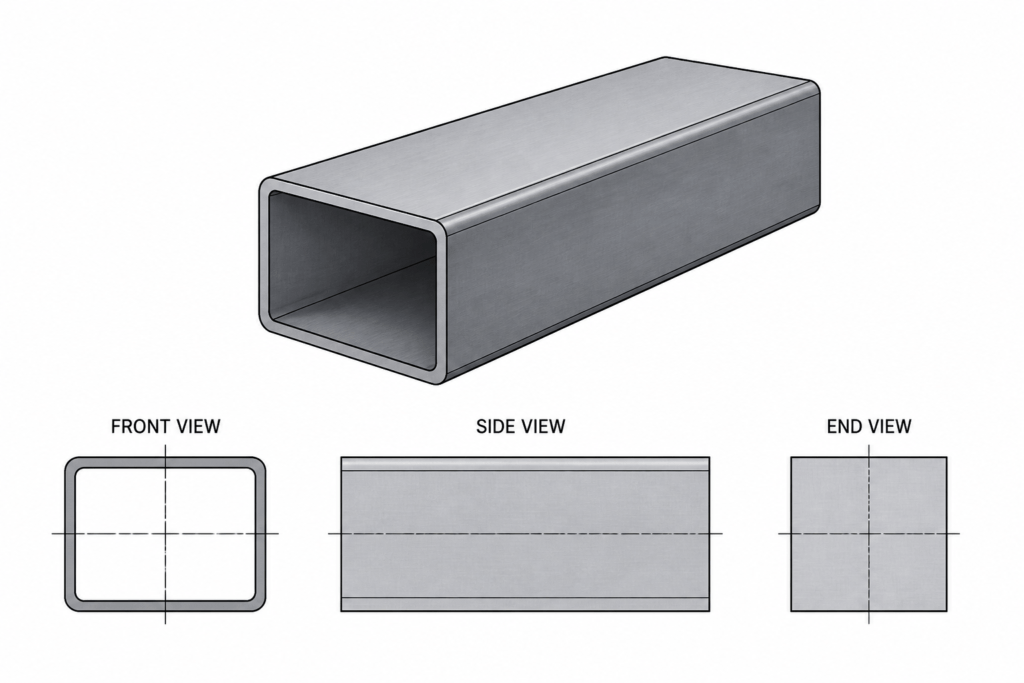
The sectional area is a cross-sectional quantity, while the unit weight expresses the listed mass per unit length. These properties are useful when reviewing section schedules, estimating steel quantities, coordinating details, and checking that a selected profile matches the intended drafting reference. They should not be treated as a substitute for project-specific structural verification.
Standard and drawing reference
The source identifies EN 10210-2:2006-04 as the dimensional and tolerance reference for the hot-finished structural hollow section information presented here, with EN 10210-1 noted for technical delivery conditions. The accompanying DWG resource can support CAD coordination and detailing; users should still check the drawing against the project standard, fabrication requirements, and the governing design documents.
Related steel reference topics
- Rectangular hollow section terminology and dimensional notation
- Corner-radius interpretation in structural steel profiles
- Sectional area and unit-weight reference data
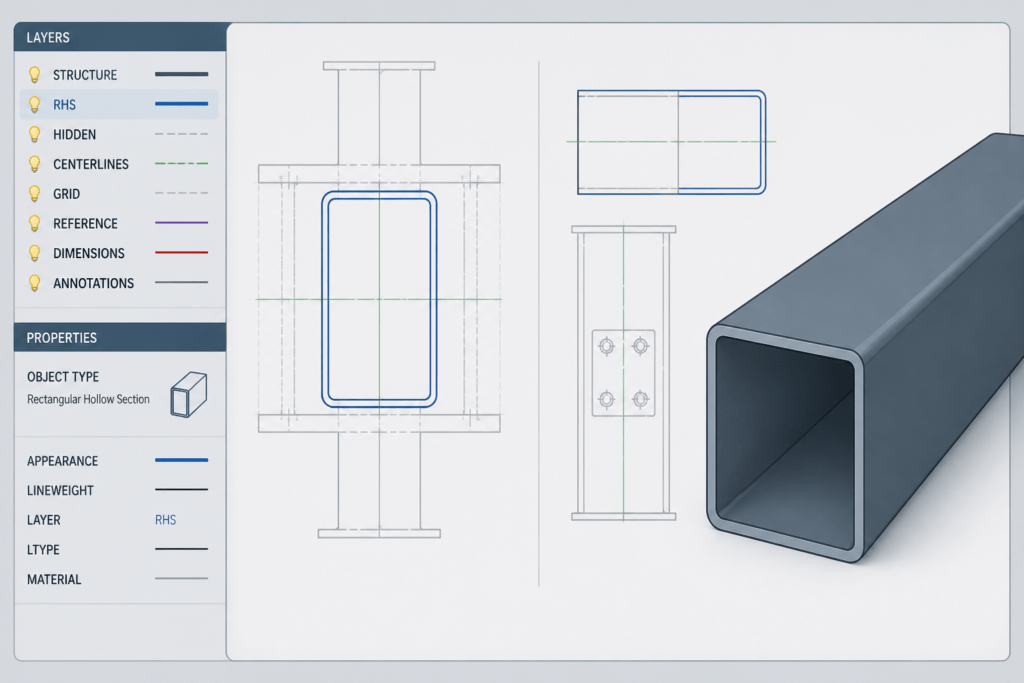
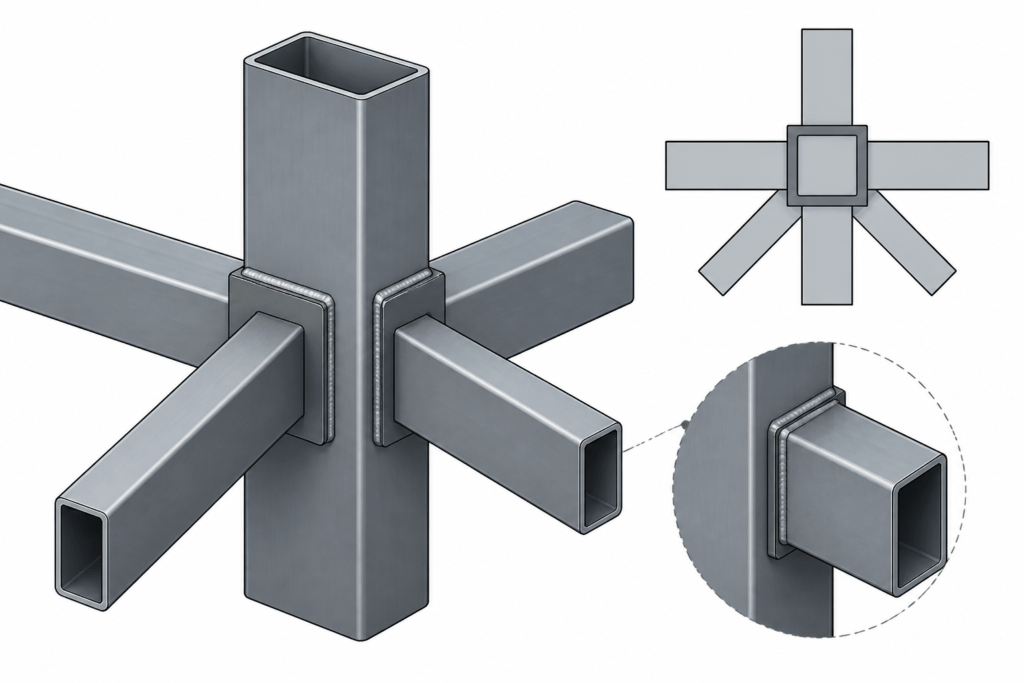
- Hollow-section drafting, CAD coordination, and connection detailing
Frequently asked questions
What does RHS mean?
RHS means rectangular hollow section. It describes a closed structural steel profile with a rectangular external form and hollow interior.
How should the 160x80x5 designation be read?
For this reference, the designation identifies the listed section depth, width, and wall thickness. The detailed values are provided in the source content together with the corner radii.
Why are the corner radii included?
Corner radii define the curved transitions between the flat faces of the hollow section. They are relevant when interpreting the profile geometry, preparing drawings, and coordinating connected or adjacent details.
What is the difference between sectional area and unit weight?
Sectional area describes the material area visible in a cross-section. Unit weight is the listed mass per unit length. They are separate reference properties and should be used for their respective purposes.
What standard is referenced for this section?
The source references EN 10210-2:2006-04 for dimensions, tolerances, and sectional properties, and notes EN 10210-1 for technical delivery conditions.
Can the DWG be used directly for fabrication?
The DWG is a CAD reference for coordination and detailing. Before fabrication, verify its geometry, units, project requirements, tolerances, connections, and approval status against the governing documents.


